Tissue Expansion
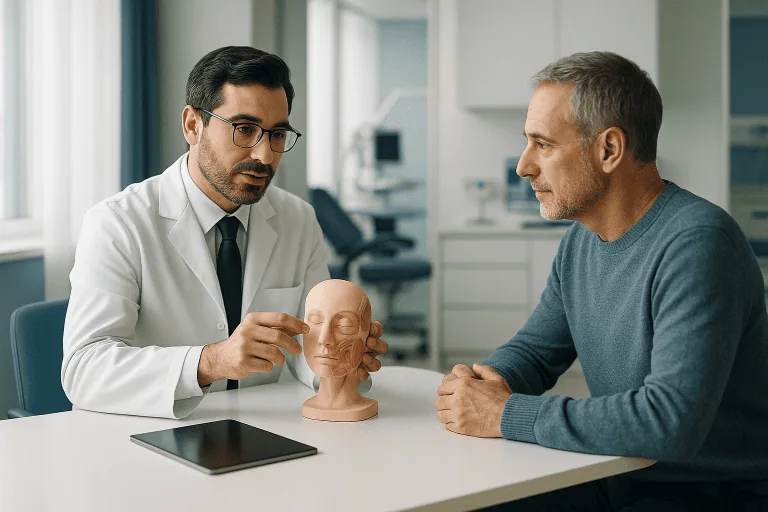
Tissue expansion is a reconstructive plastic surgery technique that gradually stretches nearby healthy skin to repair scars, burns, birth defects, or tissue loss with better color and texture match.

Quick answer
Tissue expansion is a staged reconstructive technique that grows extra skin from your own body. A surgeon places an inflatable expander under healthy skin near the defect, then gradually fills it with saline over weeks or months. Once enough new skin has formed, a second operation removes the device and uses that tissue for reconstruction, most familiarly with breast expanders after mastectomy.
What Is Tissue Expansion?
Tissue expansion is a reconstructive plastic surgery technique that creates additional skin from your own body. A surgeon places a soft, inflatable device under healthy skin next to the area that needs repair, then gradually fills it with sterile saline over a series of outpatient visits. The skin above the device does not simply stretch: it genuinely grows, adding surface area while keeping its own blood supply, colour, texture and, in many areas, hair. Once enough new skin exists, a second operation removes the device and uses the new tissue to resurface or rebuild the affected area.
Breast expanders are the most widely recognised form of the technique. After mastectomy, they prepare the chest for an implant or further reconstruction by slowly recreating the skin envelope that surgery removed. But the same principle is used far beyond the chest: on the scalp, face, neck, trunk, arms and legs, wherever a defect sits next to healthy skin that can be persuaded to grow.
The biology is familiar. Skin adapts to sustained tension during pregnancy, weight change and childhood growth. Tissue expansion harnesses that same response deliberately and in a controlled way, so that the new skin can be moved into a specific position for a specific purpose. The aim is not stretched, thinned skin. It is well-vascularised, living tissue that matches its surroundings closely, usually far more closely than a skin graft taken from a distant part of the body.
That match is the technique’s central advantage. Grafted skin from the thigh or back often looks different on the face, scalp or chest: different colour, different thickness, no hair where hair belongs. Expanded skin comes from the same neighbourhood as the defect, so it tends to blend in. The trade-off is time. Expansion takes weeks to months, requires repeated visits, and produces a visible, temporary bulge while the device fills. It is a planned pathway, not a single operation.
How does a tissue expander work?
A tissue expander is a silicone balloon with a reinforced base and a filling port, placed surgically into a pocket beneath healthy skin. The port may be built into the device itself or connected by a short tube and positioned separately under the skin, where it can be reached with a fine needle. After the incision has healed, your surgical team injects sterile saline through the port at regular visits. Each fill enlarges the device slightly, putting gentle, sustained tension on the skin above it.
The skin responds over the following days by producing new tissue. Fills are repeated, typically every one to two weeks, adjusted to your skin’s response and comfort, until the surgeon judges that enough surface area has been created for the planned reconstruction. The amount added at each session is individualised. It depends on how the skin looks and feels, how the circulation is behaving, and what the final reconstruction requires. Some patients need only a modest gain; others need a longer expansion period or more than one device.
What does the expansion process feel like?
Most patients describe pressure and tightness rather than sharp pain, strongest in the hours after each fill and easing as the skin adjusts over the following days. The needle used to access the port is fine, and the skin over the port often has reduced sensation after surgery. If a fill feels too tight, the team can remove a small amount of saline: the pace of expansion is adjustable, and telling your team honestly how each session feels is part of how they steer it. The visible bulge the device creates is temporary, but it can be the hardest part emotionally, particularly on the face, scalp or chest. A good team prepares you for this stage rather than glossing over it.
Is tissue expansion right for everyone?
No. Tissue expansion needs healthy, mobile skin adjacent to the defect, a patient who can attend repeated fill appointments, and tolerance for a temporary change in appearance. Some defects are better served by local flaps, skin grafts, free tissue transfer, fat grafting, laser scar treatment or a combination. Heavily irradiated, infected or repeatedly operated skin expands less predictably. Part of a careful consultation is deciding not just whether expansion can be done, but whether it is genuinely the best of the available options for your defect, your skin and your circumstances.
Breast Expanders and Breast Reconstruction
A breast tissue expander is a temporary device placed under the chest skin, and often partly under or behind the chest muscle, after mastectomy, to gradually recreate space and skin for a permanent breast reconstruction. This is the setting in which most people first encounter tissue expansion. Mastectomy for breast cancer removes not only breast tissue but often much of the skin envelope; before a permanent implant or flap can restore shape, that envelope has to be rebuilt. You may also see the informal term “boob expanders” in forums and search results: it refers to exactly the same medical device.
Two-stage tissue expander breast reconstruction is the most common sequence. In the first stage, often at the same operation as the mastectomy, the surgeon places the expander partially filled. Over the following weeks, saline fills gradually enlarge it until the chest skin and muscle have stretched enough. In the second stage, the expander is exchanged for a permanent implant, or in some plans replaced by the patient’s own tissue. The full pathway, including alternatives such as flap-based methods, is covered on our breast reconstruction page, and the wider clinical context sits with the Breast Health Department.
Timing matters in breast reconstruction. Whether expansion starts immediately at mastectomy or is delayed depends on pathology findings, whether radiotherapy is planned, skin quality after surgery, and your own preferences. Radiotherapy in particular changes the skin’s elasticity and healing capacity, so the sequence of cancer treatment and reconstruction is usually agreed in a multidisciplinary discussion rather than decided by the surgeon alone.
Are breast expanders harder than implants?
Yes, usually. Breast expanders sit tighter and feel firmer than permanent implants, because they are built with a reinforced base to direct the stretch into the skin and muscle rather than backwards into the chest, and because the tissue over them is under active tension. Many patients notice the difference immediately after the exchange operation: the permanent implant typically feels softer and more natural than the expander it replaces. Firmness during the expansion phase is expected and temporary: it is a working device, not the final result.
What do breasts with expanders look like?
A breast with an expander in place looks like a work in progress, and it helps to expect that. Early in expansion the chest may appear flat or under-projected; as fills continue, the mound grows but often sits higher and looks rounder and firmer than a natural breast. The shape can appear somewhat angular or uneven between fills, and the two sides may not match during the process. Contour, position and symmetry are refined at the exchange stage and, where needed, with later adjustments, sometimes including aesthetic breast surgery on the opposite side to improve balance.
Do you have to wear a bra with expanders?
There is no single rule; you follow your own surgeon’s instructions, which change through the process. Many surgeons recommend a soft, supportive, non-underwired bra or surgical garment in the early weeks after placement, both for comfort and to support healing tissue. Underwired bras are generally avoided while incisions mature because the wire can press on healing skin and scars. As expansion progresses and the shape changes, what fits comfortably will change too, many patients keep to soft, adjustable garments until after the exchange operation.
What can go wrong with breast expanders?
The recognised problems include infection around the device, fluid collection (seroma), bleeding, wound-edge breakdown, skin thinning over the expander, deflation if the device or port leaks, rotation or displacement of the expander, persistent discomfort or tightness, and exposure of the device through the skin, which usually means removing it and pausing reconstruction. Previous radiotherapy raises the likelihood of healing problems and makes expansion less predictable. None of these possibilities means expansion is a poor technique; they mean it is a staged surgical process with real risks that your surgeon should set out plainly during consent. If a device must be removed or exchanged, reconstruction can often be resumed later by another route; the practical aspects of device removal are described on our breast prosthesis removal page.
Who May Need Tissue Expansion?
Tissue expansion may be considered whenever additional skin is needed to reconstruct an area affected by scarring, burns, congenital skin differences, tumour removal, trauma or prior surgery. It is used in both adults and children, though the plan differs with age, growth, skin quality and the practicalities of attending repeated fill appointments.
Patients arrive at this decision from many directions. Some have tight scars that restrict movement of a joint, the neck or the mouth. Some have visible scars that cause daily distress, or hairless patches on the scalp after injury or surgery. Some have a large congenital lesion that needs staged removal. Others have already had a skin graft or a previous reconstruction and want to improve its colour match, texture, thickness or flexibility. And some are referred by another specialist as part of a planned reconstruction after cancer treatment, orthopaedic surgery or complex wound management.
Assessment begins with a detailed history and physical examination. The reconstructive surgeon evaluates the size, location and depth of the defect; the quality and mobility of the surrounding skin; the presence and behaviour of scar tissue; circulation to the area; any history of radiation; and medical conditions that affect healing. Clinical photographs are taken for planning and documentation. In complex cases, scalp, face, chest wall, or areas altered by trauma or tumour surgery, imaging may be needed to understand the deeper structures the reconstruction must respect.
Typical situations include a child with a large congenital nevus needing gradual removal, an adult with burn scar contracture, a patient with scalp scarring and hair loss after trauma, someone seeking revision of a poorly matched skin graft, and a patient in staged breast reconstruction. Different histories, but the same underlying question: can nearby healthy tissue be safely grown and used to restore coverage, form and, where possible, function?
Conditions Tissue Expansion Can Address
Tissue expanders are used across a broad range of reconstructive indications, and they work best when the defect sits beside healthy skin that can be expanded without excessive tension, compromised circulation, or distortion of important structures. The surgeon must also judge whether you can complete the expansion period and tolerate the temporary change in appearance: an honest conversation, not an afterthought.
Burn scars and post-burn deformities. Tight, discoloured or functionally limiting burn scars are a classic indication. Expansion can allow scarred skin to be removed entirely and replaced with expanded skin that resembles the surrounding tissue in colour and texture, something a graft rarely achieves in visible areas.
Scar revision after trauma, surgery or infection. Wide scars that cannot be excised and closed directly without unacceptable tension may be treatable in stages, using expansion to create the slack the closure needs. Reconstruction after significant soft tissue injuries often follows this logic, sometimes combined with other techniques.
Congenital skin conditions. Large congenital nevi, areas of absent tissue and some craniofacial or trunk differences can be treated with staged expansion as part of a long-term plan. In children, timing is genuinely individual: the team weighs growth, anaesthesia safety, schooling, psychosocial development and the family’s capacity to manage repeated visits. Devices used in children are sized for a child’s anatomy, and families are shown what to watch for between visits so that the process fits into ordinary life as smoothly as possible. There is rarely one “correct” age; there is a considered plan for each child.
Scalp reconstruction. Expansion is particularly valuable on the scalp because it can generate hair-bearing skin. Areas of alopecia caused by burns, trauma, tumour excision or previous surgery may be reconstructed with expanded scalp that carries its own hair: a match no non-hair-bearing graft can offer. Not every scalp defect is suitable, but in selected patients this is expansion at its most persuasive.
Reconstruction after cancer surgery. Beyond the breast, expansion is used after removal of skin tumours and other oncologic defects. Timing depends on pathology findings, the need for further cancer therapy, radiation history and the overall treatment plan. Complex cases are reviewed in multidisciplinary boards so that reconstructive timing never compromises the cancer treatment itself.
Face, neck, trunk and extremities. Expansion also serves facial and neck reconstruction, trunk defects and soft-tissue deficits of the limbs. Sometimes it stands alone; often it is combined with flaps, grafts, fat grafting, scar release, laser treatment or rehabilitation. The right combination depends on the defect’s location, the skin available nearby, and what you want the result to achieve.
How Tissue Expansion Is Performed
Initial Evaluation and Planning
The process starts with a consultation that covers both medical suitability and personal goals. The surgeon examines the defect and the surrounding healthy skin, and works backwards from the final reconstruction: how much new skin is needed, where the expander should sit to create it, what size and shape of device fits that plan, where incisions can be hidden, and how the expanded skin will eventually be advanced, rotated or rearranged once the device comes out. A well-planned first operation already contains the design of the second.
Preparation may include blood tests, anaesthesia assessment, review of your current medications with the treating doctor, and management of chronic conditions such as diabetes. Smoking and nicotine deserve blunt mention: they reduce blood flow to the skin and measurably worsen wound healing, which matters more in expansion than in many operations because the technique depends entirely on the skin’s circulation. A history of radiotherapy, infection, keloid scarring or a previously failed reconstruction does not automatically rule expansion out, but it changes the plan and the conversation.
Planning also includes the calendar, because expansion involves at least two operations separated by weeks to months of fill visits. Depending on your case, all fills may take place with the operating team, or, in selected, suitable situations, some may be coordinated with a qualified physician closer to home between the two surgical stages. Which arrangement is safe depends on the device, the site and the complexity of your reconstruction, and it is agreed explicitly before the first operation, not improvised afterwards.
Placement of the Tissue Expander
The first operation is performed under anaesthesia appropriate to your age, health and the treatment area, general anaesthesia in many cases. The sequence is consistent:
- The surgeon makes an incision positioned to be usable, or removable, in the final reconstruction.
- A pocket is created beneath the healthy skin adjacent to the defect, sized and shaped for the chosen device.
- The expander is placed into the pocket and positioned so that it will stretch the intended skin surface while sparing critical structures from pressure.
- The filling port is set beneath the skin, integrated into the device or connected by a short tube, where it can be reached easily with a needle at fill visits.
- A small amount of saline may be added to confirm position and take up dead space, but the device is not filled to its working volume at this stage.
- The incision is closed carefully and a dressing applied.
Afterwards you are monitored and either go home the same day or stay in hospital, depending on the size and site of the expander, the complexity of the operation and your medical needs. You leave with clear instructions: wound care, activity limits, which changes your team wants reported early, and the date of the first follow-up. Some swelling, bruising, tightness and discomfort are expected in the first days and are managed with prescribed medication and supportive care.
What types of tissue expanders are there?
Tissue expanders come in a range of shapes and designs, round, rectangular, crescent and anatomically contoured devices, chosen to match the area being expanded and the reconstruction being planned. Rectangular and crescent shapes are common on the scalp, trunk and limbs, where the surgeon wants a specific direction of skin gain, while devices used in the breast are usually anatomically shaped with a reinforced base so the stretch goes into the skin and muscle rather than backwards into the chest. Ports may be integrated into the device, often located before each fill with a small magnetic finder, or placed remotely under the skin nearby, which some surgeons prefer in thin or scarred tissue. Most devices are filled with sterile saline; expanders that fill gradually with carbon dioxide from an internal reservoir also exist for selected breast reconstruction patients, allowing small, frequent volume increases without needles. Which device suits your reconstruction is a surgical decision based on the site, the amount and direction of skin needed, and the quality of the tissue available.
The Expansion Phase
Once the incision has healed sufficiently, typically a few weeks, fills begin. At each outpatient visit the team locates the port, cleans the skin, and injects sterile saline through a fine needle. You feel pressure and tightness as the device enlarges; this usually settles over the following hours to days. The volume added per session is tailored to your skin’s colour, capillary response, comfort and the reconstructive target. Pushing faster than the skin can tolerate risks thinning and breakdown, so a measured pace is a feature of good care, not a delay.
Technology supports this phase in quiet, practical ways. Serial clinical photography documents progress objectively. Imaging clarifies deeper anatomy where previous surgery or trauma complicates the picture. In complex reconstructions, three-dimensional assessment and computer-assisted planning can help estimate how much tissue is required and how the staged procedures should be designed. In the operating room, magnification, meticulous soft-tissue handling, careful haemostasis and modern anaesthesia monitoring all contribute to safety. But the decisive factor is not any single device: it is the integration of planning, surgical judgement, wound care and consistent follow-up across the whole pathway.
How Long Does Tissue Expansion Take?
Most patients should plan for a total pathway of several months: a first operation of one to several hours, a healing period of a few weeks before fills begin, an expansion phase of several weeks to several months with fills roughly every one to two weeks, and then the second-stage reconstruction. The range is wide because the variables are real: the size of the defect, the number of expanders, how your skin responds, whether other treatment (such as cancer therapy) shares the calendar, and whether refinements are planned afterwards. Small expansions can finish quickly; large staged reconstructions, particularly in children, can extend across a year or more of planned steps. Your surgeon can narrow the estimate for your specific case, and should.
Second-Stage Reconstruction
When enough skin has been created, the second operation is scheduled. The surgeon removes the expander and puts the new tissue to work: excising scarred or abnormal skin, advancing the expanded skin forward, rotating it into position, or designing local flaps from it. The aim is closure with tissue that matches its surroundings in colour and texture, keeps a robust blood supply, and sits without excessive tension. In breast reconstruction, this is the exchange stage: the surgeon removes the expander, adjusts the capsule and pocket that have formed around it, and places the permanent implant, or, in some plans, transitions to reconstruction with the patient’s own tissue. Nipple reconstruction and medical tattooing, where wanted, are usually planned as later refinements once the new breast has settled into its final shape.
Some reconstructions are complete at this point. Others deliberately are not: contour adjustment, scar revision, fat grafting, laser treatment or hair restoration planning may follow as the tissues settle. Understand this from the outset, tissue expansion is often a staged strategy, and a good result frequently develops over time as swelling resolves, scars mature and planned refinements are carried out.
Recovery Timeline After Tissue Expansion
Recovery is individual, and the site of surgery changes the details, but the broad shape of the process is consistent enough to summarise. Treat the table below as orientation, not a schedule; your surgeon’s instructions for your case take precedence at every stage.
| Time Period | What Patients Can Expect |
|---|---|
| Day 1 | Monitoring after expander placement, mild to moderate discomfort, dressings over the incision, and instructions for wound care and activity limits. |
| First Week | Swelling, bruising and tightness gradually improve. You avoid pressure on the area, strenuous activity, and movements that stress the incision. |
| Expansion Phase | Outpatient saline fills begin after initial healing. The expander becomes more visible as it enlarges, with temporary tightness after each session. |
| Second-Stage Surgery | The expander is removed and the expanded skin is used for reconstruction. Recovery depends on the size and location of the repaired area. |
| First Month After Reconstruction | Incisions continue to heal, swelling decreases, and activity increases gradually according to the surgeon’s instructions. |
| Longer Term | Scars mature over months. Some patients benefit from scar care, rehabilitation, laser treatment or minor revision procedures. |
Many patients resume light daily activities within days to a couple of weeks after each surgical stage, with strenuous activity restricted until the surgeon confirms adequate healing. Children, patients with large reconstructions and those with complex medical histories should expect a longer arc. Between fill visits, day-to-day life usually continues, most people work, study and move normally through the expansion phase, adjusting clothing and sleep positions for comfort as the device grows. If long-distance travel is part of your plan, build in time for preoperative evaluation and early postoperative review before heading home: the return date should follow the healing, not the other way round.
Benefits of Tissue Expansion
For the right patient and indication, expansion offers advantages that other reconstructive methods struggle to match, precisely because the new skin is grown next to the area it will repair.
| Benefit | What It Means for You |
|---|---|
| Better colour and texture match | Because the expanded skin comes from nearby tissue, it usually blends more naturally than skin taken from a distant donor site. |
| Living tissue with its own blood supply | Expanded skin remains well vascularised, which supports healing and allows more flexible reconstruction in selected cases. |
| Reduced need for distant donor skin | You may avoid or minimise additional scars elsewhere on the body that grafts or flaps would otherwise create. |
| Useful for hair-bearing areas | On the scalp, expanded hair-bearing skin can help reconstruct areas of hair loss after burns, trauma or surgery. |
| Potential functional improvement | Replacing tight scar tissue with more flexible skin may improve movement, comfort and skin durability where contracture is present. |
| Staged, planned correction | The gradual nature of treatment lets the surgical team monitor the skin’s response and adjust the plan as healing progresses. |
Why Acting Early Matters, and When Waiting Is Right
Not every scar or defect needs urgent treatment, and this page will not pretend otherwise. Some scars improve substantially with time. Some reconstructions are deliberately delayed until the body has healed, cancer treatment is complete, or a child reaches a suitable stage of growth. Waiting can be the correct clinical decision. But there are situations where waiting too long narrows the options.
Scar contractures tighten progressively, particularly after burns and trauma. As scars mature and shorten, they can restrict movement of the neck, mouth, eyelids, hands, elbows, knees and other joints, and contribute over time to stiffness, abnormal posture, skin breakdown and pain. In children, contractures often become more pronounced as the body grows around them, so a correction that is straightforward now may be more extensive later.
Large congenital lesions grow proportionally with the child. Early planning, which is not the same as early surgery, allows staged removal to be scheduled at a time that balances surgical safety, developmental needs and psychosocial considerations. For scalp and facial defects in particular, earlier assessment tends to preserve more reconstructive choices, even when the actual procedures are booked for later.
After cancer surgery or trauma, a timely reconstructive evaluation helps coordinate wound closure, restore durable coverage and reduce the likelihood of chronic wound problems. Where radiotherapy is involved, timing needs particular care, because radiation alters skin elasticity, circulation and healing capacity; a reconstructive surgeon can advise whether expansion belongs before, after, or instead of other methods in your sequence.
Delay carries an emotional cost too. Many patients live for years with a visible scar or tissue loss because they assume nothing can be done, or because an opinion given long ago suggested limited options. Techniques and judgement move on, and defects that were once considered difficult to reconstruct may now have realistic options. Knowing where your own case stands, whether expansion is appropriate, whether something simpler would serve, or whether a staged plan could improve both function and appearance, is valuable information even when treatment is deferred.
What Determines a Good Result
The outcome of tissue expansion depends on surgical planning, tissue biology, your general health, and how consistently the follow-up plan is kept. It is worth understanding each factor before you commit, because some of them are in your hands.
Skin quality comes first. Healthy, mobile skin with good circulation expands predictably. Skin that has been heavily scarred, irradiated, infected or operated on repeatedly expands less reliably, and the surgeon may modify the plan: a slower pace, a different device position, or a different technique altogether.
Location matters. The scalp, face, neck, trunk, chest and limbs each have distinct skin characteristics and tolerance for expansion. In areas with tight skin or thin soft-tissue cover, pressure-related problems need particular vigilance. In visible areas, scar direction, hairline position, facial symmetry and natural skin creases all shape the plan before the first incision is made.
Defect size drives the timeline. Larger reconstructions may need more than one expander, or more than one cycle of expansion, and expansion is often one component of a broader plan rather than the whole of it: a burn contracture may also need scar release and therapy; a congenital nevus may need staged excisions; a post-cancer reconstruction must fit around oncology and pathology findings.
General health influences healing. Diabetes, vascular disease, immune suppression, malnutrition and active infection all affect wound healing. Nicotine deserves repeating: it constricts the blood vessels the expanded skin depends on, and surgeons usually advise stopping well before surgery and throughout healing: the specifics come from your treating team.
Your participation is part of the treatment. Attending scheduled fills, protecting the expander site and following activity instructions all shape the result. Complication signs that surgical teams monitor closely include increasing redness, fever, drainage, sudden severe pain, visible thinning of the skin over the device, and any exposure of the device, because early management can keep a small problem small.
Risks are real and should be named. They include infection, bleeding, wound separation, expander leakage or deflation, discomfort, skin thinning, device exposure, unfavourable scarring, asymmetry and the need for additional surgery. These are discussed in detail during consent. Careful planning reduces risk; nothing eliminates it, and any clinic that implies otherwise is not being straight with you.
Judge the result realistically. Expansion can improve coverage, contour, scar quality, colour match and function. It does not erase the fact that an injury, burn, birth condition or previous operation happened. Scars remain, though they are positioned and managed to be as inconspicuous as possible, and the result continues to evolve for many months as swelling resolves and scars mature. Patients who understand this at the start are consistently the most satisfied at the end.
How Acibadem Approaches Tissue Expansion
At Acibadem, tissue expansion is treated as a planned reconstructive pathway rather than a single procedure. The surgical team evaluates the condition of the skin, the location and size of the defect, your general health, previous operations, scar behaviour and personal goals before recommending expansion, or recommending something else, where something else would serve you better.
Reconstruction after burns, cancer surgery, congenital conditions or complex trauma rarely belongs to one specialty. Where the case requires it, plastic and reconstructive surgeons work alongside dermatologists, oncologists, orthopaedic surgeons, paediatric specialists, rehabilitation physicians, radiologists, anaesthesiologists and wound care teams. In cancer-related cases, tumour boards review the plan so that reconstructive timing aligns with the treatment protocol rather than competing with it.
Experience matters disproportionately in this technique, because the surgeon must design the second operation while performing the first. Incision placement, pocket design, device selection, fill pacing, scar direction and contingency planning all influence what the expanded skin can ultimately do. A personalised plan sets out why expansion is being recommended, what the alternatives are, how many stages are expected, and what each stage will realistically involve.
Transparency is the other part. Tissue expansion is not a quick cosmetic procedure, and a consultation that treats it as one is doing you a disservice. Expect a frank discussion of timelines, recovery restrictions, scar care, possible complications and alternative procedures, and expect to leave with a realistic understanding of what can be improved, what cannot be fully changed, and how the proposed plan fits your medical and personal priorities.
A Considered Path Toward Reconstruction
Tissue expansion earns its place in reconstructive surgery by doing something no other technique quite manages: growing new skin, from your own body, right next to where it is needed. That makes it a strong option for repairing burn scars, congenital skin differences, scalp defects, tissue loss after trauma or surgery, and, after mastectomy, for rebuilding the breast. It asks for patience, repeated visits and tolerance of a temporary change in appearance, and it repays well-selected patients with tissue that looks and behaves like their own, because it is.
The sensible first step, for yourself or your child, is a detailed evaluation by a reconstructive plastic surgeon: a review of your history, examination of the affected area, and an honest comparison of expansion against scar revision, grafting, local flaps, free tissue transfer and non-surgical scar management. Reconstructive decisions are personal, and they deserve a plan built the same way, around your defect, your skin, your timeline and your priorities, stage by stage, with no step left vague.
Preparation
- Before tissue expansion, a plastic surgeon evaluates the defect, skin quality, medical history, and reconstruction goals. Imaging or lab tests may be requested when needed, and smoking should be stopped to support healing. Patients receive instructions about medications, fasting before anesthesia, and the staged expansion schedule.
Aftercare
- After surgery, the incision and expander area must be kept clean and protected, with follow-up visits for gradual saline filling. Mild tightness, swelling, or discomfort can occur as the skin stretches. Patients should avoid pressure, trauma, and strenuous activity until cleared by the surgeon, and report redness, fever, leakage, or increasing pain promptly.
Frequently Asked Questions
What affects the cost of tissue expansion?
Cost is influenced by the size and location of the defect, expander type, complexity of reconstruction, need for staged procedures, anesthesia, hospital stay, wound care, and follow-up visits. Travel and accommodation may also affect the overall budget for international patients.
How can I get a personalised quote?
A personalised quote usually requires medical history, photographs of the area, previous operation or burn records if available, and a specialist evaluation. Acibadem International can arrange a free consultation to review suitability and prepare a tailored treatment plan.
Does a tissue expansion package include follow-up care?
Package inclusions vary by case, but they may include consultation, preoperative tests, surgery, anesthesia, hospital services, expander-related materials, interpreter support, and planned follow-up. The exact inclusions should be confirmed in writing before travel.
Why can the final cost change after the first assessment?
The plan may change if the specialist finds scar tightness, poor skin quality, infection risk, the need for additional reconstruction, or a different expander requirement. A detailed examination helps make the quote more accurate.
Is tissue expansion always cheaper than grafting or flap surgery?
Not necessarily. Tissue expansion can require staged care and repeated visits, while grafts or flaps have different hospital, anesthesia, and surgical requirements. The most appropriate option should be chosen for medical suitability, expected outcome, and safety rather than cost alone.
Can international patients complete all stages in Turkey?
Many international patients can coordinate the key stages through an international patient department, but the exact timeline depends on the expansion plan and medical safety. Some follow-up may be coordinated with local doctors after discussion with the treating specialist.
Medically reviewed by the Acıbadem International Medical Board September 1, 2026
See our medical review board →
Update history
- PublishedJune 8, 2026
- Medical review approvedSeptember 1, 2026
- Last content updateSeptember 1, 2026
References1
- Tissue expansion (literature search) pubmed.ncbi.nlm.nih.gov
Trusted care for international patients
From the Acibadem Blog

Tissue Expander Problems to Watch For: Tightness That Is Normal vs Signs of Infection or Leak
After a tissue expander is filled, a firm, stretched, pressure-like tightness across the chest or skin that eases over a few days is expected.…
Doctors Performing This Treatment


Aesthetic Plastic & Reconstructive Surgery
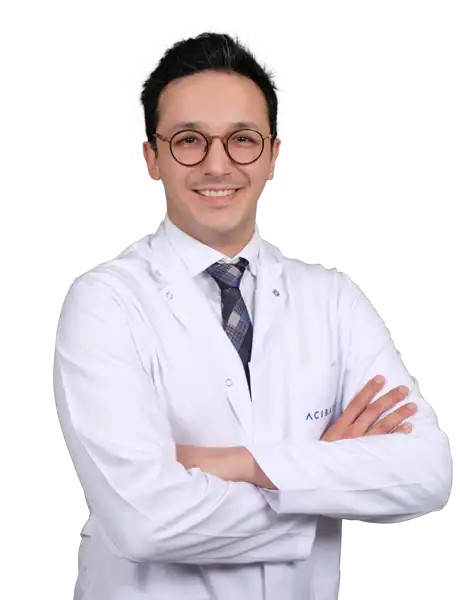
Prof. Mehmet Veli Karaaltın, MD

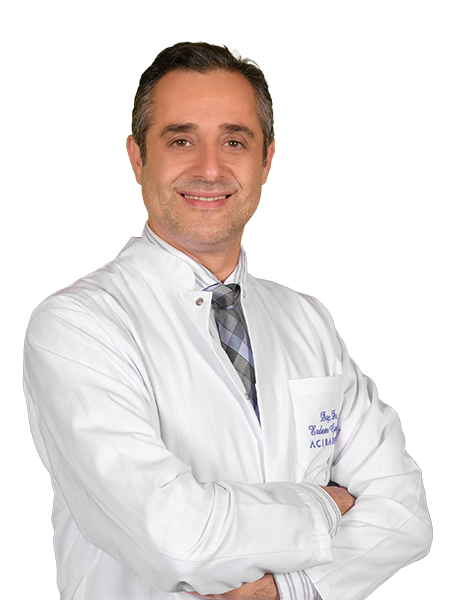
Aesthetic Plastic & Reconstructive Surgery
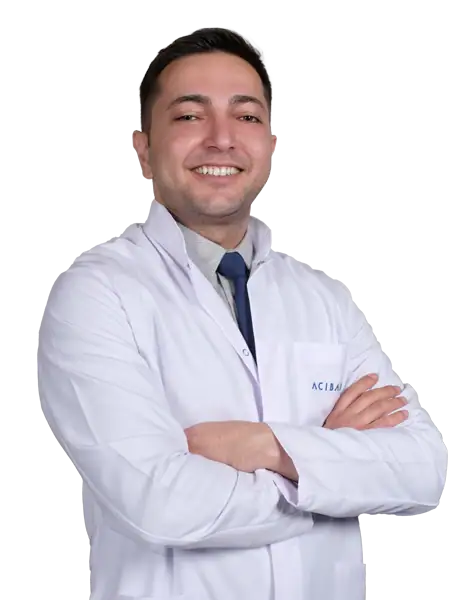
Assoc. Prof. Erdem Güven, MD

Aesthetic Plastic & Reconstructive Surgery
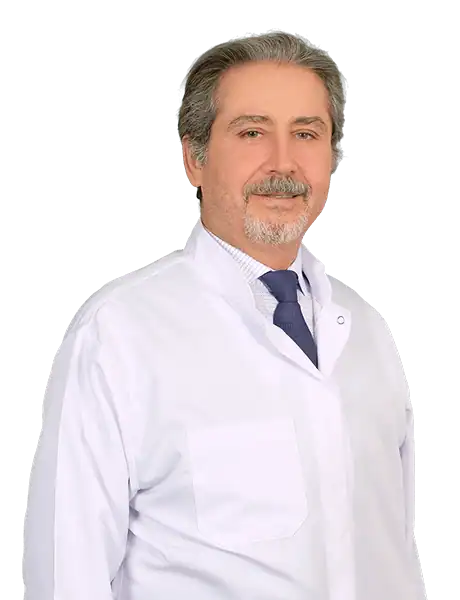
Assoc. Prof. Ahmet Küçükçelebi, MD
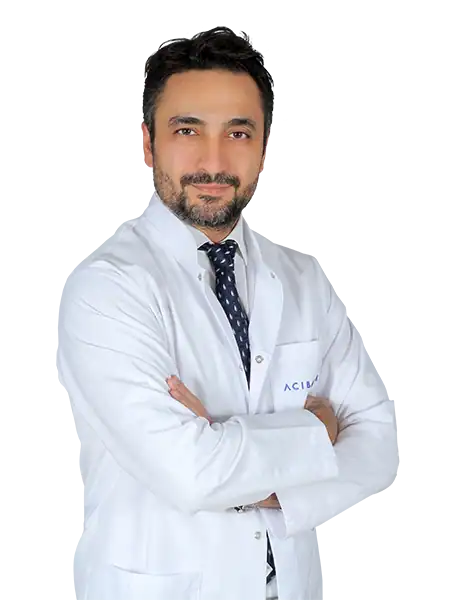
Aesthetic Plastic & Reconstructive Surgery
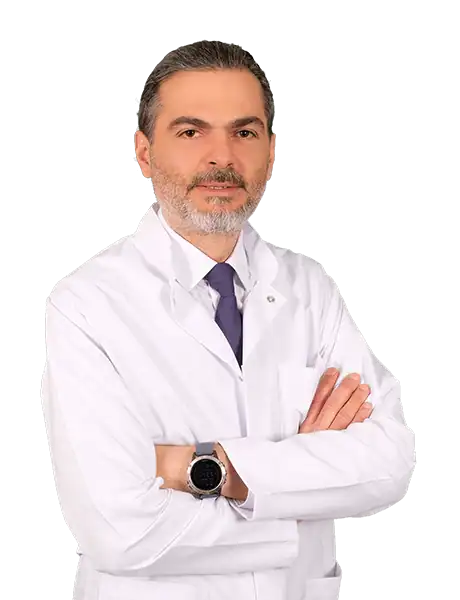
Assoc. Prof. Mehmet Altıparmak, MD

Aesthetic Plastic & Reconstructive Surgery