Whooping Cough Treatment
Whooping cough, or pertussis, is a contagious respiratory infection causing severe coughing spells. Treatment focuses on early diagnosis, antibiotics, symptom control, and protecting infants and vulnerable contacts.

Quick answer
Whooping cough, or pertussis, is a contagious bacterial respiratory infection treated with early diagnosis, antibiotics, and supportive care to ease severe coughing and reduce spread. At Acibadem in Turkey, evaluation and treatment focus on confirming the infection promptly, managing symptoms, and protecting infants and other close contacts through timely medical guidance.
What Is Whooping Cough?
Whooping cough is a highly contagious bacterial infection of the airways that causes prolonged, violent bouts of coughing. Its medical name is pertussis. The infection can affect anyone from newborn babies to older adults, but it behaves differently at different ages: adolescents and adults typically face weeks of an exhausting cough, while young infants can become seriously unwell with little warning. Treatment combines antibiotics, which shorten the contagious period and can soften the illness when started early, with supportive care while the irritated airways settle.
For families, whooping cough raises two concerns at once. The first is how to care for the person who is ill: a child who coughs until they vomit, an adult who cannot sleep for coughing, or an infant who struggles to feed. The second is how to protect the people around them, because pertussis spreads most efficiently in its earliest days, when it looks like nothing more than a common cold. By the time the characteristic coughing attacks appear, the infection has often already moved through a household, classroom, workplace or travel group. This page explains what whooping cough is, how doctors recognise it, how it is treated at each age, and what recovery genuinely looks like.
What causes the disease whooping cough?
The disease whooping cough is caused by the bacterium Bordetella pertussis. The bacteria attach to the fine, hair-like structures that line the upper airways and release toxins that damage this lining and trigger intense inflammation. This mechanism is the key to understanding the whole illness: the toxins leave the airway lining irritated and hypersensitive, so severe coughing can continue for weeks after the bacteria themselves have gone. It also explains an important limitation of treatment, antibiotics given late in the illness clear the bacteria and reduce contagiousness, but they cannot switch off a cough that is by then being driven by inflammation rather than active infection.
Are there other pertussis diseases?
Pertussis diseases form a small family of related infections caused by Bordetella species. Classic whooping cough comes from B. pertussis, while a similar and usually milder illness is caused by B. parapertussis. In practice, the two are evaluated and managed along very similar lines, and laboratory testing can distinguish between them when the result would change the plan of care.
Is whooping cough contagious?
Yes, whooping cough is among the most contagious respiratory infections known. It spreads through droplets released when an infected person coughs, sneezes or speaks at close range, and it circulates with particular ease inside households, nurseries and schools. A person is most infectious during the early, cold-like stage and the first weeks of coughing fits. Without antibiotic treatment, contagiousness can persist for several weeks after the paroxysms begin; with appropriate antibiotics, the infectious window shortens considerably. This is one of the main reasons doctors treat pertussis even when medication can no longer change the course of the cough itself: treatment protects the people around the patient. This applies to adults just as much as to children: an untreated adult with unrecognised pertussis can remain infectious to their household for weeks.
Can adults get whooping cough?
Adults can and regularly do get whooping cough. The protection gained from childhood vaccination or a previous infection fades over the years, leaving adolescents and adults susceptible again. Adult pertussis frequently goes unrecognised because it may present as nothing more than a stubborn dry cough lasting weeks, without the classic whooping sound and often without fever. Undiagnosed adults are a common source of infection for newborns, which is why a prolonged, unexplained cough in someone who lives with or cares for a young baby deserves careful medical attention rather than a wait-and-see approach.
Whooping Cough Symptoms
Whooping cough symptoms change character as the illness progresses, which is a large part of why early recognition is difficult. The first days rarely look alarming; the distinctive features arrive later, once the infection has already had time to spread. Understanding the typical sequence helps make sense of both the diagnosis and the treatment decisions doctors make.
What are the 3 stages of whooping cough?
Pertussis classically moves through three stages, each with a different clinical picture:
- The catarrhal stage lasts roughly one to two weeks and mimics an ordinary cold: runny nose, sneezing, watery eyes, a mild occasional cough, sometimes a low-grade fever and general tiredness. Nothing about it announces pertussis, yet this is when the patient is most contagious, and when antibiotics have the greatest chance of altering the course of the illness.
- The paroxysmal stage is when the disease shows its true face. Coughing occurs in fits, or paroxysms: a rapid series of coughs forced out on a single breath, often ending in a gasping inhalation, vomiting or sheer exhaustion. Fits are typically worse at night and can be triggered by feeding, crying, laughing or cold air. This stage commonly lasts several weeks.
- The convalescent stage is a slow recovery. The fits become less frequent and less intense, sleep and appetite return, but the airways remain sensitive. A new cold or an irritant such as smoke can temporarily bring the coughing back, which does not mean the infection has returned.
Not every patient follows this textbook sequence. Vaccinated people may experience a shortened or milder version, and very young infants may skip the recognisable stages altogether.
What does whooping cough sound like?
The cough whooping cough is named for comes in violent, rapid-fire bursts, five, ten or more coughs on a single breath, leaving no room to inhale between them. When the fit finally ends, the desperate rush of air back in through a narrowed airway can produce a high-pitched crowing sound: the whoop. The face may redden or darken during a fit, the eyes water, and the episode often ends with gagging or vomiting. Between fits, many patients look and sound surprisingly well, which can be misleading for families and clinicians alike. Importantly, the whoop is not universal. Infants may lack the strength to produce it and instead go quiet or briefly stop breathing, while adults often have prolonged hacking fits without any whoop at all. Its absence never rules the diagnosis out.
What are 5 symptoms of whooping cough?
Five symptoms that most strongly suggest pertussis are:
- Coughing in fits or bursts, rather than a steady all-day cough
- A whooping or gasping sound when breathing in after a fit
- Vomiting immediately after coughing episodes
- Coughing fits that are clearly worse at night
- A cough that persists or worsens beyond two to three weeks, especially after a mild cold-like start
In infants the picture is different: pauses in breathing, colour changes around the lips, feeding difficulty and unusual exhaustion may dominate, with relatively little coughing.
What are the symptoms of whooping cough in adults?
In adults, whooping cough most often presents as a prolonged dry cough that simply refuses to resolve, frequently without fever and usually without the whoop. Fits at night are common and disturb sleep for weeks. Repeated forceful coughing can cause gagging or vomiting, rib pain, headaches, hoarseness, urinary leakage and, occasionally, fainting during a severe fit. Because these features overlap with many other causes of chronic cough, adult pertussis is regularly mislabelled as bronchitis, allergy or a lingering viral infection, one reason the illness continues to circulate quietly in adult populations and reach vulnerable infants.
How whooping cough appears in infants
Infants, particularly those too young to have completed their first vaccine doses, are the group in whom pertussis is most dangerous, and the group in whom it looks least like the textbook. A baby may cough very little. Instead, parents may notice pauses in breathing (apnoea), a bluish tinge around the lips, difficulty feeding, limpness, irritability or unusual sleepiness. Fits, when they occur, can exhaust an infant rapidly. Clinicians treat suspected pertussis in a young baby as an urgent matter precisely because deterioration can be quick and the early signs subtle, and many infants with confirmed pertussis are observed or admitted to hospital rather than managed at home.
How Whooping Cough Is Diagnosed
Diagnosis starts with the story, not the swab. The physician asks when symptoms began, whether the cough comes in fits, whether vomiting follows coughing, whether anyone nearby has had a prolonged cough, what the patient’s vaccination history is, whether there has been recent travel, and whether infants or pregnant women share the household. A physical examination assesses breathing effort, oxygen levels, hydration and lung findings, which are often unremarkable between fits in pertussis, a pattern that is itself a diagnostic clue.
When testing is indicated, a nasopharyngeal specimen is usually collected: a thin, flexible swab is passed through the nose to the back of the nasal passage. The sample can be analysed with molecular (PCR) methods, which detect the genetic material of Bordetella pertussis, and in selected cases with bacterial culture, which is slower but can confirm the organism for public health purposes. Blood tests may be added in infants or more severe cases to evaluate white blood cell patterns, hydration and signs of complications. Pulse oximetry measures oxygen levels, and chest imaging is reserved for situations where pneumonia, significant respiratory distress or an alternative diagnosis is suspected.
When is testing most useful?
Timing matters more in pertussis testing than in most infections. Molecular tests perform best in the first weeks of illness, while bacterial material is still present in the upper airway. Once the cough has been established for a longer period, the bacteria may already have cleared even though the coughing continues, and a negative test no longer excludes the diagnosis. At that point clinical judgement, the symptom pattern, the exposure history, the timeline, carries the greater weight, and doctors may reasonably begin treatment for a suspected case while results are pending, especially when a vulnerable person shares the household.
Part of the diagnostic work is ruling other conditions in or out. A prolonged cough can also come from viral infections, influenza, COVID-19, pneumonia, asthma, bronchitis, reflux or postnasal drip. Several of these can coexist with pertussis or follow it, which is why the evaluation weighs the whole timeline rather than a single finding. The work-up is tailored to the individual patient rather than running the same panel of tests on everyone who presents with a cough.
Who Needs Evaluation and Treatment
Whooping cough treatment addresses three overlapping groups: people who are ill with confirmed pertussis, people who are ill with suspected pertussis, and people who have been closely exposed to it. Because the illness spreads before it is obvious, doctors do not always wait for laboratory confirmation before acting.
The clearest indication is a symptomatic patient, child, adolescent or adult, with paroxysmal coughing, vomiting after cough, a prolonged cough illness or known contact with a case. Early treatment matters most for people who spend time around infants, pregnant women or immunocompromised individuals, because they are the likeliest bridge to a serious infection in someone else.
Infants form a category of their own. A baby with suspected pertussis may need urgent evaluation even when the symptoms seem mild, because small airways, immature breathing control and limited energy reserves leave a narrow margin for deterioration. Depending on age, symptoms and risk level, care may involve antibiotics, close monitoring or supportive hospital admission.
Close contacts may need attention even without symptoms. Preventive antibiotics, post-exposure prophylaxis, may be recommended for household members and other high-risk contacts, particularly when the exposed person is an infant, in the later stages of pregnancy, elderly, immunocompromised or living with chronic lung disease. People who work in healthcare, childcare or neonatal settings may also need specific guidance, because a single missed case in those environments can seed many more.
Finally, doctors evaluate patients whose cough persists after treated pertussis. A lingering cough usually reflects ongoing airway irritation rather than treatment failure, and the aim at this stage is to avoid unnecessary repeat antibiotics while still catching genuine complications such as pneumonia, an asthma flare or a new respiratory infection.
Whooping Cough Treatment: What It Involves
Whooping cough treatment has two goals that run in parallel: managing the infection in the patient, and interrupting its spread to others. What that looks like in practice depends heavily on the patient’s age, the timing of diagnosis and the level of risk.
Antibiotic treatment
The cornerstone of medical treatment is a course of antibiotics, most commonly from the macrolide class when clinically appropriate, with alternatives available for patients who cannot take them. The prescribing physician chooses the drug, dose and duration based on age, pregnancy status, allergy history, other medications and current guidelines, and explains what side effects to watch for.
Antibiotics do their best work early. Given during the catarrhal stage or soon after the coughing fits begin, they may reduce the severity and duration of the illness. Started later, they usually cannot shorten the cough, the airway inflammation has its own momentum by then, but they still clear the bacteria and cut the patient’s infectiousness, which protects the household and the wider community. Patients typically receive clear guidance on staying away from school, work, group travel and vulnerable contacts until they are no longer considered infectious according to medical advice.
Does whooping cough go away on its own?
In otherwise healthy older children and adults, the infection does eventually resolve without treatment, but on its own terms and at a cost. The untreated illness tends to run its complete, exhausting course, the patient remains contagious for weeks, and vulnerable contacts stay at risk throughout. In infants, relying on spontaneous resolution is genuinely dangerous, because complications such as apnoea, pneumonia and exhaustion can develop quickly. Medical evaluation changes the equation on both counts: it limits spread, and it puts monitoring in place for the people most likely to develop complications.
Supportive care at home
Many adolescents and adults can be cared for at home with follow-up. Supportive care concentrates on the practical realities of a fit-based cough: fluids in small, frequent amounts, since coughing can trigger vomiting; smaller meals for the same reason; rest, because fits are more punishing when the patient is overtired; and avoidance of triggers such as smoke, strong odours, cold air and vigorous exertion. A calm, quiet environment helps too, since agitation and exertion tend to provoke fits, and some families find that keeping indoor air free of dust and aerosol sprays makes the nights more bearable. Fever or discomfort may be managed with age-appropriate medicines recommended by the physician.
Two honest limitations are worth stating plainly. First, over-the-counter cough suppressants are not reliably effective against pertussis and may be unsuitable for young children, so they are not a foundation of care. Second, no home measure switches the cough off; the aim is to make the weeks of recovery more manageable, not to eliminate the fits. Patients who are pregnant, elderly, chronically ill or taking other medicines are advised to check with their doctor before adding any remedy, herbal product or combination cold preparation.
Hospital care for infants and higher-risk patients
Hospital care may be recommended for infants, and for patients of any age with breathing pauses, low oxygen levels, dehydration, persistent vomiting, pneumonia, seizures, severe exhaustion or significant underlying disease. Inpatient care can include continuous oxygen monitoring, supplemental oxygen, gentle suctioning of airway secretions, intravenous fluids, feeding support and close observation during coughing fits. In rare, severe cases, almost always in young infants, higher levels of respiratory support are needed.
Infants are watched closely because complications can develop quickly and may not be obvious between fits. Depending on the situation, paediatricians, emergency physicians, pulmonologists, intensive care teams and specialists from the Infectious Diseases Department may all be involved. This team-based approach matters most when pertussis begins to affect breathing, feeding or circulation.
Technology used in diagnosis and monitoring
Modern pertussis care leans on three technical pillars: molecular diagnostic platforms that can identify Bordetella pertussis from nasopharyngeal samples faster than older culture methods; pulse oximetry and cardiorespiratory monitoring that detect oxygen dips and breathing pauses, particularly in babies; and digital imaging for evaluating pneumonia or other complications when the picture suggests more than uncomplicated pertussis. The value of these tools lies in interpretation, not in the machines themselves. A test result only means something alongside the symptom timeline, vaccination history and exposure pattern, which is why clinical experience and structured protocols remain at the centre of care.
Protecting Close Contacts and Preventing Spread
Because pertussis spreads through respiratory droplets, treatment always includes infection control guidance. Patients are usually advised to limit close contact with others for a defined period after starting antibiotics, or for considerably longer if untreated, and to wear a mask in healthcare settings while potentially infectious. Households plan around their most vulnerable member: keeping a coughing adolescent away from a newborn sibling, for example, is a central part of managing a family case, not an afterthought.
Close contacts themselves may need preventive antibiotics even while they feel entirely well. This decision weighs the intensity of the exposure against the vulnerability of the contact: an infant, a woman late in pregnancy, an immunocompromised person or someone with chronic lung disease sits at the top of the list. Contacts who work with newborns, in childcare or in healthcare are also considered carefully.
How does the whooping cough vaccine fit in?
The whooping cough vaccine is the most important tool for preventing pertussis, and the diagnosis of a case always prompts a review of vaccination status across the household. Immunisation is given as a primary series during infancy with boosters later in childhood, and immunity from both vaccination and natural infection wanes over time, which is why adolescents and adults can catch pertussis despite a complete childhood schedule. Many immunisation programmes therefore use booster doses for adolescents, adults and people in close contact with infants: an approach sometimes called cocooning, because it surrounds the baby with protected people. Pregnant women are commonly advised, in line with their own physician’s guidance and local immunisation schedules, to receive a pertussis-containing vaccine during pregnancy so that protective antibodies pass to the baby before birth, covering the vulnerable weeks before the infant’s own vaccinations can begin. Vaccination reduces the risk and severity of disease; it does not make infection impossible, which is why a suggestive cough is investigated even in fully vaccinated people.
Complications Doctors Watch For
Most complications of pertussis come from the sheer mechanical force and duration of the coughing, or from the strain the illness places on small or fragile bodies. In infants, the main concerns are apnoea, pneumonia, seizures, feeding failure with weight loss, dehydration and profound exhaustion; in the most severe infant cases, the illness can affect circulation and require intensive care. In older children and adults, weeks of violent coughing can lead to rib pain or rib fractures, hernias, fainting during fits, urinary leakage, burst small blood vessels in the eyes or skin, severe sleep disruption and secondary infections such as pneumonia or, in children, ear infections. Pertussis can also aggravate existing asthma and other chronic lung conditions. Part of the purpose of medical follow-up is to distinguish the expected, slowly improving cough from the signs of a complication that needs its own treatment.
Why Acting Early Matters
Early action shapes almost every aspect of pertussis care. During the catarrhal stage the symptoms seem trivial, yet the patient is at their most contagious and antibiotics have their best chance of blunting the illness. Once the paroxysmal stage arrives, the window for changing the cough has largely closed; from that point onwards, treatment is mainly about protecting others.
Delay also multiplies exposure. Infants too young to be fully vaccinated face the greatest danger from whooping cough; pregnant women, immunosuppressed people, older adults and those with chronic heart or lung disease are also at elevated risk. In a household, one unrecognised case can quietly expose everyone before the diagnosis is even suspected, and for people who travel, that circle of exposure can span several households and more than one country.
Medical delay allows complications to progress as well. Weeks of coughing can bring dehydration, weight loss, sleep deprivation, rib pain, fainting, urinary leakage in adults, and worsening of asthma and other lung conditions. Infants can develop apnoea, pneumonia, seizures or profound exhaustion. Most patients do well with appropriate care, but the possibility of serious illness is exactly why a persistent cough after a known exposure deserves proper evaluation rather than patience alone.
Finally, prompt diagnosis drives the public health response. Isolation guidance, preventive antibiotics for contacts and a vaccination review can each interrupt the chain of transmission in families, schools, clinics and travel groups.
Benefits of Whooping Cough Treatment
The benefits of treatment include direct medical care for the patient and practical steps to protect the people around them.
| Benefit | What It Means for You |
|---|---|
| Reduced contagiousness | Appropriate antibiotics lower the risk of spreading pertussis to family members, infants, pregnant women and other close contacts. |
| Earlier symptom control when treated promptly | When started early, treatment may lessen the course of illness and help prevent progression to more severe coughing episodes. |
| Protection of vulnerable contacts | Post-exposure guidance and preventive antibiotics can be considered for people at higher risk, even before symptoms develop. |
| Monitoring for complications | Medical evaluation helps identify dehydration, pneumonia, breathing pauses, low oxygen levels or other problems that may need additional care. |
| Clear recovery and isolation guidance | Patients receive practical instructions about school, work, travel, household precautions and when it is safer to resume normal activities. |
| Personalised care for age and risk | Treatment is adjusted for infants, pregnant patients, adults, medication allergies, chronic disease and immune status. |
Recovery Timeline After Whooping Cough
Recovery varies with age, the timing of treatment and the severity of the illness, but many patients follow a gradual pattern of improvement over several weeks.
| Time Period | What Patients Can Expect |
|---|---|
| Day 1 | Medical assessment, testing when appropriate, the start of antibiotics if pertussis is suspected or confirmed, and instructions on isolation and protecting close contacts. |
| First week | Contagiousness decreases after appropriate treatment, but coughing fits may continue. Hydration, rest and monitoring matter most, especially for infants. |
| First month | Coughing episodes usually become less frequent, although night cough, vomiting after cough or fatigue may persist. Follow-up may be needed if symptoms worsen. |
| Longer term | Airway sensitivity can last for weeks. Most patients gradually return to normal activity, but new fever, breathing difficulty or recurrent severe cough is evaluated afresh. |
Why is it called the hundred-day cough?
Pertussis has been called the hundred-day cough for centuries, and the name is broadly earned. Even after appropriate antibiotics, the airway lining needs time to heal and lose its hypersensitivity, so the convalescent cough can persist for weeks and occasionally longer. A cough that continues after the antibiotic course has finished does not by itself mean the treatment failed, and it does not usually mean the patient is still infectious. What matters during this period is the direction of travel: fits should gradually become rarer and gentler, sleep should improve, and appetite and energy should return. Temporary flare-ups triggered by a new cold, exercise or cold air are common and expected. A cough that worsens rather than settles, or is joined by new fever or breathing difficulty, is treated as a new clinical question rather than simple convalescence.
Factors That Influence Recovery
Several factors shape how a patient comes through whooping cough. The timing of treatment is central: antibiotics given during the early phase are more likely to influence the illness itself, while later treatment mainly reduces transmission. This is why a persistent cough with known exposure should never be dismissed as a routine cold.
Age is the next major factor. Infants, particularly young babies, are the most vulnerable, with smaller airways, less respiratory reserve and incomplete vaccine protection, and they may need close observation even when symptoms appear subtle. Older children and adults usually recover without hospitalisation, but their cough can be prolonged and genuinely disruptive to work, school and sleep.
Vaccination history matters too. Vaccinated individuals can still develop pertussis as immunity wanes, but prior immunisation may influence how severe the illness becomes. Reviewing booster status is worthwhile for adolescents, adults, healthcare workers, caregivers and anyone who shares a home with an infant.
Underlying health conditions add complexity. Asthma, chronic obstructive pulmonary disease, immune suppression, prematurity and frailty can all make pertussis harder to weather. Infants born with congenital heart diseases may tolerate the strain of repeated fits poorly; patients with neuromuscular diseases may cough less effectively and clear secretions with more difficulty; and frail older adults, including those living with neurodegenerative diseases, may need closer monitoring for complications. In these patients, physicians often coordinate care with the relevant specialists from the outset.
Adherence to the plan influences the outcome as well. Finishing the prescribed antibiotic course, respecting the isolation period and informing close contacts all reduce spread, and families are told in advance that a continuing cough after antibiotics is usually the expected convalescence, not a sign the medication failed. Worsening breathing, persistent high fever, dehydration, chest pain, confusion, seizures or a bluish colour are the findings clinicians treat as urgent.
Finally, a good result depends on accurate diagnosis and the avoidance of assumptions. Not every prolonged cough is pertussis, and not every pertussis case has the classic whoop. Evidence-based evaluation determines whether testing, antibiotics, imaging, hospital observation or contact prophylaxis is actually needed.
Pertussis Care at Acibadem
At Acibadem, pertussis is approached as both an individual treatment need and a shared household concern. Physicians evaluate the patient’s symptoms, the timing of exposure, vaccination history, age and medical risks, while also considering the close contacts who may need preventive treatment or vaccination guidance. Because whooping cough is contagious, triage and respiratory precautions are organised to protect other patients, particularly newborns and immunocompromised individuals, from the moment a suspected case arrives.
Depending on the patient, care may involve paediatricians, internal medicine physicians, infectious diseases specialists, pulmonologists, emergency physicians, obstetric teams or intensive care, with multidisciplinary discussion whenever the patient is an infant, pregnant, immunocompromised or developing respiratory complications. Molecular testing, respiratory monitoring, laboratory assessment and imaging are available and used proportionately; the emphasis is on appropriate testing, not exhaustive testing.
Treatment plans are personalised to the actual situation. A healthy adult with mild illness may need testing, antibiotics, home care instructions and contact guidance. A young infant may need hospital monitoring. A pregnant patient may need coordination between infectious diseases and obstetric care, and a family with several exposed members may need a broader prevention plan. Before discharge, patients are typically advised on medication use, warning signs, isolation timing, follow-up and travel considerations, and medical reports are prepared to support continuity of care with the patient’s own physician.
Living With the Cough While It Settles
Whooping cough is treatable, but it asks for patience as much as medicine. The antibiotics do their work in days; the airways take weeks to forgive the toxins. During that time, the pattern to expect is slow, uneven improvement, quieter nights arriving gradually, fits triggered occasionally by a cold snap or a new sniffle, energy returning before the cough fully departs. Understanding this rhythm in advance spares families a great deal of worry, because it separates the expected from the exceptional. What deserves ongoing attention is the small list of things that fall outside that rhythm: an infant who feeds poorly or pauses in breathing, a fever that arrives late, a cough that turns worse instead of better. Everything else is convalescence: the long tail of an illness that medicine can shorten at the start, contain in the middle and, above all, stop from reaching the people most at risk from it.
Preparation
- Before evaluation, note when symptoms began, cough pattern, fever, vaccination status, and any contact with infants or pregnant people. Bring medication lists and prior test results if available. Wear a mask and avoid close contact because whooping cough is highly contagious.
Aftercare
- Complete antibiotics exactly as prescribed and follow isolation guidance to reduce transmission. Rest, drink fluids, and avoid cough triggers such as smoke. Seek urgent care if breathing difficulty, blue lips, dehydration, seizures, or severe symptoms in an infant occur.
Frequently Asked Questions
What affects the cost of whooping cough treatment?
The main factors are consultation type, diagnostic testing, prescribed antibiotics, symptom control needs, age and risk profile, and whether hospital monitoring is required. Costs can also change if close contacts need assessment or preventive treatment.
How can I get a personalised quote from Acibadem?
You can request a free consultation and share the patient’s age, symptoms, medical history, vaccination status, previous test results, and current medications. The team can then advise which services may be needed and prepare a personalised estimate.
Is whooping cough usually treated as an outpatient condition?
Many patients can be managed as outpatients, but infants and people with breathing problems, dehydration, or other risk factors may need urgent assessment or hospital care. A specialist decides the safest care setting.
Does a treatment package include testing and medicines?
Package contents vary by clinical need and hospital policy. A package may include consultation, selected tests, a treatment plan, follow-up coordination, and language support, while medicines or additional investigations may be listed separately.
Should an international patient travel with suspected whooping cough?
Because whooping cough is contagious, travel should be discussed with a clinician before making arrangements. Remote triage may be appropriate first, and travel may need to wait until the patient is medically cleared and no longer poses a transmission risk.
Medically reviewed by the Acıbadem International Medical Board August 31, 2026
See our medical review board →
Update history
- PublishedJune 8, 2026
- Medical review approvedAugust 31, 2026
- Last content updateSeptember 8, 2026
References3
- Whooping Cough (Pertussis) cdc.gov
- Whooping cough nhs.uk
- Whooping Cough medlineplus.gov
Trusted care for international patients
From the Acibadem Blog
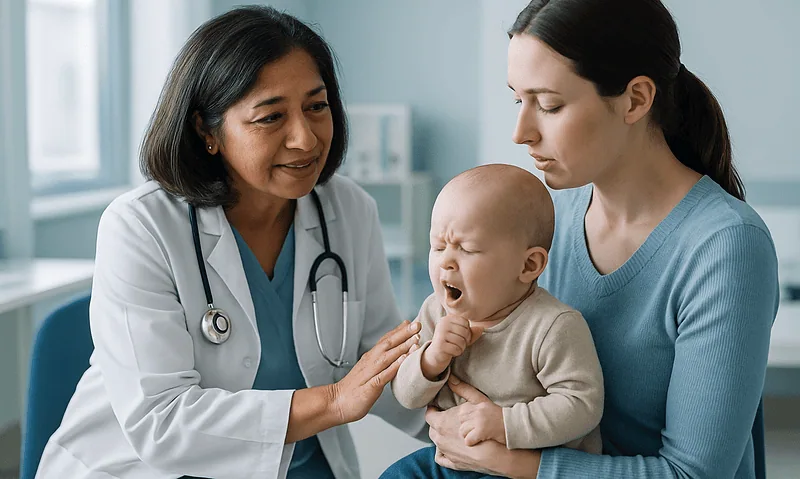
Whooping Cough in Babies: Breathing Pauses, Color Changes and Other Reasons for Urgent Care
Whooping cough infant warning signs that need urgent care include any pause in breathing, lips or face turning blue, gray or dusky, coughing fits…

Before a Whooping Cough Appointment: Masks, Cough Pattern Notes and Vaccination Records
For a whooping cough doctor visit, bring vaccination records for the patient and household, a written note of when the cough began and how…

How Does Whooping Cough Progress Through Its Three Stages and Why Does Timing Matter?
Whooping cough moves through three stages: a catarrhal stage of cold-like symptoms lasting about one to two weeks, a paroxysmal stage of violent coughing…

Traveling With Whooping Cough: Why Flying Waits Until Treatment and Isolation Are Complete
Flying with whooping cough is generally discouraged for as long as a person is contagious. Public health guidance treats someone as infectious from the…

How Whooping Cough Is Diagnosed: Nasal Swab, Blood Tests and Why Early Sampling Matters
Whooping cough is usually diagnosed with a swab taken from the back of the nose, tested by PCR or culture for the bacterium Bordetella…
Doctors Performing This Treatment






Infectious Diseases & Clinical Microbiology
Prof. Cihadiye Elif Öztürk, MD


Infectious Diseases & Clinical Microbiology
Assoc. Prof. Aslıhan Demirel, MD

Infectious Diseases & Clinical Microbiology