Acute Coronary Syndrome: Early Signs, Risk Factors, and How It Is Treated

Acute coronary syndrome is sudden reduced blood flow to the heart, most often from a blood clot in a coronary artery. It includes unstable angina and heart attack. Chest pressure, pain spreading to the arm or jaw, breathlessness, or sweating needs emergency care immediately, even if symptoms ease, because heart muscle can still be at risk.
Key Takeaways
- Acute coronary syndrome includes unstable angina and heart attacks caused by reduced blood flow to heart muscle.
- Common warning signs include chest pressure, shortness of breath, sweating, nausea, or pain spreading to the arm, jaw, back, or shoulder.
- Immediate medical evaluation is important because symptoms can be subtle, especially in women, older adults, and people with diabetes.
- Diagnosis usually combines symptoms, an electrocardiogram, blood tests, and sometimes urgent imaging or coronary angiography.
- Treatment may include medications, catheter-based procedures, or surgery depending on the cause and severity.
- Controlling blood pressure, cholesterol, diabetes, smoking, and lifestyle habits helps lower future risk.
Chest pressure that comes out of nowhere. Sudden shortness of breath, cold sweat, a feeling that something is very wrong. When blood flow to your heart drops suddenly, doctors call it acute coronary syndrome — an emergency term that covers unstable angina and heart attack.
Here’s what matters most: acting fast. Recognizing the signs early and getting treated quickly can limit damage to your heart, ease your symptoms, and give you a better recovery.
Overview: what acute coronary syndrome means
Acute coronary syndrome is a medical term for a sudden drop in blood flow to the heart muscle. It usually happens when a fatty plaque inside a coronary artery ruptures and a blood clot forms, partly or completely blocking the artery. This group of conditions includes unstable angina and heart attacks, also called myocardial infarction.
Why does the phrase matter? Urgency. You might feel severe chest pressure — or something milder and less typical, like unusual shortness of breath, sweating, nausea, or pain in the jaw or back. Even if the symptoms ease off, the reduced blood supply can still threaten your heart tissue. It needs to be checked promptly.
Doctors use the term acute coronary syndrome, or ACS, before the exact type is fully confirmed. Early testing helps identify whether there is ongoing heart muscle injury and how quickly blood flow needs to be restored. Fast treatment can reduce complications, preserve heart function, and support a safer recovery.
Early signs and symptoms to watch for
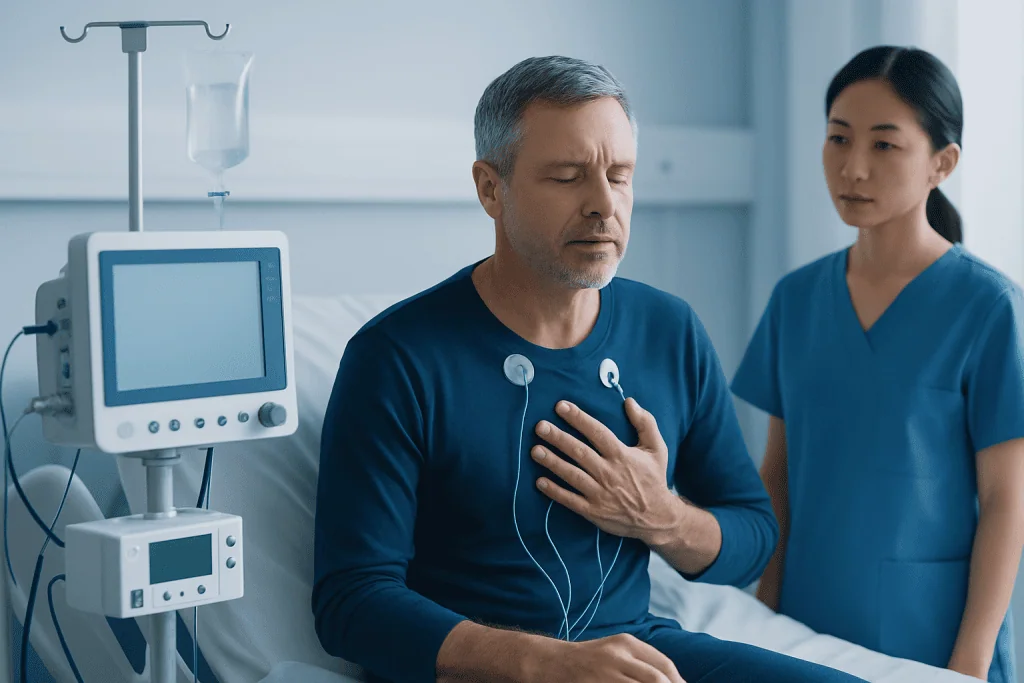
The most common symptom of acute coronary syndrome is chest discomfort. People often describe it as pressure, squeezing, fullness, heaviness, or pain in the center or left side of the chest. It may last several minutes, come and go, or happen at rest. Some episodes start during physical activity or emotional stress, while others begin suddenly without a clear trigger.
Symptoms do not always stay in the chest. Discomfort may spread to the arm, shoulder, neck, jaw, upper back, or upper abdomen. Shortness of breath, cold sweating, nausea, vomiting, dizziness, unusual fatigue, or a sense of impending illness can also occur. In some people, especially women, older adults, and people with diabetes, these less typical symptoms may be more noticeable than chest pain.
Unstable angina can cause symptoms similar to a heart attack, but heart muscle damage may not yet be detectable on blood tests. A heart attack usually means there is enough blockage to injure heart tissue. You cannot safely tell the two apart at home — the symptoms overlap too much. So treat any suspected ACS as an emergency.
- Chest pressure, tightness, or pain
- Pain spreading to the arm, jaw, neck, shoulder, or back
- Shortness of breath
- Sweating, nausea, or lightheadedness
- Sudden unexplained fatigue or weakness
Why it happens: causes and risk factors
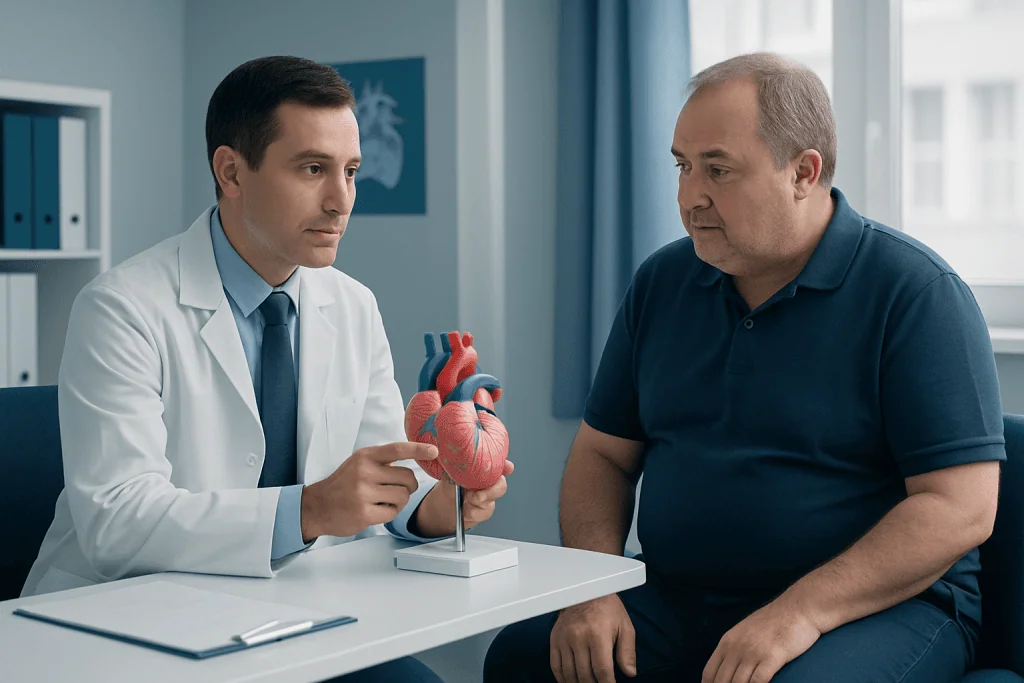
The usual cause of acute coronary syndrome is coronary artery disease. Over time, cholesterol-rich plaques can build up inside the arteries that supply the heart. If one plaque becomes inflamed or ruptures, the body forms a clot at that site. The clot can narrow the artery sharply or block it completely, cutting off oxygen to part of the heart muscle.
Certain conditions and habits make this more likely. The big ones: smoking, high blood pressure, high LDL cholesterol, diabetes, obesity, physical inactivity, chronic stress, and a family history of early heart disease. Age matters too — risk generally rises over time. And if you have more than one risk factor, your overall risk can climb significantly.
Less common causes are also possible, such as coronary artery spasm, spontaneous coronary artery dissection, severe anemia, or a mismatch between the heart’s oxygen demand and supply during serious illness. A clinician may evaluate these possibilities based on symptoms, test results, and the person’s medical background. People already living with coronary artery disease are at particular risk of ACS and need close follow-up.
How doctors diagnose acute coronary syndrome
Diagnosis begins with the symptoms, a physical examination, and how quickly they started. In emergency care, clinicians usually perform an electrocardiogram, or ECG, within minutes. This test records the heart’s electrical activity and can show patterns that suggest reduced blood flow or an ongoing heart attack. However, a normal or unclear ECG does not fully rule out ACS, so doctors also use other tests.
Blood tests are used to measure cardiac troponin, a protein released when heart muscle is injured. Troponin levels may rise over several hours, so repeat testing is common. Doctors also monitor blood pressure, oxygen levels, heart rhythm, and symptoms while assessing for other possible causes of chest pain, such as lung problems, digestive disorders, or aortic disease.
Further evaluation may include echocardiography to look at heart function and movement, stress testing in selected stable patients, or coronary angiography to directly visualize narrowed or blocked arteries. Coronary angiography is especially important when there are signs of ongoing ischemia, elevated troponin, ECG changes, or a higher risk of complications. In some cases, urgent coronary angiography helps both diagnose the blockage and guide immediate treatment.
Treatment options and what happens in hospital
Treatment for acute coronary syndrome aims to restore blood flow, relieve symptoms, and prevent more clotting. Immediate care often includes medications such as antiplatelet drugs, anticoagulants, nitrates, pain-relieving support, and medicines that reduce the heart’s workload. The exact combination depends on the type of ACS, the person’s vital signs, test results, and any other medical conditions or bleeding risks.
Some patients need an urgent procedure to open the blocked artery. The most common approach is a catheter-based treatment in which a specialist reaches the coronary artery through a blood vessel and may use a balloon and stent to improve blood flow. This is commonly called coronary angioplasty. If several arteries are severely narrowed, or if the anatomy is not suitable for stenting, coronary artery bypass surgery may be recommended.
Hospital care also includes continuous monitoring for rhythm problems, heart failure, recurrent chest pain, and other complications. Before discharge, the care team usually reviews long-term medications, risk-factor control, cardiac rehabilitation, and follow-up plans. In selected patients, doctors may also assess for related conditions such as heart attack consequences or ongoing ischemia that need additional treatment planning.
Recovery, prevention, and self-care after an event
Feeling better does not mean recovery is over. The long-term goal is to protect your heart and lower the chance of another event. That usually means taking your prescribed medications consistently, keeping follow-up appointments, and telling your doctor promptly about any new symptoms. Stopping medicines on your own can increase your risk.
Your daily habits matter. If you smoke, quitting is one of the most effective things you can do. Beyond that: eat a heart-healthy diet, stay active within your doctor’s guidance, keep a healthy weight, get enough sleep, and manage stress. Keep a close eye on high blood pressure, diabetes, and high cholesterol, and treat them as recommended.
Cardiac rehabilitation can be especially helpful after ACS. These supervised programs combine exercise, education, and counseling to support recovery and confidence. They help many people return to activity safely while learning how to recognize warning signs, control risk factors, and build long-term heart-protective habits.
When to seek medical care
Emergency help is needed right away if a person has chest pressure, tightness, or pain that lasts more than a few minutes, returns repeatedly, or happens with shortness of breath, sweating, faintness, nausea, or pain spreading to the arm, jaw, neck, or back. Don’t ignore these symptoms, even if they seem mild or fade away. It’s always safer to get checked urgently than to wait and see.
People should also contact a doctor promptly for new exertional chest discomfort, worsening episodes of known angina, or unusual fatigue and breathlessness that are not explained. Symptoms can be less typical in women, older adults, and people with diabetes, so changes in usual stamina or comfort deserve attention. If someone becomes unresponsive or is not breathing normally, emergency services should be called immediately.
Near the end of treatment planning and recovery, coordinated specialist follow-up is often important. Acibadem International’s multidisciplinary heart specialists in JCI-accredited hospitals diagnose and treat acute coronary syndrome for international patients, including advanced imaging, interventional care, and surgical management when needed.
Frequently asked questions
Is acute coronary syndrome the same as a heart attack?
Not exactly. Acute coronary syndrome is a broader emergency term that includes unstable angina and heart attacks. A heart attack usually means heart muscle damage has occurred, while unstable angina causes reduced blood flow without clear evidence of permanent injury on blood tests.
Can acute coronary syndrome happen without severe chest pain?
Yes. Some people have shortness of breath, nausea, sweating, unusual fatigue, dizziness, or pain in the jaw, back, or arm without strong chest pain. These symptoms are especially important to recognize in women, older adults, and people with diabetes.
What is the difference between unstable angina and a heart attack?
Both are forms of acute coronary syndrome and can cause similar symptoms. In unstable angina, blood flow to the heart is reduced but blood tests do not show clear heart muscle injury. In a heart attack, the blockage is severe or long enough to damage heart tissue.
How quickly should someone get help for suspected acute coronary syndrome?
Immediately. Acute coronary syndrome is a medical emergency because heart muscle can be injured within a short time. Quick evaluation improves the chance of restoring blood flow early and reducing complications.
What tests are usually done in the emergency department?
Doctors commonly use an ECG, blood tests for cardiac troponin, physical examination, and continuous monitoring. Depending on the findings, additional tests may include echocardiography, chest imaging, or coronary angiography. These tests help confirm the diagnosis and guide treatment.
Can acute coronary syndrome be prevented?
Risk cannot always be eliminated, but it can often be lowered. Not smoking, controlling blood pressure and cholesterol, managing diabetes, staying active, eating a heart-healthy diet, and taking prescribed medicines as directed all help reduce future risk.
This article is for general information only and is not a substitute for professional medical advice. Please consult a qualified doctor about your individual situation.
Persistent digestive symptoms? Get evaluated in Turkey
7 JCI-accredited hospitals · board-certified surgeons · reply within 24h
Add us as a Preferred Source to see more of our trusted health content across Google Search, AI Overviews and Discover.
Check your numbers in seconds
BMI, calories, due date, blood pressure and 30+ more clinical calculators — free, instant, doctor-reviewed ranges.

Medically reviewed by the Acıbadem International Medical Board — August 24, 2026
See our medical review board →
References (1)
- Heart Attack - MedlinePlus — medlineplus.gov
Cardiology Department
Diagnosis and treatment of heart and vascular conditions, from prevention to advanced interventional procedures.
93 specialists in this unitCardiovascular Surgery Specialists at Acibadem

Assoc. Prof. Dr. Bahar Temur
Cardiovascular Surgery
Dr. Bakytbek Kazybaev
Cardiovascular Surgery
Prof. Dr. Barış Kılıçaslan
Cardiology
Prof. Dr. Bekir Sıtkı Cebeci
Cardiology
Dr. Bülent Bolat
Cardiovascular SurgeryRelated Treatments
Related Conditions
More from the Health Library

Cholesterol Screening: Who Needs It and How the Test Works

Anticoagulants Prevent Clots but Raise Bleeding Risk

An Enlarged Heart Is a Sign, Not a Diagnosis in Itself

Where the Heart Really Sits in the Chest

How PCI Opens Blocked Coronary Arteries With a Stent