Progressive Lenses: An Evidence-Based Guide for Patients

Progressive lenses provide seamless vision correction for far, intermediate, and near distances in one pair of glasses. They are commonly prescribed for presbyopia and may also correct nearsightedness, farsightedness, and astigmatism.
Key Takeaways
- Progressive lenses provide seamless vision correction for far, intermediate, and near distances in one pair of glasses.
- They are commonly prescribed for presbyopia and may also correct nearsightedness, farsightedness, and astigmatism.
- Most people adapt within days to weeks, though early blur at the lens edges and posture changes are common.
- Proper measurement and frame fit are important for comfort, reading performance, and safe walking or driving.
- New headaches, sudden vision changes, eye pain, or persistent poor vision should be assessed by an eye care professional.
Progressive lenses are eyeglass lenses that combine distance, intermediate, and near vision correction without visible lines. They can be a practical option for people with presbyopia, but comfort depends on accurate prescription, careful fitting, and a brief adaptation period.
Overview: what progressive lenses are and who they help
Progressive lenses are multifocal eyeglass lenses designed to correct vision at more than one distance in a single lens. Unlike bifocals or trifocals, they do not have visible dividing lines. Instead, the prescription changes gradually from the top of the lens to the bottom, allowing the wearer to look through different zones for distance, computer work, and reading.
They are most often used for presbyopia, an age-related change in the eye that makes close-up focusing harder over time. Many people first notice presbyopia in their 40s when reading small print becomes more difficult or they begin holding phones and books farther away. Progressive lenses can also include correction for myopia, hyperopia, or astigmatism, so one pair of glasses may serve several daily tasks.
For many patients, the main advantage is convenience. There is no need to switch between reading glasses and distance glasses, and the lens appearance is similar to standard single-vision glasses. That said, progressive lenses are not simply a cosmetic upgrade. They work best when the prescription is current, the lens design matches the wearer’s needs, and the frames are measured and fitted carefully.
How progressive lenses work in everyday vision
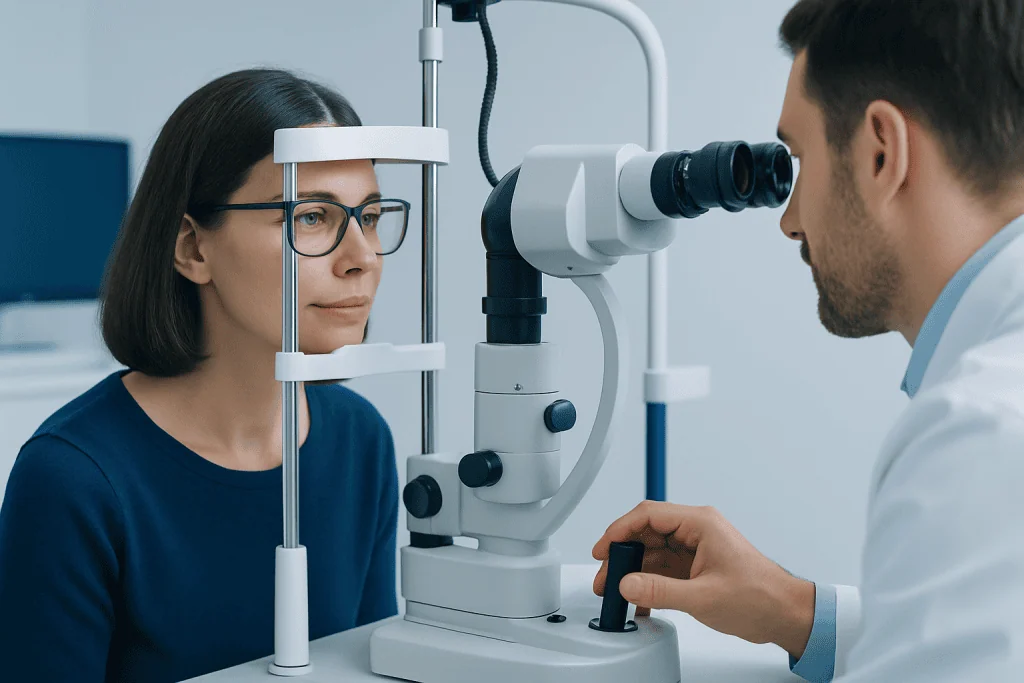
A progressive lens contains several functional viewing areas. The upper part is generally used for distance vision, such as walking outdoors, watching television, or driving. The middle corridor supports intermediate vision, which is often used for computer screens, dashboards, and face-to-face conversation. The lower part provides near vision for reading, sewing, or using a smartphone.
Because these zones blend into each other, eye movement matters. Rather than only moving the eyes side to side, wearers usually need to point the nose toward what they want to see and look through the most appropriate part of the lens. This is especially noticeable during the first days of use. The edges of the lens may also feel less clear because some peripheral distortion is a known tradeoff of progressive design.
Lens technology varies. Some progressive lenses are optimized for general daily use, while others are designed more specifically for office work or wider near vision. A person who spends many hours at a desktop computer may have different visual priorities from someone who drives frequently or reads for long periods. An eye care professional can help match the lens design to those needs.
Who may benefit most and when they may be less suitable

Progressive lenses are often a good option for adults with presbyopia who want one pair of glasses for multiple distances. They may be especially helpful for people who move often between far and near tasks during the day, such as driving, shopping, reading labels, checking a phone, and using a computer. They can also be useful for those who prefer a lens without the visible lines found in bifocals or trifocals.
However, they are not ideal for everyone. Some people prefer single-vision reading glasses for long periods of close work because the near zone in progressive lenses can feel narrower than expected. Others, especially those with balance concerns, vestibular symptoms, or strong sensitivity to visual distortion, may need extra caution while adapting. Patients with certain eye conditions may also find that progressive lenses do not fully address their visual needs.
Underlying problems such as cataracts, dry eye, or retinal disease can reduce the quality of vision no matter how advanced the lens design is. In those situations, the first step is to identify and manage the eye condition itself. Patients already being evaluated for cataracts or other causes of blurred vision should mention any problems with new glasses, because the issue may not be the lens alone.
Common symptoms during adjustment and how long adaptation takes
Most people need a short period to adapt to progressive lenses. During this time, common experiences include mild blur in side vision, a sensation that floors or stairs look slightly unusual, or the need to tilt the head differently for reading. Some wearers also notice temporary eye strain or a mild headache, especially if they switch back and forth between old glasses and new ones.
Adaptation commonly takes a few days to two weeks, though some people need longer. Wearing the glasses consistently often helps the brain learn the new visual pattern more quickly. It is also helpful to use the correct area of the lens for each task: look straight ahead for distance, lower the eyes for near work, and turn the head rather than relying only on sideward eye movements.
If symptoms remain strong after a reasonable adjustment period, the cause may be a fitting issue, an incorrect prescription, or an unsuitable lens design for the person’s lifestyle. This is not unusual and does not necessarily mean progressive lenses are impossible to use. A recheck can often identify whether the lens height, frame position, or prescription needs refinement.
Prescription, fitting, and eye examination: why details matter
Successful use of progressive lenses depends on more than the written prescription. Accurate measurements of pupillary distance, fitting height, frame shape, and how the glasses sit on the face are all important. Even a small mismatch can make reading awkward or create the feeling that the clearest area of the lens is in the wrong place.
An eye examination is also important because changes in vision are not always due to normal aging alone. Refractive errors may shift over time, and some symptoms that seem like a glasses problem can be caused by eye disease. Dry eye, early lens clouding, glaucoma-related changes, or retinal disorders can reduce visual clarity. People with complex symptoms may benefit from a detailed ophthalmology assessment, and some may need further evaluation in ophthalmology care.
When progressive lenses are being considered for the first time, patients can help the fitting process by describing how they use their vision each day. Time spent driving, computer work, reading, hobbies, and even body posture can influence the best lens choice. This more individualized approach often improves comfort and satisfaction.
Alternatives and treatment options if progressives are not the best fit
Progressive lenses are only one way to manage presbyopia and mixed focusing needs. Alternatives include single-vision glasses for separate tasks, bifocals, trifocals, occupational or office lenses, and contact lens strategies such as monovision or multifocal contacts. Each option has advantages and limitations, and the best choice depends on visual goals, work habits, and tolerance for adaptation.
Some patients are interested in surgical approaches when glasses become inconvenient. Depending on the underlying eye condition, options may include lens-based procedures or surgery for visually significant cataracts. These decisions require a full medical eye evaluation and discussion of benefits, limitations, and risks. If cataracts are reducing sight, cataract surgery may improve visual quality, though it does not automatically remove the need for glasses in every case.
For people with coexisting disorders such as marked dry eye or corneal irregularity, the priority may be treatment of the eye surface before changing lenses again. In selected situations, broader assessment in eye surgery services may help clarify whether a medical or procedural option is more appropriate than repeated changes in spectacles.
Self-care tips for easier use and better comfort
Several practical habits can make progressive lenses easier to use. Consistent wear is often better than alternating with older glasses, especially in the early adjustment period. The glasses should sit properly on the bridge of the nose and not slide downward, because a lower position can shift the viewing zones and make near tasks less comfortable.
Lighting also matters. Reading in dim light can make any lens seem less effective, so brighter, even lighting is often helpful for near work. Computer users may benefit from adjusting screen height and viewing distance rather than leaning the head backward or forward to find the clearest part of the lens. Keeping lenses clean can also improve contrast and reduce glare.
- Turn the head toward objects instead of looking far to the side through the lens edges.
- Use handrails and move carefully on stairs during the first days of adaptation.
- Return for a fitting check if reading feels too low, too narrow, or consistently unclear.
- Schedule regular eye exams, especially if vision needs are changing or symptoms persist.
Near the end of the care pathway, patients who need multidisciplinary evaluation can be assessed by Acibadem International, where JCI-accredited hospitals and eye specialists diagnose and treat vision problems for international patients.
When to seek medical care
Difficulty adjusting to progressive lenses is often a fitting or prescription issue, but some symptoms need medical attention rather than simple lens changes. A person should arrange an eye examination if vision remains blurry after an adjustment period, one eye sees much worse than the other, or headaches are frequent and persistent with the new glasses.
Urgent medical assessment is important for sudden vision loss, flashing lights, a shower of new floaters, eye pain, marked redness, double vision, or a curtain-like shadow in the visual field. These symptoms can indicate a condition that should not be attributed to normal aging or to new glasses alone. Patients with diabetes, prior eye surgery, or existing eye disease should be especially careful about new visual changes.
If blurred vision seems to be caused by more than presbyopia, doctors may investigate common conditions such as glaucoma or retinal disease alongside refractive error. Timely evaluation helps ensure that the right problem is being treated.
Frequently asked questions
What are progressive lenses used for?
Progressive lenses are used to correct vision at multiple distances in one lens. They are commonly prescribed for presbyopia and may also include correction for nearsightedness, farsightedness, or astigmatism.
Are progressive lenses the same as bifocals?
No. Bifocals have distinct sections with a visible line, while progressive lenses change power gradually without a line. This creates a more seamless transition between distance, intermediate, and near vision.
How long does it take to get used to progressive lenses?
Many people adapt within a few days to two weeks, but some need longer. Consistent wear, proper frame fit, and using the correct viewing zone for each task can make adjustment easier.
Why do progressive lenses sometimes feel blurry on the sides?
Mild peripheral blur is a known feature of progressive lens design because the lens combines different powers in one surface. This does not usually affect central vision, but it can feel unusual until the wearer adapts.
Can progressive lenses be used for computer work?
Yes, many people use them for computer work because they include an intermediate zone. However, people who spend long hours at a screen may sometimes do better with occupational or office-specific lenses that provide a wider intermediate and near area.
When should someone see an eye doctor instead of just changing glasses?
A person should see an eye doctor if vision stays poor despite new glasses, if one eye is noticeably worse, or if headaches and strain continue. Sudden vision loss, flashes, new floaters, double vision, or eye pain need prompt medical assessment.
This article is for general information only and is not a substitute for professional medical advice. Please consult a qualified doctor about your individual situation.
Explore treatments in Turkey — costs, top hospitals & a free quote
JCI-accredited · board-certified surgeons · reply within 24h
Add us as a Preferred Source to see more of our trusted health content across Google Search, AI Overviews and Discover.

More from the Health Library

Massage or Aromatherapy — Explained by Medical Evidence, Not Myths
Proper Tongue Posture — Explained by Medical Evidence, Not Myths

Immunocompromised: An Evidence-Based Guide for Patients
Oatmeal Bath — Explained by Medical Evidence, Not Myths

Sclerotherapy — Explained by Medical Evidence, Not Myths