Trigeminal Neuralgia: Severe Facial Pain Explained

Trigeminal neuralgia usually causes brief attacks of severe, shock-like pain in areas supplied by the trigeminal nerve. Everyday actions such as chewing, talking, brushing teeth, shaving, or a light touch to the face may trigger pain episodes.
Key Takeaways
- Trigeminal neuralgia usually causes brief attacks of severe, shock-like pain in areas supplied by the trigeminal nerve.
- Everyday actions such as chewing, talking, brushing teeth, shaving, or a light touch to the face may trigger pain episodes.
- Diagnosis is based on a careful symptom history, neurological examination, and often MRI to look for nerve compression or other causes.
- Medicines are often the first treatment, while procedures or surgery may be considered if medication is ineffective or not tolerated.
- New or unexplained facial pain should be assessed by a qualified doctor, especially if it is severe, recurrent, or associated with neurological symptoms.
Trigeminal neuralgia is a nerve pain condition that causes sudden, intense, electric shock-like pain on one side of the face. Although the pain can be distressing, careful diagnosis and modern treatment options can help many people achieve meaningful relief.
Overview
Trigeminal neuralgia is a chronic pain condition involving the trigeminal nerve, the main nerve that carries sensation from the face to the brain. The condition is best known for sudden, severe, electric shock-like pain that usually affects one side of the face. Attacks may last only seconds to a couple of minutes, but they can occur repeatedly and may interfere with eating, speaking, oral care, and daily comfort.
The trigeminal nerve has three main branches. One supplies the forehead and eye area, another supplies the cheek and upper jaw, and the third supplies the lower jaw. Trigeminal neuralgia most often affects the cheek, jaw, teeth, gums, or lips, which is why some people first seek dental care before a neurological cause is considered.
There are different clinical patterns. In classic trigeminal neuralgia, pain attacks are brief and sharp, with pain-free intervals between episodes. Some people also have a more persistent aching, burning, or throbbing background pain. The condition is not life-threatening, but it can significantly affect quality of life, and it deserves careful medical assessment and individualized treatment.
Symptoms
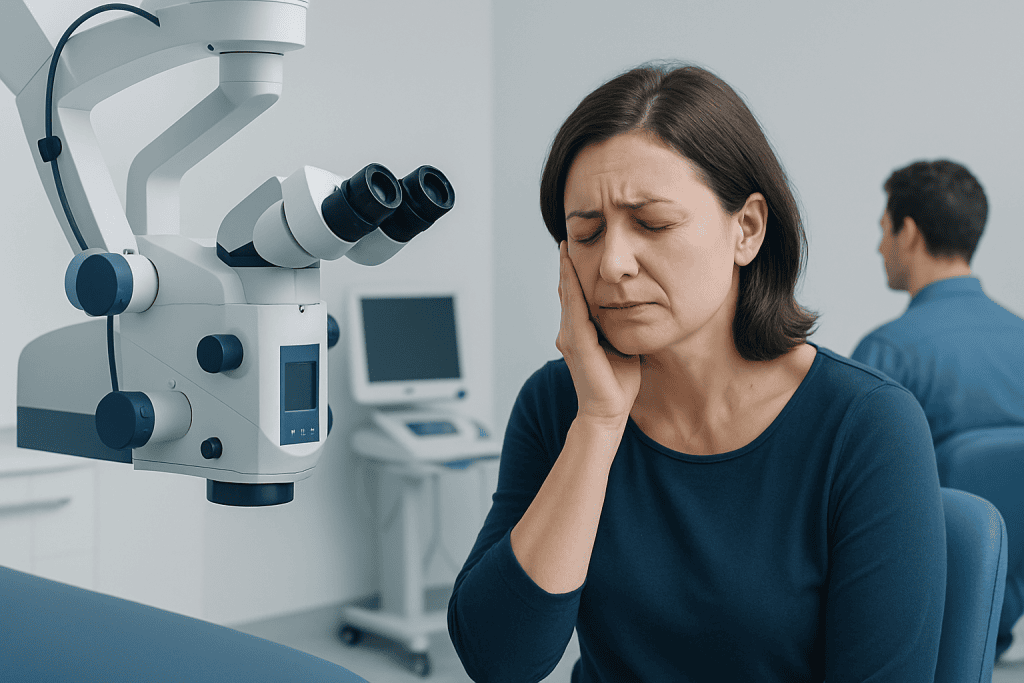
The hallmark symptom is sudden facial pain that feels like an electric shock, stabbing, shooting, or lightning-like jolt. The pain is typically one-sided and follows the distribution of one or more branches of the trigeminal nerve. Episodes may be very brief, yet intense, and they may occur in clusters over minutes, hours, or days.
Many people describe trigger zones on the face or inside the mouth. A light touch, breeze, washing the face, shaving, applying makeup, brushing teeth, chewing, swallowing, smiling, or talking may bring on an attack. Between attacks, some people feel completely normal, while others experience mild sensitivity or a dull ache in the affected area.
Symptoms can vary over time. Some individuals have long pain-free periods followed by flare-ups, while others experience more frequent attacks. Pain is usually not associated with facial weakness, numbness, fever, swelling, or visible skin changes; if these are present, doctors may look for other causes or additional conditions.
- Common pain areas include the cheek, upper jaw, lower jaw, teeth, gums, lips, and around the nose.
- Pain most often affects one side of the face, although bilateral symptoms can occur in some situations.
- Attacks are often triggered by ordinary, non-painful stimulation.
Causes and Risk Factors

Trigeminal neuralgia is often related to irritation or compression of the trigeminal nerve near where it enters the brainstem. In many classic cases, a nearby blood vessel presses against the nerve. Over time, this pressure may affect the protective covering of the nerve, called myelin, making the nerve more likely to send abnormal pain signals.
Not all cases have the same cause. Trigeminal neuralgia may also be associated with conditions that affect myelin, such as multiple sclerosis, or with structural problems such as tumors, vascular malformations, or injury affecting the trigeminal pathway. In some people, no clear cause is found on imaging, but the symptom pattern still supports the diagnosis.
The condition is more common in adults, especially in later adulthood, but it can occur at younger ages. Risk may be higher in people with multiple sclerosis or other neurological conditions involving the trigeminal nerve. A family history is not required, although rare familial patterns have been described.
Facial pain can have many causes, including dental disease, sinus problems, temporomandibular joint disorders, migraine-related pain, post-herpetic neuralgia, and other nerve pain syndromes. This is why a structured evaluation is important before deciding on treatment.
Diagnosis
Diagnosis begins with a detailed medical history. The doctor will ask where the pain occurs, how it feels, how long attacks last, what triggers them, and whether there are pain-free intervals. The pattern of brief, shock-like, triggered pain in the trigeminal nerve distribution is a key clue.
A neurological examination is used to assess facial sensation, reflexes, jaw movement, muscle strength, coordination, and other nerve functions. In typical trigeminal neuralgia, the examination may be normal. If there is numbness, weakness, hearing changes, balance problems, or other neurological findings, further evaluation becomes especially important.
Magnetic resonance imaging, often called MRI, is commonly recommended to look for causes such as nerve compression, multiple sclerosis plaques, tumors, or other structural conditions. In some centers, specialized MRI techniques may help visualize the relationship between the trigeminal nerve and nearby blood vessels. Imaging results are interpreted together with symptoms, because a blood vessel near the nerve does not always mean it is the cause of pain.
Dental and ear, nose, and throat evaluation may be needed when symptoms overlap with tooth, jaw, sinus, or ear problems. A correct diagnosis helps avoid unnecessary dental procedures and allows treatment to focus on the nerve pain mechanism.
Treatment Options
Treatment is individualized and usually begins with medication. Certain anti-seizure medicines are commonly used because they can calm overactive nerve signaling. Other nerve pain medicines may be considered depending on symptoms, other medical conditions, and side effects. These medicines require medical supervision, as they may interact with other drugs and may need monitoring.
If medicines provide good relief and are well tolerated, they may be continued with regular follow-up. The goal is to reduce attack frequency and severity while using the safest effective plan. Patients should not stop or change prescribed medicines suddenly without speaking to their doctor, because doing so may worsen symptoms or cause side effects.
When medication does not work well enough, causes troublesome side effects, or becomes less effective over time, procedural options may be discussed. Microvascular decompression is a surgical procedure that aims to relieve pressure from a blood vessel on the trigeminal nerve when compression is suspected. Other options may include radiofrequency rhizotomy, balloon compression, glycerol injection, or stereotactic radiosurgery, which target the nerve to reduce pain signals.
Each procedure has potential benefits and risks, including pain recurrence, facial numbness, or other complications. The best option depends on age, general health, imaging findings, pain pattern, previous treatments, and personal preferences. A neurologist and neurosurgeon can help explain realistic expectations and choose an approach that fits the individual patient.
Prevention and Self-care
There is no guaranteed way to prevent trigeminal neuralgia, especially when it is related to nerve compression or another neurological condition. However, people can often reduce avoidable triggers and support overall well-being during treatment. Keeping a symptom diary may help identify patterns, such as specific foods, temperature changes, touch points, or activities that provoke attacks.
Self-care should be gentle and practical. Some people find it helpful to use lukewarm water for face washing, choose softer foods during flare-ups, avoid very hot or cold drinks if they trigger pain, and use a soft toothbrush. Protecting the face from cold wind with a scarf may reduce attacks for some individuals.
Stress does not directly cause trigeminal neuralgia, but pain can increase tension, poor sleep, and anxiety, which may make coping harder. Relaxation strategies, sleep routines, supportive counseling, and careful pacing of activities can be useful parts of a broader care plan. These measures do not replace medical treatment, but they can make day-to-day management easier.
- Track triggers, attack frequency, and medication effects.
- Maintain regular follow-up to adjust treatment safely.
- Avoid unnecessary manipulation of painful facial areas during flare-ups.
- Seek dental care when tooth symptoms are present, but mention the possibility of nerve pain.
When to See a Doctor
A person should seek medical evaluation for new, severe, recurrent, or unexplained facial pain, especially if it feels like electric shocks or is triggered by light touch. Early assessment can help distinguish trigeminal neuralgia from dental, sinus, jaw, migraine, and other neurological conditions. Prompt diagnosis also allows treatment to begin before pain significantly disrupts eating, speaking, sleep, or daily activities.
Urgent medical attention is needed if facial pain is accompanied by weakness, facial drooping, speech difficulty, confusion, severe headache, vision loss, fever, rash near the eye, new numbness, or loss of balance. These symptoms may suggest conditions other than typical trigeminal neuralgia and should be assessed without delay.
People already diagnosed with trigeminal neuralgia should contact their doctor if pain changes pattern, becomes more frequent, occurs on both sides, or no longer responds to prescribed medicine. Side effects such as excessive drowsiness, rash, dizziness, coordination problems, or mood changes should also be discussed with a healthcare professional.
For international patients seeking evaluation, Acibadem International offers access to multidisciplinary specialists and JCI-accredited hospitals where neurological assessment, imaging, and treatment planning for trigeminal neuralgia can be coordinated. As with any medical decision, patients should discuss options, benefits, and risks with qualified clinicians.
Frequently asked questions
Is trigeminal neuralgia the same as ordinary facial pain?
No. Trigeminal neuralgia has a characteristic pattern of sudden, severe, shock-like pain in areas supplied by the trigeminal nerve. Ordinary facial pain may come from dental disease, sinus inflammation, jaw problems, migraine, or other causes, so medical evaluation is important.
Can trigeminal neuralgia feel like a toothache?
Yes. Pain can occur in the upper or lower jaw, gums, or teeth, and some people first think they have a dental problem. A dental check may be needed, but repeated dental procedures should be avoided unless a clear dental cause is found.
Does trigeminal neuralgia go away on its own?
Some people have periods when symptoms improve or disappear for a time, but attacks may return. Because the pain can become recurrent and disruptive, a doctor should assess the condition and discuss treatment options.
What is the first treatment for trigeminal neuralgia?
Medication is usually the first treatment, especially medicines that reduce abnormal nerve signaling. The exact choice depends on the person’s health, other medicines, side effect risk, and the doctor’s assessment.
When is surgery considered?
Surgery or other procedures may be considered when medicines do not provide enough relief, cause unacceptable side effects, or stop working well. The choice of procedure depends on imaging findings, overall health, age, pain pattern, and patient preferences.
Is trigeminal neuralgia dangerous?
Typical trigeminal neuralgia is not life-threatening, but the pain can be very intense and can affect nutrition, sleep, mood, and daily life. New or changing facial pain should be assessed to confirm the diagnosis and rule out other medical causes.
References
- National Institute of Neurological Disorders and Stroke
- International Headache Society
- American Association of Neurological Surgeons
- Mayo Clinic
- NHS
This article is for general information only and is not a substitute for professional medical advice. Please consult a qualified doctor about your individual situation.
Explore treatments in Turkey — costs, top hospitals & a free quote
JCI-accredited · board-certified surgeons · reply within 24h
Add us as a Preferred Source to see more of our trusted health content across Google Search, AI Overviews and Discover.

Neurology
Diagnosis and treatment of disorders of the brain, spinal cord, nerves and muscles.
51 specialists in this unit