Retinoblastoma
Retinoblastoma is a rare eye cancer in children. Learn symptoms, causes, diagnosis, treatment options and when to seek medical care.
Quick answer
Retinoblastoma is a rare eye cancer that begins in the retina, usually in early childhood, and is treated according to the tumor’s size, location, and whether one or both eyes are affected. At Acibadem in Turkey, evaluation may include detailed eye examination and imaging, with treatment options such as chemotherapy, laser-based therapies, cryotherapy, radiotherapy, or surgery aimed at controlling the…
Retinoblastoma is a rare cancer of the retina, the light-sensitive tissue at the back of the eye, and it mainly affects babies and young children. With early diagnosis and specialist treatment, many children can be treated successfully while doctors also work to protect vision whenever possible.
Overview
Retinoblastoma is a malignant tumor that starts in the retina, the thin layer of nerve tissue at the back of the eye that detects light and sends visual signals to the brain. It occurs when retinal cells develop abnormal genetic changes and begin to grow in an uncontrolled way. Retinoblastoma usually develops in infants and young children, and it may be found in one eye or in both eyes.
Although any diagnosis of childhood cancer is emotionally difficult for a family, retinoblastoma is a condition with well-established diagnostic and treatment pathways. The main goals of care are to save the child’s life, treat the tumor, preserve the eye when safely possible, and protect as much vision as possible. Decisions depend on the size and location of the tumor, whether one or both eyes are involved, whether the cancer has spread, and the child’s overall health.
Retinoblastoma can be hereditary or non-hereditary. Hereditary retinoblastoma is related to a change in the RB1 gene and may affect both eyes or develop as multiple tumors. Non-hereditary retinoblastoma more often affects one eye. Genetic counseling is important because it helps families understand the risk for siblings, future children, and long-term monitoring needs.
Symptoms
The most recognized sign of retinoblastoma is leukocoria, which means a white, pale, or yellow-white reflection in the pupil. Parents may notice it in photographs taken with a flash, where one pupil looks white instead of red, or they may see it in certain lighting. A white pupil does not always mean cancer, but it should always be checked promptly by an eye doctor.
Another common sign is strabismus, often described as a crossed eye or an eye that turns inward or outward. This may happen because the tumor affects central vision or eye alignment. Some children may also show reduced vision, bump into objects, fail to follow moving objects, or appear to prefer one eye, although very young children may not be able to describe vision changes.
Other possible symptoms include eye redness, eye swelling, a change in pupil size, eye pain, sensitivity to light, or a change in the color of the iris. These symptoms can also occur with infections, cataracts, inflammatory eye conditions, or other childhood eye disorders. Because early assessment is important, any persistent abnormal eye appearance or vision concern in a child should be evaluated by a qualified specialist.
Causes & Risk Factors
Retinoblastoma is caused by changes in both copies of the RB1 gene in a developing retinal cell. The RB1 gene normally helps regulate cell growth. When it does not work properly, retinal cells may keep dividing and form a tumor. In many children, these genetic changes occur by chance in the retinal cells and are not inherited from a parent.
In hereditary retinoblastoma, a child is born with an RB1 gene change in all cells of the body. This increases the chance of tumors developing in one or both eyes and may be associated with an increased risk of other cancers later in life. A child may inherit the gene change from a parent, or it may occur for the first time very early in development.
Important risk factors and related considerations include:
- A family history of retinoblastoma or a known RB1 gene change.
- Retinoblastoma in both eyes, which is more likely to be hereditary.
- Multiple tumors within one eye, which may suggest a genetic form.
- Diagnosis at a very young age, especially in infancy.
Most children with retinoblastoma do not have lifestyle-related risk factors. Parents should know that retinoblastoma is not caused by anything they did or did not do during pregnancy or early childhood. When hereditary disease is possible, genetic counseling and testing can guide screening for the child and family members.
Diagnosis
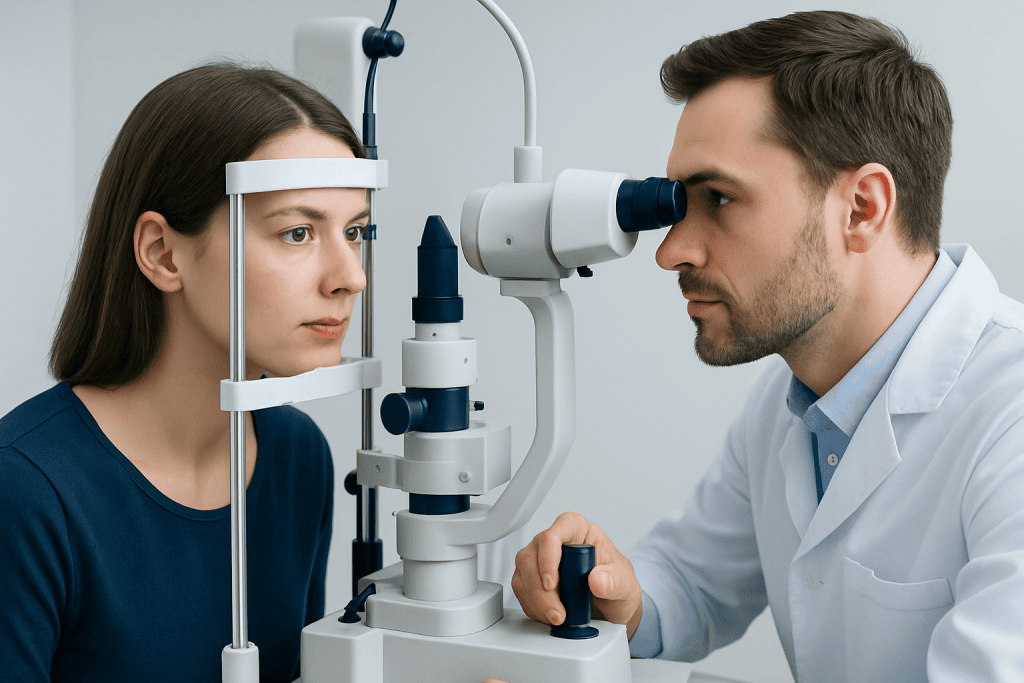
Retinoblastoma is diagnosed through a detailed eye examination by an ophthalmologist, often a pediatric ophthalmologist or ocular oncologist. The doctor examines the retina after dilating the pupils and may use specialized instruments to see the tumor and assess its size, number, and location. In young children, a complete examination may require anesthesia so the doctor can safely and carefully inspect both eyes.
Imaging tests are often used to support diagnosis and treatment planning. Ultrasound of the eye can help identify features typical of retinoblastoma, including calcification within the tumor. Magnetic resonance imaging may be recommended to evaluate the eye, optic nerve, brain, and surrounding structures, especially when there is concern about spread outside the eye or a hereditary form associated with tumors in the pineal region.
A biopsy is usually avoided in suspected retinoblastoma because entering the eye can carry a risk of spreading tumor cells. Instead, diagnosis is usually made from the clinical eye examination and imaging findings. Blood tests, cerebrospinal fluid testing, bone marrow evaluation, or body imaging may be considered only in selected cases when doctors suspect disease outside the eye.
Genetic testing for RB1 changes is an important part of care for many children. It helps determine whether the condition may be hereditary, whether siblings need screening, and how future pregnancies may be counseled. Diagnosis and staging are best managed by a multidisciplinary team that includes eye cancer specialists, pediatric oncologists, radiologists, genetic counselors, and supportive care professionals.
Treatment Options
Retinoblastoma treatment is individualized after specialist assessment. The safest approach depends on whether the disease affects one or both eyes, how advanced the tumor is within the eye, whether there is seeding inside the eye, the expected visual potential, and whether there is any spread outside the eye. The first priority is always the child’s overall safety, followed by preserving the eye and vision when medically appropriate.
Focal treatments are used for some smaller tumors or as part of combined therapy. These may include laser-based treatment, freezing treatment, or heat-based treatment directed at the tumor. These approaches aim to destroy tumor tissue while limiting harm to surrounding healthy structures. They are commonly used when tumors are small or after chemotherapy has reduced tumor size.
Chemotherapy may be used in different ways depending on the case. It may be given through the bloodstream to shrink tumors, delivered through an artery that supplies the eye, or injected into the eye in carefully selected situations to treat tumor cells floating within the eye. These techniques require highly experienced teams because the child’s age, tumor pattern, and eye anatomy all influence the safest method.
Radiotherapy is used less often than in the past but may still be considered in selected situations. Modern techniques aim to focus radiation more precisely and reduce exposure to healthy tissues. Surgery to remove the eye, called enucleation, may be recommended when the tumor is large, vision cannot be saved, or keeping the eye would pose an unsafe risk. After surgery, children can be fitted with a custom artificial eye for appearance, and families receive support for recovery and adaptation.
Living With / Prognosis
Many children with retinoblastoma do well when the disease is diagnosed and treated early by experienced specialists. Prognosis depends on several factors, including whether the tumor is limited to the eye, whether one or both eyes are affected, the size and location of tumors, and the response to treatment. Families should discuss the child’s individual outlook with the treating team, as each case is different.
After treatment, children need regular follow-up examinations. These visits help doctors check for tumor control, detect any new tumors in children at risk, monitor vision, and manage treatment effects. Follow-up may be frequent in early childhood and then continue at longer intervals. Children with hereditary retinoblastoma often need long-term monitoring because of genetic considerations and the possibility of other tumors later in life.
Vision support can be an important part of care. Some children retain useful vision in one or both eyes, while others may need glasses, low-vision services, eye alignment treatment, or educational support. If an eye is removed, children usually adapt well with guidance, protection of the remaining eye, and routine ophthalmic care. Families may also benefit from psychological support, play therapy, and practical help with school or daily activities.
Acibadem International provides diagnosis and treatment for retinoblastoma through multidisciplinary specialists in JCI-accredited hospitals for international patients. Care planning may involve pediatric oncology, ophthalmology, radiology, genetics, anesthesia, rehabilitation, and psychosocial support, with recommendations tailored to the child’s medical needs.
When to See a Doctor
Parents and caregivers should seek an eye examination promptly if a child’s pupil looks white, especially in photographs or under certain lighting. A white pupil can have several causes, but it is never a sign to ignore. Early evaluation helps identify retinoblastoma or other treatable eye conditions before vision or health is affected further.
Medical attention is also recommended if a child has a persistent crossed eye, unexplained poor vision, unusual eye redness or swelling, a change in the size or shape of the pupil, eye pain, or an eye that appears enlarged. Babies and toddlers cannot always communicate vision problems, so changes in behavior, eye tracking, or movement around objects may be important clues.
Families with a history of retinoblastoma should discuss screening with a pediatric ophthalmologist and genetic counselor as early as possible, ideally before or soon after birth of a child at risk. Urgent evaluation is especially important for infants with a known RB1 gene change or a parent who had hereditary retinoblastoma. A qualified doctor can advise the correct screening schedule and next steps.
Frequently asked questions
What is retinoblastoma?
Retinoblastoma is a cancer that begins in the retina, the light-sensitive tissue at the back of the eye. It mainly affects babies and young children. It can occur in one eye or both eyes and requires evaluation by eye cancer and pediatric oncology specialists.
What is the first sign of retinoblastoma?
The most common early sign is a white or pale reflection in the pupil, known as leukocoria. It may be noticed in flash photographs or in dim light. A crossed eye, poor vision, or persistent eye redness can also be warning signs.
Is retinoblastoma inherited?
Some cases are inherited or related to a gene change present in all cells of the body, while others happen by chance in retinal cells. Hereditary retinoblastoma is more likely when both eyes are affected, multiple tumors are present, or there is a family history. Genetic counseling can help families understand risks and screening needs.
How is retinoblastoma diagnosed?
Diagnosis is usually made with a detailed dilated eye examination by a specialist, often under anesthesia in young children. Eye ultrasound and magnetic resonance imaging may be used to assess the tumor and surrounding structures. Biopsy is usually avoided because it can increase the risk of spreading tumor cells.
Can retinoblastoma be treated without removing the eye?
In many cases, doctors may use eye-preserving treatments such as focal therapy, chemotherapy-based approaches, or carefully selected radiotherapy. However, if the tumor is advanced or the eye cannot be safely preserved, removal of the eye may be the safest option. The decision is made by specialists after a full assessment.
Will a child with retinoblastoma lose vision?
Vision outcomes vary depending on the size, location, and extent of the tumor and the treatments needed. Some children keep useful vision, while others may have reduced vision or may lose vision in the affected eye. Follow-up care, low-vision support, and protection of the healthy eye are important parts of long-term management.
When should a child be checked for retinoblastoma?
A child should be examined promptly if there is a white pupil, crossed eye, unexplained vision concern, or persistent abnormal eye appearance. Children with a family history of retinoblastoma should be screened according to a specialist's plan from birth or early infancy. Early assessment gives the best chance for timely treatment.
References
- World Health Organization
- American Cancer Society
- National Cancer Institute
- American Academy of Ophthalmology
- International Society of Paediatric Oncology
This article is for general information only and is not a substitute for professional medical advice. Please consult a qualified doctor about your individual situation.
Treatments for This Condition
Doctors Who Treat This Condition
Prof. Dr. Abdullah Büyükçelik
Medical Oncology
Prof. Dr. Ali Arican
Medical Oncology
Prof. Dr. Aziz Yazar
Medical Oncology
Prof. Dr. Başak Oyan Uluç
Medical Oncology
Prof. Dr. Bülent Karabulut
Medical Oncology
Prof. Dr. Ersin Özaslan
Medical Oncology
Prof. Dr. Faysal Dane
Medical Oncology
Prof. Dr. Gökhan Demir
Medical Oncology
Prof. Dr. Gül Başaran
Medical Oncology
Prof. Dr. Handan Onur Topuzlu
Medical Oncology
Prof. Dr. Hüseyin Engin
Medical Oncology