IVF and Thyroid Health: TSH Targets, Antibodies, and Treatment Planning

TSH is usually checked before IVF, often with free T4 and sometimes thyroid antibodies, to identify treatable thyroid imbalance. Many clinicians aim for a TSH below 2.5 mIU/L before conception in patients already treated for hypothyroidism or at higher thyroid risk, but targets should be individualized.
Key Takeaways
- TSH is usually checked before IVF, often with free T4 and sometimes thyroid antibodies, to identify treatable thyroid imbalance.
- Many clinicians aim for a TSH below 2.5 mIU/L before conception in patients already treated for hypothyroidism or at higher thyroid risk, but targets should be individualized.
- Positive thyroid antibodies may signal a higher risk of thyroid dysfunction during IVF or pregnancy, even when TSH is currently normal.
- Overt hypothyroidism or hyperthyroidism should be treated and stabilized before embryo transfer whenever possible.
- Thyroid medication needs can change during ovarian stimulation and early pregnancy, so follow-up testing is important.
Thyroid function can influence ovulation, embryo implantation, miscarriage risk, and early pregnancy development, so it is commonly assessed before and during IVF. Most thyroid findings can be managed with careful testing, individualized TSH targets, and coordinated planning between fertility and endocrine specialists.
Overview
IVF and thyroid health are closely linked because thyroid hormones support normal ovulation, endometrial development, early embryo growth, and the hormonal changes of pregnancy. The thyroid gland produces hormones that help regulate metabolism, but these hormones also interact with reproductive hormones in ways that matter during fertility treatment. For this reason, thyroid screening is a routine part of many pre-IVF assessments.
The main blood test is thyroid-stimulating hormone, or TSH. TSH reflects how strongly the brain is asking the thyroid gland to work. A high TSH often suggests an underactive thyroid, while a very low TSH can suggest an overactive thyroid or excess thyroid hormone replacement. Doctors usually interpret TSH together with free T4, symptoms, medical history, pregnancy plans, and antibody results.
The goal is not simply to reach one number for every patient. Instead, treatment planning aims to correct overt thyroid disease, reduce avoidable risks, and monitor changes during ovarian stimulation and early pregnancy. Patients undergoing IVF treatment may benefit from coordinated care between a reproductive medicine specialist and an endocrinologist, especially if thyroid results are abnormal or antibodies are present.
Why Thyroid Function Matters Before and During IVF
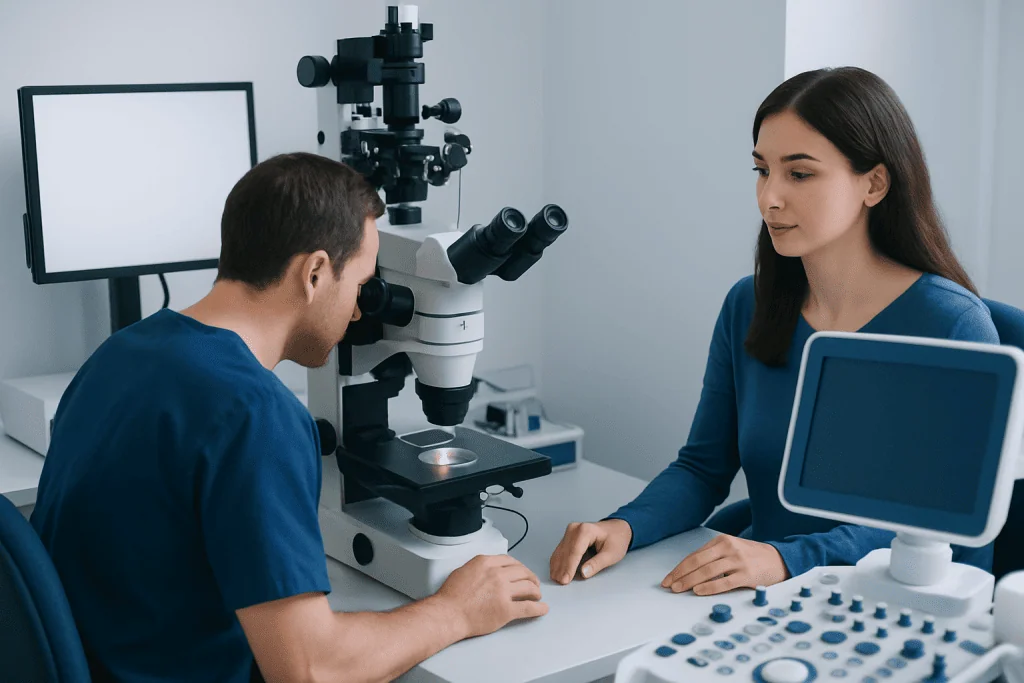
Thyroid hormones help the ovaries respond normally to reproductive hormones and support the uterine lining as it becomes receptive to an embryo. When thyroid hormone levels are clearly too low, ovulation may be irregular, menstrual cycles may change, and prolactin levels can rise. During IVF, untreated hypothyroidism may also make it harder to interpret cycle response and can increase the chance that medication adjustment will be needed quickly.
In early pregnancy, the developing embryo depends on the mother’s thyroid hormone supply before the fetal thyroid becomes active. This is one reason doctors prefer to identify and treat significant hypothyroidism before embryo transfer, rather than discovering it after a positive pregnancy test. Good thyroid control is also important for patients who already take levothyroxine, because their dose may need to change once pregnancy begins.
Hyperthyroidism also needs attention. If the thyroid is overactive, symptoms may include palpitations, heat intolerance, tremor, anxiety, weight loss, or irregular periods. Uncontrolled hyperthyroidism is generally corrected before pregnancy attempts because stable thyroid function supports safer treatment planning and early pregnancy care.
TSH Testing and Common Target Ranges

Before IVF, many clinics check TSH as part of the fertility workup, and free T4 is added when TSH is abnormal or when there is a known thyroid condition. Some patients also need thyroid peroxidase antibodies, thyroglobulin antibodies, or TSH receptor antibodies depending on their history. Results should be reviewed in context, because reference ranges can vary by laboratory, pregnancy status, iodine intake, age, and medication use.
A commonly used preconception target for patients with known hypothyroidism or those taking levothyroxine is a TSH below about 2.5 mIU/L. This target is often used because early pregnancy increases thyroid hormone needs, and starting pregnancy with a well-controlled TSH gives a safety margin. However, for patients with no thyroid disease, normal free T4, and a mildly elevated TSH, the decision to treat is individualized.
Many guidelines recommend treating overt hypothyroidism before conception. Subclinical hypothyroidism, where TSH is elevated but free T4 is normal, is more nuanced. Treatment is more strongly considered when TSH is above the pregnancy-specific reference range, when TSH is above about 4.0 mIU/L, or when thyroid antibodies are positive. A TSH between 2.5 and 4.0 mIU/L may lead to monitoring or treatment depending on the patient’s history, antibody status, and clinic protocol.
Patients should tell their doctor about supplements, especially biotin, because biotin can interfere with some thyroid blood tests. Blood tests should also be timed consistently when possible, and patients already taking levothyroxine are usually advised to take it the same way each day, separated from iron, calcium, and prenatal vitamins unless their doctor gives different instructions.
Thyroid Antibodies: What They Mean for IVF
Thyroid antibodies are markers of thyroid autoimmunity. The most commonly discussed antibody in fertility care is thyroid peroxidase antibody, or TPOAb. Thyroglobulin antibody may also be checked. A positive antibody test does not always mean the thyroid is currently underactive, but it can indicate a higher risk of developing hypothyroidism during ovarian stimulation or pregnancy.
Research has linked thyroid autoimmunity with infertility, miscarriage, and pregnancy complications in some groups, but the relationship is complex. Antibodies may reflect an immune background rather than directly causing implantation failure. Importantly, studies have not consistently shown that giving levothyroxine to every antibody-positive patient with normal TSH improves IVF success. Therefore, most doctors avoid one-size-fits-all treatment and instead base decisions on TSH, free T4, prior pregnancy history, and overall fertility factors.
When antibodies are positive, a practical plan often includes closer TSH monitoring. A patient may have normal thyroid function before stimulation but develop a rising TSH as estrogen levels increase or pregnancy begins. Monitoring helps clinicians adjust treatment early if needed, without assuming that antibodies alone require medication in every case.
Treatment Planning for Hypothyroidism, Hyperthyroidism, and Autoimmunity
For hypothyroidism, the standard treatment is levothyroxine, a synthetic form of T4. The dose is individualized and adjusted according to TSH and free T4 results, body factors, symptoms, pregnancy plans, and whether the patient already takes thyroid medication. Patients should not start, stop, or change thyroid medication without medical guidance, particularly during fertility treatment or pregnancy.
For overt hypothyroidism, IVF may be postponed until thyroid function is adequately corrected, especially before embryo transfer. In subclinical hypothyroidism, treatment may be recommended or discussed depending on the TSH level and antibody status. If treatment begins shortly before IVF, doctors usually recheck TSH after an appropriate interval or sooner if pregnancy occurs, because hormone needs can shift rapidly.
Hyperthyroidism requires a different approach. Causes include Graves’ disease, thyroid nodules, thyroiditis, or excessive thyroid hormone intake. Treatment may involve antithyroid medicines, adjustment of replacement therapy, beta-blockers for symptoms in selected cases, radioactive iodine before pregnancy planning, or surgery in specific situations. The best option depends on the cause, severity, timing of IVF, and pregnancy safety considerations.
Fertility care is often broader than thyroid care alone. Patients may also be evaluated for ovulation disorders, tubal factors, sperm factors, endometriosis, or female infertility causes such as polycystic ovary syndrome. A complete plan helps avoid placing too much emphasis on a single lab result while still correcting thyroid issues that are medically important.
Monitoring During Ovarian Stimulation, Embryo Transfer, and Early Pregnancy
Ovarian stimulation can temporarily influence thyroid tests. Rising estrogen increases thyroid-binding proteins, and this may increase the body’s requirement for thyroid hormone. Patients with limited thyroid reserve, known hypothyroidism, or positive thyroid antibodies may be more likely to show a TSH rise during or after stimulation.
After embryo transfer, if pregnancy occurs, thyroid hormone needs may increase very early. Patients who already take levothyroxine are often instructed by their doctor to contact the clinic as soon as they have a positive pregnancy test, because their dose may need prompt reassessment. TSH is commonly checked in early pregnancy and then repeated at intervals based on results, risk factors, and local protocols.
If fresh embryo transfer is planned but thyroid results are clearly abnormal, the team may recommend correcting thyroid function first. In some situations, embryos can be frozen while thyroid control is optimized before a later transfer. This can be reassuring for patients, because it allows fertility treatment progress while giving the body time to reach a safer hormonal balance.
Patients with Graves’ disease or a history of treatment for Graves’ disease may need TSH receptor antibody testing, because these antibodies can affect pregnancy management. This is a specialized area, and planning with an endocrinologist and obstetric team is important before and after conception.
Prevention, Self-Care, and When to See a Doctor
Patients can support thyroid health by taking prescribed medication consistently, attending follow-up blood tests, and telling their fertility team about all medications and supplements. Prenatal vitamins often contain iodine, iron, and calcium. Iodine is important for thyroid hormone production, but extra iodine is not appropriate for everyone, especially in some thyroid conditions, so supplement choices should be reviewed with a clinician.
Levothyroxine absorption can be reduced by calcium, iron, some antacids, and certain foods or supplements if taken too close together. Patients should ask their doctor or pharmacist how to time thyroid medication with prenatal vitamins and IVF medicines. They should also avoid making major diet changes, using high-dose supplements, or taking thyroid-support products without medical advice, as these may contain variable iodine or thyroid-active ingredients.
A doctor should be consulted before IVF if there is a history of thyroid disease, thyroid surgery, radioactive iodine treatment, Graves’ disease, Hashimoto’s thyroiditis, recurrent pregnancy loss, irregular cycles, unexplained infertility, or symptoms of thyroid imbalance. Symptoms such as unusual fatigue, cold intolerance, constipation, hair thinning, palpitations, tremor, or unexplained weight change should also be discussed. At Acibadem International, multidisciplinary specialists in JCI-accredited hospitals can evaluate thyroid factors as part of individualized infertility and IVF planning for international patients.
Frequently asked questions
What TSH level is best before IVF?
Many clinicians aim for a TSH below about 2.5 mIU/L before conception in patients with known hypothyroidism or those already taking levothyroxine. However, the best target depends on free T4, antibody status, lab reference ranges, symptoms, and medical history. Patients should review their specific result with a fertility specialist or endocrinologist.
Does a mildly high TSH always need treatment before IVF?
Not always. Overt hypothyroidism should be treated, but mild subclinical hypothyroidism is individualized, especially when TSH is between 2.5 and 4.0 mIU/L and free T4 is normal. Treatment is more often considered when TSH is higher, thyroid antibodies are positive, or there is a relevant pregnancy history.
Can thyroid antibodies reduce IVF success?
Thyroid antibodies have been associated with infertility and miscarriage in some studies, but they do not predict the outcome for an individual patient. They may indicate a higher risk of thyroid dysfunction during IVF or pregnancy. If antibodies are positive but TSH is normal, doctors often recommend closer monitoring rather than automatic treatment for everyone.
Should levothyroxine be started if thyroid antibodies are positive but TSH is normal?
Current evidence does not support levothyroxine for every antibody-positive patient with normal thyroid function. Some patients may benefit if TSH begins to rise or if there are additional risk factors. The decision should be made with a doctor who can interpret the full fertility and endocrine picture.
Can IVF medications affect thyroid test results?
Yes, ovarian stimulation can raise estrogen levels, which may increase thyroid-binding proteins and change thyroid hormone requirements. This is most important for patients with known hypothyroidism, positive thyroid antibodies, or limited thyroid reserve. Repeat testing during treatment or early pregnancy may be recommended.
Is it safe to proceed with embryo transfer if thyroid results are abnormal?
It depends on the type and severity of the abnormality. Significant hypothyroidism or uncontrolled hyperthyroidism is usually treated and stabilized before embryo transfer when possible. In some cases, the fertility team may freeze embryos and plan transfer after thyroid function is better controlled.
References
- American Thyroid Association
- European Thyroid Association
- American Society for Reproductive Medicine
- European Society of Human Reproduction and Embryology
- Endocrine Society
This article is for general information only and is not a substitute for professional medical advice. Please consult a qualified doctor about your individual situation.
Medical weight-loss options in Turkey — costs & eligibility
JCI-accredited · board-certified surgeons · reply within 24h
Add us as a Preferred Source to see more of our trusted health content across Google Search, AI Overviews and Discover.
Check your numbers in seconds
BMI, calories, due date, blood pressure and 30+ more clinical calculators — free, instant, doctor-reviewed ranges.

Related Treatments
Related Conditions
More from the Health Library



Related Specialists

Prof. Dr. Bülent Tıraş
Gynecology & Obstetrics
Prof. Dr. Mete Güngör
Gynecology & Obstetrics
Prof. Dr. Faruk Suat Dede
Gynecology & Obstetrics
Prof. Dr. Tansu Küçük
Gynecology & Obstetrics