No Embryos After IVF: Why It Happens and What to Discuss Next

No embryos after IVF can mean no eggs were retrieved, no eggs fertilized, embryos stopped developing, or no embryos were suitable for transfer or freezing. The cause may involve egg number or quality, sperm factors, ovarian response, trigger timing, laboratory findings, or embryo genetics.
Key Takeaways
- No embryos after IVF can mean no eggs were retrieved, no eggs fertilized, embryos stopped developing, or no embryos were suitable for transfer or freezing.
- The cause may involve egg number or quality, sperm factors, ovarian response, trigger timing, laboratory findings, or embryo genetics.
- One cycle does not define a person's overall chance of success; trends across cycles and test results are more informative.
- A detailed IVF cycle review should examine stimulation response, egg maturity, fertilization method, sperm parameters, embryo development, and lab notes.
- Next steps may include adjusting the stimulation protocol, using ICSI when appropriate, further testing, lifestyle optimization, or discussing donor eggs or sperm in selected cases.
- Emotional support is an important part of care after an IVF cycle with no embryos.
Having no embryos available after an IVF cycle is emotionally difficult, but it is a recognized outcome that can happen for several medical, laboratory, egg, sperm, or embryo-development reasons. A careful review with a fertility specialist can often identify what happened and guide safer, more personalized next steps.
Overview
No embryos after IVF means that, at the end of an in vitro fertilization cycle, there are no embryos available for transfer to the uterus or for freezing. This may happen at different points in the process: no eggs may be retrieved, eggs may be immature, fertilization may not occur, or early embryos may stop developing before they reach a stage suitable for use.
This outcome is understandably disappointing, especially after the time, medication, monitoring, procedures, and hopes involved in treatment. However, it does not automatically mean that pregnancy is impossible or that future treatment cannot work. IVF is a complex biological process, and each cycle provides information that can help the medical team make a more individualized plan.
The most helpful next step is usually a structured discussion with the fertility specialist and embryology team. This review can clarify exactly where the cycle stopped progressing and whether changes in ovarian stimulation, egg retrieval timing, fertilization method, sperm preparation, laboratory strategy, or further testing may be useful.
What Can Happen During an IVF Cycle

IVF has several stages, and a problem at any stage can result in no embryos. In a typical cycle, the ovaries are stimulated with medications, follicles are monitored by ultrasound and hormone tests, a trigger injection helps the eggs mature, eggs are retrieved, and sperm is used to fertilize the eggs in the laboratory. Embryologists then observe early embryo development over the next several days.
The phrase no embryos is broad, so it is important to ask which situation applies. Some patients have follicles on ultrasound but few or no eggs retrieved. Others have eggs retrieved, but many are immature. In some cycles, mature eggs do not fertilize. In others, fertilization occurs but embryos stop dividing or do not develop to the blastocyst stage.
Common scenarios include:
- No eggs retrieved despite follicle growth.
- Eggs retrieved but few mature eggs available for fertilization.
- Failed or low fertilization after conventional IVF or ICSI.
- Embryo development arrest between day 2 and day 6.
- No embryo meeting safety and quality criteria for transfer or freezing.
Clarifying the exact stage helps avoid general conclusions. For example, an egg maturity issue may require a different trigger approach, while fertilization failure may lead the team to discuss intracytoplasmic sperm injection, or ICSI, sperm testing, or changes in laboratory technique.
Causes and Risk Factors
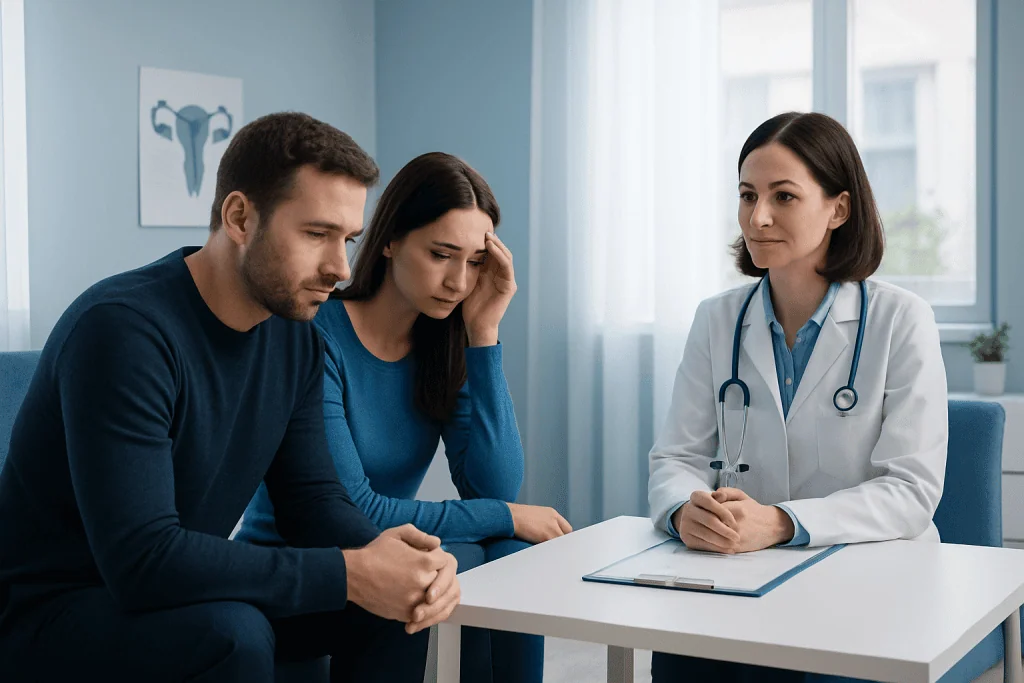
No embryos after IVF may be related to egg factors, sperm factors, ovarian response, embryo genetics, or cycle management. Age is one important influence because egg number and chromosome normality tend to decline over time, but age is not the only explanation. Younger patients can also experience poor fertilization or embryo arrest, while some older patients still produce usable embryos.
Egg-related factors may include a low ovarian reserve, reduced egg quality, a low number of mature eggs, or eggs that do not complete maturation properly. Conditions such as endometriosis, previous ovarian surgery, genetic factors, or the natural variation between cycles may also contribute. In some cases, follicles develop but the retrieved eggs are fewer than expected or not mature enough to fertilize normally.
Sperm-related factors can be equally important. A standard semen analysis measures count, movement, and shape, but it may not explain every fertilization or embryo-development problem. In selected cases, doctors may consider additional evaluation, such as sperm DNA fragmentation testing, especially after repeated fertilization failure or embryo arrest.
Other contributors include the ovarian stimulation protocol, medication response, trigger timing, lab observations, and rare technical or biological events. A single IVF cycle with no embryos may reflect a combination of factors rather than one clear cause. For this reason, a balanced review is more useful than assigning blame to either partner.
Diagnosis: What to Review With the Fertility Team
A post-cycle review should be specific and step by step. The doctor may discuss the number of follicles seen during monitoring, estradiol and other hormone levels, the trigger medication and timing, the number of eggs retrieved, how many eggs were mature, the fertilization method used, and how embryos developed each day in the laboratory.
Patients may find it useful to ask for a simple summary of the cycle outcome. Important questions include: How many follicles were expected? How many eggs were collected? How many were mature? Did fertilization occur normally? If embryos stopped growing, on which day did this happen? Were there any notes from the embryology laboratory about egg appearance, sperm quality, fertilization pattern, or embryo quality?
Depending on the history, the specialist may recommend further assessment. This may include ovarian reserve testing, review of thyroid and prolactin levels, evaluation for uterine or tubal factors, genetic counseling in selected cases, or a more detailed male-factor assessment. For patients at the beginning of care, information about infertility evaluation can help frame which tests are most relevant.
The goal of diagnosis is not only to explain the past cycle but also to decide whether a future cycle should be modified. Sometimes the most appropriate conclusion is that the protocol was reasonable and the outcome may have been due to cycle-to-cycle variation. In other cases, the review points to clear changes for the next attempt.
Treatment Options and Possible Changes for a Future Cycle
There is no single solution for all patients with no embryos after IVF. The next plan depends on where the process stopped, the patient’s age, ovarian reserve, sperm results, previous cycle history, and personal goals. A fertility specialist may recommend repeating treatment with adjustments, taking time for further testing, or considering alternative reproductive options.
If few eggs or immature eggs were retrieved, the medical team may discuss changes to the stimulation plan, medication dose, monitoring schedule, trigger type, or retrieval timing. If fertilization did not occur, ICSI may be considered when appropriate. If embryos stopped developing, the team may review both egg and sperm factors, culture conditions, and whether additional sperm testing or genetic counseling is indicated.
Possible next-step discussions may include:
- Changing the ovarian stimulation protocol or trigger strategy.
- Using ICSI if conventional fertilization was unsuccessful or male-factor infertility is present.
- Optimizing sperm collection, preparation, or further male evaluation.
- Considering preconception health changes before another cycle.
- Discussing donor eggs, donor sperm, or donor embryos in selected situations.
- Reviewing whether another IVF treatment cycle is medically and emotionally appropriate.
Some patients ask whether embryo genetic testing would help. Genetic testing is only possible when embryos develop enough to be biopsied, so it cannot prevent all cases of no embryos. It may be part of planning in certain future cycles, but it should be discussed carefully, including benefits, limitations, and whether it fits the individual situation.
Emotional Recovery and Decision-Making
An IVF cycle with no embryos can feel like a sudden stop after weeks of effort. Feelings of grief, frustration, guilt, anger, or numbness are common and valid. Patients and partners may process the outcome differently, and neither response is wrong.
It can help to schedule a dedicated follow-up appointment rather than trying to absorb all information on the day of the result. Many people benefit from writing down questions in advance and, if possible, attending the appointment with a partner or trusted support person. Asking for the embryology summary in plain language can make the next decision feel more manageable.
Emotional support is part of fertility care. Counseling, fertility support groups, mindfulness-based strategies, or speaking with a psychologist experienced in reproductive medicine may help patients cope with uncertainty and treatment fatigue. Taking a pause before deciding on another cycle is also reasonable when the body or mind needs recovery.
Prevention and Self-Care
Not all causes of no embryos after IVF can be prevented. Egg number, egg quality, sperm biology, and embryo genetics are not fully controllable. However, general health optimization may support fertility treatment and improve overall well-being, even when it cannot guarantee a particular outcome.
Doctors commonly encourage patients to avoid smoking and recreational drugs, limit alcohol, maintain a balanced diet, and follow safe exercise habits. Managing chronic conditions such as diabetes, thyroid disease, high blood pressure, or autoimmune disorders is also important before and during fertility treatment. Supplements should be discussed with the fertility team because not every product is useful or appropriate.
Male partners can also contribute to preparation. Avoiding heat exposure to the testes, stopping smoking, moderating alcohol, treating infections when present, and allowing enough time for sperm production cycles may be recommended. If semen results are abnormal or previous fertilization was poor, a reproductive urologist may be involved.
Self-care also includes protecting emotional energy. Patients can ask the clinic what to expect at each stage, how results will be communicated, and when decisions must be made. Having clear information before treatment can reduce uncertainty if the cycle does not progress as hoped.
When to See a Fertility Specialist
Anyone who has no embryos after IVF should have a follow-up consultation before deciding whether to repeat the same approach. The appointment is especially important if there were no eggs retrieved, very few mature eggs, total fertilization failure, repeated embryo arrest, severe male-factor findings, or multiple previous cycles with no usable embryos.
Patients should also seek specialist guidance if they have known low ovarian reserve, endometriosis, polycystic ovary syndrome, recurrent pregnancy loss, or a history of cancer treatment, ovarian surgery, or genetic conditions. A detailed assessment of female infertility and male-factor contributors can help create a more realistic and personalized plan.
For international patients, Acibadem International’s multidisciplinary fertility specialists and JCI-accredited hospitals can evaluate IVF cycle records, investigate possible causes, and discuss evidence-based treatment options. As with any fertility decision, recommendations should be individualized after a qualified medical consultation.
Frequently asked questions
Does no embryos after IVF mean IVF will never work?
No. One cycle with no embryos does not necessarily predict all future cycles. The meaning depends on where the cycle stopped, the number of eggs retrieved, sperm findings, embryo development, age, ovarian reserve, and previous history. A detailed review can help estimate whether another attempt with changes is reasonable.
What is the difference between no fertilization and embryo arrest?
No fertilization means that mature eggs did not form normally fertilized embryos after sperm exposure or injection. Embryo arrest means fertilization occurred, but the embryos stopped developing before they were suitable for transfer or freezing. These situations may have different causes and may lead to different next-step recommendations.
Can ICSI prevent having no embryos?
ICSI can improve the chance of fertilization in certain situations, especially when there is male-factor infertility or previous fertilization failure. However, it cannot correct every egg, sperm, or genetic issue, and it does not guarantee embryo development. The decision to use ICSI should be based on the couple’s medical and laboratory findings.
Should I change clinics after a cycle with no embryos?
Changing clinics is a personal decision, but the first step is usually to request a clear explanation of the cycle outcome. Patients may ask for their stimulation details, egg maturity report, fertilization report, and embryo development notes. A second opinion can be helpful if the explanation is unclear or if repeated cycles have had the same outcome.
How soon can another IVF cycle be attempted?
Timing depends on physical recovery, emotional readiness, ovarian response, and whether further testing is needed. Some patients may proceed after a short break, while others benefit from waiting longer to review results or optimize health factors. The fertility specialist can recommend a safe timeline based on the individual situation.
Can lifestyle changes prevent embryo development problems?
Healthy habits can support fertility treatment and general health, but they cannot fully prevent embryo development problems. Egg and sperm biology, chromosome patterns, age-related factors, and natural cycle variation also play important roles. Patients should focus on evidence-based health steps and avoid blaming themselves for an outcome that is often beyond personal control.
References
- European Society of Human Reproduction and Embryology
- American Society for Reproductive Medicine
- National Institute for Health and Care Excellence
- Centers for Disease Control and Prevention
- World Health Organization
This article is for general information only and is not a substitute for professional medical advice. Please consult a qualified doctor about your individual situation.
IVF & fertility treatment in Turkey — success rates and costs
JCI-accredited · board-certified surgeons · reply within 24h
Add us as a Preferred Source to see more of our trusted health content across Google Search, AI Overviews and Discover.

Related Treatments
Related Conditions
More from the Health Library



Related Specialists

Prof. Dr. Bülent Tıraş
Gynecology & Obstetrics
Prof. Dr. Mete Güngör
Gynecology & Obstetrics
Prof. Dr. Faruk Suat Dede
Gynecology & Obstetrics
Prof. Dr. Tansu Küçük
Gynecology & Obstetrics