Uterine Polyps Before IVF: Hysteroscopy, Timing, and Pregnancy Chances

Uterine polyps can sometimes interfere with embryo implantation by altering the uterine lining or causing inflammation. Hysteroscopy is considered the most direct way to confirm and remove an endometrial polyp before IVF.
Key Takeaways
- Uterine polyps can sometimes interfere with embryo implantation by altering the uterine lining or causing inflammation.
- Hysteroscopy is considered the most direct way to confirm and remove an endometrial polyp before IVF.
- Timing depends on polyp size, symptoms, age, ovarian reserve, embryo plans, and whether a fresh or frozen transfer is intended.
- Many clinics recommend removing significant polyps before embryo transfer, although very small polyps may be managed individually.
- After polypectomy, embryo transfer is often planned once the lining has healed and the fertility specialist confirms the cavity is ready.
Uterine polyps are usually benign growths inside the womb that may affect implantation, especially when an IVF cycle is planned. Hysteroscopy allows direct diagnosis and removal, helping doctors prepare the uterine cavity before embryo transfer.
Overview
Uterine polyps, also called endometrial polyps, are soft overgrowths of the tissue that lines the inside of the womb. They may be small and flat, or they may attach to the uterine wall by a thin stalk. Most are benign, and many cause no symptoms. However, when a person is preparing for in vitro fertilization, even a small change inside the uterine cavity can become important because the embryo needs a receptive, healthy lining for implantation.
In IVF, attention is often focused on egg quality, sperm quality, embryo development, and laboratory techniques. The uterine cavity is just as important. A polyp may act like a physical obstacle, change local blood flow, or contribute to inflammation in the lining. For this reason, doctors commonly check the uterine cavity before IVF treatment, especially in people with previous failed transfers, abnormal bleeding, or ultrasound findings that suggest a polyp.
Finding a polyp before IVF does not mean pregnancy is impossible. It means the care team has identified a potentially correctable factor. Hysteroscopy, a minimally invasive procedure that allows the doctor to look directly inside the uterus, can usually confirm the diagnosis and remove the polyp in the same setting. The aim is to create the best possible environment before embryo transfer while avoiding unnecessary delays.
What Uterine Polyps Are and Why They Matter in IVF
The endometrium is the inner lining of the uterus that thickens and changes during the menstrual cycle. A uterine polyp forms when a localized area of this lining grows more than expected. Polyps can vary in number and size. Some are only a few millimeters, while others may fill part of the cavity. They can occur at any reproductive age, but they are more common with increasing age and in people exposed to higher estrogen stimulation.
For natural conception or assisted reproduction, the embryo must attach to the endometrium at the right time. A polyp may reduce the available surface for implantation or create an uneven cavity. Some studies suggest polyps may change the local balance of inflammatory cells, molecules involved in implantation, or blood vessel patterns. These effects are not identical for every patient, which is why treatment decisions are individualized.
In fertility care, the significance of a polyp often depends on its size, location, and clinical context. A polyp near the top of the uterus, where embryos commonly implant, may be more relevant than a tiny polyp near the cervix. A person with repeated implantation failure, miscarriage history, or unexplained female infertility may be advised to remove even smaller lesions. In contrast, a very small suspected polyp found incidentally may be discussed in relation to the overall IVF timeline and embryo strategy.
Symptoms and How Polyps Are Found
Many uterine polyps are discovered during fertility assessment rather than because they cause symptoms. When symptoms do occur, they are often related to bleeding patterns. A person may notice spotting between periods, heavier menstrual bleeding, bleeding after intercourse, or irregular cycles. Some patients report no discomfort at all, and pelvic pain is not usually the main symptom unless another condition is also present.
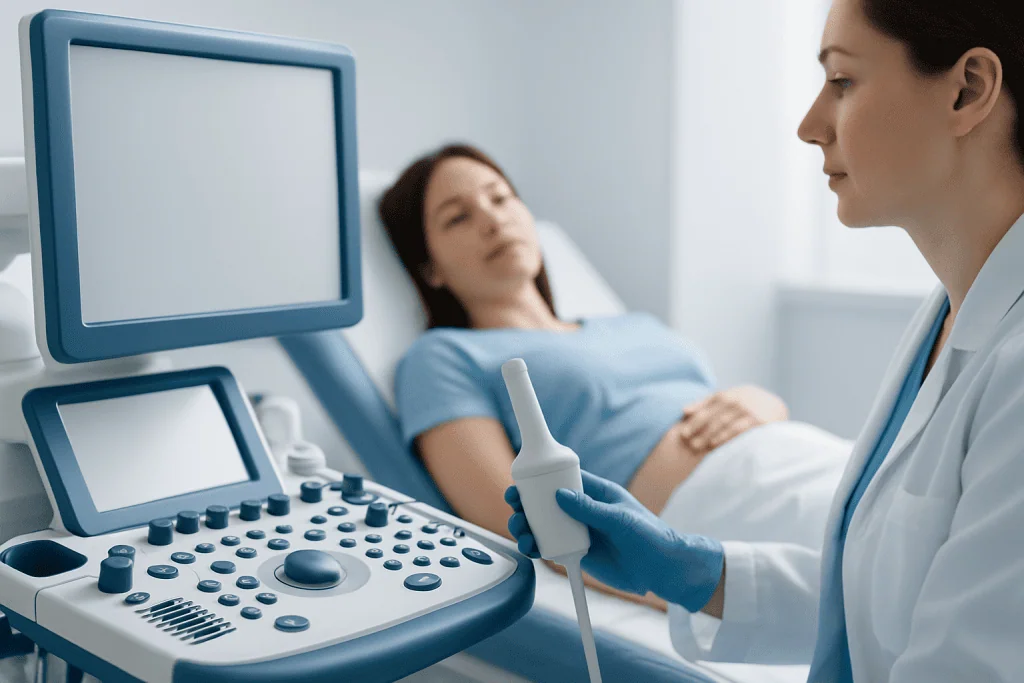
Before IVF, polyps may be suspected during a transvaginal ultrasound. On ultrasound, the doctor may see a focal thickening or a small mass inside the endometrial cavity. Because polyps can be easier to see at certain times in the cycle, the scan may be planned when the lining is thinner, often shortly after menstruation. If the view is unclear, saline infusion sonography may be used; this test gently fills the cavity with sterile fluid during ultrasound, helping outline any polyp-like growth.
Common ways to assess the uterine cavity include:
- Transvaginal ultrasound: a first-line imaging test that can identify suspicious thickening or a visible polyp.
- Saline infusion sonography: an ultrasound enhanced with fluid to show the shape of the cavity more clearly.
- Hysteroscopy: direct visualization using a thin camera, with the option to remove a polyp during the same procedure.
- Histopathology: laboratory examination of removed tissue to confirm the diagnosis and rule out uncommon abnormal changes.
Causes and Risk Factors
The exact reason one person develops an endometrial polyp and another does not is not always clear. Polyps are thought to be influenced by hormonal signals, especially estrogen, which stimulates growth of the uterine lining. They may also involve localized changes in endometrial tissue, blood vessel development, and inflammatory pathways. Most polyps are benign, but removed tissue is usually sent to a laboratory because microscopic examination provides confirmation.
Risk factors can include increasing age, irregular ovulation, obesity, certain hormonal medications, and a history of polyps. People with conditions associated with unopposed estrogen exposure may have a higher tendency to develop endometrial overgrowth. Some patients undergoing fertility treatment may have polyps detected after cycles of hormonal stimulation, although this does not mean IVF medications directly caused the polyp in every case.
Polycystic ovary syndrome may be relevant for some patients because irregular ovulation can lead to longer exposure of the endometrium to estrogen without regular progesterone balance. This does not mean every person with polycystic ovary syndrome will develop polyps, but it is one reason fertility specialists pay careful attention to cycle history and uterine lining patterns. A complete fertility assessment considers the uterus, ovaries, tubes, sperm factors, endocrine health, and previous pregnancy history together.
Hysteroscopy Before IVF: Diagnosis and Removal
Hysteroscopy is often considered the most accurate method for evaluating and treating uterine polyps. During the procedure, a thin telescope-like instrument is passed through the cervix into the uterus. The cavity is gently expanded with fluid so the doctor can see the endometrial surface directly. If a polyp is present, small instruments can remove it at its base, which is known as hysteroscopic polypectomy.
The procedure may be done in an office, outpatient clinic, or operating room, depending on the size of the polyp, the patient’s comfort, cervical access, and local practice. Pain control may range from simple analgesia to sedation or anesthesia. Most patients go home the same day. Mild cramping or light bleeding for a short period afterward is common, while serious complications such as infection, heavy bleeding, or uterine injury are uncommon but possible.
Hysteroscopy offers two important advantages before IVF. First, it confirms whether the suspected ultrasound finding is truly a polyp, because blood clots, folds of endometrium, or fibroids can sometimes look similar on imaging. Second, it allows targeted removal while preserving the surrounding lining as much as possible. This is especially important in fertility care, where the goal is not only to remove the lesion but also to maintain a healthy cavity for implantation.
After removal, the tissue is usually examined by a pathologist. In reproductive-age patients, most endometrial polyps are benign. If unusual cells are found, the treatment plan may change and further gynecologic evaluation is needed before pregnancy is attempted. The fertility team will also consider whether additional uterine factors, such as fibroids, adhesions, or chronic endometritis, should be evaluated.
Timing: When to Remove a Polyp and When to Transfer
Timing is one of the most practical questions for patients planning IVF. In many cases, a polyp is removed before embryo transfer rather than ignored, particularly if it is clearly inside the cavity, larger than a few millimeters, associated with bleeding, or present after previous unsuccessful treatment. If the polyp is found before ovarian stimulation begins, hysteroscopy may be scheduled first so the uterus is ready before the IVF cycle proceeds.
If a polyp is discovered during stimulation or close to egg retrieval, the plan may be more individualized. Some clinics may proceed with egg retrieval, freeze suitable embryos, remove the polyp, and schedule a frozen embryo transfer after healing. This approach avoids losing the ovarian response while still allowing the uterine cavity to be optimized before transfer. In other situations, especially when a polyp is very small and the patient’s circumstances are time-sensitive, the doctor may discuss risks and benefits of proceeding.
There is no single waiting period that fits every patient after polypectomy. Many fertility specialists plan embryo transfer in a later cycle once bleeding has settled, the endometrium has regenerated, and ultrasound or clinical assessment is reassuring. Some patients may be ready the following menstrual cycle, while others need more time because of a larger procedure, additional findings, infection treatment, or medical conditions. The key decision is whether the lining has healed and whether the cavity appears suitable for implantation.
For patients using frozen embryos, timing can often be more flexible. The transfer cycle may be programmed or natural, depending on ovulation pattern and clinic protocols. For patients planning related assisted reproductive techniques such as intracytoplasmic sperm injection, the laboratory method for fertilization does not remove the need for a healthy uterine cavity. The embryo and the endometrium both need careful preparation.
Pregnancy Chances, Self-Care, and When to See a Doctor
Patients often ask whether removing a uterine polyp improves IVF success. The honest answer is that evidence is supportive but not perfectly uniform. Many specialists recommend removing cavity-distorting polyps before embryo transfer because implantation depends on a receptive endometrium, and hysteroscopic removal is usually straightforward. Research suggests benefit is most likely when polyps are larger, symptomatic, clearly within the cavity, or present in patients with infertility or previous failed implantation.
However, IVF success is never determined by one factor alone. Age, ovarian reserve, embryo chromosomal status, sperm quality, body health, uterine lining development, and the transfer technique all matter. Polypectomy may improve the uterine environment, but it cannot guarantee pregnancy. It is best understood as one step in reducing avoidable barriers before transfer.
After hysteroscopy, patients are usually advised to follow their doctor’s instructions about activity, intercourse, vaginal products, and medications. They should contact their clinic if they develop heavy bleeding, fever, worsening pelvic pain, foul-smelling discharge, or symptoms that feel unusual for them. Routine follow-up may include reviewing the pathology result and confirming the next IVF or frozen transfer plan.
A fertility specialist should be consulted if ultrasound suggests a polyp before IVF, if there is abnormal uterine bleeding, if embryo transfers have failed without clear explanation, or if miscarriage has occurred repeatedly. At Acibadem International, multidisciplinary fertility and gynecology specialists in JCI-accredited hospitals evaluate uterine cavity findings and coordinate treatment plans for international patients, including hysteroscopy when appropriate. Care decisions should always be personalized after direct medical assessment.
Frequently asked questions
Should all uterine polyps be removed before IVF?
Not always, but many fertility specialists recommend removing polyps that are clearly inside the uterine cavity before embryo transfer. The decision depends on size, location, symptoms, age, previous IVF outcomes, and the planned treatment timeline. Very small suspected polyps may be discussed individually with the fertility team.
Can a uterine polyp stop an embryo from implanting?
A polyp may interfere with implantation by taking up space in the cavity, changing the local lining, or contributing to inflammation. This does not mean implantation is impossible, but it may reduce the chance in some patients. Removing the polyp is often considered a way to improve the uterine environment before transfer.
Is hysteroscopy painful?
Discomfort varies depending on the type of hysteroscopy, the patient’s sensitivity, and whether removal is performed. Some office procedures cause brief cramping, while larger polypectomies may be done with sedation or anesthesia. The care team should explain pain-control options before the procedure.
How soon after polyp removal can embryo transfer be done?
Many patients can proceed once the next cycle begins and the uterine lining appears healed, but timing is individualized. Larger polyps, additional uterine findings, infection treatment, or pathology results may require a longer wait. The fertility specialist will usually confirm readiness with clinical review and sometimes ultrasound.
Can uterine polyps come back after removal?
Yes, polyps can recur in some patients, although many do not have repeated problems. Recurrence risk may be higher when hormonal or ovulatory factors continue. If IVF is delayed for a long period after removal, the doctor may consider rechecking the uterine cavity before transfer.
Does removing a polyp guarantee IVF success?
No procedure can guarantee IVF success. Polyp removal may improve the uterine cavity and reduce one possible barrier to implantation, but embryo quality, age, sperm factors, hormonal preparation, and overall health also influence outcomes. It should be viewed as part of a broader fertility plan.
References
- European Society of Human Reproduction and Embryology
- American Society for Reproductive Medicine
- American College of Obstetricians and Gynecologists
- National Institute for Health and Care Excellence
- Royal College of Obstetricians and Gynaecologists
This article is for general information only and is not a substitute for professional medical advice. Please consult a qualified doctor about your individual situation.
IVF & fertility treatment in Turkey — success rates and costs
JCI-accredited · board-certified surgeons · reply within 24h
Add us as a Preferred Source to see more of our trusted health content across Google Search, AI Overviews and Discover.

Related Treatments
Related Conditions
More from the Health Library



Related Specialists

Prof. Dr. Bülent Tıraş
Gynecology & Obstetrics
Prof. Dr. Mete Güngör
Gynecology & Obstetrics
Prof. Dr. Faruk Suat Dede
Gynecology & Obstetrics
Prof. Dr. Tansu Küçük
Gynecology & Obstetrics