Essential Tremor vs Parkinsonian Tremor: How Movement Disorder Specialists Tell the Difference

Essential tremor often happens during action or when holding a posture, while parkinsonian tremor commonly appears at rest. Parkinsonian tremor is more likely to come with slowness, stiffness, balance changes, and reduced arm swing.
Key Takeaways
- Essential tremor often happens during action or when holding a posture, while parkinsonian tremor commonly appears at rest.
- Parkinsonian tremor is more likely to come with slowness, stiffness, balance changes, and reduced arm swing.
- Diagnosis is usually clinical and based on a detailed history and neurological examination.
- Treatment depends on the cause and may include medication, therapy, and in selected cases advanced procedures.
- A new, worsening, or one-sided tremor should be assessed by a qualified doctor.
Essential tremor and parkinsonian tremor can both cause shaking, but they are not the same condition. Movement disorder specialists tell the difference by looking at when the tremor appears, which body parts are involved, and whether other neurological signs are present.
Overview
Tremor is an involuntary, rhythmic shaking movement. It can affect the hands, head, voice, legs, jaw, or other body parts, and it may be mild or disruptive depending on its cause. Two of the most commonly discussed tremor types are essential tremor and parkinsonian tremor.
Although they may seem similar at first, these tremors usually behave differently. Essential tremor is a common movement disorder that often appears when a person is using their hands or holding a position. Parkinsonian tremor is most often linked to Parkinson disease and is classically more noticeable when the affected body part is at rest.
Because the distinction is not always obvious, many people benefit from evaluation by a neurologist with expertise in movement disorders. These specialists focus on the pattern of the tremor, associated symptoms, and how the tremor changes over time. In some cases, what appears to be one tremor type at first may need follow-up to confirm the diagnosis.
How the Tremors Usually Differ
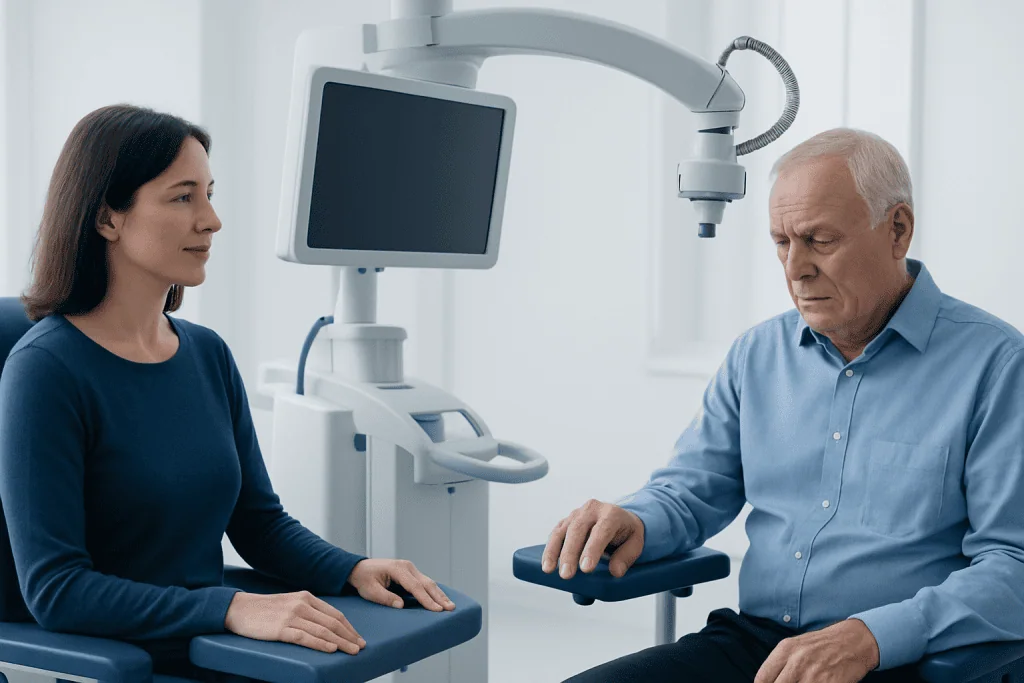
The most important clue is when the tremor happens. Essential tremor usually appears during action, such as writing, drinking from a cup, using utensils, or reaching for an object. It may also happen when the arms are held out against gravity. By contrast, parkinsonian tremor often appears when the hand, foot, or leg is relaxed and supported, such as when sitting quietly. It may lessen during purposeful movement and then return afterward.
The second clue is where the tremor appears. Essential tremor often affects both hands, though one side may be worse. It can also involve the head or voice, which is less typical in Parkinson disease. Parkinsonian tremor often starts on one side and may remain more noticeable there, especially early on. A classic example is a resting hand tremor that looks like a “pill-rolling” movement of the fingers.
The third clue is what comes with it. Essential tremor may occur largely on its own, though some people also have mild balance difficulty or a family history of similar shaking. Parkinsonian tremor is more likely to occur with other motor symptoms, including slowed movement, muscle stiffness, smaller handwriting, softer voice, reduced facial expression, and changes in walking.
- Essential tremor: usually action or postural tremor
- Parkinsonian tremor: usually resting tremor
- Essential tremor: may affect hands, head, and voice
- Parkinsonian tremor: often begins on one side, commonly in a hand
- Parkinsonian tremor: often accompanied by slowness and stiffness
Symptoms and Associated Signs Specialists Look For

People with essential tremor often notice difficulty with everyday tasks that require steady hand control. Drinking from a glass, applying makeup, shaving, buttoning clothing, or writing neatly may become harder. Stress, fatigue, caffeine, and poor sleep can make the tremor more noticeable. Some people describe embarrassment in social settings, especially if head or voice tremor is present.
With parkinsonian tremor, the shaking may initially be subtle and intermittent. Family members may notice that one hand shakes when resting in the lap, or that one arm does not swing normally while walking. Over time, additional symptoms may appear, such as bradykinesia, which means generalized slowness of movement, and rigidity, which refers to increased muscle tone causing stiffness.
Movement disorder specialists also ask about non-motor symptoms because they can support a diagnosis of Parkinson disease. These may include constipation, reduced sense of smell, sleep behavior changes, mood symptoms, or lightheadedness when standing. These features do not diagnose Parkinson disease on their own, but together with the examination they can provide a clearer picture.
Not every tremor fits neatly into one category. Dystonic tremor, medication-related tremor, anxiety-related enhanced physiologic tremor, and tremor due to thyroid disease or other neurological conditions can overlap with these patterns. For that reason, a careful assessment is important, especially if there are unusual symptoms such as abnormal postures, weakness, numbness, or sudden onset.
Causes and Risk Factors
Essential tremor is considered a neurological movement disorder, and it often runs in families. In many people, there is no single identifiable trigger, but a genetic tendency appears to play a role. It can start at different ages and may progress gradually over years. The tremor itself is not usually dangerous, but it can interfere with work, eating, writing, and quality of life.
Parkinsonian tremor most commonly occurs as part of Parkinson disease, a neurodegenerative condition that affects movement control. Not everyone with Parkinson disease has tremor, and not every tremor means Parkinson disease. When parkinsonian tremor is present, it reflects changes in brain circuits that help regulate smooth, coordinated movement.
Age is a risk factor for both disorders, though either can occur earlier in adulthood. A family history is especially relevant in essential tremor. Certain medications, stimulant use, excess caffeine, alcohol withdrawal, overactive thyroid, and other neurological disorders can also cause or worsen tremor. Sometimes specialists consider whether a person may have another movement disorder such as dystonia, which can produce tremor along with abnormal muscle contractions or postures.
How Diagnosis Is Made
There is no single blood test that definitively separates essential tremor from parkinsonian tremor in most cases. Diagnosis usually begins with a detailed medical history and a neurological examination. The doctor asks when the tremor started, whether it is present at rest or during action, whether it affects one side or both, and whether there are triggers such as stress, caffeine, or certain medications.
During the examination, the specialist may observe the hands while resting in the lap, stretched forward, and during tasks such as writing, drawing spirals, pouring water, or touching the finger to the nose. They also look for signs such as slowness, stiffness, reduced blinking, changes in gait, balance difficulty, and decreased arm swing. This bedside evaluation is often the most valuable part of diagnosis.
Tests may be ordered to rule out other causes. Blood tests can check for thyroid problems or metabolic issues. Brain imaging is not always necessary, but it may be used when symptoms are atypical, sudden, or associated with other neurological findings. In selected cases, specialized imaging or electrophysiological assessment through neurophysiology or neuroradiology services may help support the clinical impression.
Diagnosis may also become clearer over time. A person with very early Parkinson disease may not yet have all the classic signs at the first visit. Follow-up appointments help specialists see whether the tremor pattern is stable, whether new symptoms appear, and how the person responds to treatment.
Treatment Options
Treatment depends on the cause of the tremor, how severe it is, and how much it affects daily life. Mild essential tremor may not need medication if it is not troublesome. When symptoms interfere with eating, writing, work, or social activities, doctors may recommend medications that can reduce tremor. Occupational therapy strategies, adaptive utensils, weighted tools, and lifestyle adjustments may also help.
Parkinsonian tremor is treated as part of Parkinson disease management. Medications are chosen based on the person’s overall symptoms, age, function, and goals of care. In many people, treatment also targets stiffness, slowed movement, gait changes, and non-motor symptoms. Physical therapy, speech therapy, and regular exercise often play an important role alongside medication.
For selected patients with significant symptoms that do not respond well to standard therapy, advanced approaches may be considered. These can include specialist-led neuromodulation options for carefully evaluated patients. People seeking broader evaluation may also benefit from dedicated tremor care programs that coordinate neurology, rehabilitation, and follow-up.
Near the end of the diagnostic and treatment journey, some patients look for comprehensive centers with multidisciplinary expertise. Acibadem International’s specialists in neurology, movement disorders, and related fields, working in JCI-accredited hospitals, diagnose and treat tremor disorders for international patients when a more detailed evaluation is needed.
Prevention and Self-Care
There is no guaranteed way to prevent essential tremor or Parkinson disease, but self-care can reduce symptom burden and improve day-to-day function. Many people find it useful to identify triggers that make tremor worse. Common triggers include emotional stress, fatigue, poor sleep, excess caffeine, and some medications. Keeping a symptom diary can help reveal patterns.
General healthy habits support brain and body function. Regular physical activity, good sleep routines, balanced nutrition, hydration, and stress management may help overall well-being. For people whose tremor affects hand control, practical adjustments can make tasks easier, such as using cups with lids, heavier utensils, voice-to-text tools, or clothing with easier fasteners.
Because some symptoms overlap with other neurological issues, it is wise not to self-diagnose based only on internet descriptions. If a tremor appears suddenly or is accompanied by weakness, speech difficulty, severe imbalance, or facial drooping, urgent assessment is important because other conditions, including stroke, may need immediate attention.
When to See a Doctor
A doctor should assess any new tremor that persists, progresses, or interferes with normal activities. Medical review is especially important if the tremor is one-sided, begins at rest, is associated with stiffness or slowed movement, or starts along with changes in walking, handwriting, or balance. Early evaluation can help clarify the cause and guide treatment before symptoms become more disruptive.
People should also seek medical advice if tremor begins after starting a new medicine, if there is a history of thyroid disease or heavy stimulant use, or if the shaking occurs with weight loss, palpitations, numbness, or weakness. Not all tremors are due to essential tremor or Parkinson disease, and some causes are treatable once identified.
Emergency care is needed for sudden neurological symptoms such as facial asymmetry, trouble speaking, severe headache, loss of coordination, or weakness on one side of the body. In non-emergency situations, a neurologist or movement disorder specialist can provide a structured evaluation, explain the likely diagnosis, and discuss suitable next steps in a clear and reassuring way.
Frequently asked questions
What is the main difference between essential tremor and parkinsonian tremor?
The main difference is when the shaking happens. Essential tremor usually appears during action or when holding a posture, while parkinsonian tremor is more commonly noticed when the affected body part is at rest. Doctors also look for other Parkinson-related signs such as slowness and stiffness.
Can essential tremor turn into Parkinson disease?
Essential tremor does not simply "turn into" Parkinson disease in most people. They are generally considered different conditions, though a person can develop either disorder over time. Because symptoms can overlap, follow-up with a specialist may be helpful if the diagnosis is uncertain.
Does head tremor suggest essential tremor more than Parkinson disease?
Head tremor is more commonly associated with essential tremor than with Parkinson disease. Voice tremor also tends to point more toward essential tremor. However, diagnosis should still be based on the full history and neurological examination rather than one symptom alone.
Are scans always needed to diagnose tremor?
No, scans are not always needed. In many cases, a movement disorder specialist can make the diagnosis through a careful history and physical examination. Imaging or other tests are usually reserved for unclear cases or when another cause needs to be excluded.
What makes tremor worse?
Tremor can become more noticeable with stress, anxiety, fatigue, poor sleep, caffeine, and some medications. Illness, dehydration, and overexertion may also contribute in some people. Recognizing personal triggers can be useful in daily management.
When should someone worry about a tremor?
A tremor should be medically assessed if it is new, worsening, one-sided, or interfering with normal tasks. It also deserves prompt attention if it comes with stiffness, slowed movement, weakness, numbness, balance problems, or speech changes. Sudden neurological symptoms require urgent medical care.
References
- National Institute of Neurological Disorders and Stroke
- Parkinson's Foundation
- International Parkinson and Movement Disorder Society
- National Institute on Aging
- Mayo Clinic
This article is for general information only and is not a substitute for professional medical advice. Please consult a qualified doctor about your individual situation.
Tremor in Turkey — costs, top hospitals & a free quote
JCI-accredited · board-certified surgeons · reply within 24h
Add us as a Preferred Source to see more of our trusted health content across Google Search, AI Overviews and Discover.

Neurology
Diagnosis and treatment of disorders of the brain, spinal cord, nerves and muscles.
51 specialists in this unit