Essential Tremor vs Parkinsonian Tremor: How Specialists Tell the Difference

Essential tremor usually appears during action or when holding a posture, while parkinsonian tremor often appears at rest. Parkinsonian tremor is more likely to occur with slowness, stiffness, and changes in walking or facial expression.
Key Takeaways
- Essential tremor usually appears during action or when holding a posture, while parkinsonian tremor often appears at rest.
- Parkinsonian tremor is more likely to occur with slowness, stiffness, and changes in walking or facial expression.
- Essential tremor commonly affects both hands and may involve the head or voice; parkinsonian tremor often starts on one side.
- Diagnosis is mainly clinical, based on history and neurologic examination, with tests used when the picture is unclear.
- Both conditions can often be managed with medication, therapy, lifestyle adjustments, and selected procedural treatments.
Essential tremor and parkinsonian tremor can look similar at first, but specialists use the pattern of shaking, associated symptoms, examination findings, and sometimes imaging to tell them apart. A careful diagnosis helps guide treatment and gives patients a clearer idea of what to expect.
Overview: Why These Tremors Are Often Confused
Tremor means an involuntary, rhythmic shaking movement. Many people use the word broadly, but specialists recognize several different tremor patterns. Two of the most common are essential tremor and parkinsonian tremor, and they can sometimes be mistaken for one another, especially in the early stages.
Essential tremor is a common movement disorder that typically affects the hands during everyday activities such as writing, eating, or holding objects. Parkinsonian tremor is a type of tremor associated with Parkinson disease and related conditions. It often appears when the affected body part is relaxed and supported rather than actively being used.
Even though both conditions involve shaking, they are not the same disorder. The timing of the tremor, the body parts involved, the presence of other neurologic symptoms, and the way symptoms evolve over time all help specialists tell the difference. This is why a detailed assessment by a neurologist, often one focused on movement disorders, is so important.
Symptoms and Patterns Specialists Look For
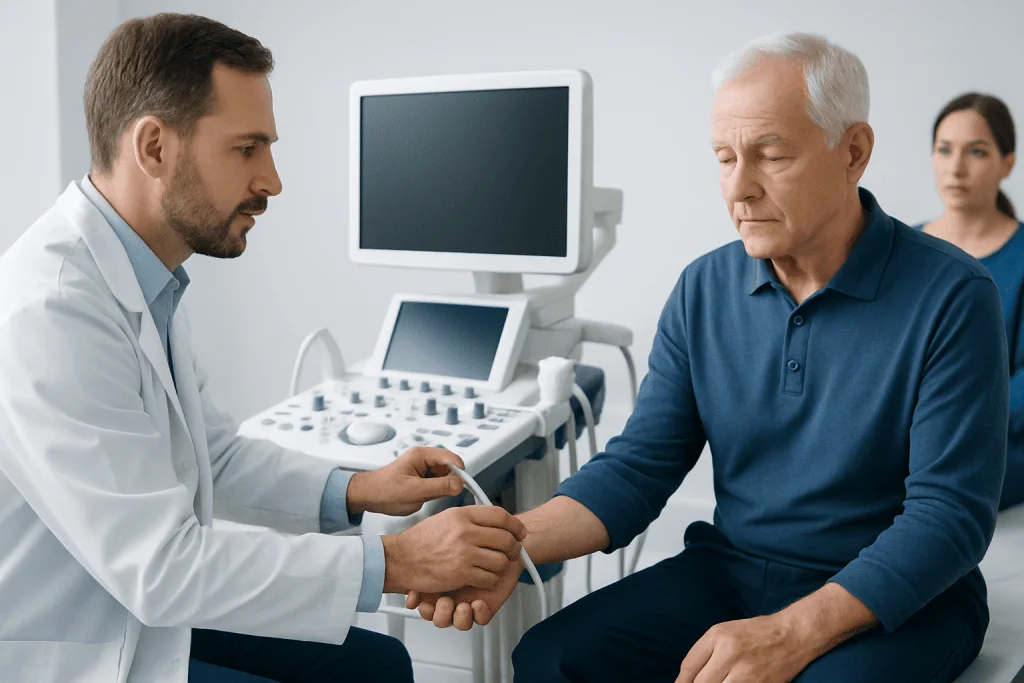
The single most useful clue is when the tremor happens. Essential tremor is usually an action tremor. That means it appears while a person is moving, reaching for something, writing, drinking from a cup, or holding the arms out against gravity. By contrast, parkinsonian tremor is classically a resting tremor. It tends to be more noticeable when the hand or limb is relaxed, such as when sitting quietly, and it may lessen during purposeful movement.
The body distribution also matters. Essential tremor commonly affects both hands and forearms, although one side may be worse. It can also involve the head, causing a “yes-yes” or “no-no” motion, and may affect the voice. Parkinsonian tremor often begins on one side, especially in one hand, and may look like a pill-rolling movement of the fingers. Head and voice tremor are less typical in Parkinson disease.
Specialists also ask about associated features. Essential tremor may interfere with fine motor tasks but usually does not cause stiffness or slowness. Parkinsonian tremor often comes together with other signs of Parkinson disease, such as:
- slowness of movement
- muscle stiffness or rigidity
- smaller handwriting
- reduced arm swing while walking
- balance changes
- a softer voice or less facial expression
Some people notice that stress, fatigue, caffeine, or anxiety make any tremor more visible. That can happen in both conditions, so it is not enough on its own to distinguish them. The overall pattern is much more important than any single trigger.
Causes and Risk Factors

Essential tremor is considered a neurologic movement disorder, and it often runs in families. In many people there is a genetic tendency, although the exact cause can vary and is not always identifiable. It is not simply a sign of nervousness, aging, or weakness. While it can start at different ages, it often becomes more noticeable over time.
Parkinsonian tremor is most often related to Parkinson disease, a neurodegenerative condition in which brain circuits involved in movement are affected. Tremor is only one feature of Parkinson disease. Some people with Parkinson disease have a prominent tremor, while others have very little tremor and more difficulty with stiffness or slowed movement. Patients who want to learn more about this condition may also read about essential tremor and Parkinson disease care.
Age is a risk factor for both conditions, but they are not an inevitable part of getting older. A family history can strongly support the diagnosis of essential tremor. Parkinson disease risk is influenced by a combination of age, genetic susceptibility, and environmental factors, although many people develop it without a clear cause. The presence of other neurologic disorders, medication side effects, thyroid disease, or metabolic problems may also cause tremor, which is why the evaluation must stay broad.
How Doctors Make the Diagnosis
Diagnosis begins with a careful history. The doctor asks when the tremor started, whether it came on gradually or suddenly, which body parts are involved, and whether the shaking is worse at rest or during action. Questions about handwriting, walking, balance, voice, family history, medication use, caffeine intake, and daily function can all provide useful clues.
The neurologic examination is central. A specialist watches the hands at rest, with the arms held out, and during tasks such as drawing, pouring water, or touching a finger to the nose. They also look for slowness, rigidity, reduced facial expression, changes in posture, and gait differences. In many cases, this examination is enough to strongly suggest one diagnosis over the other.
There is no single blood test that confirms essential tremor or parkinsonian tremor. However, blood tests may be used to rule out other causes such as thyroid problems or medication-related tremor. In selected cases, brain imaging or specialized functional imaging may help when the diagnosis remains uncertain. Some patients may also benefit from advanced assessment through neurophysiology or neuroradiology services, especially when symptoms are complex.
Doctors also consider conditions that can mimic or overlap with tremor disorders. For example, abnormal postures or twisting movements may suggest dystonia rather than classic essential tremor or Parkinson disease. Because symptoms can evolve, follow-up over time is sometimes the best way to reach a confident diagnosis.
Treatment Options for Each Condition
Treatment depends on the diagnosis, symptom severity, and how much the tremor affects daily life. Mild essential tremor may not need medication if it causes little disruption. When treatment is needed, doctors may use medicines that reduce action tremor and improve practical tasks such as eating, writing, or dressing. Occupational therapy strategies, weighted utensils, and adaptive devices can also be helpful.
Parkinsonian tremor is treated in the broader context of Parkinson disease. Medications are chosen not only to reduce tremor but also to address slowness, stiffness, walking difficulty, and other symptoms. Response to treatment can itself provide useful diagnostic information, although it is not the only factor doctors rely on.
For some people with more disabling symptoms that do not respond well to medication, procedural treatments may be considered. These may include carefully selected neuromodulation approaches as part of specialist care. Decisions about advanced therapy are individualized and based on overall health, symptom pattern, and treatment goals.
Treatment should always be personalized. A plan that works well for one person may not suit another, even if the diagnosis is the same. In experienced centers, multidisciplinary teams may include neurologists, rehabilitation specialists, speech therapists, and mental health professionals when needed.
Prevention, Self-care, and Living Well With Tremor
Neither essential tremor nor Parkinson disease can always be prevented, but self-care can reduce symptom burden and improve confidence in daily life. Many people find it useful to identify personal triggers, such as fatigue, emotional stress, or excess caffeine, and then make practical adjustments. Good sleep, regular meals, hydration, and a consistent routine can help the nervous system function more steadily.
Physical activity is important in both conditions. Gentle strength work, stretching, balance exercises, and walking may support mobility and coordination. If Parkinsonian features are present, a doctor may recommend formal physical therapy or exercise programs tailored to gait, posture, and balance. For essential tremor, occupational therapy can provide techniques for handwriting, meal preparation, and other fine motor tasks.
It is also helpful to review all medications with a clinician, because some drugs can worsen tremor. Emotional stress can amplify visible shaking even when it is not the cause, so relaxation techniques, counseling, and support groups may be valuable. People should avoid self-diagnosing based only on internet videos or family stories, because several neurologic conditions can look similar.
Near the end of the care journey, some patients seek comprehensive evaluation in specialty centers. Acibadem International’s multidisciplinary specialists and JCI-accredited hospitals diagnose and treat tremor disorders for international patients, with care tailored to the individual diagnosis and symptoms.
When to See a Doctor
A medical evaluation is appropriate when tremor is new, worsening, or interfering with work, writing, eating, or other everyday activities. It is especially important to seek care if shaking occurs together with slowness, stiffness, balance problems, falls, speech changes, or a noticeable decline in fine motor control. Early assessment can help clarify the diagnosis and start supportive treatment sooner.
Urgent medical attention is needed if tremor begins suddenly, especially with weakness, numbness, severe headache, confusion, facial drooping, or trouble speaking. These symptoms are not typical of essential tremor or Parkinson disease and may point to another neurologic emergency such as stroke.
People should also speak with a doctor if they are unsure whether a medication, caffeine, alcohol use, or another health problem may be contributing to shaking. Because tremor disorders can evolve over time, follow-up visits are often as important as the first consultation. A clear diagnosis may take more than one appointment, and that is a normal part of careful neurologic care.
Frequently asked questions
What is the main difference between essential tremor and parkinsonian tremor?
The main difference is the setting in which the tremor appears. Essential tremor usually happens during movement or when holding a posture, while parkinsonian tremor is typically more noticeable at rest. Doctors also look for other signs such as stiffness and slowness, which support Parkinson disease.
Can essential tremor turn into Parkinson disease?
Essential tremor does not simply "turn into" Parkinson disease in most people. However, a person can have one condition and later develop another movement disorder, or the original diagnosis may need to be reconsidered as symptoms evolve. This is one reason regular follow-up can be helpful.
Does a head tremor mean it is not Parkinson disease?
Head tremor is more common in essential tremor than in Parkinson disease. Still, diagnosis should never be based on one feature alone. A neurologist considers the full pattern of symptoms and examination findings.
Are scans always needed to diagnose tremor?
No. In many patients, the diagnosis is made through medical history and neurologic examination. Scans or additional tests are usually reserved for unclear cases or when another cause of tremor needs to be ruled out.
Can stress cause these tremors?
Stress does not usually cause essential tremor or Parkinson disease, but it can make tremor more noticeable. Fatigue, anxiety, and stimulants such as caffeine may have a similar effect. Managing these triggers can improve day-to-day control, even though they are not the root cause.
Is tremor always a sign of Parkinson disease?
No. Tremor has many possible causes, including essential tremor, medication effects, thyroid disorders, and other neurologic conditions. That is why new or persistent shaking should be assessed by a qualified clinician rather than assumed to be Parkinson disease.
References
- National Institute of Neurological Disorders and Stroke
- Parkinson's Foundation
- International Parkinson and Movement Disorder Society
- National Health Service
- Mayo Clinic
This article is for general information only and is not a substitute for professional medical advice. Please consult a qualified doctor about your individual situation.
Tremor in Turkey — costs, top hospitals & a free quote
JCI-accredited · board-certified surgeons · reply within 24h
Add us as a Preferred Source to see more of our trusted health content across Google Search, AI Overviews and Discover.

Neurology
Diagnosis and treatment of disorders of the brain, spinal cord, nerves and muscles.
51 specialists in this unit