

Ear Reconstruction for Microtia: When Surgery Is Done and What to Expect

Microtia is a congenital condition in which the outer ear does not fully develop. Ear reconstruction is often timed for later childhood, but the best age depends on the technique used and the individual patient.
Key Takeaways
- Microtia is a congenital condition in which the outer ear does not fully develop.
- Ear reconstruction is often timed for later childhood, but the best age depends on the technique used and the individual patient.
- Treatment planning may include hearing tests, imaging, and coordination with ENT, audiology, and plastic surgery specialists.
- Several reconstruction options exist, including rib cartilage reconstruction, synthetic implant reconstruction, or a prosthetic ear.
- Recovery usually happens in stages and requires careful wound care, follow-up visits, and realistic expectations.
Ear reconstruction for microtia is a personalized procedure that creates or reshapes the outer ear when it is underdeveloped or absent. Timing, surgical method, and recovery depend on the child’s anatomy, hearing needs, overall health, and family goals.
Overview
Ear reconstruction for microtia is a procedure used to create a more natural-looking outer ear when the ear is small, misshapen, or absent from birth. Microtia can affect one ear or both ears, and its severity varies. Some children have a slightly underdeveloped ear, while others have little visible outer ear tissue. Families may also hear the term microtia during early evaluations.
The main goal of reconstruction is to improve the shape, size, and position of the outer ear. For many patients, this can help facial balance and self-image. It is important to understand that reconstruction addresses the visible ear, also called the auricle or pinna. Hearing care may require separate evaluation and treatment, especially if the ear canal is narrow or absent.
Planning usually involves more than one specialist. A plastic or reconstructive surgeon, ENT doctor, and audiologist may all take part in the decision-making process. Together, they assess appearance, hearing, anatomy, and the most suitable timing for surgery or other supportive care.
What Microtia Is and How It Affects a Child
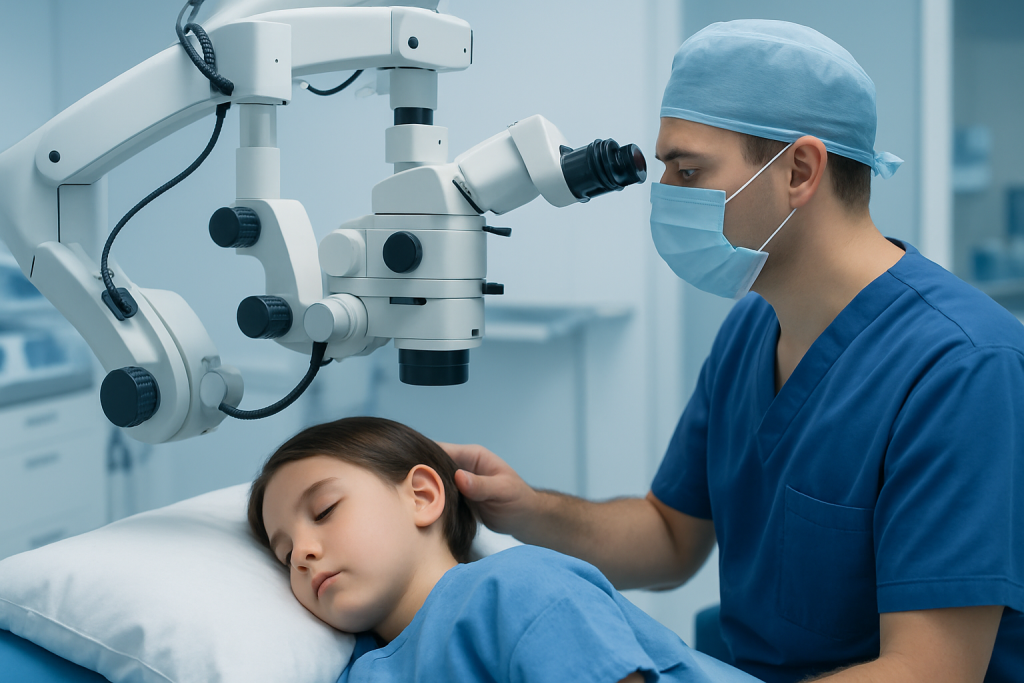
Microtia is a congenital difference, meaning it develops before birth. The exact cause is not always known. In many cases, it happens sporadically, without a clear inherited pattern. Sometimes microtia appears as part of a syndrome or with other craniofacial differences, so the care team may recommend a broader evaluation.
The condition mainly affects the outer ear, but it can also be linked with atresia, where the ear canal is partly or completely closed. This may reduce hearing on the affected side. Even when one ear hears normally, hearing tests are still important because hearing supports speech, language, learning, and social development.
The physical appearance of microtia can also affect confidence as a child grows. Some children are not bothered by the difference, while others may become more aware of it at school age. Families often consider reconstruction for both practical and emotional reasons, and the right decision is usually the one that fits the child’s needs and readiness.
When Surgery Is Done

One of the most common questions is when ear reconstruction for microtia should be done. There is no single age that suits every child. Timing depends on the reconstruction method, the size of the healthy ear, the amount of available tissue, chest wall development if rib cartilage is used, and the child’s emotional maturity.
For autologous reconstruction, which uses the patient’s own rib cartilage, surgery is often considered in later childhood when the rib cartilage is developed enough and the ear is closer to adult size. For implant-based reconstruction, some surgeons may consider treatment at a somewhat younger age if the tissues are suitable. The surgeon explains the pros and cons of each approach and how age influences results and recovery.
Timing may also depend on hearing care. If a child needs treatment for hearing loss or ear canal issues, the order of procedures should be carefully coordinated. This is why many centers prefer a team approach before deciding on surgery. Families benefit from discussing not only the technical plan, but also school timing, activity restrictions, and the child’s own wishes.
Surgical Options and How They Differ
There are several approaches to ear reconstruction. One option uses the patient’s own rib cartilage to build an ear framework that is placed under the skin. This approach has a long history and uses living tissue from the patient. It may involve more than one operation, and there can be temporary discomfort where cartilage is taken from the chest.
Another option uses a biocompatible synthetic framework covered with local tissue, often with a tissue flap and skin graft. This can create detailed ear shape and may sometimes be completed in fewer stages, but it requires careful patient selection and expert surgical planning. The surgeon will discuss possible benefits and limitations, including long-term protection of the implant.
Some patients may choose a prosthetic ear rather than surgery, or delay surgery until later. This can be a reasonable option in selected cases. A personalized plan may also include auricular (ear) reconstruction techniques tailored to the child’s anatomy and goals. If there are associated differences after trauma or scarring, reconstructive choices may overlap with care principles used in facial trauma or scar management such as keloid scars.
- Autologous reconstruction: uses the patient’s own rib cartilage
- Implant-based reconstruction: uses a synthetic ear framework
- Prosthetic ear: a non-surgical or delayed-surgery alternative
- Staged planning: common for both appearance and hearing-related care
Evaluation Before Surgery
Before surgery, the care team performs a detailed assessment. This usually includes a physical examination, medical history, and hearing evaluation. The surgeon studies the skin, hairline, symmetry of the face, and the size and position of the opposite ear. These details help guide the design of the reconstructed ear.
Imaging may be recommended in some cases, especially if the team is also assessing the middle and inner ear structures or considering hearing-related procedures. Families should ask whether imaging is needed before reconstruction, and whether it changes the timing of surgery. Not every child needs the same tests.
Preoperative discussions are an important part of care. The surgeon explains the number of stages, expected scars, hospital stay, anesthesia, activity restrictions, and likely appearance over time. Photographs or drawings may be used to support planning. The aim is to build realistic expectations and help the child and family feel prepared.
What to Expect During Recovery
Recovery depends on the type of reconstruction and whether it is done in one stage or several stages. After surgery, the ear is usually protected with dressings, and there may be swelling, bruising, and mild to moderate discomfort for a period of time. If rib cartilage is used, there can also be soreness in the chest area. The surgical team provides instructions on sleeping position, bathing, and activity limits.
Most children need close follow-up visits so the surgeon can monitor healing and the ear’s shape. Dressings may be changed, and the family is taught how to keep the area clean and protected. Contact sports and rough play usually need to be avoided until healing is well established. The exact timeline varies, so parents should follow their surgeon’s advice rather than compare one child’s recovery with another’s.
It is helpful to think of reconstruction as a process, not a single moment. The ear often looks different as swelling settles and tissues heal. Additional stages or refinement procedures may be planned to improve projection, contour, or symmetry. Broader reconstructive principles are similar to those used across cosmetic and reconstructive surgery, where healing and final appearance evolve over time.
Benefits, Risks, and Long-Term Expectations
For many patients, ear reconstruction can improve the balance of facial features and reduce self-consciousness about appearance. Children and adults often value having an ear shape that looks more natural from the front and side. Some families also appreciate that treatment can be planned in a way that supports the child’s social development and confidence.
Like any operation, ear reconstruction has risks. These may include bleeding, infection, delayed wound healing, scarring, asymmetry, changes in skin or graft appearance, exposure of a framework, or the need for revision surgery. When rib cartilage is used, there can also be discomfort or contour change at the donor site. The surgeon discusses these possibilities in the context of the individual child rather than as a fixed outcome.
Long-term results depend on anatomy, skin quality, surgical technique, healing, and protection of the reconstructed ear. The reconstructed ear may not exactly match a natural ear in every detail, but many patients achieve a meaningful aesthetic improvement. In experienced centers, planning often includes both appearance and function, especially if hearing support is also needed.
Self-care, Follow-up, and When to Seek Medical Advice
After reconstruction, good self-care supports healing. Families should follow instructions on wound care, dressings, sleeping position, and return to school or activities. Sun protection may be advised once the area has healed, as new scars can darken with sun exposure. If glasses are worn, the team may suggest when they can safely rest on or near the ear.
It is important to attend all follow-up appointments. These visits allow the surgeon to watch for pressure on the new ear, scar changes, or signs that a later stage is needed. Hearing care should continue as recommended, since reconstruction of the outer ear does not automatically correct hearing loss. In some cases, related support may involve ENT care, hearing devices, or other pediatric services.
Medical advice should be sought promptly if there is increasing redness, fever, drainage, severe pain, sudden swelling, or any injury to the reconstructed ear. Families should also contact the surgical team if they have concerns about dressings, skin color changes, or delayed healing. Acibadem International’s multidisciplinary specialists in JCI-accredited hospitals diagnose and treat microtia and provide individualized reconstructive planning for international patients, including ear reconstruction when appropriate.
Frequently asked questions
What is the best age for ear reconstruction for microtia?
The best age depends on the reconstruction method and the child’s anatomy. Rib cartilage reconstruction is often planned in later childhood, while some implant-based approaches may be considered earlier. A specialist team can explain which timing is most appropriate for the individual child.
Does ear reconstruction improve hearing?
Ear reconstruction mainly improves the appearance of the outer ear. It does not automatically restore hearing, especially if the ear canal or middle ear is also affected. Hearing needs should be assessed separately by an ENT doctor and audiologist.
How many surgeries are usually needed?
Some children need a staged reconstruction with more than one operation, while others may have a plan with fewer stages. The number depends on the technique used, healing, and whether refinement procedures are needed. The surgeon usually outlines this plan before treatment begins.
Is microtia surgery painful?
There is usually some discomfort after surgery, but pain is generally managed with standard postoperative care. If rib cartilage is used, the chest area may feel sore as well. The medical team provides guidance on comfort, positioning, and activity during recovery.
Will the reconstructed ear look exactly like the other ear?
The aim is to create an ear that looks natural and balanced with the face. However, a reconstructed ear may not match the opposite ear in every fine detail. Most patients and families focus on overall improvement in shape, symmetry, and confidence.
Can adults have ear reconstruction for microtia?
Yes, adults can also be evaluated for ear reconstruction. The surgical plan may differ from that used in children, but the same principles of anatomy, tissue quality, and realistic expectations apply. Adults who were not treated earlier can still discuss suitable options with a reconstructive surgeon.
References
- American Society of Plastic Surgeons
- American Academy of Otolaryngology–Head and Neck Surgery
- American Academy of Pediatrics
- National Institute on Deafness and Other Communication Disorders
- MedlinePlus
This article is for general information only and is not a substitute for professional medical advice. Please consult a qualified doctor about your individual situation.
Explore treatments in Turkey — costs, top hospitals & a free quote
JCI-accredited · board-certified surgeons · reply within 24h
Add us as a Preferred Source to see more of our trusted health content across Google Search, AI Overviews and Discover.

Related Treatments
Related Conditions
More from the Health Library

Related Specialists

Assoc. Prof. Dr. Erdem Güven (m)
Aesthetic Plastic & Reconstructive Surgery
Prof. Dr. Şükrü Yazar
Aesthetic Plastic & Reconstructive Surgery
Prof. Dr. Hakan Ağır
Aesthetic Plastic & Reconstructive Surgery
Prof. Dr. Bülent Saçak
Aesthetic Plastic & Reconstructive Surgery