Neuromuscular Diseases: How Doctors Diagnose Progressive Muscle Weakness

Neuromuscular diseases can affect muscles, peripheral nerves, motor neurons, or the junction between nerves and muscles. Progressive muscle weakness should be assessed carefully because the pattern of weakness often helps narrow the diagnosis.
Key Takeaways
- Neuromuscular diseases can affect muscles, peripheral nerves, motor neurons, or the junction between nerves and muscles.
- Progressive muscle weakness should be assessed carefully because the pattern of weakness often helps narrow the diagnosis.
- Diagnosis may involve neurological examination, blood tests, EMG and nerve conduction studies, imaging, genetic testing, and sometimes muscle or nerve biopsy.
- Some neuromuscular conditions are inherited, while others are autoimmune, inflammatory, metabolic, infectious, or degenerative.
- Early diagnosis can help improve symptom control, rehabilitation planning, and monitoring of breathing, swallowing, and mobility.
Neuromuscular diseases are a group of conditions that affect the nerves controlling muscles, the muscles themselves, or the communication between them. When progressive muscle weakness develops, doctors use a step-by-step approach to identify the cause and guide treatment and supportive care.
Overview
Neuromuscular diseases are conditions that interfere with the normal function of muscles and the nerves that control them. This broad group includes disorders of the muscles, peripheral nerves, motor neurons, and the neuromuscular junction, which is the point where a nerve communicates with a muscle. Because these structures work closely together, a problem in any one of them can lead to weakness, fatigue, cramps, muscle wasting, numbness, or difficulty with movement.
Progressive muscle weakness means that weakness develops gradually or worsens over time. It may first appear in the legs, arms, face, hands, or the muscles used for swallowing and breathing. Some conditions progress slowly over years, while others develop over days to weeks. Doctors pay close attention to the speed of progression, the parts of the body involved, and whether symptoms fluctuate during the day.
Not all muscle weakness is caused by a neuromuscular disease. Weakness can also occur with stroke, hormonal disorders, medication side effects, severe infection, poor nutrition, or general deconditioning. For that reason, diagnosis begins with ruling out common and treatable causes before moving to more specialized testing.
Although the term sounds complex, diagnosis is usually built step by step. A careful medical history and neurological examination often provide the first important clues, and additional tests are chosen based on the likely source of the problem.
Symptoms and Warning Signs
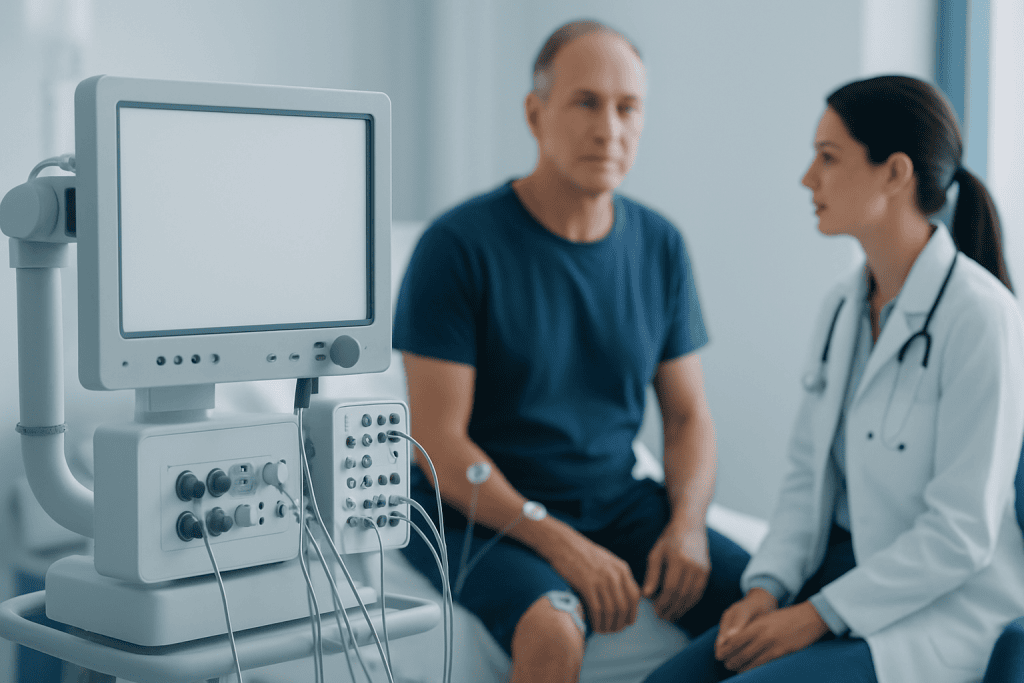
The most common symptom is muscle weakness that does not improve as expected or slowly gets worse. Some people notice trouble climbing stairs, getting up from a chair, lifting objects, raising the arms, or walking longer distances. Others develop weakness in the hands, leading to difficulty buttoning clothes, opening jars, or writing.
Symptoms depend on which part of the neuromuscular system is affected. Muscle disease often causes weakness closer to the center of the body, such as the shoulders and hips. Peripheral nerve disease may cause weakness along with numbness, tingling, burning pain, or reduced reflexes. Disorders at the neuromuscular junction may lead to fluctuating weakness that becomes more noticeable with repeated activity.
Additional symptoms can include muscle cramps, twitching, stiffness, fatigue, drooping eyelids, double vision, swallowing difficulty, slurred speech, balance problems, or shortness of breath. Some neuromuscular diseases may also affect the heart or breathing muscles, which is why comprehensive assessment is important.
- Weakness that spreads or worsens over time
- Frequent falls or trouble walking
- Difficulty swallowing, chewing, or speaking
- Drooping eyelids or double vision
- Muscle wasting, twitching, or persistent cramps
- Breathing problems, especially when lying flat or during sleep
Sudden severe weakness is different from slow progression and may point to an urgent condition. For example, some patients with Guillain-Barre syndrome develop rapidly worsening weakness over days and need prompt medical care.
Causes and Risk Factors

Neuromuscular diseases have many possible causes. Some are inherited and result from gene changes that affect muscle proteins, nerve function, or energy use within cells. Others are acquired later in life because of autoimmune inflammation, metabolic imbalance, toxic exposures, infections, or degenerative disease. In some cases, the exact cause remains unclear even after thorough testing.
Doctors usually group these conditions by the part of the body they affect. Motor neuron disorders involve nerve cells in the brain and spinal cord that control movement. Peripheral neuropathies affect nerves outside the brain and spinal cord. Myopathies affect muscle fibers directly. Neuromuscular junction disorders interfere with signal transmission between nerve and muscle. Some conditions overlap these categories.
Risk factors vary by diagnosis. Family history can suggest inherited disorders such as muscular dystrophies or certain hereditary neuropathies. Autoimmune diseases may increase the risk of inflammatory neuromuscular conditions. Age also matters, as some diseases are more common in childhood while others appear in midlife or older age. Doctors also review medicines, alcohol use, occupational exposures, and recent infections.
Examples of conditions in the broader differential diagnosis include inflammatory muscle disease, diabetic neuropathy, myasthenia gravis, inherited muscular dystrophy, and motor neuron disorders such as motor neuron disease. Sometimes other neurological conditions, such as syringomyelia, can also contribute to weakness and need to be distinguished from primary neuromuscular disease.
How Doctors Diagnose Progressive Muscle Weakness
Diagnosis begins with a detailed history. Doctors ask when the weakness started, whether it is stable or worsening, which muscles are involved, and whether symptoms are constant or fluctuate. They also ask about numbness, pain, fatigue, breathing symptoms, swallowing changes, infections, medications, family history, and exercise tolerance. Even small details, such as whether weakness is worse at the end of the day or after activity, can be helpful.
The neurological examination is central to the process. The doctor checks muscle strength, muscle bulk, tone, reflexes, coordination, gait, sensation, eye movements, facial strength, and speech. This helps determine whether the weakness is coming mainly from muscle, nerve, spinal cord, or the neuromuscular junction. For example, reduced reflexes may suggest peripheral nerve involvement, while prominent muscle wasting may raise concern for chronic nerve or muscle disease.
Blood tests are often used early to look for muscle breakdown, inflammation, vitamin deficiencies, thyroid disease, electrolyte problems, liver or kidney disease, autoimmune markers, and signs of infection. A creatine kinase level can be elevated in many muscle disorders, though a normal result does not rule them out. Genetic testing may be recommended if the pattern suggests an inherited condition or if there is a relevant family history.
Electrodiagnostic tests are especially important. Nerve conduction studies and electromyography, often performed through neurophysiology, help doctors tell the difference between nerve disease, muscle disease, and problems at the neuromuscular junction. Imaging such as MRI may be used to assess muscle changes or to rule out structural problems affecting the brain or spinal cord. In selected cases, doctors may recommend a muscle biopsy, nerve biopsy, breathing tests, heart evaluation, or sleep assessment. This broader workup is often coordinated in specialized neuromuscular diseases services.
Treatment Options
Treatment depends on the specific diagnosis, severity of symptoms, and the body systems involved. Some neuromuscular diseases can be treated directly, especially when the cause is autoimmune, inflammatory, metabolic, infectious, or medication-related. Inherited and degenerative conditions may not always be curable, but many symptoms can still be managed effectively, and supportive care can greatly improve quality of life.
Medical treatment may include immunotherapy for immune-mediated disorders, treatment of an underlying infection, correction of nutritional or hormonal abnormalities, or adjustment of medicines that may contribute to weakness. Some patients are referred to specialists in neuroimmunology when an autoimmune cause is suspected. For inherited or progressive disorders, care often focuses on preserving function and monitoring for complications.
Rehabilitation is a key part of treatment. Physical therapy can help maintain mobility, flexibility, and safe movement patterns. Occupational therapy can support hand function, energy conservation, and daily activities. Speech and swallowing therapy may be important when facial, throat, or respiratory muscles are affected. Nutritional guidance can also help if weight loss or swallowing difficulty is present.
Doctors may also monitor breathing, heart rhythm, sleep quality, and bone health, depending on the diagnosis. Assistive devices such as braces, walking aids, or respiratory support may be recommended when needed. The overall goal is not only to address the disease itself but also to maintain independence, safety, and comfort.
Prevention and Self-care
Many neuromuscular diseases cannot be fully prevented, especially inherited conditions. However, early recognition and regular medical follow-up can reduce complications and help patients stay active and safe. People who already have a diagnosis often benefit from a long-term care plan that includes monitoring strength, mobility, breathing, nutrition, and emotional well-being.
Self-care usually focuses on protecting function rather than pushing through weakness. Overexertion can sometimes worsen symptoms, so activity plans should be individualized. Gentle exercise, stretching, and supervised rehabilitation may be helpful, but it is best to follow advice from a doctor or therapist familiar with the underlying diagnosis.
- Keep regular follow-up visits and report any change in symptoms
- Use prescribed mobility aids or braces to reduce falls
- Maintain balanced nutrition and stay hydrated
- Discuss all medicines and supplements with a doctor
- Seek advice promptly for swallowing, breathing, or sleep problems
- Consider genetic counseling if an inherited condition is suspected
Family support and education are also important. Understanding the condition can help patients pace activities, plan home adjustments, and know when symptoms need urgent attention. Near the end of the diagnostic journey, some patients may benefit from evaluation at centers such as Acibadem International, where multidisciplinary specialists in JCI-accredited hospitals care for international patients with complex neurological and neuromuscular conditions.
When to See a Doctor
Any ongoing or progressive muscle weakness deserves medical attention, especially if it affects walking, climbing stairs, hand function, speech, or swallowing. Evaluation is also important when weakness is accompanied by muscle wasting, numbness, cramping, double vision, or repeated falls. A gradual pattern may seem easy to overlook at first, but early assessment can make diagnosis more straightforward and may identify treatable causes.
Urgent medical care is needed if weakness develops quickly, spreads over days, or affects breathing, swallowing, or the ability to stand and walk. Sudden weakness on one side of the body may suggest a condition such as stroke rather than a neuromuscular disease and should be treated as an emergency. Rapid progression, severe shortness of breath, or choking episodes should never be ignored.
Parents should seek evaluation for children who miss motor milestones, tire easily, fall often, or show unusual gait changes. Older adults should also be assessed promptly because weakness can increase the risk of falls and loss of independence. Whether symptoms begin in childhood or later life, a clear diagnosis helps guide treatment and long-term planning.
If the cause of weakness remains uncertain after initial assessment, referral to a neurologist is usually the next step. Specialized testing and multidisciplinary review can help distinguish among the many disorders that affect nerves and muscles and lead to a more accurate treatment plan.
Frequently asked questions
What are neuromuscular diseases?
Neuromuscular diseases are conditions that affect muscles, the nerves that control them, or the connection between nerves and muscles. They can cause weakness, fatigue, muscle wasting, cramps, numbness, or difficulty with swallowing and breathing.
How do doctors tell whether weakness is coming from a muscle or a nerve problem?
Doctors combine the medical history, neurological examination, blood tests, and electrodiagnostic studies such as EMG and nerve conduction tests. The pattern of weakness, reflex changes, sensory symptoms, and test results usually helps identify whether the main problem is in the muscle, nerve, or neuromuscular junction.
Is progressive muscle weakness always caused by a serious neurological disorder?
Not always. Progressive weakness can also be related to medication effects, thyroid disease, vitamin deficiency, metabolic problems, or general deconditioning. However, because some causes need specific treatment, ongoing weakness should be assessed by a qualified doctor.
What tests are commonly used to diagnose neuromuscular diseases?
Common tests include blood tests, electromyography, nerve conduction studies, MRI, and genetic testing. In selected cases, doctors may recommend a muscle biopsy, breathing tests, swallowing evaluation, or heart assessment depending on the suspected diagnosis.
Can neuromuscular diseases be treated?
Many can be treated or managed, although the best approach depends on the exact condition. Some respond to immune treatment, nutritional correction, or other targeted care, while others are managed with rehabilitation, symptom control, breathing support, and regular monitoring.
When should muscle weakness be treated as urgent?
Urgent evaluation is needed if weakness starts suddenly, worsens rapidly, or affects breathing, swallowing, or the ability to walk. Sudden weakness on one side of the body, severe shortness of breath, or choking should be treated as an emergency.
References
- World Health Organization
- National Institute of Neurological Disorders and Stroke
- National Institute of Arthritis and Musculoskeletal and Skin Diseases
- Muscular Dystrophy Association
- American Academy of Neurology
This article is for general information only and is not a substitute for professional medical advice. Please consult a qualified doctor about your individual situation.
Neuromuscular Diseases in Turkey — costs, top hospitals & a free quote
JCI-accredited · board-certified surgeons · reply within 24h
Add us as a Preferred Source to see more of our trusted health content across Google Search, AI Overviews and Discover.

Physical Medicine & Rehabilitation
Restoring movement and function after injury, surgery or neurological conditions.
152 specialists in this unit