Can You Wear Contacts After LASIK? What to Know

Contact lenses should not be worn immediately after LASIK unless an eye surgeon specifically instructs it. Some people may need contacts later for residual nearsightedness, farsightedness, or astigmatism.
Key Takeaways
- Contact lenses should not be worn immediately after LASIK unless an eye surgeon specifically instructs it.
- Some people may need contacts later for residual nearsightedness, farsightedness, or astigmatism.
- Dry eye, corneal healing, and flap stability affect when contacts can be used safely.
- A follow-up eye examination is important before restarting or trying contact lenses after LASIK.
- Persistent blur, pain, redness, or light sensitivity should be assessed by an eye doctor promptly.
Many people do not need contact lenses after LASIK, but some may use them later for temporary vision changes, dry eye management, or residual refractive error. Whether contacts are safe after LASIK depends on healing, eye health, and guidance from an eye specialist.
Overview
LASIK reshapes the cornea to reduce dependence on glasses or contact lenses. For many people, the goal is to see clearly without needing vision correction for everyday activities. Even so, the question of contacts after LASIK is common, especially during recovery or if vision changes over time.
In most cases, people should not wear their usual contact lenses right after LASIK. The eye needs time to heal, and the cornea is more sensitive in the early postoperative period. Putting in lenses too soon can increase irritation, interfere with healing, and raise the risk of infection.
Later on, some people may still use contact lenses for specific reasons. These can include a small leftover prescription, age-related vision changes, or situations where particularly sharp distance or near vision is desired. The safest approach is to let an ophthalmologist decide when the eye has healed enough and which type of lens, if any, is appropriate.
Why Someone Might Need Contacts After LASIK
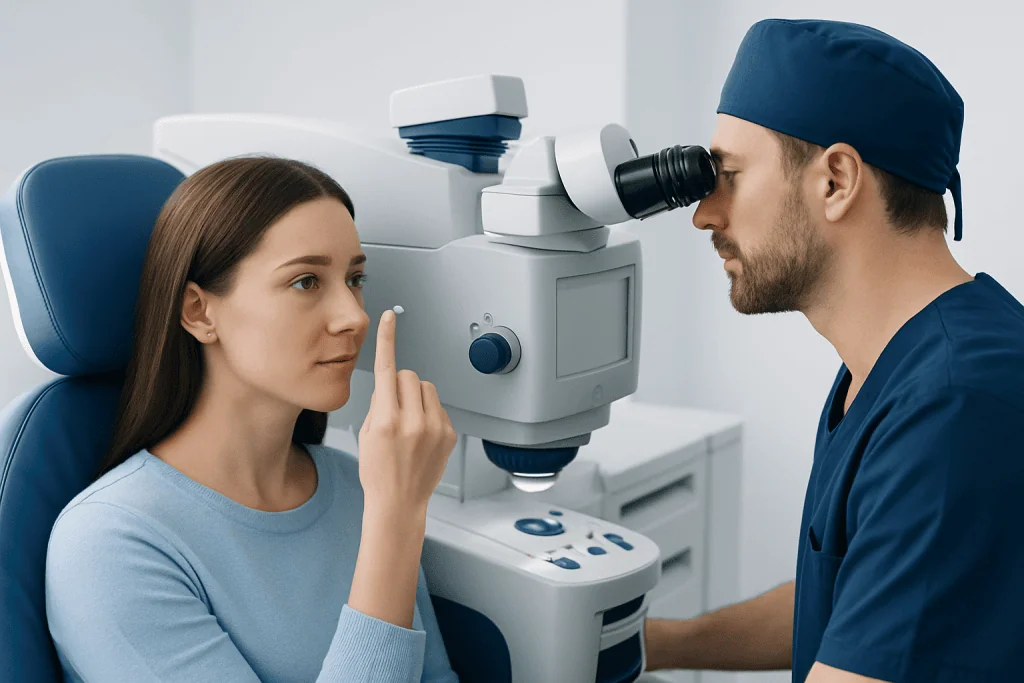
Although LASIK is highly effective for many refractive errors, it does not always eliminate the need for all vision correction forever. Some people have a small residual prescription after surgery, while others notice changes years later as the eyes naturally age. In these situations, contact lenses may still be considered.
One common reason is residual refractive error. A person may continue to have mild nearsightedness, farsightedness, or astigmatism that affects activities such as driving at night or reading signs from a distance. In some cases, temporary use of contact lenses may be a simple option if further surgery is not needed or not preferred.
Another reason is presbyopia, the age-related loss of near focusing ability that usually develops in the 40s and beyond. LASIK does not stop presbyopia from occurring. Someone who had excellent distance vision after surgery may later use reading glasses, or in selected cases may discuss specialty contact lenses with their eye doctor.
Contact lenses may also be used therapeutically in specific circumstances. Some surgeons place a special bandage contact lens after surface-based procedures such as PRK, but this is different from routine contact lens use after LASIK and should only be done under direct medical supervision.
When Is It Safe to Wear Contacts After LASIK?

There is no single timeline that fits everyone. The answer depends on how the eye is healing, whether there is dryness or irritation, and why the lens is needed. Immediately after LASIK, patients are usually advised to avoid placing anything in the eye other than prescribed drops. This helps protect the corneal flap and lowers the risk of complications.
For most people, contact lenses are not considered during the early healing phase unless an ophthalmologist specifically recommends them. At follow-up visits, the surgeon checks vision, the corneal surface, tear film, and flap position. Only after the eye is stable should contact lens wear be discussed.
If contact lenses are needed later, fitting may be different from before surgery. Because LASIK changes the corneal shape, an old lens prescription or lens design may no longer fit well. A fresh eye examination and contact lens assessment are important to choose a lens that sits comfortably and allows enough oxygen to reach the cornea.
People should never restart old lenses on their own after LASIK. Even if the lens still seems to provide clear vision, it may not fit the reshaped cornea properly. Poor fit can lead to discomfort, dryness, blurred vision, and stress on the corneal surface.
Symptoms and Problems That Can Affect Contact Lens Use
Dry eye is one of the most common reasons contact lenses may feel uncomfortable after LASIK. The surgery can temporarily affect corneal nerves involved in tear production, and some people notice burning, fluctuating vision, grittiness, or a feeling that the eyes tire easily. Contact lenses can make these symptoms more noticeable, especially in dry or air-conditioned environments.
Other symptoms can suggest that the eye is not ready for lens wear. These include persistent redness, pain, marked light sensitivity, tearing, or blurred vision that does not improve with blinking. These symptoms do not always mean a serious problem, but they do mean the eye should be checked before contact lenses are used.
In some cases, surface irritation or eye inflammation can mimic simple dryness. Eye conditions such as conjunctivitis or problems affecting the corneal surface can make post-LASIK lens use unsafe until treated. If there is discharge, swelling, or sudden worsening of symptoms, medical advice is especially important.
A less common issue is irregular corneal shape, which can affect vision quality after surgery. When this happens, standard soft contact lenses may not work well, and a specialist may consider other lens designs or further corneal evaluation through services such as cornea and external disease care.
How Doctors Evaluate Contact Lens Use After LASIK
Assessment begins with a detailed history. The eye doctor asks why contact lenses are needed, when LASIK was performed, what symptoms are present, and whether there have been any changes in vision. Dryness, allergies, rubbing the eyes, and screen-heavy daily habits can all affect comfort and safety.
The examination usually includes checking visual acuity, refraction, the corneal surface, tear film quality, and the overall health of the front of the eye. The doctor may also examine the LASIK flap and measure the cornea’s shape. This helps determine whether a contact lens is appropriate and which type is likely to be tolerated.
Not everyone who feels their vision is “not perfect” after LASIK needs contact lenses. Sometimes the main problem is dryness, glare, or an unstable tear film rather than a true refractive error. Treating the underlying issue may improve vision enough that no lens is required.
If residual refractive error is confirmed, the doctor may discuss several options. These can include updated glasses, contact lenses, dry eye treatment, or, in carefully selected cases, a laser enhancement such as LASIK touch-up or another refractive approach if the cornea is suitable.
Treatment Options and Practical Alternatives
If a person wants the clearest possible vision after LASIK and still has a small prescription, several options may be available. Glasses may be the simplest choice for occasional tasks such as nighttime driving or prolonged reading. Some people prefer this because it avoids the dryness and maintenance associated with contact lenses.
When contact lenses are appropriate, the eye doctor may recommend a soft lens, a daily disposable lens, or a specialty lens depending on the corneal shape and the amount of prescription remaining. The best lens after LASIK is the one that provides clear vision while preserving comfort and corneal health. Follow-up visits are often needed to confirm that the fit is safe.
For people whose symptoms are mainly due to dryness, treatment may focus on lubricating drops, eyelid care, environmental adjustments, and limiting factors that worsen evaporation. Improving the tear film can make vision more stable and may remove the need for contacts altogether.
In selected cases, a refractive enhancement may be discussed if the prescription is stable and the cornea is healthy. This is highly individualized. The right solution depends on eye measurements, symptoms, age, and visual goals rather than on a one-size-fits-all plan.
Self-care, Recovery Tips, and Prevention
Good aftercare supports healing and helps reduce the chance of needing lenses too soon. It is important to use prescribed eye drops exactly as directed, avoid rubbing the eyes, and attend all follow-up appointments. These simple steps protect the cornea and allow the surgeon to identify any healing concerns early.
Managing dryness can make a big difference in comfort after LASIK. Helpful habits may include staying well hydrated, taking breaks during long screen sessions, using a humidifier if the air is dry, and following advice about artificial tears or other supportive treatments. Contact lens use should only be added once the ocular surface is stable.
Lens hygiene remains essential if contacts are eventually prescribed. Hands should be clean before handling lenses, replacement schedules should be followed carefully, and lenses should never be worn longer than instructed. Sleeping in lenses or using old solutions can increase the risk of eye irritation and infection.
People who are considering refractive surgery but are not ideal candidates for LASIK may discuss alternatives such as ReLEx SMILE or surface procedures with their surgeon. Choosing the most suitable procedure from the beginning can help support better long-term comfort and vision quality.
When to See a Doctor
Any new or worsening eye symptoms after LASIK deserve attention, especially if a person is thinking about wearing contact lenses again. Medical advice is important for persistent blurred vision, eye pain, increasing redness, marked dryness, light sensitivity, or a feeling that something is stuck in the eye. These symptoms can have simple causes, but they should be assessed rather than ignored.
Urgent evaluation is especially important if symptoms appear suddenly or are associated with discharge, decreased vision, or significant discomfort. Early treatment of postoperative problems generally leads to better outcomes and can help protect long-term vision.
Even without alarming symptoms, anyone who wants to use contacts after LASIK should first have a professional fitting and eye health review. A lens that worked before surgery may no longer be suitable. The eye’s shape, tear film, and visual needs may all be different after treatment.
For patients seeking specialist assessment, Acibadem International’s multidisciplinary eye teams in JCI-accredited hospitals evaluate and treat refractive and corneal concerns for international patients. A careful examination can clarify whether contact lenses, glasses, dry eye therapy, or another approach is the most appropriate next step.
Frequently asked questions
Can someone ever wear contact lenses again after LASIK?
Yes, some people can wear contact lenses after LASIK, but only after the eye has healed and an eye doctor confirms that it is safe. The need may arise because of residual prescription, age-related vision changes, or specific visual tasks.
How soon after LASIK can contact lenses be worn?
There is no universal timeline, and people should not wear contacts soon after LASIK unless their surgeon specifically advises it. The timing depends on corneal healing, dryness, and the reason the lenses are needed.
Why might old contact lenses feel uncomfortable after LASIK?
LASIK changes the shape of the cornea, so lenses that fit before surgery may no longer sit properly afterward. In addition, temporary or ongoing dry eye can make lens wear less comfortable even if the prescription seems similar.
Are contacts after LASIK a sign that the surgery failed?
Not necessarily. Some people have a small remaining prescription, while others develop normal age-related vision changes over time. Needing occasional correction does not automatically mean the procedure was unsuccessful.
What kind of contact lenses might be used after LASIK?
That depends on the eye’s shape, tear film, and visual needs. Some people do well with soft lenses, while others may need a specialty design if the corneal surface is irregular or standard lenses are not comfortable.
Is dry eye common after LASIK, and does it affect contact lens use?
Dry eye is relatively common after LASIK, especially during recovery, and it can make contact lenses harder to tolerate. Treating dryness first often improves comfort and vision and may reduce or delay the need for lenses.
This article is for general information only and is not a substitute for professional medical advice. Please consult a qualified doctor about your individual situation.
LASIK in Turkey — costs, top hospitals & a free quote
JCI-accredited · board-certified surgeons · reply within 24h
Add us as a Preferred Source to see more of our trusted health content across Google Search, AI Overviews and Discover.

Related Treatments
More from the Health Library

Tearing in Babies: When a Blocked Tear Duct Needs Treatment

Premium vs Standard Lens Options in Cataract Surgery
What Does LASIK Eye Surgery Correct?

Retinal Tear vs Retinal Detachment: Key Differences and Urgent Signs

LASIK Vision Institute vs Hospital Eye Centers