Achalasia Treatment: Balloon Dilation vs POEM vs Heller Myotomy

Achalasia is a swallowing disorder caused by poor relaxation of the lower esophageal sphincter and abnormal esophageal movement. Balloon dilation, POEM, and Heller myotomy all relieve obstruction but differ in technique, durability, and reflux risk.
Key Takeaways
- Achalasia is a swallowing disorder caused by poor relaxation of the lower esophageal sphincter and abnormal esophageal movement.
- Balloon dilation, POEM, and Heller myotomy all relieve obstruction but differ in technique, durability, and reflux risk.
- Diagnosis usually involves upper endoscopy, esophageal manometry, and a timed barium swallow.
- Treatment choice is individualized based on achalasia subtype, overall health, esophageal anatomy, and local specialist expertise.
- Long-term follow-up matters because symptoms can return and gastroesophageal reflux may develop after treatment.
Achalasia treatment aims to help food and liquids pass more easily from the esophagus into the stomach. Balloon dilation, POEM, and Heller myotomy can all be effective, but the best option depends on the person’s anatomy, symptoms, age, and reflux risk.
Overview of achalasia and its treatment goals
Achalasia is an uncommon disorder of the esophagus, the tube that carries food from the mouth to the stomach. In achalasia, the lower esophageal sphincter does not relax properly during swallowing, and the muscles of the esophagus do not move food downward in the usual coordinated way. As a result, food and liquid can collect in the esophagus instead of entering the stomach smoothly.
People with achalasia often notice gradually worsening trouble swallowing, regurgitation of undigested food, chest discomfort, coughing, or weight loss. Because the condition tends to progress slowly, symptoms may first be mistaken for heartburn or another esophageal problem such as esophagitis or hiatal hernia. A proper diagnosis is important because standard acid-reducing medicines do not correct the underlying swallowing problem.
The main goal of achalasia treatment is to weaken or divide the tight lower esophageal sphincter so food can pass into the stomach more easily. The three most established options are pneumatic balloon dilation, peroral endoscopic myotomy (POEM), and laparoscopic Heller myotomy. Each can provide meaningful symptom relief, and the best option depends on individual factors rather than a single approach being right for everyone.
Symptoms and when treatment is considered
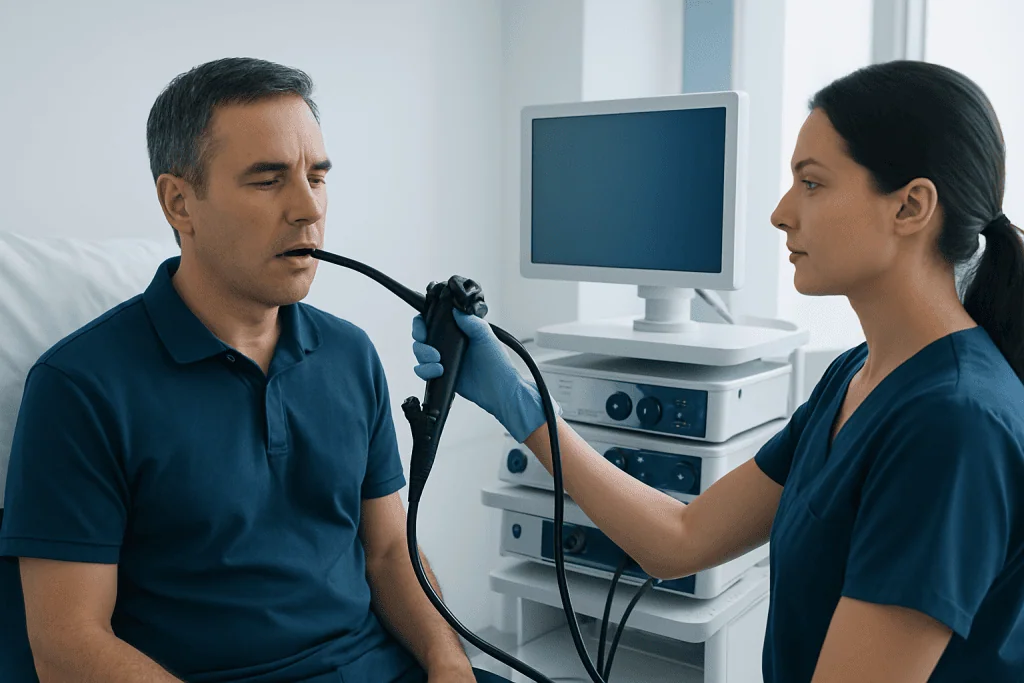
The most common symptom of achalasia is dysphagia, which means difficulty swallowing both solids and liquids. Unlike many other swallowing conditions, trouble with liquids may appear early. Some people feel that food is sticking in the chest, while others experience regurgitation, especially when lying down or bending forward.
Other symptoms may include chest pain, nighttime coughing, repeated choking episodes, bad breath, and unintentional weight loss. Retained food in the esophagus can also increase the risk of aspiration, meaning food or liquid enters the airway. In some cases, symptoms resemble gastroesophageal reflux, although the problem is actually poor emptying rather than too much stomach acid.
Treatment is usually recommended once achalasia has been confirmed and symptoms are affecting eating, comfort, or nutrition. Even if symptoms seem manageable, delaying care for a long time can lead to further stretching of the esophagus and make management more complex. Early specialist assessment can help preserve function and guide a more tailored treatment plan.
How achalasia is diagnosed before choosing a procedure
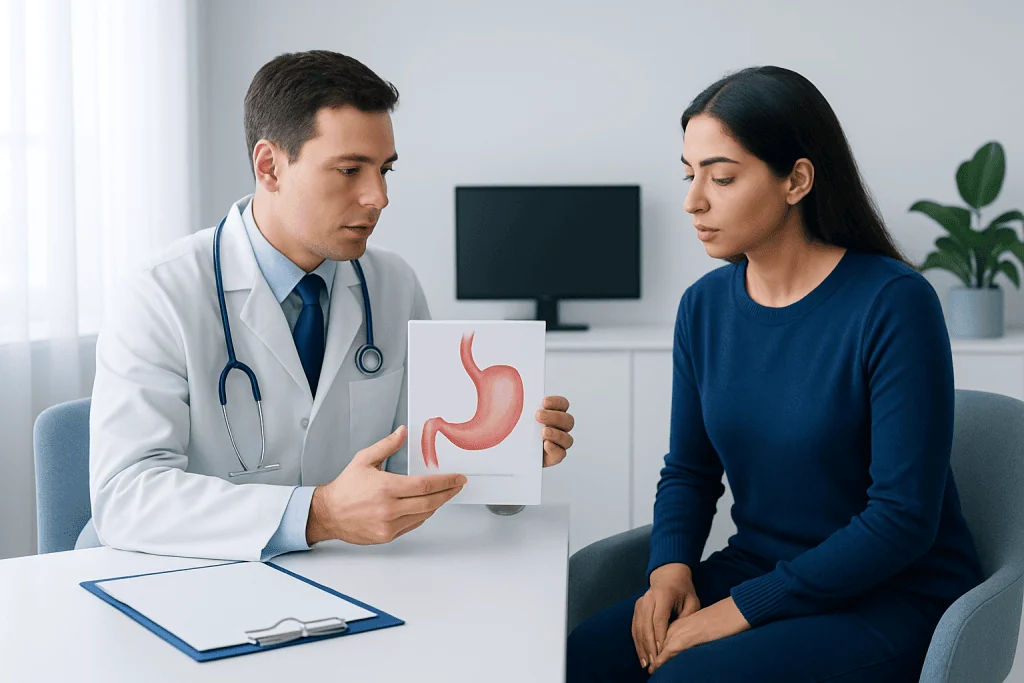
Before deciding between balloon dilation, POEM, or Heller myotomy, doctors first confirm the diagnosis and assess the pattern of esophageal dysfunction. Upper endoscopy is commonly performed to look inside the esophagus and stomach, rule out a blockage or cancer, and check for irritation caused by retained food. Endoscopy also helps identify related problems such as Barrett’s esophagus when reflux has been present.
Esophageal manometry is the key test for diagnosis. This test measures pressure and muscle coordination in the esophagus and identifies whether the lower esophageal sphincter relaxes properly. High-resolution manometry can also classify achalasia into subtypes, which may influence which treatment is most suitable.
A timed barium swallow is another important test. During this imaging study, the person drinks contrast liquid and X-rays track how well the esophagus empties over time. Together, manometry, endoscopy, and barium testing provide a fuller picture of severity, esophageal shape, and treatment planning. In specialized centers, evaluation may be guided by teams experienced in neurogastroenterology and esophageal motility disorders.
Balloon dilation: how it works, benefits, and limits
Pneumatic balloon dilation is a non-surgical treatment performed during endoscopy. A specially designed balloon is positioned across the lower esophageal sphincter and then inflated to stretch and partially disrupt the tight muscle fibers. The aim is to reduce resistance at the junction between the esophagus and stomach so swallowing becomes easier.
One reason balloon dilation remains an important option is that it can work well without an incision. Recovery is usually relatively quick, and it may be especially reasonable for some older adults or for people who prefer a less invasive first treatment. However, the effect may lessen over time, and some people need repeat dilations to maintain symptom relief.
There are also limitations to consider. Although serious complications are uncommon, esophageal perforation is a known risk and requires urgent care if it occurs. Balloon dilation may be less durable in some younger patients and may not be the best fit for all achalasia subtypes. A doctor weighs age, symptom pattern, esophageal anatomy, and local expertise before recommending this route.
- Potential advantages: no surgical incisions, short recovery, can be repeated
- Potential drawbacks: symptoms may recur, repeated sessions may be needed, small risk of perforation
- Best suited for: selected patients based on age, anatomy, and overall health
POEM: a minimally invasive endoscopic myotomy
POEM, or peroral endoscopic myotomy, is an advanced endoscopic procedure performed through the mouth. Using an endoscope, the doctor creates a tunnel within the wall of the esophagus and cuts the inner muscle fibers that are preventing normal passage of food. Because there are no external incisions, POEM is considered minimally invasive.
POEM has become widely used because it can provide strong symptom relief across different achalasia subtypes, including spastic forms that may be more difficult to treat with some other methods. It also allows the myotomy to be tailored in length, which can be especially helpful when abnormal muscle contractions extend higher in the esophagus. For many patients, hospital stay and recovery are relatively short.
The main trade-off is reflux. Because POEM does not routinely include an anti-reflux procedure, gastroesophageal reflux after treatment is relatively common and may require long-term monitoring or acid-suppressing therapy. Follow-up may include symptom review, endoscopy, or pH testing. Patients considering achalasia treatment through POEM usually discuss both swallowing improvement and the possibility of later reflux disease management.
- Potential advantages: no external incisions, effective in many achalasia subtypes, tailored myotomy length
- Potential drawbacks: postoperative reflux is common, requires specialized expertise
- Best suited for: many patients, especially when manometry shows spastic or type III achalasia
Heller myotomy: a surgical option with long-term experience
Laparoscopic Heller myotomy is a minimally invasive surgical procedure in which the surgeon cuts the tight lower esophageal sphincter muscle through small abdominal incisions. It is often combined with a partial fundoplication, an anti-reflux procedure that wraps part of the stomach around the lower esophagus to help reduce reflux after the myotomy. This combined approach is one reason many specialists continue to recommend it.
Heller myotomy has a long track record and can provide durable relief of dysphagia. For many patients, especially those who are good surgical candidates, it offers a balance between effective symptom control and reflux prevention. Recovery is typically longer than after purely endoscopic treatment, but it is still usually much easier than traditional open surgery.
As with any operation, there are risks such as bleeding, infection, anesthesia-related complications, or injury to nearby tissues. Some people may still develop reflux or recurrent swallowing symptoms over time. Even so, Heller myotomy remains a well-established standard of care, particularly when treatment planning is done by experienced upper gastrointestinal surgeons and gastroenterologists.
Balloon dilation vs POEM vs Heller myotomy: how doctors choose
There is no single best achalasia treatment for every person. Instead, the decision is personalized. Age matters because younger patients may need a treatment with stronger long-term durability, while some older adults may prefer a less invasive option. Achalasia subtype on manometry also matters, since POEM may be especially effective for spastic disease.
Reflux risk is another major factor. If minimizing postoperative reflux is a high priority, Heller myotomy with fundoplication may be attractive because it includes an anti-reflux step. POEM can be highly effective for swallowing symptoms, but patients should understand that acid exposure after the procedure may be more frequent. Balloon dilation can avoid surgery, but repeat treatment may be needed.
Esophageal anatomy also influences planning. A markedly dilated or sigmoid-shaped esophagus may be harder to treat and can require a more individualized strategy. Previous treatments, prior scarring, and other health conditions are also important. Shared decision-making is central: the doctor explains expected benefits, likely recovery, possible side effects, and the need for long-term follow-up so the patient can choose with confidence.
In tertiary centers, care may involve multidisciplinary review. Acibadem International’s multidisciplinary specialists at JCI-accredited hospitals diagnose and treat achalasia for international patients, with decisions guided by gastroenterology, endoscopy, surgery, and imaging teams.
Recovery, self-care, and when to seek medical advice
After any achalasia procedure, the care team usually recommends a stepwise return to eating. Many patients start with liquids and then progress to soft foods before resuming a more regular diet. Eating slowly, taking small bites, chewing thoroughly, and avoiding lying flat soon after meals can make recovery smoother. Follow-up visits are important to check symptom relief and nutrition.
Long-term self-care often includes paying attention to reflux symptoms such as heartburn, sour taste, chronic cough, or throat irritation. Even if swallowing improves, reflux can still affect the esophagus silently in some cases. A doctor may recommend medication, endoscopic monitoring, or further testing depending on symptoms and the type of procedure performed.
Medical advice should be sought promptly if there is severe chest pain, fever, trouble breathing, vomiting, inability to swallow liquids, black stools, or signs of dehydration after treatment. These symptoms do not always mean a serious complication, but they deserve urgent assessment. Anyone with recurring dysphagia months or years later should also be reevaluated, because additional treatment may help.
People newly diagnosed with achalasia often benefit from care in centers familiar with advanced endoscopy and esophageal surgery. Specialist follow-up helps ensure that symptom control, nutrition, and reflux prevention are all addressed over time.
Frequently asked questions
Which achalasia treatment is best: balloon dilation, POEM, or Heller myotomy?
The best treatment depends on the individual rather than one method being universally superior. Doctors consider age, achalasia subtype, esophageal anatomy, reflux risk, prior treatments, and the expertise available at the treating center. A specialist can explain which option offers the best balance of symptom relief and long-term outcomes.
Is POEM better than Heller myotomy?
POEM and Heller myotomy are both effective, but they have different strengths. POEM is less invasive externally and can be especially useful for spastic achalasia, while Heller myotomy is often paired with fundoplication to help reduce reflux afterward. The choice often comes down to anatomy, subtype, and the patient’s priorities.
How long does symptom relief last after balloon dilation?
Balloon dilation can provide good symptom relief, but some people need repeat treatments over time. Durability varies from person to person and may be influenced by age and disease features. Regular follow-up helps detect recurrence early if symptoms begin to return.
Can achalasia come back after treatment?
Symptoms can recur after any achalasia treatment, even when the initial response is very good. Recurrence does not necessarily mean treatment failed completely; it may reflect gradual muscle tightening, scarring, or progression of the underlying motility disorder. Additional evaluation can help determine whether repeat or alternative treatment is needed.
Will achalasia treatment cure acid reflux?
Not necessarily. In fact, some treatments for achalasia can increase the chance of reflux because they reduce the tightness of the lower esophageal sphincter. That is why follow-up for reflux symptoms and, when needed, endoscopic monitoring is an important part of long-term care.
What tests are needed before achalasia treatment?
Most patients need upper endoscopy, esophageal manometry, and a timed barium swallow. These tests confirm the diagnosis, define the subtype, and show how well the esophagus empties. Together, they help doctors recommend the most appropriate procedure.
References
- American College of Gastroenterology
- American Gastroenterological Association
- National Institute of Diabetes and Digestive and Kidney Diseases
- Society of American Gastrointestinal and Endoscopic Surgeons
- European Society of Gastrointestinal Endoscopy
This article is for general information only and is not a substitute for professional medical advice. Please consult a qualified doctor about your individual situation.
Achalasia in Turkey — costs, top hospitals & a free quote
JCI-accredited · board-certified surgeons · reply within 24h
Add us as a Preferred Source to see more of our trusted health content across Google Search, AI Overviews and Discover.

Gastroenterology
Diagnosis and treatment of the digestive system and liver, with advanced endoscopy.
43 specialists in this unit