

Black Male Nose Job: How Rhinoplasty Can Preserve Features

Rhinoplasty for Black men focuses on harmony, function, and preserving natural features. Skin thickness, cartilage strength, nostril shape, and bridge height all affect the surgical plan.
Key Takeaways
- Rhinoplasty for Black men focuses on harmony, function, and preserving natural features.
- Skin thickness, cartilage strength, nostril shape, and bridge height all affect the surgical plan.
- Ethnic and male rhinoplasty techniques often emphasize support and subtle definition rather than over-reduction.
- Choosing a board-certified plastic surgeon with experience in diverse noses is especially important.
- Recovery takes time, and final definition may continue to improve for many months.
- A careful consultation helps align personal goals with realistic surgical outcomes.
A Black male nose job usually refers to rhinoplasty planned to refine the nose while respecting natural facial identity, skin characteristics, and ethnic features. The best results come from individualized assessment, structural support, and clear discussion of goals rather than using a one-size-fits-all nose shape.
Overview: What a Black Male Nose Job Means
A Black male nose job is a patient-centered form of rhinoplasty that aims to improve the nose without erasing features that contribute to ethnic identity and masculine facial balance. People may seek surgery for cosmetic reasons, breathing problems, or both. Common goals include refining a wide nasal tip, increasing bridge definition, adjusting nostril width, or correcting asymmetry while keeping the nose natural-looking.
The term often overlaps with ethnic rhinoplasty and male rhinoplasty. Ethnic rhinoplasty recognizes that noses vary widely in skin thickness, cartilage strength, nostril shape, bridge height, and overall facial proportions. Male rhinoplasty also considers masculine contours, which often means avoiding an overly narrow bridge or over-rotated tip. Together, these principles support a result that fits the person rather than a trend.
For some patients, rhinoplasty is not only aesthetic. A history of injury, prior surgery, or congenital differences can affect both shape and breathing. In those situations, the surgeon may assess the nose as part of broader facial analysis, especially if there is a history of facial trauma. The goal is to create a balanced outcome that supports appearance and nasal function.
Common Goals and What Can Be Preserved
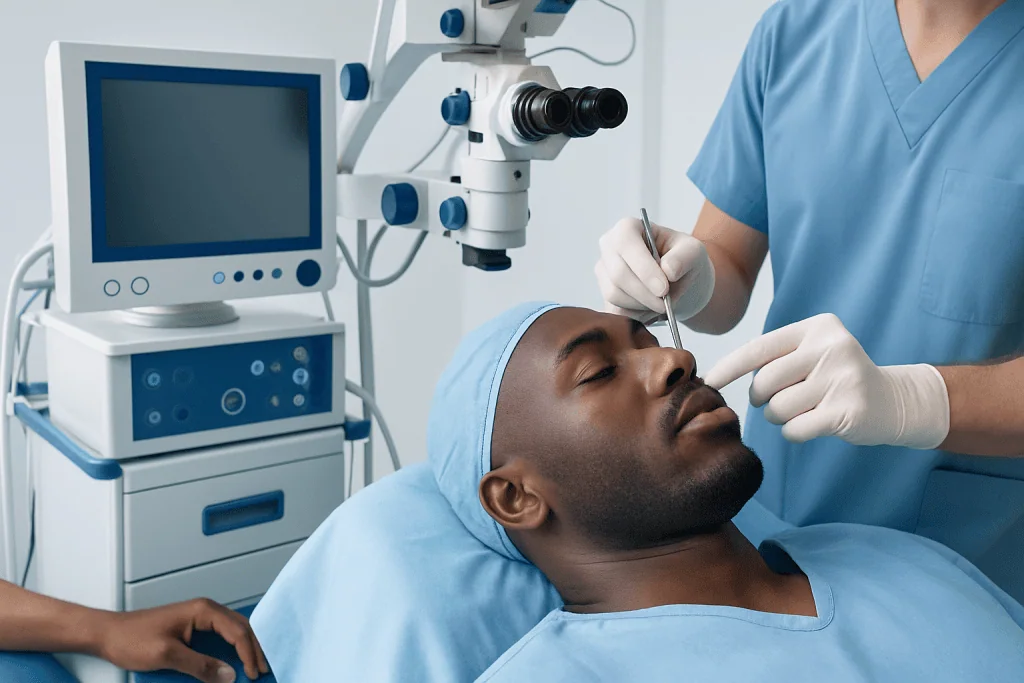
Every nose has unique traits, and many patients want improvement without looking like someone else. A common concern among Black male patients is whether surgery will make the nose appear too small, too sharp, or disconnected from the rest of the face. In a well-planned operation, surgeons can preserve identity by respecting overall facial structure, skin quality, and the patient’s own preferences.
Features that may be discussed during consultation include the width of the bridge, tip projection, tip definition, nostril flare, columella position, and the angle between the nose and upper lip. Some patients want only modest refinement, while others want stronger bridge support or more visible tip structure. Preservation does not mean no change; it means making changes that look proportionate and natural.
Rhinoplasty is often considered alongside other facial-balancing procedures when appropriate. For example, chin position can affect how prominent the nose appears from the side, so some patients may ask about chin aesthetic procedures during planning. In selected cases, volume balance in the midface may also influence how the nose is perceived, which is why discussions about cheek augmentation can occasionally be relevant.
Anatomy and Surgical Considerations in Ethnic Male Rhinoplasty

There is no single “Black nose,” and anatomical features vary greatly among individuals and families. Still, surgeons often consider a few common patterns: thicker skin over the tip, less tip cartilage support, a lower nasal bridge, and wider nostrils or alar base. These features influence how much visible definition can be created and which techniques are safest and most durable.
In many cases, the operation is more about building support than removing tissue. If cartilage is weak, simply reducing the nose can lead to collapse, pinching, or an unnatural appearance over time. Structural grafting may be used to support the bridge or tip and to help the shape remain stable as healing progresses. This is one reason why subtle, carefully supported changes are often preferred to aggressive reduction.
Skin thickness also matters. Thick skin can soften contour changes, so the surgeon may explain that fine details seen in thin-skinned noses are not always immediately visible. At the same time, preserving blood supply and avoiding excessive narrowing are important. Patients with a tendency toward prominent scarring may also want to discuss scar behavior, especially if they have a history of keloid scars, although standard rhinoplasty incisions usually heal discreetly.
The surgeon’s plan typically balances three priorities: breathing, structure, and appearance. If nostril width is reduced, bridge and tip relationships must still look natural. If bridge definition is increased, the tip and side walls need support to avoid an operated look. This type of nuanced planning is central to preserving features while still making meaningful improvement.
Consultation, Assessment, and Surgical Planning
A thorough consultation is one of the most important parts of rhinoplasty. The surgeon usually asks what bothers the patient most, what kind of change is desired, and whether breathing, sleep, allergies, or previous injury are concerns. Standardized photographs from multiple angles help analyze proportions and guide discussion. In some clinics, digital imaging may be used to explore possible outcomes, but these images are planning tools rather than promises.
During the physical examination, the surgeon evaluates the skin, cartilage, septum, nostril shape, facial symmetry, and internal airway. Medical history is also important, including smoking, medications, prior nasal surgery, and healing history. The consultation should make space for concerns about preserving ethnic identity and masculine appearance, and patients should feel comfortable saying what they do not want as well as what they do want.
Planning also includes deciding whether an open or closed rhinoplasty approach is more suitable. Open rhinoplasty uses a small incision across the columella and can provide excellent visibility for detailed tip and structural work. Closed rhinoplasty places incisions inside the nostrils and may be appropriate in selected cases. The best approach depends on anatomy, goals, and whether grafting or major structural adjustment is needed.
Because facial harmony matters, the conversation may extend beyond the nose alone. Some patients are generally exploring cosmetic and aesthetic surgery options to improve overall balance, while others need only a focused nasal procedure. A careful, honest consultation helps define realistic expectations and reduces the risk of disappointment after surgery.
How the Procedure Is Performed
Rhinoplasty is usually performed under anesthesia in a hospital or accredited surgical setting. Depending on the treatment plan, the surgeon may reshape cartilage, narrow the nostrils, build up the bridge, straighten the septum, or refine the tip. In ethnic and male rhinoplasty, preserving support is a major principle, especially when the goal is better definition rather than a smaller nose at any cost.
Cartilage grafts may be taken from the septum, ear, or, less commonly, another source when additional support is needed. These grafts can help strengthen the tip, improve bridge height, or support the nasal valves for breathing. The nostrils may be narrowed through carefully placed incisions at the alar base if flare is a concern. Each step is individualized to match the patient’s anatomy and desired level of change.
If breathing problems are present, functional correction may be combined with cosmetic reshaping. This can include addressing a deviated septum or weak sidewall support. When appearance and function are treated together, surgery aims for a nose that looks balanced and works well in daily life.
Recovery, Results, and Possible Risks
After surgery, swelling, congestion, and mild bruising are common. A splint may be placed on the nose for about a week, and internal support or dressings may sometimes be used. Most patients can return to light daily activities within one to two weeks, but visible swelling can last longer, especially in thicker skin. Final tip definition may continue to improve gradually over many months.
During recovery, patients are usually advised to keep the head elevated, avoid nose blowing, protect the nose from impact, and limit strenuous exercise until the surgeon says it is safe. Wearing glasses directly on the nose may need to be modified for a period. Follow-up visits are important so healing can be monitored and instructions adjusted if needed.
As with any surgery, rhinoplasty has risks. These can include bleeding, infection, asymmetry, persistent swelling, breathing changes, numbness, visible scarring, dissatisfaction with appearance, or the need for revision surgery. Risk does not mean a problem will happen, but it is important to understand that rhinoplasty is a complex procedure and healing is individual.
Patients often benefit from thinking of recovery as a process rather than a single event. Early changes can be encouraging, but the nose may continue to refine for a long time. Patience, realistic expectations, and close communication with the surgical team help support a smoother recovery experience.
Choosing a Surgeon and Protecting Natural Results
Choosing the right surgeon is one of the most important decisions in rhinoplasty. Patients should look for a board-certified plastic surgeon or facial plastic surgeon with specific experience in male and ethnic rhinoplasty. Reviewing before-and-after photos of patients with similar anatomy can be helpful, especially when the goal is preservation of identity rather than dramatic transformation.
Questions to ask include how often the surgeon performs rhinoplasty, whether they treat breathing issues at the same time, what approach they recommend, and how they manage thick skin or weaker cartilage support. It is also reasonable to ask how they define a natural result for Black male patients and what steps they take to avoid over-narrowing or loss of structural support.
A good consultation should feel collaborative. The surgeon should explain what is possible, what may be limited by anatomy, and what trade-offs might exist between refinement and preserving natural character. In experienced hands, rhinoplasty can enhance balance while still looking authentic to the patient’s face.
Near the end of the treatment journey, some international patients may choose centers such as Acibadem International, where multidisciplinary specialists in JCI-accredited hospitals evaluate and treat rhinoplasty candidates with individualized planning and follow-up care.
When to Seek Medical Advice
Anyone considering rhinoplasty should schedule a consultation if they are bothered by nasal shape, feel their nose does not fit the rest of their face, or have persistent breathing concerns. Medical evaluation is also important after injury, especially if there is a new deformity, blockage, pain, or asymmetry. A specialist can determine whether symptoms are cosmetic, structural, or both.
After surgery, urgent medical advice is needed for heavy bleeding, fever, worsening redness, severe pain not improving as expected, sudden shortness of breath, or signs of infection. These issues are uncommon, but prompt review is important. Patients should also contact their surgeon if they notice persistent obstruction, significant asymmetry during healing, or concerns about scar changes.
For people still unsure about surgery, a consultation can simply be educational. Learning what can realistically be improved, what should be preserved, and how recovery works often helps patients decide whether rhinoplasty is right for them at this stage of life.
Frequently asked questions
Can rhinoplasty for Black men preserve ethnic features?
Yes. A well-planned Black male nose job is designed to refine the nose while respecting ethnic identity and overall facial balance. The key is individualized planning rather than trying to copy a standard nose shape.
Is a Black male nose job different from standard rhinoplasty?
The basic procedure is rhinoplasty, but the planning and techniques may differ. Surgeons often pay special attention to skin thickness, cartilage strength, nostril shape, bridge support, and maintaining masculine contours.
Will the nose look too narrow or unnatural after surgery?
That is a common concern, and it should be discussed clearly during consultation. An experienced surgeon aims to avoid over-reduction and instead create a nose that looks proportionate, functional, and natural on the patient’s face.
How long does recovery take after rhinoplasty?
Most people return to routine non-strenuous activities within one to two weeks, although swelling can last much longer. Final results, especially around the tip, may continue to settle over several months and sometimes up to a year or more.
Can rhinoplasty also improve breathing?
Yes, in many cases it can. If a deviated septum, weak nasal valves, or other structural issues are present, functional correction may be combined with cosmetic reshaping in the same operation.
Who is a good candidate for a Black male nose job?
Good candidates are generally healthy adults with realistic expectations who want to improve nasal shape, function, or both. A consultation is important to confirm that goals are achievable and that the surgical plan fits the individual’s anatomy.
References
- American Society of Plastic Surgeons
- American Academy of Facial Plastic and Reconstructive Surgery
- National Health Service
- Mayo Clinic
- U.S. National Library of Medicine
This article is for general information only and is not a substitute for professional medical advice. Please consult a qualified doctor about your individual situation.
Rhinoplasty in Turkey — costs, top hospitals & a free quote
JCI-accredited · board-certified surgeons · reply within 24h
Add us as a Preferred Source to see more of our trusted health content across Google Search, AI Overviews and Discover.

Related Treatments
Related Conditions
More from the Health Library



Related Specialists

Assoc. Prof. Dr. Erdem Güven (m)
Aesthetic Plastic & Reconstructive Surgery
Prof. Dr. Şükrü Yazar
Aesthetic Plastic & Reconstructive Surgery
Prof. Dr. Hakan Ağır
Aesthetic Plastic & Reconstructive Surgery
Prof. Dr. Bülent Saçak
Aesthetic Plastic & Reconstructive Surgery