

Failed Fertilization in IVF: Common Causes and What Can Be Tried Next

Failed fertilization in IVF can involve all eggs or only some eggs in a treatment cycle. Possible causes may relate to egg quality, sperm factors, timing, ovarian response, or laboratory processes.
Key Takeaways
- Failed fertilization in IVF can involve all eggs or only some eggs in a treatment cycle.
- Possible causes may relate to egg quality, sperm factors, timing, ovarian response, or laboratory processes.
- A detailed cycle review often guides what can be tried next, such as ICSI, protocol changes, or further testing.
- One failed cycle does not automatically predict the outcome of future IVF treatment.
- Couples benefit from individualized planning with a fertility specialist rather than assuming a single cause.
Failed fertilization in IVF happens when some or all retrieved eggs do not successfully become embryos after insemination. Although this can be deeply disappointing, it does not always mean future treatment will fail, and a careful review can help identify possible causes and next-step options.
Overview
Failed fertilization in IVF refers to a situation where retrieved eggs do not fertilize as expected after they are combined with sperm in the laboratory. This may involve total fertilization failure, in which none of the mature eggs fertilize, or a lower-than-expected fertilization rate, where only a small number develop normally. For patients, this can be one of the most upsetting outcomes in fertility treatment because it may happen after days or weeks of preparation and egg retrieval.
In standard IVF, eggs and sperm are placed together so that fertilization can occur naturally in the laboratory dish. In some cycles, a different method called ICSI is used, where a single sperm is injected directly into each mature egg. If fertilization does not occur, the fertility team reviews the cycle carefully to understand whether the main issue was more likely related to the egg, sperm, timing, egg maturity, or another factor.
It is important to know that failed fertilization does not always have one clear explanation. In many couples, more than one factor may be involved. The next step is usually not to guess, but to assess the details of the cycle and decide whether adjustments in a future IVF treatment plan may improve the chance of success.
What Fertilization Failure Means in Practice
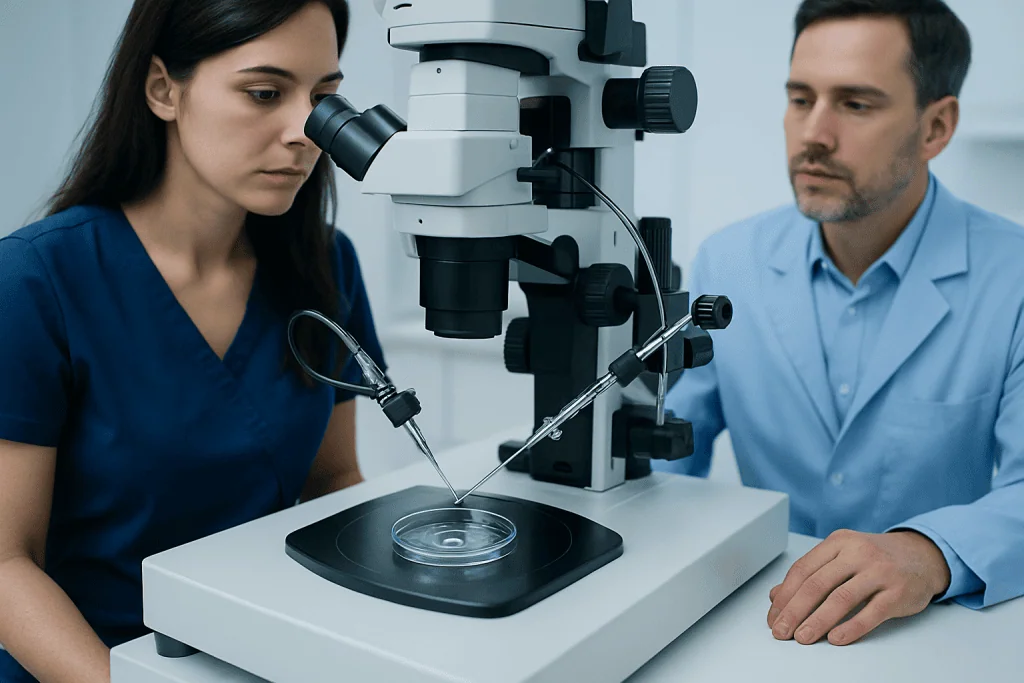
For fertilization to happen, several steps must occur in the right sequence. The egg should be mature, the sperm should be capable of reaching or being introduced into the egg, and the egg and sperm must then activate properly so embryo development can begin. If any part of this process is disrupted, normal fertilization may not happen.
Clinicians often distinguish between complete fertilization failure and partial fertilization failure. Complete failure means no normal embryos form from the mature eggs retrieved. Partial failure means some eggs fertilize, but fewer than expected. This distinction matters because it can point to different possible causes and may influence the plan for a future cycle.
Not every retrieved egg is expected to fertilize. Some eggs may be immature or unsuitable for fertilization even before insemination. A fertility specialist will usually review how many eggs were retrieved, how many were mature, whether standard IVF or ICSI was used, and what happened at each stage in the laboratory before discussing what can be tried next.
Common Causes and Risk Factors

Egg-related factors are one important cause of failed fertilization in IVF. An egg may look mature under the microscope but still have reduced developmental potential. Egg quality can be affected by age, ovarian reserve, underlying hormonal conditions, and how the ovaries responded to stimulation medication. Some patients with low ovarian reserve or premature ovarian insufficiency may have fewer mature eggs available, which can make any fertilization problem more noticeable in a cycle with a small egg number.
Sperm-related factors may also play a role, even when a semen analysis appears only mildly abnormal or sometimes even normal. Problems with sperm movement, shape, function, or the ability to activate the egg can interfere with fertilization. In some cases, a hidden sperm factor becomes more obvious only after failed standard IVF, which is one reason a future cycle may be planned differently.
Technique and timing can matter as well. Fertilization depends on collecting eggs at the right time, proper egg maturity, appropriate handling in the lab, and suitable insemination methods. A mismatch between insemination method and the couple’s biology may contribute. For example, if standard IVF is used and sperm cannot penetrate the egg on their own, ICSI may be considered in a later cycle.
Underlying reproductive conditions can increase complexity, though they do not always directly cause fertilization failure. Conditions associated with ovulation problems, such as polycystic ovary syndrome, or structural and gynecologic issues associated with broader female infertility may be part of the overall fertility picture. In some patients, coexisting findings such as ovarian cysts or hormonal cycle irregularities influence treatment planning rather than being the sole reason fertilization failed.
How Doctors Investigate the Cause
After a cycle with failed fertilization, the fertility team usually performs a detailed post-cycle review. This includes the patient’s age, ovarian reserve testing, stimulation response, number of follicles, number of eggs retrieved, and how many eggs were mature. The laboratory report is especially important because it shows whether the eggs appeared mature, which insemination method was used, and whether any signs suggested sperm or egg activation problems.
Semen analysis may be reviewed again, and additional sperm assessment can sometimes be considered depending on the history. If a male factor is suspected, clinicians may look more closely at sperm count, movement, and morphology, while also considering whether functional issues could have affected fertilization. In some cases, a previously unrecognized male factor becomes more apparent only after a failed cycle.
Further evaluation may include hormone testing, reassessment of ovulation or ovarian reserve, and review of any conditions affecting the reproductive organs. The aim is not always to find a single definite cause, because that is not always possible. Rather, it is to identify the most likely contributing factors and make the next cycle more tailored and evidence-based.
Patients often find it helpful to ask specific questions after the cycle. Useful points include how many eggs were mature, whether egg quality was a concern, whether sperm function might have contributed, and whether another insemination approach would be recommended next time. These questions can make the plan feel clearer and more manageable.
What Can Be Tried Next
The next step depends on what happened in the first cycle. One common change is moving from standard IVF to intracytoplasmic sperm injection if sperm penetration of the egg is thought to have been the problem. ICSI is often considered when there is total fertilization failure after conventional IVF, a known male factor, or a prior history suggesting a lower chance of fertilization with standard insemination.
Doctors may also adjust the ovarian stimulation protocol in a future cycle. The goal may be to improve the number of mature eggs retrieved, optimize timing of the trigger injection, or support better egg maturity at collection. In some patients, protocol changes are combined with closer monitoring to better match the treatment plan to their ovarian response.
If egg activation problems are suspected, the fertility team may discuss whether specialized laboratory approaches are appropriate, depending on the clinic’s practice and the couple’s history. If sperm quality is a concern, improvements in collection timing or sperm selection methods may be considered. In a small number of cases, more advanced evaluation of either partner may be recommended before another cycle begins.
There are also situations where broader fertility planning becomes part of the discussion. This may include reviewing the overall diagnosis of infertility, considering whether uterine or hormonal issues should be treated first, or discussing donor eggs or donor sperm when repeated cycles suggest a severe egg or sperm factor. The best path forward is individualized and should balance medical findings, age, time considerations, and patient preferences.
Prevention and Self-care Before Another Cycle
Not every case of failed fertilization can be prevented, because some causes are related to the biology of the egg or sperm and are not fully modifiable. Even so, careful preparation before another cycle may help the treatment team optimize conditions. This can include following medication instructions closely, attending monitoring visits, and discussing any concerns about timing, previous response, or test results in advance.
General health also matters. A balanced diet, regular sleep, avoidance of smoking, and limiting alcohol can support reproductive health in both partners. If there are chronic medical conditions such as thyroid disease, diabetes, or obesity, improving control before treatment may be helpful. Men may also be advised to review lifestyle factors that can affect sperm quality, such as heat exposure, tobacco use, and certain medications or supplements.
Emotional self-care is equally important. Failed fertilization can bring grief, frustration, self-blame, or uncertainty about whether to continue treatment. Many patients benefit from a follow-up consultation, counseling, or support groups to process the result and make decisions with a clearer understanding of their options rather than in the immediate distress of the cycle outcome.
Near the end of the planning process, some patients seek care in experienced fertility centers that can offer multidisciplinary assessment. Acibadem International’s specialists in reproductive medicine, working in JCI-accredited hospitals, diagnose and treat fertility problems for international patients and can help review options after unsuccessful fertilization.
When to See a Fertility Specialist Again
After failed fertilization in IVF, a follow-up appointment should be arranged before starting another cycle. This visit is the right time to review exactly what happened, discuss likely explanations, and decide whether additional testing or a different treatment method is appropriate. Moving directly into another cycle without this review may miss opportunities to improve the plan.
A couple should seek prompt reassessment if there has been total fertilization failure, repeated poor fertilization, a very low number of mature eggs, or signs that sperm factors may be contributing. Recurrent unsuccessful cycles often justify a broader review of both partners rather than focusing only on one step in the process.
Medical review is also important if menstrual patterns have changed, new pelvic symptoms have appeared, or there is a known condition that may affect fertility over time, such as amenorrhea. A fertility specialist can explain whether the issue is mainly about fertilization itself or whether it reflects a broader reproductive health problem that needs attention before trying again.
Frequently asked questions
Does failed fertilization in IVF mean pregnancy is no longer possible?
No. Failed fertilization in one IVF cycle does not automatically mean future treatment will fail or that pregnancy is impossible. Many couples go on to have a different plan in a later cycle, such as protocol changes or ICSI, after the fertility team reviews what may have contributed.
What is the most common reason eggs do not fertilize in IVF?
There is not one single reason for all cases. Common possibilities include egg maturity or egg quality problems, sperm factors, difficulty with sperm entering the egg, or less commonly issues with egg activation after sperm entry. Often more than one factor may be involved.
Can fertilization fail even if the semen analysis is normal?
Yes. A routine semen analysis provides useful information, but it does not measure every aspect of sperm function. Some sperm-related problems only become apparent when fertilization does not occur as expected in the IVF laboratory.
Is ICSI always recommended after failed fertilization?
Not always, but it is a common next-step option, especially after total fertilization failure with standard IVF or when a male factor is suspected. The decision depends on the details of the cycle, the number and maturity of eggs, sperm findings, and the couple's treatment history.
Can age affect fertilization success in IVF?
Yes. Age can influence egg quality, and this may affect the chance of normal fertilization and embryo development. However, age is only one factor, and younger patients can also experience fertilization failure for other reasons.
Should further testing be done before another IVF cycle?
In many cases, yes. The fertility team may recommend a detailed review of the previous cycle, repeat or additional semen testing, hormone evaluation, or reassessment of ovarian reserve and ovulation. The purpose is to make the next treatment plan more individualized.
This article is for general information only and is not a substitute for professional medical advice. Please consult a qualified doctor about your individual situation.
IVF & fertility treatment in Turkey — success rates and costs
JCI-accredited · board-certified surgeons · reply within 24h
Add us as a Preferred Source to see more of our trusted health content across Google Search, AI Overviews and Discover.
Check your numbers in seconds
BMI, calories, due date, blood pressure and 30+ more clinical calculators — free, instant, doctor-reviewed ranges.

Related Treatments
Related Conditions
More from the Health Library

Poor Embryo Development in IVF: What It Can Mean for the Next Cycle

How Long Does IVF Take From Consultation to Embryo Transfer?
Endometrial Thickness and IVF: Why the Uterine Lining Matters

Using Frozen Sperm in IVF: Storage, Thawing, and Fertilization Expectations

IVF Treatment: Who Is a Good Candidate?

IVF Cost in Turkey: What Affects the Price and What Is Usually Included
Gynecology & Obstetrics Specialists at Acibadem

Dr. Cavide Ali
Gynecology & Obstetrics
Prof. Dr. Cem Demirel
Gynecology & Obstetrics
Prof. Dr. Cem Fıçıcıoğlu
Gynecology & Obstetrics
Dr. Cem Öncüloğlu
Gynecology & Obstetrics