Using Frozen Sperm in IVF: Storage, Thawing, and Fertilization Expectations

Frozen sperm is stored in liquid nitrogen at very low temperatures to preserve viable sperm cells for future use. Some sperm do not survive freezing and thawing, but embryologists assess motility, count, and quality before use.
Key Takeaways
- Frozen sperm is stored in liquid nitrogen at very low temperatures to preserve viable sperm cells for future use.
- Some sperm do not survive freezing and thawing, but embryologists assess motility, count, and quality before use.
- Standard IVF may be possible with stronger thawed samples, while ICSI is often preferred when sperm numbers or motility are limited.
- The length of storage does not usually reduce sperm quality if the sample remains continuously and correctly cryopreserved.
- Planning ahead, infectious disease screening, consent forms, and clear laboratory protocols are important parts of sperm freezing and later IVF use.
Frozen sperm is commonly used in IVF for medical, fertility preservation, donor, and scheduling reasons. With careful cryostorage, controlled thawing, and the right fertilization method, many samples can be used safely and effectively in assisted reproduction.
Overview
Frozen sperm in IVF refers to the use of sperm that has been collected, processed, cryopreserved, and stored for later fertilization of eggs in a fertility laboratory. It may be used by couples undergoing infertility treatment, people preserving fertility before cancer therapy or other medical treatments, men with travel or work constraints, and patients using donor sperm. Frozen sperm is also helpful when sperm retrieval is planned in advance of an egg collection, especially if sperm numbers are expected to be low.
Sperm freezing is a well-established part of assisted reproductive care. After collection or surgical retrieval, the sample is mixed with protective solutions, divided into small labeled containers, and cooled to extremely low temperatures for storage. When the sample is needed, it is thawed by trained embryology staff and examined under the microscope before being used in IVF treatment or intracytoplasmic sperm injection.
Using frozen sperm does not mean that treatment is less carefully individualized. The fertility team considers the sperm’s post-thaw quality, the number of available eggs, the couple’s history, genetic or infectious screening needs, and whether standard IVF or ICSI is most appropriate. The goal is to use the available sperm in the safest and most efficient way while giving patients realistic expectations.
Why Sperm May Be Frozen Before IVF
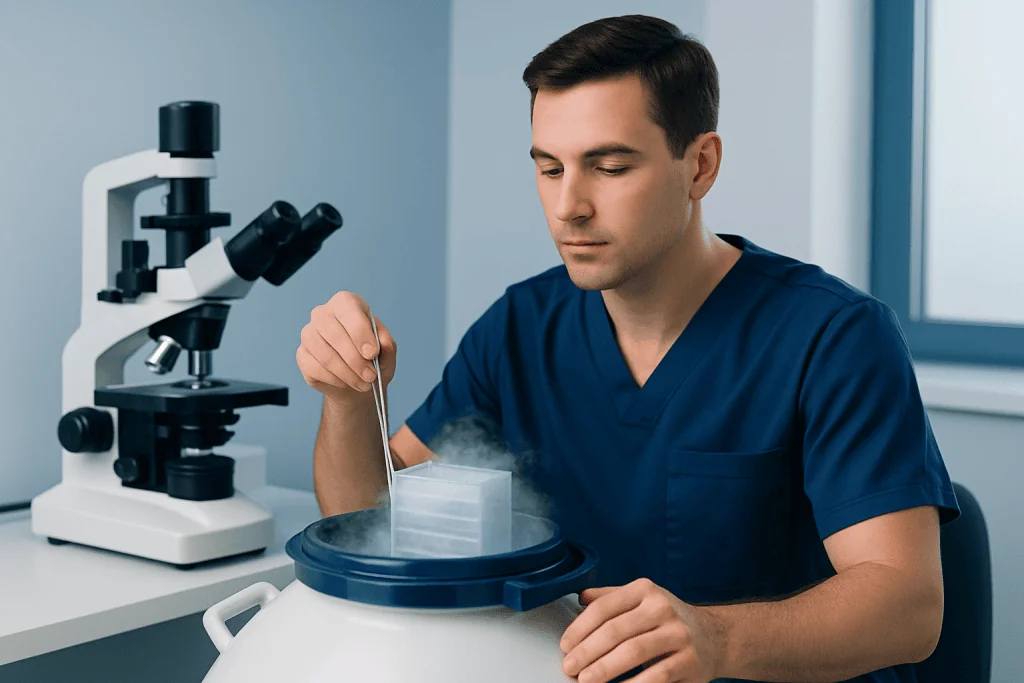
There are many medical and practical reasons to freeze sperm. Fertility preservation is one of the most important. Chemotherapy, radiotherapy, some pelvic or testicular surgeries, and certain medications can affect sperm production temporarily or permanently. Freezing sperm before such treatment may preserve the possibility of having biological children later.
Frozen sperm may also be used when the male partner cannot be present on the day of egg retrieval, has difficulty producing a sample under pressure, or has a history of variable semen results. Some patients have sperm retrieved directly from the testicle or epididymis because sperm are not present in the ejaculate. In these cases, freezing retrieved sperm can avoid repeating a surgical procedure at the same time as the female partner’s egg collection.
Other common situations include donor sperm treatment, prior vasectomy, severe male factor infertility, and fertility treatment for single women or same-sex female couples where permitted by local regulations. Sperm freezing may be part of a broader infertility evaluation, alongside assessment of ovulation, ovarian reserve, fallopian tubes, uterus, hormones, and lifestyle factors.
How Frozen Sperm Is Stored
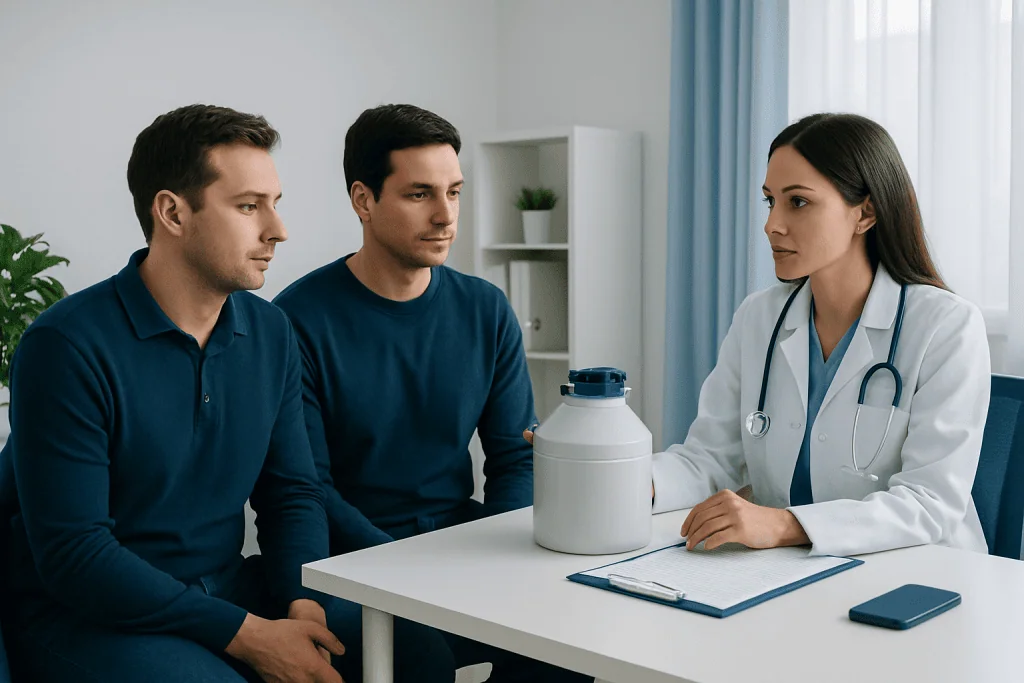
Before freezing, a semen sample is usually assessed for volume, sperm concentration, motility, and sometimes morphology. If the sample is produced by ejaculation, patients are commonly advised to follow the clinic’s instructions about abstinence timing and collection method. If sperm is obtained surgically, the laboratory receives tiny tissue or fluid samples and searches for usable sperm under magnification.
The sperm is then combined with a cryoprotectant, a solution that helps reduce damage from ice crystal formation and changes in fluid balance during cooling. The processed sample is usually divided into straws, vials, or other secure cryocontainers. Dividing the sample allows one portion to be thawed for a treatment attempt while other portions remain stored.
Long-term storage takes place in liquid nitrogen tanks, typically at approximately -196°C. At this temperature, cellular activity is essentially paused. If the sample remains continuously frozen and properly monitored, the time in storage itself is not usually the main factor affecting later use; the original sample quality, freezing method, and thaw survival are more important. Legal storage limits, consent renewal rules, and ownership instructions vary by country and clinic, so patients should review consent forms carefully.
Reliable identification is critical. Fertility laboratories use labeling, witnessing, electronic tracking, and chain-of-custody procedures to reduce the risk of errors. Patients are usually asked to provide written consent about storage duration, future use, disposal, use after death or separation, and whether the sample may be transferred to another clinic.
What Happens During Thawing
Thawing is performed in the embryology laboratory on the day the sperm is needed, or shortly before the planned fertilization procedure. The container is removed from liquid nitrogen and warmed according to the laboratory’s validated protocol. The cryoprotectant is then diluted or removed, and the sperm is prepared in culture media suitable for use with eggs.
Not every sperm cell survives freezing and thawing. It is expected that motility and total usable sperm numbers may be lower after thawing than they were before freezing. This does not automatically prevent IVF from proceeding, because fertilization may require only a limited number of good-quality motile sperm, especially if ICSI is used. The embryologist will assess whether there are enough moving sperm and whether additional frozen portions need to be thawed.
After thawing, the laboratory may use preparation techniques to select the most motile and structurally normal sperm available. These may include washing, density gradient preparation, or swim-up methods, depending on the sample. For very low-count samples, testicular sperm, or rare sperm, the laboratory may handle the specimen differently to preserve as many viable cells as possible.
Fertilization Expectations: IVF, ICSI, and Embryo Development
Fertilization with frozen sperm may be performed by conventional IVF or by ICSI. In conventional IVF, prepared sperm are placed in the same culture dish as the eggs, allowing sperm to penetrate the egg naturally in the laboratory environment. This approach generally requires adequate numbers of motile sperm after thawing and may be considered when semen quality is reassuring and there is no significant prior fertilization problem.
ICSI is often selected when sperm count, motility, or morphology is reduced, when sperm was surgically retrieved, when only a small amount of frozen sperm is available, or when there has been previous low or failed fertilization. In ICSI, an embryologist selects a single sperm and injects it directly into a mature egg. This can make efficient use of limited thawed sperm, although it does not guarantee fertilization or pregnancy.
After fertilization, embryos are monitored for normal development. The quality of embryos depends on many factors, including egg quality, sperm quality, age, genetic factors, laboratory conditions, and underlying fertility diagnoses. Frozen sperm that thaws well can support normal embryo development, but the fertility team should explain expectations based on the patient’s specific semen results and treatment history.
Patients often ask whether frozen sperm is “weaker” than fresh sperm. Freezing can reduce the number of motile sperm available, but properly cryopreserved sperm that survive thawing can fertilize eggs. When sperm parameters are borderline or limited, ICSI may help overcome some practical challenges by placing one selected sperm directly into each mature egg.
Safety, Screening, and Possible Limitations
Sperm freezing and use in IVF are considered established laboratory practices, but they require careful screening and documentation. Clinics commonly request infectious disease testing, such as screening for hepatitis B, hepatitis C, HIV, and other infections according to local laws and clinic policy. Donor sperm programs have additional selection, screening, quarantine, and regulatory requirements.
Freezing does not correct genetic or chromosomal problems in sperm. If there is severe male factor infertility, repeated pregnancy loss, known inherited disease, or very low sperm counts, the doctor may recommend genetic counseling or testing. The female partner’s evaluation is also important, because conditions affecting ovulation, tubal function, the uterus, or ovarian reserve can influence the overall treatment plan. In some cases, care may include investigation and treatment of female infertility factors alongside sperm preparation.
Limitations can include poor post-thaw survival, too few motile sperm, contamination concerns if screening is incomplete, or a limited number of stored vials. Sometimes more than one vial must be thawed for a single cycle. If the thawed sample is unexpectedly poor, the laboratory and physician may discuss changing from conventional IVF to ICSI, thawing an additional sample, or adjusting the treatment plan.
Patients should also understand the administrative side of storage. Annual storage renewal, contact information updates, and clear consent instructions help prevent future difficulties. If a couple separates, a patient dies, or consent expires, clinics must follow the law and the consent documents on file.
Preparing for Treatment and When to Seek Medical Advice
Good preparation begins before sperm is frozen. Patients should tell the fertility team about previous semen analyses, surgeries, infections, cancer treatment plans, medications, hormone use, smoking, alcohol intake, recreational drug use, and occupational heat or toxin exposure. These factors may influence the timing of collection, the number of samples recommended, and whether additional male fertility testing is needed.
Before an IVF cycle using frozen sperm, the couple or patient should ask how many vials are stored, what the post-thaw plan is, whether conventional IVF or ICSI is recommended, and what will happen if the sample thaws poorly. It is also useful to ask how unused thawed sperm is handled, whether additional sperm should be frozen, and whether any consent documents need updating before treatment starts.
Medical advice is appropriate if semen results are abnormal, ejaculation is difficult, there is a history of testicular injury or surgery, cancer treatment is planned, or pregnancy has not occurred after a reasonable period of trying. Men with pain, swelling, blood in semen, or symptoms of infection should seek prompt evaluation. Acibadem International’s multidisciplinary specialists and JCI-accredited hospitals can diagnose and treat fertility conditions for international patients, including cases where frozen sperm may be used in assisted reproduction.
Frequently asked questions
Does frozen sperm work as well as fresh sperm in IVF?
Frozen sperm can work very well in IVF when it is properly collected, stored, thawed, and prepared. Some sperm cells may not survive thawing, so the usable count and motility can be lower than in the fresh sample. The best fertilization method depends on the post-thaw sperm quality and the overall fertility situation.
How long can sperm stay frozen?
When sperm remains continuously stored in liquid nitrogen under proper laboratory conditions, long storage time itself is not usually expected to damage it. However, legal storage limits and consent renewal requirements vary by country and clinic. Patients should keep contact details updated and review storage agreements regularly.
What if the sperm does not thaw well?
If post-thaw motility or sperm numbers are low, the embryology team may thaw another vial if one is available or recommend ICSI rather than conventional IVF. In some cases, the doctor may discuss collecting a fresh sample, retrieving sperm surgically, or postponing treatment depending on the circumstances. The plan should be individualized before the egg retrieval whenever possible.
Is ICSI always needed with frozen sperm?
ICSI is not always required, but it is commonly used when frozen sperm numbers are limited, motility is reduced, or sperm was surgically retrieved. Conventional IVF may be possible if the thawed sample has enough motile sperm and there are no other concerns. The fertility team will recommend the method most suitable for the sample and the patient’s history.
Can sperm be frozen after chemotherapy or other medical treatment?
It may be possible, but sperm quality can be reduced after chemotherapy, radiotherapy, or certain medications. Whenever possible, sperm banking should be discussed before starting treatment that may affect fertility. A fertility specialist or oncologist can advise on timing and safety.
Does freezing sperm increase the risk of birth defects?
Current clinical practice supports sperm cryopreservation as an established assisted reproduction technique. Freezing itself is not considered to create genetic problems in sperm that were not already present. However, individual risks can depend on age, genetic history, infertility diagnosis, and other medical factors, so counseling may be recommended in selected cases.
This article is for general information only and is not a substitute for professional medical advice. Please consult a qualified doctor about your individual situation.
IVF & fertility treatment in Turkey — success rates and costs
JCI-accredited · board-certified surgeons · reply within 24h
Add us as a Preferred Source to see more of our trusted health content across Google Search, AI Overviews and Discover.
Check your numbers in seconds
BMI, calories, due date, blood pressure and 30+ more clinical calculators — free, instant, doctor-reviewed ranges.

Related Treatments
Related Conditions
More from the Health Library

Infertility in Men: Causes, Symptoms, and When Sperm Testing Is Needed

Sperm Health and Fertility: What Count, Movement, and Shape Mean

Fertility Checkup: What a Specialist May Review for Women and Men

Preimplantation Genetic Testing: PGT-A and PGT-M Explained

Androgen Insensitivity Syndrome (AIS): Diagnosis, Fertility Questions, and Specialist Care

Artificial Fertilisation Explained: Types, Candidates, and Success Factors
Gynecology & Obstetrics Specialists at Acibadem

Assoc. Prof. Dr. Cevat Rıfat Cündübey
Gynecology & Obstetrics
Dr. Cevdet Hekimoğlu
Gynecology & Obstetrics
Dr. Ceyda Perçinoğlu
Gynecology & Obstetrics
Dr. Cihan Deniz Keleş
Gynecology & Obstetrics