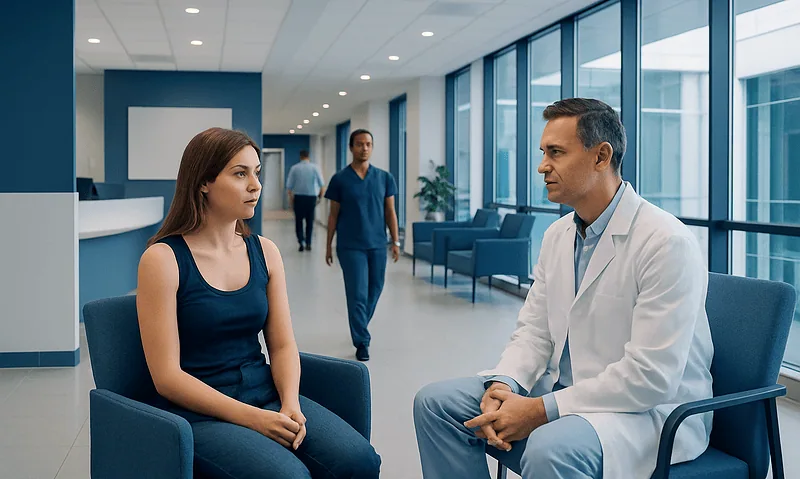
Abdomen Shape After Open Surgery: What’s Normal?
Abdomen shape after open surgery often changes from swelling, scar healing, and muscle recovery; most contour changes improve gradually over weeks to months.
Key Takeaways
- Temporary swelling and unevenness are common after open abdominal surgery.
- Healing tissues and scar formation can make the abdomen feel firm or look irregular for several weeks or months.
- A gradually improving contour is usually reassuring, while increasing pain, redness, fever, or a new bulge needs medical review.
- Gentle movement, following wound-care instructions, and avoiding strain support recovery.
- If shape changes persist or cause distress, a surgeon can assess whether they reflect normal healing, a hernia, fluid collection, or scar-related changes.
Abdomen shape after open surgery commonly looks different for a while. Swelling, firmness, asymmetry, and changes around the scar are often part of normal healing, but some symptoms should be checked by a doctor.
Overview: Why the Abdomen May Look Different After Open Surgery
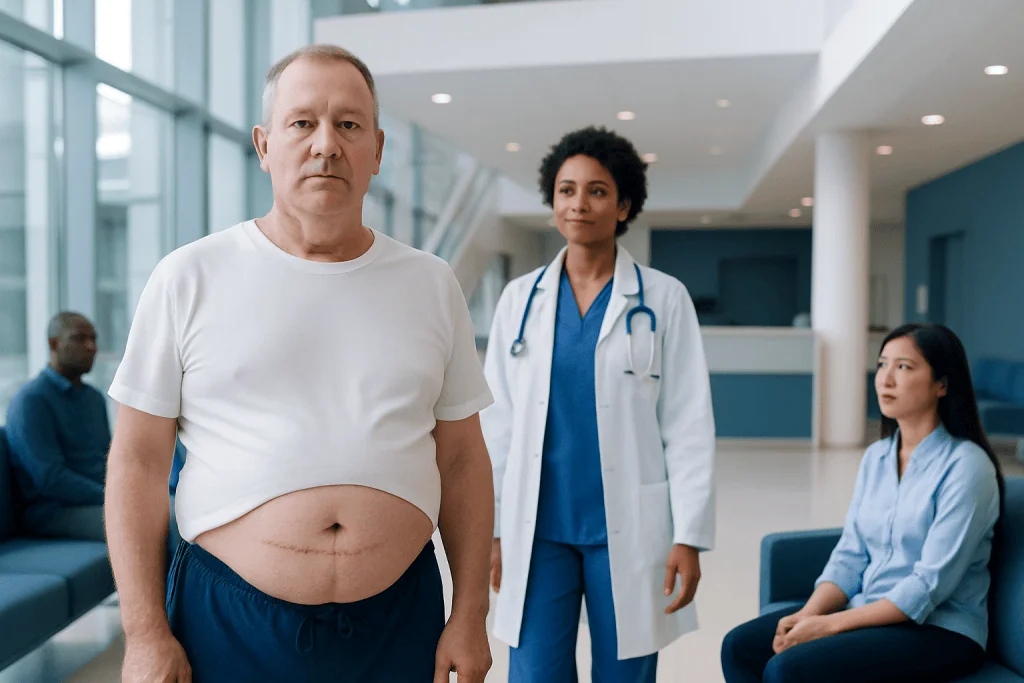
Abdomen shape after open surgery often changes during recovery, and in many cases this is expected. Open surgery involves a larger incision through skin, fat, and sometimes the abdominal wall muscles or their supporting layers. As these tissues heal, the abdomen may appear swollen, uneven, puffy, tight, or slightly misshapen for a period of time.
Several normal healing processes can affect the contour. These include inflammation, fluid shifting into tissues, bruising, temporary weakness of the abdominal wall, and the formation of scar tissue under the skin. Depending on the operation, the location of the incision, and the person’s body shape, the abdomen may look fuller on one side, flatter in one area, or mildly lumpy near the scar.
In most people, the shape improves gradually rather than all at once. Early recovery is often measured in days and weeks, while scar remodeling and deeper tissue settling can continue for months. A doctor can help explain what is typical for that specific procedure and whether the change is likely temporary or needs further evaluation.
What Can Be Normal During Healing
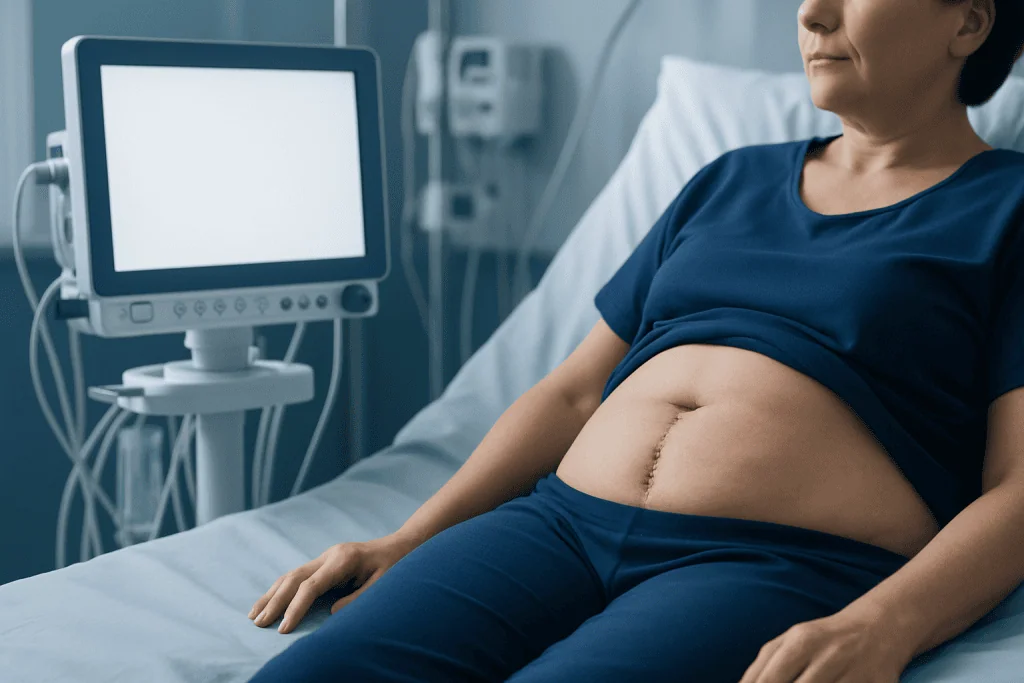
It is common for the abdomen to look larger or more rounded than expected soon after surgery. Swelling usually peaks in the first days and then slowly starts to settle, but a degree of puffiness may last for weeks. Some people notice that the area around the incision feels hard, raised, numb, or tender. This can happen as the body lays down healing tissue and small nerves recover.
Mild asymmetry can also be normal. One side may appear more swollen than the other, especially if the surgery was focused on one part of the abdomen or if drains were used on only one side. Bruising may move downward over time, and gravity can make the lower abdomen or pubic area look more swollen before the body reabsorbs the extra fluid.
Other normal changes may include:
- A tight or pulling sensation when standing upright
- A ridge or firmness along the incision line
- Temporary bloating from reduced activity, bowel changes, or anesthesia effects
- A small skin fold or indentation near the scar
- Gradual flattening rather than immediate return to the pre-surgery shape
Even when these changes are expected, it is still reasonable to ask the surgical team about any contour change that feels surprising. Reassurance is helpful, and an examination can confirm whether the healing pattern is typical.
Common Causes of Abdominal Shape Changes After Surgery
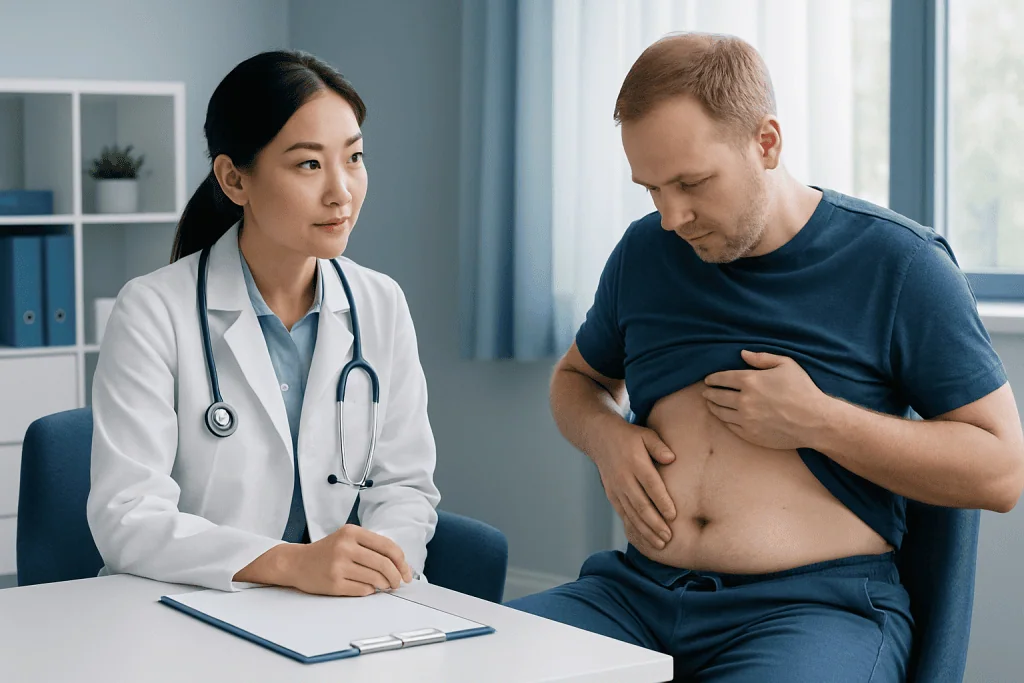
Swelling is one of the most common reasons the abdomen looks different. Surgery triggers inflammation, which helps healing but also causes fluid to collect in tissues. The body usually clears this fluid naturally, though the process takes time. Internal healing can continue long after the skin appears closed.
Scar tissue is another frequent cause. As tissue repairs itself, deeper layers can feel firm or form uneven bands under the skin. In some people, the scar becomes thickened or raised, especially if they are prone to keloid scars or prominent scar formation. This can affect both the appearance and the feel of the abdomen around the incision.
Temporary weakness or altered function of the abdominal wall may also change the contour. If muscles were separated, retracted, or simply not used much during recovery, the abdomen may protrude more than usual. Postoperative constipation, gas, and reduced mobility can add to the sense of bloating.
Less commonly, shape changes may relate to a fluid collection such as a seroma, a pocket of blood called a hematoma, infection, or an incisional hernia. These are not always emergencies, but they should be assessed by a qualified clinician, especially if the area is enlarging, painful, red, or warm.
When Abdomen Shape Changes May Need Medical Attention
Although many contour changes are harmless parts of healing, some symptoms suggest the abdomen should be checked. A new or enlarging bulge near the incision may point to a fluid collection or a hernia. If the shape changes suddenly after coughing, lifting, or straining, that also deserves medical review.
Warning signs include increasing pain rather than steady improvement, redness spreading around the incision, wound drainage with an unpleasant odor, fever, or skin that feels hot to the touch. A very tense, swollen abdomen, ongoing vomiting, or inability to pass stool or gas can indicate a more serious postoperative problem and should not be ignored.
It is also worth contacting a doctor if firmness lasts much longer than expected, numbness worsens, or the scar becomes progressively raised and uncomfortable. Some patients develop delayed scar-related concerns, including tight bands or thickened tissue. In certain cases, shape changes can resemble problems seen after other tissue injuries, such as burns, where healing and scarring affect surface contour.
If there is any uncertainty, the safest approach is to ask the surgical team. They can decide whether reassurance, imaging, wound care changes, or referral to another specialist is needed.
How Doctors Evaluate Post-Surgery Abdominal Contour
Assessment usually begins with a careful history and physical examination. The doctor may ask when the shape changed, whether it is improving, whether there is pain, and if symptoms worsen with standing, coughing, eating, or activity. The incision, scar, and surrounding skin are examined for swelling, fluid, tenderness, and signs of infection.
During the exam, the clinician may ask the patient to stand, lie down, or gently tense the abdominal muscles. This helps show whether a bulge is soft tissue swelling, scar-related fullness, or a possible abdominal wall defect such as a hernia. The feel of the tissue can also provide clues, since fluid collections, scar firmness, and muscle weakness often present differently.
If needed, imaging tests may be used. Ultrasound can help identify fluid collections or superficial problems around the scar. CT scanning may be considered when there is concern about a deeper collection, bowel issues, or a hernia. These tests are chosen based on symptoms and examination findings, not routinely for every patient.
In some cases, especially if the contour problem persists after recovery, a consultation with a general surgeon or plastic and reconstructive surgeon may be useful. This is most relevant when the issue affects comfort, function, clothing fit, or body image.
Treatment Options and When Correction Is Considered
Treatment depends on the cause. Normal postoperative swelling usually improves with time, gentle walking, avoiding strain, and following instructions about wound care and activity. Some surgeons recommend compression garments after certain procedures, but these should only be used if specifically advised, because not every operation or wound is suited to compression.
If a seroma or hematoma is present, the clinician may monitor it or, in selected cases, drain it. Infection may require antibiotics, wound care, or additional treatment. An incisional hernia may need surgical repair if it causes symptoms or grows over time. Thick or uncomfortable scars may be managed with scar care measures or specialist review, particularly for patients with a history of raised scars.
When healing is complete but the abdomen still has a contour issue, reconstructive or aesthetic options may sometimes be discussed. These might include scar revision, abdominal wall repair, or selected body contouring procedures. In a broader body-contouring plan, a specialist may consider approaches such as body aesthetics, liposuction, or bariatric contouring if they are medically appropriate and timed safely after recovery.
For international patients who need further evaluation, Acibadem International’s multidisciplinary specialists and JCI-accredited hospitals assess postoperative healing concerns and provide treatment when indicated. The right timing for any corrective procedure matters, because operating too early can interfere with natural recovery and scar maturation.
Self-care Tips to Support a Smoother Recovery
Good recovery habits can help the abdomen settle more comfortably. Patients should follow their surgeon’s guidance on walking, lifting limits, showering, wound care, and returning to work or exercise. Gentle movement often supports circulation and bowel function, while heavy exertion too soon can worsen swelling or stress the healing abdominal wall.
It may also help to manage bloating by staying hydrated, eating fiber as tolerated, and using postoperative bowel advice from the care team. Standing fully upright may feel difficult at first, but people should not force painful positions. Protecting the incision from friction and avoiding smoking are also important, since smoking can impair wound healing.
Practical self-care measures include:
- Keeping follow-up appointments
- Watching for new redness, drainage, or a growing lump
- Avoiding heavy lifting until cleared
- Supporting the abdomen when coughing, if instructed
- Asking before using scar creams, silicone products, or compression garments
Emotional adjustment matters too. A temporary change in body shape can be frustrating, especially when expectations are for a quick return to normal. Taking regular progress photos, if the surgeon agrees, may help some people notice gradual improvement that is easy to miss day to day.
When to See a Doctor and What to Ask
A doctor should be contacted promptly if the abdomen becomes more swollen instead of less swollen, if there is increasing pain, fever, vomiting, spreading redness, or drainage from the wound. A visible or palpable bulge that appears with coughing or standing should also be evaluated, since it may suggest a hernia or other structural issue.
Even without urgent symptoms, a review is worthwhile if the contour still seems very irregular after the expected recovery period, if the scar is becoming thick and uncomfortable, or if the shape change affects confidence or daily life. Questions to ask may include whether the appearance fits the normal stage of healing, how long improvement usually takes, and whether any tests are needed.
Patients may also ask when it is safe to resume core exercise, whether scar management would help, and if a referral to a reconstructive specialist is appropriate. In select cases, a surgeon may discuss options such as reconstructive surgery principles for tissue restoration, even though the abdomen and breast are different anatomical areas, because the same careful planning around scars, symmetry, and healing often applies.
Most importantly, people should not feel they need to judge this alone. Postoperative body changes are common, and professional guidance can help distinguish normal healing from a problem that deserves treatment.
Frequently asked questions
How long does swelling affect abdomen shape after open surgery?
Swelling often improves noticeably over the first few weeks, but mild fullness can last longer. Deeper tissue healing and scar remodeling may continue for several months, so the final contour is not always obvious early on.
Is a hard area near the incision normal?
A firm or slightly raised area near the incision is often part of normal healing and scar formation. It should gradually soften, but if it becomes increasingly painful, red, or enlarged, a doctor should examine it.
Can open surgery cause a permanent change in abdominal shape?
Sometimes it can, depending on the type of operation, the scar, and whether the abdominal wall was affected. However, many early shape changes improve significantly with time, so doctors usually wait for healing to mature before considering permanent correction.
What is the difference between normal swelling and a hernia?
Normal swelling is usually diffuse and gradually improves. A hernia often feels like a more defined bulge that may become more noticeable when standing, coughing, or straining, and it should be assessed by a clinician.
Should a compression garment be used after open abdominal surgery?
Only if the surgeon recommends it. Compression can be helpful in some situations, but it is not suitable for every procedure, and improper use may cause discomfort or interfere with wound care.
When should someone worry about the shape of the abdomen after surgery?
Medical advice is important if the abdomen becomes more swollen, painful, red, hot, or if there is fever, vomiting, or wound drainage. A new bulge or sudden contour change also deserves prompt review.
This article is for general information only and is not a substitute for professional medical advice. Please consult a qualified doctor about your individual situation.
Explore treatments in Turkey — costs, top hospitals & a free quote
JCI-accredited · board-certified surgeons · reply within 24h
Add us as a Preferred Source to see more of our trusted health content across Google Search, AI Overviews and Discover.

Aesthetic Plastic & Reconstructive Surgery Specialists at Acibadem
Dr. Nezail Demirciler
Aesthetic Plastic & Reconstructive Surgery
Dr. Nihal Üstün
Aesthetic Plastic & Reconstructive Surgery
Dr. Nuri Soysal
Aesthetic Plastic & Reconstructive Surgery
Dr. Okan Acicbe
Aesthetic Plastic & Reconstructive Surgery
Dr. Ömercan Yağız Öksüz
Aesthetic Plastic & Reconstructive SurgeryRelated Treatments
Related Conditions
More from the Health Library
Wound Opening After Surgery: Dehiscence Causes, Prevention, and Care

Why Is It Called Plastic Surgery?

Nipple Reduction Surgery: What to Expect
Chin Aesthetic Surgery: What Results Are Realistic?