

Acne Scar Subcision: How It Works, Recovery, and Who May Benefit

Acne scar subcision works best for tethered, depressed scars such as rolling acne scars. The procedure uses a needle or blunt cannula to break the fibrous bands beneath the scar.
Key Takeaways
- Acne scar subcision works best for tethered, depressed scars such as rolling acne scars.
- The procedure uses a needle or blunt cannula to break the fibrous bands beneath the scar.
- Bruising, swelling, and tenderness are common for several days after treatment.
- Results are usually gradual and may require more than one session or combination treatment.
- Subcision is not the best option for every scar type, so expert assessment is important.
Acne scar subcision is a minimally invasive procedure used to treat certain depressed acne scars, especially rolling scars that are pulled downward by fibrous bands under the skin. By releasing these bands, the skin can lift and appear smoother over time, often as part of a broader acne scar treatment plan.
Overview
Acne scar subcision is a minor in-office procedure designed to improve certain sunken acne scars. It is most often used for rolling scars, which create uneven, wave-like depressions in the skin. These scars are commonly tethered by tight fibrous bands underneath the surface, and subcision aims to release those bands so the skin can rise more naturally.
During the procedure, a dermatologist or plastic surgeon inserts a fine needle or blunt-tipped cannula under the skin. The instrument gently moves beneath the scar to separate the fibrous attachments. This controlled release can stimulate healing and may also encourage new collagen formation over time, which can further soften the scar’s appearance.
Subcision is not a one-size-fits-all treatment. Acne scars vary widely in depth, shape, and cause, so the best results usually come from matching the treatment to the scar type. Many patients benefit from subcision as part of a larger acne scarring treatment plan that may also include laser procedures, microneedling, fillers, or chemical peels.
Who May Benefit From Acne Scar Subcision
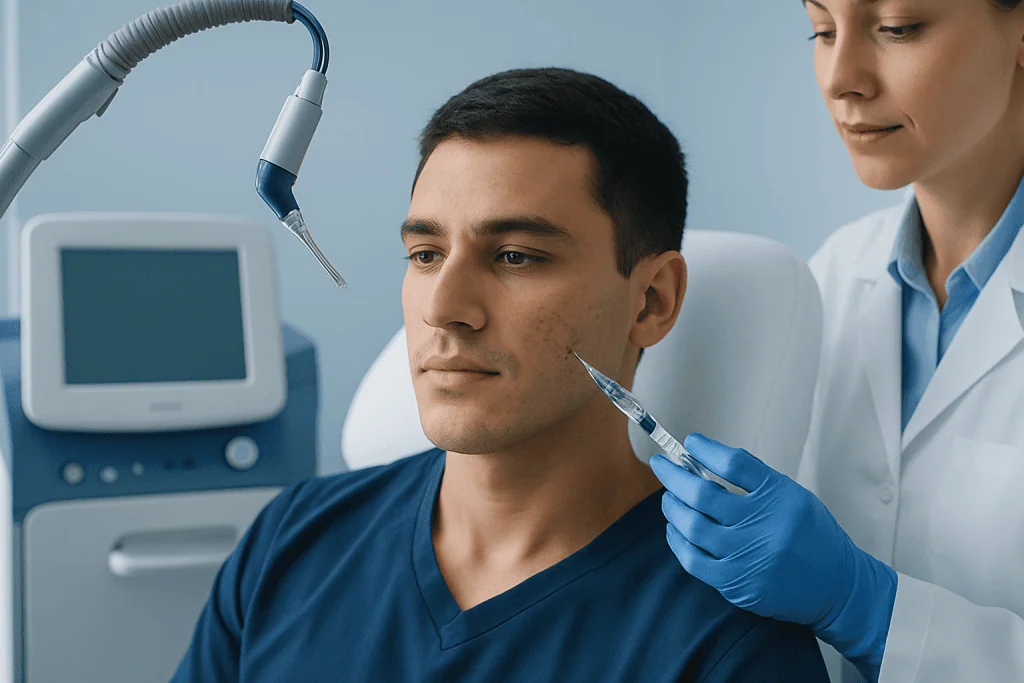
Subcision is usually most helpful for people with depressed acne scars that seem stuck to deeper tissue. Rolling scars are the classic example, but some shallow boxcar scars may also improve. The key feature is tethering, meaning the skin is being pulled inward from below rather than simply lacking surface collagen.
People with active acne may need that condition controlled before scar procedures are considered. This helps reduce the chance of new scars developing while treatment is underway. A doctor will also look at skin tone, general skin health, tendency to scar, and any history of delayed healing before recommending subcision.
Subcision is generally less effective for ice pick scars, which are narrow and deep, and it does not treat raised scars. Patients with a history of thick or raised scarring, including keloid scars, may need a careful evaluation because treatment plans can differ. A tailored consultation helps set realistic expectations about what subcision can and cannot improve.
How the Procedure Works

Before treatment, the clinician examines the scars closely, often marking the areas that appear tethered. The skin is cleansed, and local anesthetic is used to improve comfort. Once the area is numb, the doctor introduces a needle or cannula through a small entry point and passes it beneath the scar.
The instrument is then moved in a controlled back-and-forth or fanning motion to release the fibrous bands. A small amount of bleeding under the skin is expected, and this is part of the healing response that can help support the lifted scar. Depending on the number and size of scars, the procedure may take from several minutes to around half an hour.
Some specialists combine subcision with other techniques in the same session or in staged sessions. These may include fillers to support the released area, microneedling to improve texture, or energy-based treatments after the skin has healed. When scars are related not only to acne but also to other skin injuries such as burns, treatment planning may be more complex and should be individualized.
- Typically performed with local anesthesia
- Targets tethered, depressed scars
- Usually done as an outpatient procedure
- May be repeated if needed
Recovery and Aftercare
Recovery after acne scar subcision is usually straightforward, but temporary side effects are common. Swelling, bruising, soreness, and a feeling of firmness under the skin can occur for several days and sometimes longer. Small marks at the entry sites usually heal quickly, and many people return to desk-based activities within a short time, depending on the extent of treatment.
Doctors often advise patients to avoid heavy exercise, vigorous facial massage, and any activity that may increase swelling immediately after the procedure. Gentle skin care is important. The treated area should be kept clean, and sun protection is especially helpful because healing skin can be more prone to discoloration.
Visible improvement is often gradual rather than immediate. Some change may be noticed once swelling settles, but collagen remodeling takes time. It is common for the final result of a session to develop over weeks to months, and repeat treatments may be recommended for deeper or more widespread scarring.
Patients should follow their clinician’s aftercare instructions carefully, especially if subcision is combined with other therapies. In centers with experience in cosmetic and reconstructive skin procedures, coordinated aftercare can help support comfort and healing. Acibadem International’s multidisciplinary specialists in JCI-accredited hospitals diagnose and treat acne scarring for international patients when a personalized treatment approach is needed.
Results, Benefits, and Limitations
The main benefit of acne scar subcision is that it treats a structural cause of many depressed scars: the fibrous bands pulling the skin downward. By releasing these bands, the skin surface may become smoother and less shadowed. This can improve overall skin texture and may make makeup sit better and facial contours look more even.
Results vary from person to person. The depth of the scar, skin type, healing response, and whether other treatments are added can all influence the outcome. Some people achieve noticeable improvement after one session, while others need several sessions spaced over time for more meaningful change.
Subcision also has limitations. It does not erase every scar completely, and it is not the ideal treatment for all scar patterns. Ice pick scars, sharply edged deep scars, and raised scars often need different methods. In some cases, doctors may suggest combining subcision with treatments such as laser resurfacing or other acne scar therapies to address both deeper tethering and surface irregularity.
Risks and Possible Side Effects
Acne scar subcision is generally considered safe when performed by an experienced medical professional, but like any procedure, it has potential risks. The most common effects are bruising, swelling, tenderness, and temporary unevenness. These are usually expected parts of healing and tend to improve with time.
Less commonly, patients may develop prolonged discoloration, lumps, infection, or bleeding. There can also be under-correction if not enough tethering is released, or overcorrection if swelling or internal changes alter the contour more than expected. Rarely, nearby nerves or blood vessels may be affected, which is one reason facial anatomy knowledge is important.
People with certain medical conditions, bleeding disorders, or a history of abnormal scarring should mention this before treatment. The risk profile may differ if scars are located near areas altered by previous surgery or facial trauma. A detailed medical history helps the clinician choose the safest approach.
When to See a Doctor and How Treatment Is Planned
It is reasonable to see a doctor when acne scars affect confidence, daily comfort, or satisfaction with skin appearance. Professional assessment is especially helpful if over-the-counter products have not improved the skin texture or if the scars seem deep, widespread, or mixed in type. A specialist can identify whether subcision is likely to help or whether another option may be more effective.
During consultation, the doctor usually reviews acne history, current medications, prior procedures, and healing patterns. Photos may be taken to help track progress over time. The specialist may recommend a staged plan rather than a single treatment, since combination therapy often gives the best outcome for complex acne scarring.
Patients should ask about expected downtime, the likelihood of needing multiple sessions, and how success will be measured. It is also useful to discuss realistic goals, since the aim is often improvement rather than perfection. In some aesthetic and reconstructive practices, treatment planning may overlap with other contour-restoring procedures, such as cheek augmentation, when volume loss contributes to the appearance of facial depressions, although this is considered case by case.
Frequently asked questions
What type of acne scars respond best to subcision?
Subcision is most effective for depressed, tethered scars, especially rolling acne scars. These scars are pulled downward by fibrous bands under the skin, which subcision is designed to release. It is usually less helpful for ice pick scars or raised scars.
Is acne scar subcision painful?
The procedure is usually done with local anesthesia, so discomfort during treatment is often manageable. Afterward, the area may feel sore, tender, or bruised for a few days. Most people describe recovery symptoms as temporary and tolerable.
How long does it take to recover from subcision?
Mild swelling, bruising, and tenderness are common for several days, and some bruising can last longer depending on the treatment area and the person's skin. Many patients can return to normal non-strenuous routines fairly quickly. Final improvement usually develops gradually over weeks to months.
How many sessions of subcision are usually needed?
The number of sessions depends on the depth, number, and type of scars, as well as the skin's healing response. Some people improve after one treatment, but others need repeated sessions for better results. A doctor can estimate a likely plan after examining the scars.
Can subcision be combined with other acne scar treatments?
Yes, subcision is often combined with other treatments because acne scars usually have more than one cause or pattern. Depending on the scar type, a doctor may recommend fillers, microneedling, lasers, or other resurfacing methods. Combination treatment can improve both deeper tethering and surface texture.
Are the results of acne scar subcision permanent?
The release of scar tethering can provide lasting improvement, but results vary and no procedure can guarantee complete removal of scars. Some people continue to see benefits as collagen remodeling develops over time. New acne breakouts or ongoing inflammation can affect the long-term appearance of the skin.
References
- American Academy of Dermatology
- British Association of Dermatologists
- National Health Service
- American Society for Dermatologic Surgery
- Mayo Clinic
This article is for general information only and is not a substitute for professional medical advice. Please consult a qualified doctor about your individual situation.
Acne in Turkey — costs, top hospitals & a free quote
JCI-accredited · board-certified surgeons · reply within 24h
Add us as a Preferred Source to see more of our trusted health content across Google Search, AI Overviews and Discover.

Related Treatments
Related Conditions
More from the Health Library

Related Specialists

Assoc. Prof. Dr. Erdem Güven (m)
Aesthetic Plastic & Reconstructive Surgery
Prof. Dr. Şükrü Yazar
Aesthetic Plastic & Reconstructive Surgery
Prof. Dr. Hakan Ağır
Aesthetic Plastic & Reconstructive Surgery
Prof. Dr. Bülent Saçak
Aesthetic Plastic & Reconstructive Surgery