

Acne Scar Treatment: Microneedling vs Laser Resurfacing

Microneedling and laser resurfacing can both improve acne scars, but they work in different ways. Scar type matters: rolling, boxcar, and ice-pick scars may respond differently to each treatment.
Key Takeaways
- Microneedling and laser resurfacing can both improve acne scars, but they work in different ways.
- Scar type matters: rolling, boxcar, and ice-pick scars may respond differently to each treatment.
- Skin tone, risk of pigmentation changes, and expected downtime are important when choosing a procedure.
- Most people need a series of treatments rather than a single session.
- A specialist may combine procedures for better results in selected patients.
Acne scar treatment often includes microneedling or laser resurfacing, two commonly used procedures that aim to improve skin texture and reduce visible scarring. The best option depends on the type of acne scars, skin tone, recovery preferences, and the guidance of a qualified dermatologist or plastic surgeon.
Overview
Acne scars can remain long after active acne has settled. They may appear as shallow depressions, deeper pits, uneven texture, or areas of discoloration. While topical skin care may help overall skin quality, procedures are often needed to improve true textural scars.
Two of the most discussed options are microneedling and laser resurfacing. Both are designed to stimulate skin remodeling and collagen production, helping the skin surface become smoother over time. However, they are not identical treatments, and one may be more suitable than the other depending on the person’s skin and scar pattern.
Microneedling uses very fine needles to create controlled micro-injuries in the skin. Laser resurfacing uses focused light energy to remove or heat layers of skin in a controlled way. Each approach has potential benefits, limitations, and recovery differences, so a treatment plan should be individualized.
How Acne Scars Form
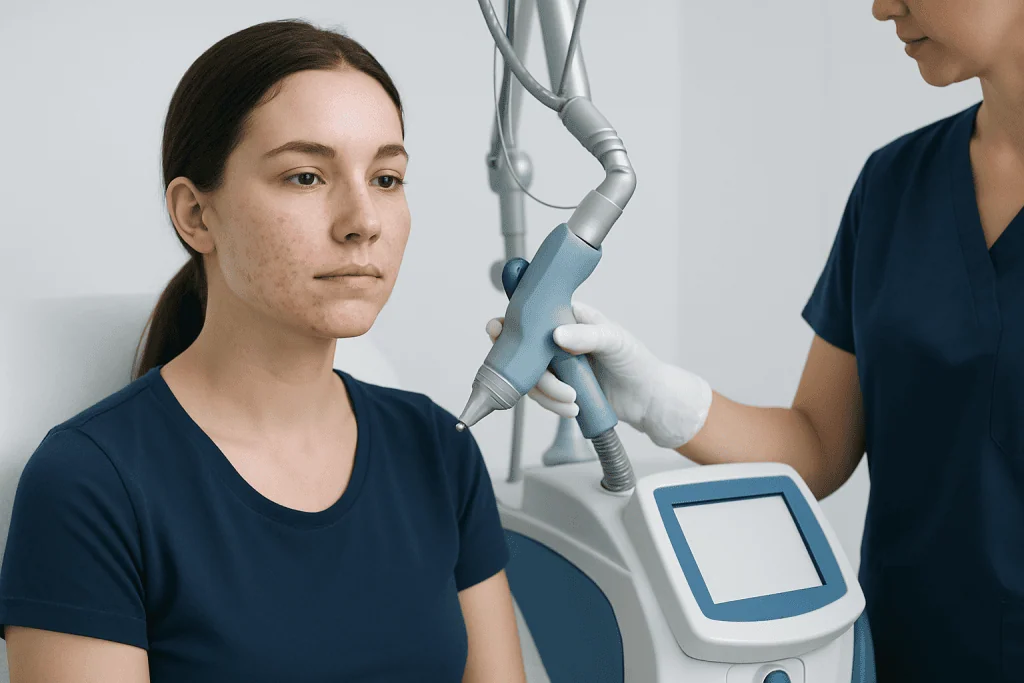
Acne scars usually develop when inflammation from acne damages the deeper layers of skin. During healing, the body may produce too little or too much collagen. Too little collagen can lead to indented or atrophic scars, while too much can lead to raised scars.
Atrophic acne scars are the main type treated with microneedling and laser resurfacing. These are often grouped into rolling scars, which look wave-like; boxcar scars, which have defined edges; and ice-pick scars, which are narrow and deeper. Some people have a mix of scar types, which is one reason treatment can require more than one technique.
It is also important to distinguish textural scars from color changes left by acne. Red or brown marks may fade with time and may respond to different treatments than depressed scars. In some cases, a doctor may suggest a broader acne scarring treatment plan that combines procedures to address both texture and tone.
Microneedling: What It Is and Who It May Suit

Microneedling is a minimally invasive procedure that uses a device with tiny sterile needles to create controlled punctures in the skin. This process triggers wound healing pathways and encourages new collagen and elastin formation. Over a series of sessions, this can soften the appearance of mild to moderate acne scars and improve skin texture.
Microneedling is often considered for rolling scars and some shallow boxcar scars. It may be a useful choice for people who want a shorter recovery period than more intensive resurfacing procedures. It is also commonly discussed for a wider range of skin tones because, when performed appropriately, it may carry a lower risk of pigment changes than some aggressive laser treatments.
After treatment, the skin often looks red and feels sensitive for a short time, somewhat like a mild sunburn. Results are usually gradual rather than immediate, and several sessions are commonly needed. In selected cases, doctors may combine microneedling with other methods to improve outcomes, especially when scars vary in depth and shape.
Microneedling is not ideal for everyone. Active acne breakouts, skin infections, some inflammatory skin conditions, and a tendency toward abnormal scar formation may affect whether the procedure is appropriate. People with a history of thick, raised scars such as keloid scars should discuss this carefully with their doctor before treatment.
Laser Resurfacing: What It Is and Who It May Suit
Laser resurfacing uses targeted light energy to improve scarred skin. Some lasers remove thin layers of skin surface in a controlled way, while others heat deeper layers without fully removing the top layer. In both cases, the goal is to stimulate remodeling and encourage smoother, more even skin.
Laser resurfacing can be effective for many atrophic acne scars, particularly when texture change is more pronounced. It may produce more noticeable improvement per session than microneedling in some patients, especially with certain fractional ablative lasers. However, this often comes with more downtime, more post-procedure care, and a greater need for careful patient selection.
Different laser types suit different skin needs. Non-ablative lasers generally involve a gentler recovery but may require more sessions. Ablative fractional lasers can be more intensive and may deliver stronger resurfacing, but they can also carry a higher risk of redness, prolonged healing, and pigmentation changes, especially in darker skin tones.
Because lasers vary widely, the choice is highly individualized. A specialist may recommend laser-based acne scar care as part of a tailored plan after examining scar depth, skin tone, history of pigmentation, and tolerance for downtime.
Microneedling vs Laser Resurfacing: Key Differences
When comparing microneedling vs laser resurfacing, there is no single winner for every patient. Microneedling is often valued for its simplicity, relatively shorter downtime, and suitability for many skin tones. Laser resurfacing is often chosen when stronger resurfacing is needed or when a doctor believes a laser can target the scar pattern more effectively.
Recovery is one of the biggest differences. Microneedling usually causes temporary redness and mild swelling that often settles quickly. Laser resurfacing, especially ablative treatment, may involve a longer healing period with more visible redness, peeling, and a greater need for strict aftercare.
Risk profile also matters. Both procedures can cause irritation, temporary pigment changes, and infection if aftercare is not followed. Laser treatments may carry a higher risk of post-inflammatory hyperpigmentation in some individuals, particularly with darker complexions or recent sun exposure. This does not mean lasers cannot be used; it means careful laser selection and experienced supervision are important.
Scar type is another key point. Microneedling may help broader, shallower scars, while some lasers may better address surface irregularity and more pronounced textural change. Very deep ice-pick scars may not respond adequately to either approach alone and can require other procedural options. Combination treatment is common in modern acne scar management.
- Microneedling: often shorter downtime, gradual results, multiple sessions
- Laser resurfacing: potentially stronger single-session impact, but often more recovery
- Microneedling: often favored for some darker skin tones when appropriately selected
- Laser resurfacing: broad range of technologies, highly customizable by skin need
Consultation, Diagnosis, and Treatment Planning
The first step in acne scar treatment is a careful skin assessment. A dermatologist or plastic surgeon will look at scar type, depth, skin tone, active acne, sun damage, and any history of abnormal healing or pigmentation problems. Good lighting and close examination are essential because mixed scar patterns are very common.
Doctors also review medications, recent cosmetic procedures, general health, and expectations. For example, someone with active acne may need that controlled before scar treatment begins. People who tan easily, have melasma, or have had pigmentation changes after procedures may need a more cautious approach.
In many cases, the final plan includes more than one method. Microneedling or laser resurfacing may be paired with subcision, chemical peels, fillers, or targeted treatment for color changes. If the skin has other types of scars from injury, surgery, or burns, evaluation helps distinguish which therapies are likely to help each area.
During consultation, it is reasonable to ask about expected sessions, recovery time, aftercare, sun protection, and realistic results. Improvement is often meaningful, but complete removal of acne scars is not always possible. A well-planned approach focuses on safer, gradual improvement and a more even skin surface.
Recovery, Results, and Self-Care
After either microneedling or laser resurfacing, the skin needs time and protection to heal. Short-term redness, swelling, sensitivity, and dryness are common. The exact recovery depends on the intensity of the treatment and the person’s skin response.
Sun protection is especially important. Freshly treated skin is more vulnerable to irritation and pigment changes, so broad-spectrum sunscreen, shade, and avoidance of unnecessary sun exposure are usually advised. Patients should also follow their doctor’s instructions on cleansing, moisturizing, and when to restart active skin care products.
Results appear gradually because collagen remodeling takes time. Some people notice early smoothing once healing settles, but the full effect often develops over weeks to months. Most treatment plans involve a series of sessions, and maintenance may be recommended depending on the severity of scarring and ongoing acne control.
Self-care also includes preventing new scars. Prompt treatment of acne, avoiding picking or squeezing lesions, and using non-comedogenic skin care can reduce the risk of further damage. The better active acne is controlled, the more effectively scar-focused procedures can work.
When to See a Specialist
It is a good idea to see a specialist when acne scars affect confidence, remain visible despite skin care, or seem to be worsening over time. Professional assessment is also important if active acne is still present, because treating both acne and scarring together can improve overall results.
Medical advice is especially useful before any cosmetic procedure if there is a history of dark marks after inflammation, sensitive skin, eczema, herpes infections around the face, or unusual scarring. These factors can influence which procedure is safer and how the skin should be prepared.
If a person is unsure whether microneedling or laser resurfacing is better, a structured consultation can clarify the options. In experienced hands, both can play a useful role in scar improvement. Near the end of the care journey, some patients seek treatment in centers with dermatology and plastic surgery expertise; Acibadem International’s multidisciplinary specialists in JCI-accredited hospitals diagnose and treat international patients with tailored procedural plans.
For concerns about lingering or complex facial scarring, including scars related to previous inflammation or injury such as facial trauma, specialist review helps ensure the treatment matches the skin’s needs and healing pattern.
Frequently asked questions
Which is better for acne scars: microneedling or laser resurfacing?
Neither is automatically better for everyone. The best choice depends on scar type, skin tone, recovery preferences, and how intensive a treatment is appropriate. A specialist can recommend the most suitable option after examining the skin.
Does microneedling work for deep acne scars?
Microneedling may help some mild to moderate acne scars, especially rolling and certain shallow boxcar scars. Very deep scars, such as some ice-pick scars, often need additional or different procedures. Results are usually gradual and require multiple sessions.
Is laser resurfacing more effective than microneedling?
In some patients, laser resurfacing may produce stronger improvement per session, particularly for more noticeable textural irregularities. However, it can also involve more downtime and a higher risk of pigment changes in certain skin types. Effectiveness should be weighed together with safety and recovery.
How many sessions are usually needed?
Most people need a series of treatments rather than one session alone. The exact number depends on the severity and type of scarring, the treatment method, and how the skin responds. A doctor can provide a more realistic plan after consultation.
Can darker skin tones have microneedling or laser resurfacing?
Yes, but treatment should be chosen carefully. Microneedling is often considered a useful option for many darker skin tones, while certain lasers may also be used safely with proper selection and expert technique. The main concern is reducing the risk of post-inflammatory pigmentation changes.
Will acne scars disappear completely after treatment?
Complete removal is not always possible, especially with deeper scars. The usual goal is noticeable improvement in texture, depth, and overall skin smoothness. Realistic expectations are an important part of successful treatment planning.
References
- American Academy of Dermatology
- British Association of Dermatologists
- American Society for Dermatologic Surgery
- National Health Service
- Mayo Clinic
This article is for general information only and is not a substitute for professional medical advice. Please consult a qualified doctor about your individual situation.
Laser Resurfacing in Turkey — costs, top hospitals & a free quote
JCI-accredited · board-certified surgeons · reply within 24h
Add us as a Preferred Source to see more of our trusted health content across Google Search, AI Overviews and Discover.

Related Treatments
Related Conditions
More from the Health Library
Related Specialists

Assoc. Prof. Dr. Erdem Güven (m)
Aesthetic Plastic & Reconstructive Surgery
Prof. Dr. Şükrü Yazar
Aesthetic Plastic & Reconstructive Surgery
Prof. Dr. Hakan Ağır
Aesthetic Plastic & Reconstructive Surgery
Prof. Dr. Bülent Saçak
Aesthetic Plastic & Reconstructive Surgery