

Arm Lift Scar: Placement, Healing, and Scar Care

An arm lift scar is usually placed along the inner or back side of the upper arm to make it less visible in everyday positions. Scar length varies depending on how much extra skin needs to be removed and whether liposuction is also used.
Key Takeaways
- An arm lift scar is usually placed along the inner or back side of the upper arm to make it less visible in everyday positions.
- Scar length varies depending on how much extra skin needs to be removed and whether liposuction is also used.
- Most scars look red, firm, or raised at first, then slowly flatten and lighten over several months.
- Following aftercare instructions, avoiding smoking, and protecting the area from the sun can support better scar healing.
- People with a history of thick or [[DISEASE:keloid-scars|keloid scars]] should discuss this with their surgeon before surgery.
- If a scar becomes increasingly painful, opens, drains, or thickens significantly, medical review is important.
An arm lift scar is an expected part of brachioplasty, but its position, length, and appearance depend on the surgical technique and how the body heals. With good wound care, sun protection, and regular follow-up, most arm lift scars gradually soften and fade over time.
Overview: What an Arm Lift Scar Is
An arm lift, also called brachioplasty, removes loose skin and reshapes the upper arm. Because skin must be surgically excised, an arm lift scar is a normal and unavoidable part of the procedure. The goal is not to avoid a scar completely, but to place it thoughtfully and help it heal as neatly as possible.
Surgeons usually position the scar where it is less noticeable when the arms rest at the sides. In many cases, it runs along the inner upper arm or slightly toward the back of the arm. The exact placement depends on the amount of excess skin, the quality of the skin, and the technique used during arm lift surgery.
For many patients, the trade-off is worthwhile: a longer scar in exchange for a smoother arm contour. A careful preoperative discussion helps set realistic expectations about where the scar will be, how long healing may take, and what kind of scar care may be recommended afterward.
Where Arm Lift Scars Are Usually Placed
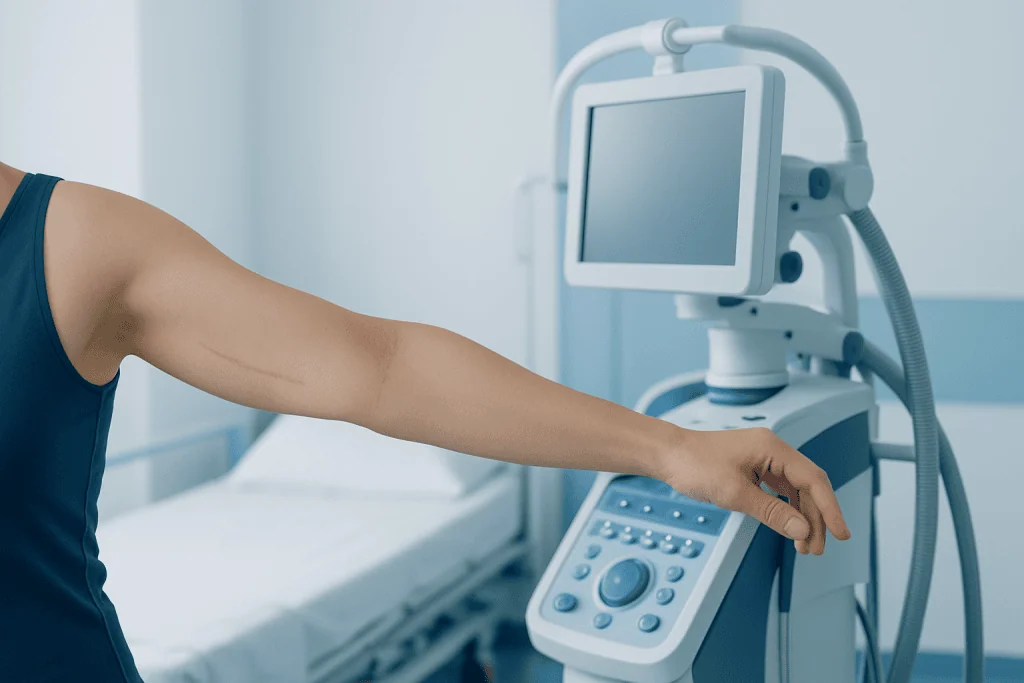
Scar placement depends on the extent of skin laxity. When only a small amount of tissue needs correction near the armpit, the incision may be limited to the underarm area, creating a shorter and more hidden scar. This approach is sometimes suitable for mild sagging.
When there is more loose skin extending down the upper arm, the scar is often longer. It commonly runs from the armpit toward the elbow along the inner arm, or slightly on the back-inner side so it is less visible from the front. This placement aims to balance contour improvement with scar concealment in normal movement and clothing.
Some patients undergoing body contouring after major weight loss may need more extensive incisions because there is more excess skin to remove. In these situations, scar length may be greater, but the technique is chosen to improve arm shape and reduce heavy, hanging tissue. A surgeon may also combine the procedure with arm liposuction or broader body contouring when this is appropriate for the person’s goals and anatomy.
How Arm Lift Scars Heal Over Time

Scar healing happens in stages. In the first days and weeks after surgery, the incision line may look pink or red and feel slightly firm. Mild swelling, tightness, and itching can also occur as the tissue starts to repair. This early appearance is common and does not mean the final scar will stay that way.
Over the next few months, the scar usually enters a remodeling phase. During this stage, it may temporarily become darker, firmer, or more noticeable before gradually softening and flattening. Many scars continue to improve for up to a year or longer, depending on the individual’s skin type, age, genetics, and overall healing response.
Healing is not identical for everyone. Some people naturally make finer scars, while others are more likely to develop thick, raised scars. Skin tone can also affect how long redness or pigmentation changes remain visible. Good follow-up care helps the surgical team recognize whether healing is progressing normally or whether extra scar treatment may help.
What Affects Scar Appearance
Several factors influence how an arm lift scar ultimately looks. Surgical technique, incision tension, and careful wound closure all matter, but so do patient-related factors such as skin quality, genetics, age, nutrition, and general health. A history of poor wound healing or abnormal scarring should always be shared before surgery.
Smoking and nicotine exposure are especially important because they can reduce blood flow to healing tissue. This may increase the risk of delayed healing, widened scars, or wound complications. Conditions that affect circulation, immune response, or blood sugar control can also influence recovery, so a full medical assessment is important before elective surgery.
Mechanical stress on the incision can make a scar more noticeable. Repeated stretching, lifting too early, or poor support during the first weeks may increase tension on the wound. In some patients, thickened scars can develop even with excellent care, particularly if there is a personal or family tendency toward hypertrophic or keloid scarring.
- Genetics and skin type
- The amount of skin removed
- Smoking or nicotine use
- Infection or wound separation
- Sun exposure during healing
- How closely aftercare instructions are followed
Scar Care After an Arm Lift
Scar care usually starts with basic incision care in the early healing period. Patients are often advised to keep the area clean and dry, wear recommended compression garments, avoid strenuous arm activity, and attend follow-up visits. The exact instructions can vary, so it is important to follow the surgeon’s own plan rather than generic advice.
Once the incision has fully closed and the surgeon confirms that scar care can begin, options may include silicone gel or silicone sheets, gentle scar massage, and regular moisturizing. Silicone is commonly recommended because it may help flatten and soften scars over time. Massage may improve pliability in selected patients, but it should not start until the wound is adequately healed.
Sun protection is one of the most important long-term steps. Fresh scars can darken with ultraviolet exposure and remain more visible for longer. Keeping the scar covered or applying a suitable sunscreen after healing can support a better cosmetic result. Some people who have more persistent or raised scars may benefit from additional treatments such as steroid injections, laser-based options, or other scar-revision measures guided by a specialist.
Possible Problems and When Scar Revision Is Considered
Most arm lift scars heal without major difficulty, but some complications can affect their appearance. These may include delayed wound healing, infection, fluid buildup, widened scars, uneven contour, or scar thickening. Early recognition matters because prompt treatment may reduce the long-term effect on the scar.
A scar may deserve closer review if it becomes increasingly red, hot, swollen, painful, or starts to drain pus-like fluid. Separation of the wound edges, a bad odor, or fever should also be discussed with a clinician promptly. In some cases, what first appears to be a simple scar concern may actually reflect a deeper healing issue that needs treatment.
Scar revision is not usually the first step. Surgeons often wait until the scar has matured because many scars improve naturally over time. If a scar remains very wide, raised, tight, or cosmetically troubling after adequate healing, revision or scar-focused treatment may be discussed. This is considered on an individual basis and depends on the scar pattern, skin behavior, and patient goals.
Prevention, Expectations, and Choosing the Right Support
No method can guarantee an invisible scar after brachioplasty, but good planning can help reduce the chance of a poor scar. A consultation should include discussion of the likely scar length, where it will sit on the arm, and whether an arm lift is the best option compared with less invasive approaches. For some patients, skin excess is the main issue; for others, fat reduction alone may not be enough.
Realistic expectations are essential. An arm lift improves contour, but the scar is the trade-off for removing stretched skin. Patients who understand this in advance are often better prepared for the normal stages of healing, including redness and firmness early on. Those considering surgery after major weight loss may also want to ask how scar placement compares with other reshaping procedures such as bariatric contouring.
Choosing a qualified plastic surgeon and following aftercare closely are practical ways to support the best result. Near the end of the recovery journey, some patients seek specialist guidance if a scar remains bothersome. Acibadem International’s multidisciplinary specialists and JCI-accredited hospitals diagnose and treat concerns related to aesthetic surgery recovery for international patients, including evaluation of healing and options for scar management when needed.
When to See a Doctor
Patients should contact their surgeon or healthcare team if they notice symptoms that seem worse rather than better. Warning signs include increasing pain, spreading redness, significant swelling, fever, bleeding that does not settle, drainage, or the incision opening. These concerns do not always mean a serious problem, but they should be assessed promptly.
Medical review is also helpful when a scar becomes very itchy, thick, rope-like, or uncomfortable, especially in someone with a history of abnormal scarring. A doctor can help distinguish normal scar maturation from hypertrophic scarring, infection, or other recovery issues. This is particularly important if there is concern about a developing contracture or restricted arm movement.
Even if healing is uncomplicated, regular follow-up visits remain valuable. They allow the surgeon to monitor scar progress, advise on silicone therapy or massage timing, and discuss whether additional measures are needed. Reassurance from a qualified professional can make recovery feel more predictable and manageable.
Frequently asked questions
Is an arm lift scar permanent?
Yes, an arm lift scar is permanent because the skin is surgically incised and removed. However, most scars fade, soften, and become less noticeable over time, especially with good scar care and sun protection.
Where is the scar after an arm lift usually located?
It is usually placed on the inner upper arm or slightly toward the back-inner side of the arm. In milder cases, the incision may be limited to the armpit area, which creates a shorter scar.
How long does an arm lift scar take to heal?
The incision usually closes within weeks, but the scar continues to mature for many months. It is common for the scar to keep improving for up to a year or longer before its more settled appearance becomes clear.
Can arm lift scars be reduced?
They cannot be removed completely, but they can often be improved. Silicone products, sun protection, careful follow-up, and selected medical treatments may help reduce redness, thickness, or uneven texture.
What makes an arm lift scar worse?
Smoking, infection, wound tension, sun exposure, and poor healing can all make a scar more noticeable. Some people also have a natural tendency to form raised or wider scars despite appropriate care.
When should someone worry about an arm lift scar?
A scar should be checked if it becomes increasingly painful, very red, hot, swollen, or starts draining fluid. It is also worth seeking medical advice if the scar becomes very thick, raised, or restricts arm movement.
References
- American Society of Plastic Surgeons
- National Health Service
- Mayo Clinic
- American Academy of Dermatology
- MedlinePlus
This article is for general information only and is not a substitute for professional medical advice. Please consult a qualified doctor about your individual situation.
Arm Lift in Turkey — costs, top hospitals & a free quote
JCI-accredited · board-certified surgeons · reply within 24h
Add us as a Preferred Source to see more of our trusted health content across Google Search, AI Overviews and Discover.

Plastic, Reconstructive & Aesthetic Surgery
Reconstructive and aesthetic procedures for the face and body, performed by experienced surgeons.
35 specialists in this unitRelated Treatments
Related Conditions
More from the Health Library



Related Specialists
Assoc. Prof. Dr. Erdem Güven (m)
Aesthetic Plastic & Reconstructive Surgery
Prof. Dr. Şükrü Yazar
Aesthetic Plastic & Reconstructive Surgery
Prof. Dr. Hakan Ağır
Aesthetic Plastic & Reconstructive Surgery
Prof. Dr. Bülent Saçak
Aesthetic Plastic & Reconstructive Surgery