Carotid Artery — Explained by Medical Evidence, Not Myths
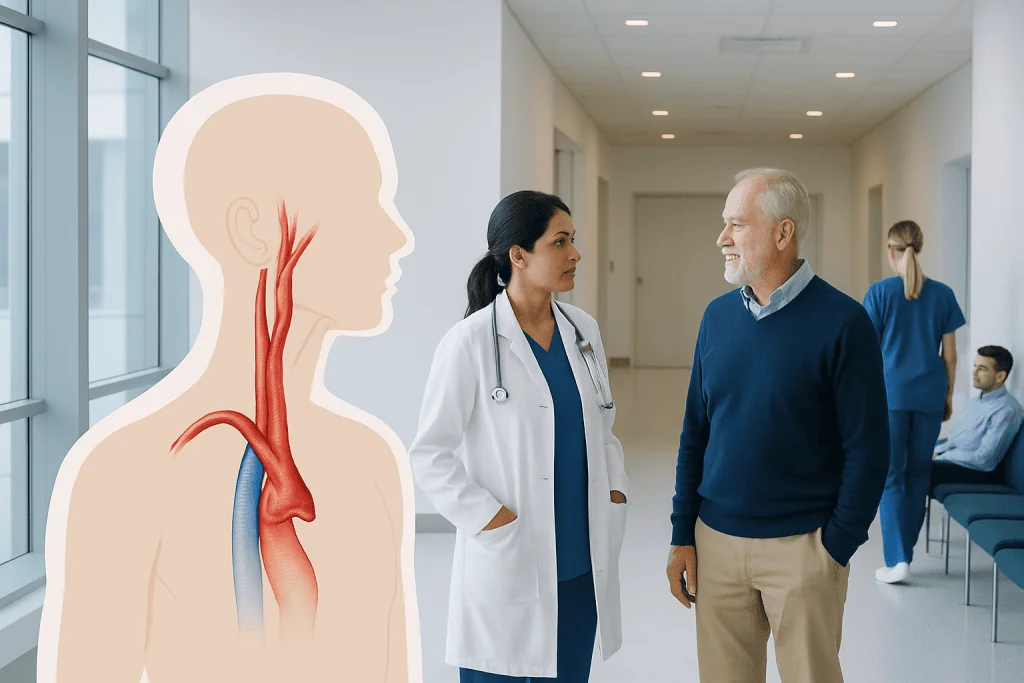
The carotid arteries are two large neck arteries that help supply the brain with blood. Carotid artery disease usually develops when fatty plaque narrows the artery over time.
Key Takeaways
- The carotid arteries are two large neck arteries that help supply the brain with blood.
- Carotid artery disease usually develops when fatty plaque narrows the artery over time.
- Many people have no warning signs until a transient ischemic attack or stroke occurs.
- Diagnosis often begins with a physical exam and carotid ultrasound.
- Treatment may include lifestyle changes, medicines, and in some cases a procedure to restore blood flow.
- Urgent medical care is needed for sudden weakness, speech trouble, facial drooping, or vision loss.
The carotid artery is a major blood vessel in the neck that carries oxygen-rich blood to the brain. Most concerns about the carotid artery involve narrowing from plaque buildup, which may not cause symptoms at first but can increase the risk of stroke or transient ischemic attack.
What the carotid artery is and why it matters
The carotid artery is one of the main blood vessels that delivers oxygen-rich blood from the heart to the brain. There are two carotid arteries, one on each side of the neck, and each divides into internal and external branches. The internal carotid artery is especially important because it helps supply blood to the brain, where steady circulation is essential for normal thinking, movement, speech, and vision.
When people search for information about the carotid artery, they are often asking about disease in this vessel rather than the normal anatomy itself. The most common problem is carotid artery disease, also called carotid stenosis, in which fatty deposits known as plaque build up inside the artery wall. This narrowing can reduce blood flow or allow a small clot or plaque fragment to travel to the brain, increasing the risk of a transient ischemic attack (TIA) or stroke.
Not every change in the carotid artery causes symptoms, and many people feel completely well even when narrowing is present. This is one reason the topic can be confusing and sometimes surrounded by myths. A clear, evidence-based view is that carotid artery disease is important because of its link to brain health and stroke prevention, not because every artery abnormality is immediately dangerous.
How carotid artery disease develops
In most adults, carotid artery disease develops gradually through a process called atherosclerosis. Over time, cholesterol, inflammatory cells, calcium, and other materials collect in the artery wall and form plaque. As plaque enlarges, the artery becomes narrower and less flexible.
The main concern is not only reduced space inside the vessel but also the possibility that plaque can become unstable. If the plaque surface breaks or a clot forms on it, blood flow to part of the brain can suddenly be blocked. This can cause a TIA, sometimes called a mini-stroke, or a full stroke. In this way, a problem in the neck artery can directly affect brain function.
Less commonly, carotid artery problems may be linked to artery dissection, radiation-related vessel damage, fibromuscular dysplasia, or inflammatory vascular disease. These causes are less frequent than atherosclerosis, but doctors consider them when symptoms, age, or imaging findings do not fit the usual pattern. In some cases, evaluation overlaps with care for stroke or related vascular conditions.
Symptoms and signs: what myths often miss

A common myth is that carotid artery narrowing always causes neck pain, dizziness, or obvious warning signs. In reality, many people with carotid artery disease have no symptoms at all until a TIA or stroke occurs. This is why doctors focus on overall risk factors and careful testing rather than symptoms alone.
When symptoms do happen, they are usually neurological rather than local to the neck. Warning signs can include sudden weakness or numbness on one side of the body, facial drooping, trouble speaking or understanding speech, sudden vision loss in one eye, double vision, severe imbalance, or sudden confusion. These symptoms may last only a few minutes in a TIA, but they should still be treated as a medical emergency.
During an examination, a clinician may hear a bruit, which is an abnormal sound over the artery caused by turbulent blood flow. However, the absence of a bruit does not rule out disease, and the presence of a bruit does not confirm severe narrowing by itself. Imaging is usually needed to know whether the carotid artery is significantly affected.
- Possible silent disease: no symptoms at all
- TIA symptoms: brief weakness, speech changes, or vision problems
- Stroke symptoms: persistent neurological deficits that need emergency care
- Exam clue: a carotid bruit may sometimes be heard with a stethoscope
Causes and risk factors
The same factors that increase the risk of heart disease often increase the risk of carotid artery disease. Smoking, high blood pressure, diabetes, high LDL cholesterol, older age, obesity, physical inactivity, and a family history of vascular disease are among the best-known contributors. Risk rises when several of these factors occur together.
Some people assume carotid artery disease only affects older adults, but vascular risk can begin building earlier in life. Long-standing high blood pressure and high cholesterol may damage the artery lining over many years before any symptoms appear. This makes prevention especially important, even for people who feel healthy.
Having disease in one blood vessel often suggests risk in others. A person with coronary artery disease, peripheral artery disease, or previous TIA or stroke may be more likely to have carotid narrowing as well. This is why doctors often evaluate the whole cardiovascular picture rather than treating the carotid artery as an isolated issue. When needed, broader assessment may involve check-up and screening to review blood pressure, cholesterol, diabetes risk, and vascular health more generally.
How doctors diagnose carotid artery problems
Diagnosis begins with medical history and physical examination. A doctor will ask about past stroke-like symptoms, smoking history, blood pressure, cholesterol, diabetes, and heart disease. They may listen over the neck for a bruit and perform a neurological examination to look for signs of impaired brain function.
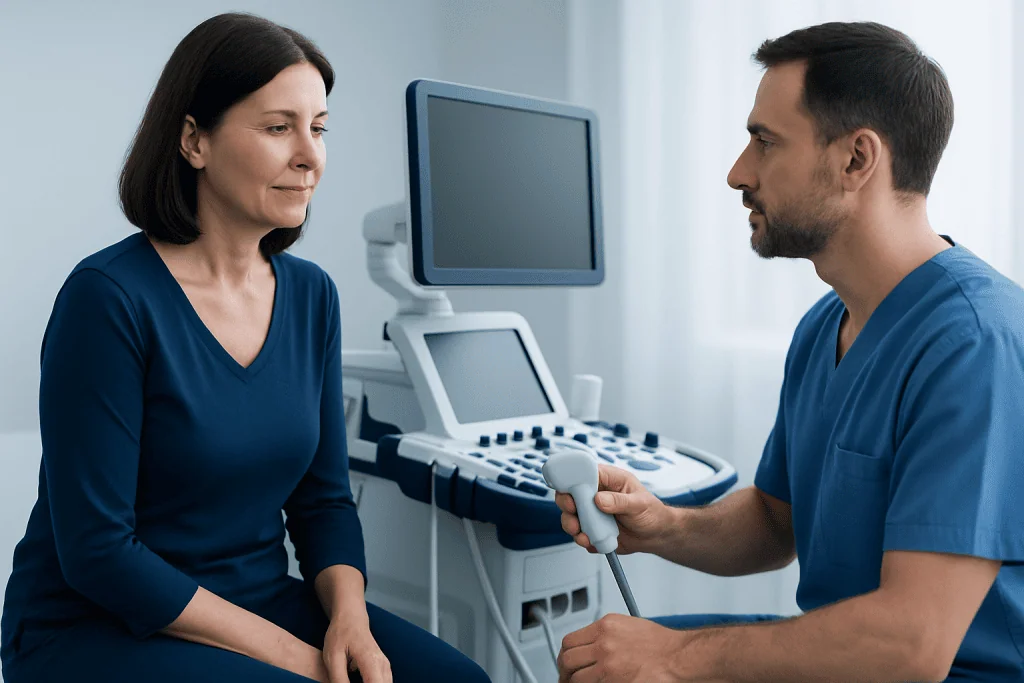
The most common first imaging test is a carotid ultrasound, also called duplex ultrasonography. This painless, noninvasive test uses sound waves to show the artery and estimate how fast blood is moving through it. Faster flow can suggest narrowing, and the scan can help identify plaque and estimate the degree of stenosis.
If more detail is needed, doctors may use CT angiography or MR angiography to look at the blood vessels in greater detail. In selected situations, catheter angiography may be performed, especially when planning an intervention. For people who have had neurological symptoms, the evaluation may also include brain imaging and urgent review by specialists in neurology or vascular medicine.
The purpose of diagnosis is not just to confirm narrowing but to understand how severe it is, whether it has caused symptoms, and what the safest treatment approach will be. The same degree of stenosis may be managed differently depending on a person’s age, medical conditions, symptom history, and overall stroke risk.
Treatment options and stroke prevention
Treatment depends on whether the carotid artery narrowing is mild, moderate, or severe, and whether it has caused symptoms. For many people, the foundation of treatment is medical management and risk reduction. This often includes medicines to lower cholesterol, control blood pressure, reduce clotting risk when appropriate, and manage diabetes, alongside strong lifestyle changes.
Procedures are usually considered when narrowing is more significant or when symptoms such as TIA or stroke have occurred. One established option is carotid endarterectomy, an operation in which a surgeon opens the artery and removes plaque. Another option in selected patients is carotid artery stenting, in which a small mesh tube is placed to help keep the artery open. These decisions are individualized and based on anatomy, symptom status, surgical risk, and specialist assessment.
Supportive treatment may also include structured follow-up imaging and comprehensive management of related vascular disease. If a person has experienced a stroke or TIA, treatment may overlap with specialized stroke rehabilitation and secondary prevention planning. The goal is to reduce the chance of future events while preserving quality of life and daily function.
Evidence-based care focuses on balancing benefit and risk. Not every narrowed carotid artery needs a procedure, and not every person is best treated with medicines alone. Shared decision-making with a qualified doctor helps determine the most appropriate plan.
Prevention and self-care for long-term vascular health
Prevention aims to slow plaque buildup and lower the chance of stroke. Stopping smoking is one of the most important steps because tobacco damages blood vessels and accelerates atherosclerosis. Keeping blood pressure, cholesterol, and blood sugar in target ranges also plays a major role in protecting the carotid arteries and the rest of the circulation.
Healthy eating patterns that emphasize vegetables, fruits, whole grains, legumes, fish, and unsaturated fats may support cardiovascular health. Regular physical activity, weight management, stress reduction, and good sleep habits can also improve long-term vascular outcomes. These measures are not quick fixes, but they are meaningful parts of treatment and prevention.
People with known carotid artery disease should take prescribed medicines consistently and attend follow-up visits as advised. They should also understand stroke warning signs and make sure family members know them too. For international patients who need coordinated evaluation, Acibadem International’s multidisciplinary specialists and JCI-accredited hospitals diagnose and treat carotid artery disease as part of broader stroke and vascular care.
When to seek medical care
Emergency care is needed immediately if there is sudden facial drooping, arm or leg weakness, numbness on one side, speech difficulty, sudden vision loss, severe confusion, or a sudden loss of balance. Even if these symptoms go away quickly, they may represent a TIA and should not be ignored. Fast assessment can reduce the risk of a major stroke.
A non-emergency medical appointment is appropriate for people with vascular risk factors such as smoking, diabetes, high blood pressure, high cholesterol, or known artery disease elsewhere in the body. It is also reasonable to seek evaluation after a doctor hears a carotid bruit, after unexplained brief neurological symptoms, or after a stroke risk review suggests further testing may be useful.
People should not try to diagnose carotid artery disease based on dizziness, headache, or neck discomfort alone. These symptoms have many possible causes, and only a clinician can determine whether the carotid artery is involved. Prompt, calm medical evaluation is the safest way to separate common myths from conditions that truly need treatment.
Frequently asked questions
What does the carotid artery do?
The carotid arteries are two major blood vessels in the neck that carry oxygen-rich blood to the brain. They are essential for normal brain function, including movement, speech, memory, and vision.
Can carotid artery disease exist without symptoms?
Yes. Many people have carotid narrowing without noticing any symptoms. Often the condition is found during an evaluation for stroke risk, a neck bruit, or after a TIA or stroke has already occurred.
Is carotid artery disease the same as a stroke?
No. Carotid artery disease is a condition affecting the neck arteries, while a stroke happens when blood flow to part of the brain is interrupted or bleeding occurs. However, carotid artery disease can increase the risk of stroke.
How is carotid artery disease usually found?
Doctors often start with a medical history, physical examination, and carotid ultrasound. If needed, they may order CT angiography or MR angiography to better define the anatomy and severity of narrowing.
Does every blocked carotid artery need surgery?
No. Treatment depends on how severe the narrowing is, whether symptoms have occurred, and the person's overall health. Some people do well with medicines and risk-factor control, while others may benefit from a procedure such as carotid endarterectomy or stenting.
What are the most important warning signs to act on immediately?
Sudden weakness on one side, facial drooping, trouble speaking, sudden vision loss, or sudden severe imbalance require urgent medical attention. Even symptoms that last only a few minutes may be a TIA and should be treated as an emergency.
References
- American Heart Association
- National Institute of Neurological Disorders and Stroke
- National Heart, Lung, and Blood Institute
- Society for Vascular Surgery
- Centers for Disease Control and Prevention
This article is for general information only and is not a substitute for professional medical advice. Please consult a qualified doctor about your individual situation.
Explore treatments in Turkey — costs, top hospitals & a free quote
JCI-accredited · board-certified surgeons · reply within 24h
Add us as a Preferred Source to see more of our trusted health content across Google Search, AI Overviews and Discover.
Check your numbers in seconds
BMI, calories, due date, blood pressure and 30+ more clinical calculators — free, instant, doctor-reviewed ranges.

More from the Health Library



Related Specialists
Assoc. Prof. Dr. Gülcan Seymen
Pediatric Endocrinology
Fzt. Cüneyt Karoğlu
Physical Medicine & Rehabilitation
Dr. Metin Bozkuş
Emergency Service
Dr. Çiğdem Kurt Yavrucu
Pediatrics