Chalazion and Stye: Eyelid Lumps and Treatment Options

A stye is usually an infected or inflamed eyelid gland, while a chalazion is typically a blocked oil gland that forms a firm, often painless lump. Warm compresses are the first-line home care for both conditions and should be done gently and consistently.
Key Takeaways
- A stye is usually an infected or inflamed eyelid gland, while a chalazion is typically a blocked oil gland that forms a firm, often painless lump.
- Warm compresses are the first-line home care for both conditions and should be done gently and consistently.
- Patients should avoid squeezing, popping, or cutting an eyelid lump because this can worsen inflammation or spread infection.
- Medical treatment may include antibiotic ointment or drops for selected styes, steroid injection for some chalazia, or minor surgical drainage when needed.
- Urgent medical attention is needed if eyelid swelling is severe, vision changes occur, fever develops, or redness spreads around the eye.
Chalazion and stye are common causes of eyelid lumps, but they have different causes and may need different care. Most improve with simple measures, while persistent, painful, or recurrent eyelid swelling should be assessed by an eye specialist.
Overview
Chalazion and stye are two of the most common reasons people notice a lump, swelling, or tenderness on the eyelid. They can look similar at first, but they are not exactly the same condition. A stye, also called a hordeolum, is usually related to infection or acute inflammation of a gland at the eyelid margin or within the eyelid. A chalazion is usually caused by blockage of a meibomian gland, which produces the oily layer of the tear film.
A stye often appears suddenly and may be red, sore, and sensitive to touch. It can develop near the base of the eyelashes or deeper inside the eyelid. A chalazion tends to develop more slowly and may feel like a firm, round lump within the lid. It is often less painful than a stye, although it can cause pressure, irritation, or blurred vision if it becomes large enough to press on the eye.
Both conditions are usually benign and treatable. Many improve with warm compresses and gentle eyelid hygiene. However, an eye doctor should evaluate lumps that do not improve, keep returning, affect vision, or resemble other eyelid conditions. Proper diagnosis helps guide treatment and reduces the chance of ongoing discomfort or recurrence.
Symptoms: How Chalazion and Stye Feel and Look
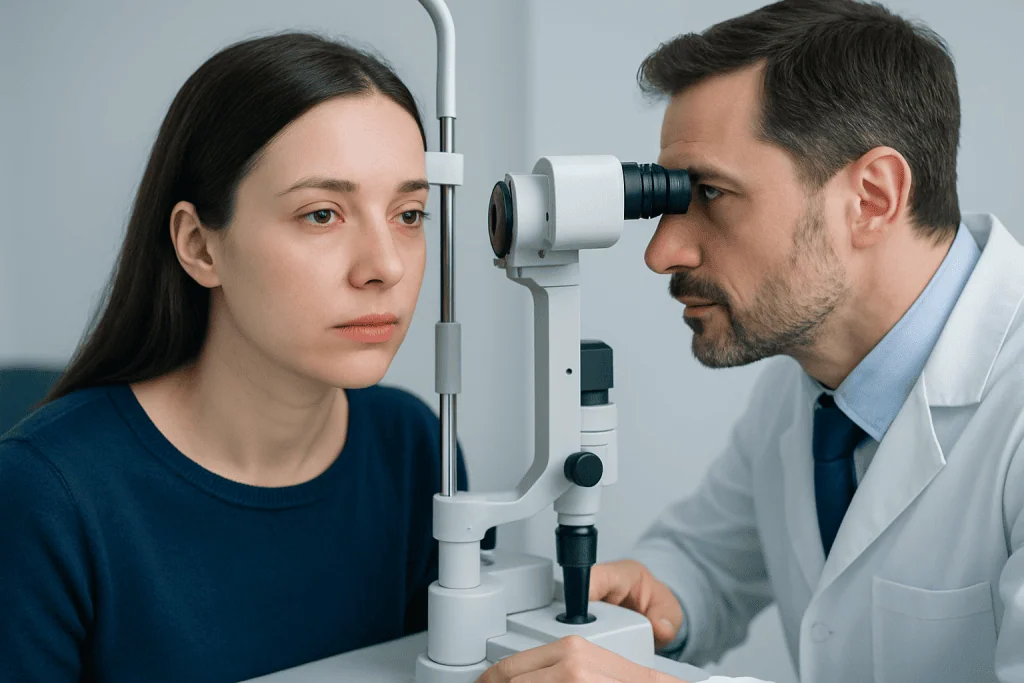
The symptoms of chalazion and stye can overlap, especially in the early stages. Both may cause a visible or palpable eyelid lump, localized swelling, mild tearing, or a feeling that something is in the eye. The eyelid may look puffy, and blinking may feel uncomfortable. Some people also notice crusting at the eyelashes, especially if blepharitis is present.
A stye is more likely to be painful, red, and tender. It may form a small yellowish point near the eyelid edge, similar to a pimple, but it should never be squeezed. An external stye develops near an eyelash follicle, while an internal stye develops from a gland deeper in the eyelid. Internal styes can feel more swollen and may be harder to see from the outside.
A chalazion is more likely to feel like a firm, painless bump that grows gradually over days or weeks. The overlying skin may be normal in color or slightly red. Large chalazia can cause heaviness of the eyelid, eye irritation, or temporary blurred vision by gently changing the shape of the cornea. Warning symptoms include worsening redness around the eye, fever, reduced vision, significant eye pain, or difficulty moving the eye.
Causes and Risk Factors

The eyelids contain several small glands that help keep the eye surface healthy. Meibomian glands release oils into the tear film to slow evaporation and maintain comfort. When a gland opening becomes blocked, oil can build up inside the eyelid and trigger inflammation, forming a chalazion. A stye often begins when bacteria, commonly those normally living on the skin, contribute to infection or inflammation in an eyelash follicle or gland.
Certain conditions increase the chance of developing chalazion and stye. Blepharitis, which is chronic inflammation of the eyelid margins, is a common contributor. Meibomian gland dysfunction, dry eye disease, rosacea, seborrheic dermatitis, and a history of previous eyelid lumps may also increase risk. People who frequently rub their eyes or sleep in eye makeup may be more prone to irritation and blocked glands.
Contact lens use does not directly cause every eyelid lump, but poor lens hygiene can increase irritation and infection risk. Sharing eye cosmetics, using expired makeup, or applying products too close to the eyelid margin may also play a role. In children, styes are common and often related to eye rubbing or mild eyelid inflammation. Recurrent or unusual eyelid lumps should be assessed to confirm the diagnosis and check for underlying eyelid disease.
Diagnosis
Diagnosis is usually made during an eye examination. The doctor asks about how quickly the lump appeared, whether it is painful, whether there is discharge, and whether similar lumps have occurred before. The eyelid is examined externally and, when needed, gently everted to see the inner surface. Vision may be checked, especially if the lump is large or the patient reports blurring.
An eye specialist can usually distinguish a chalazion from a stye based on appearance, tenderness, location, and duration. They may also look for signs of blepharitis, meibomian gland dysfunction, dry eye, or skin conditions such as rosacea. If there is significant redness, warmth, or swelling extending beyond the eyelid, the doctor will consider preseptal cellulitis, which is an infection of the eyelid tissues and needs medical treatment.
Most patients do not need laboratory tests or imaging. However, further evaluation may be recommended if the lump is persistent, repeatedly occurs in the same location, has an unusual appearance, bleeds, causes loss of eyelashes, or does not respond to standard treatment. In rare cases, a biopsy may be needed to rule out other eyelid conditions, including eyelid tumors, particularly in older adults or with recurrent lesions in the same spot.
Treatment Options
Warm compresses are the first step for most chalazia and styes. A clean cloth soaked in warm, not hot, water is placed over the closed eyelid for several minutes, then reheated as needed. The warmth helps soften thickened oil and encourages natural drainage. Gentle eyelid massage may be advised for a chalazion after warming, but massage should be light and should stop if it causes pain. Patients should avoid squeezing, puncturing, or trying to drain the lump at home.
For a stye, the doctor may recommend antibiotic ointment or drops if there is eyelid margin infection, discharge, or associated conjunctivitis. Oral antibiotics may be needed if infection spreads into surrounding eyelid tissues or if the patient has significant risk factors. Not every stye needs antibiotics, because many resolve with conservative care. Pain relievers may be used if appropriate for the person’s health status, but medication choices should be discussed with a clinician or pharmacist.
A chalazion that does not improve after several weeks, becomes large, or affects vision may need in-office treatment. Options can include steroid injection to reduce inflammation or a minor procedure called incision and curettage, in which the eyelid is numbed and the blocked material is drained from the inner surface of the lid. These procedures are commonly performed by ophthalmologists when appropriate. The choice depends on the size, location, duration, and individual medical factors.
During treatment, patients may be advised to pause eye makeup and avoid contact lenses until irritation resolves, especially if there is discharge or significant inflammation. Any prescribed medication should be used only as directed. If symptoms worsen despite treatment, follow-up is important to reassess the diagnosis and adjust care.
Prevention and Self-Care
Good eyelid hygiene can reduce the chance of future chalazia and styes, especially in people with blepharitis or meibomian gland dysfunction. Regular warm compresses may be recommended as part of a long-term routine for recurrent cases. Gentle cleaning of the eyelid margins with a clinician-recommended lid cleanser or diluted, non-irritating product may help remove crusts, oils, and debris.
Helpful habits include washing hands before touching the face, removing eye makeup before sleep, replacing mascara and eyeliner regularly, and not sharing cosmetics or towels. Contact lens wearers should follow proper lens cleaning, storage, and replacement instructions. If lenses cause irritation during an eyelid flare, they should be removed and an eye care professional should be consulted before restarting use.
Self-care should be gentle. Heat should be comfortably warm, not hot, to avoid burns. The eyelid should not be squeezed, scratched, or rubbed aggressively. People with recurrent eyelid lumps may benefit from evaluation for dry eye, rosacea, or chronic eyelid inflammation, because treating the underlying issue often helps prevent repeated episodes.
- Use clean compresses each time.
- Keep hands and eyelids clean.
- Avoid expired or shared eye makeup.
- Do not attempt to pop an eyelid lump.
- Seek follow-up if the lump persists or returns.
When to See a Doctor
Many small styes and chalazia improve with home care, but medical assessment is recommended if the lump does not begin to improve after one to two weeks, lasts longer than several weeks, or continues to grow. A doctor should also be consulted if the eyelid lump returns frequently, occurs in the same location, or is associated with chronic eyelid crusting, redness, or dry eye symptoms.
Prompt care is needed if there is significant eye pain, reduced or blurred vision that does not clear with blinking, fever, spreading redness, swelling that closes the eye, or difficulty moving the eye. These features can indicate a more serious infection or another eye condition requiring timely treatment. Infants, people with weakened immune systems, and patients with diabetes should seek advice earlier if symptoms are worsening.
Patients planning travel or those who have had repeated eyelid problems may prefer to see an ophthalmologist for a clear diagnosis and prevention plan. Acibadem International’s multidisciplinary specialists and JCI-accredited hospitals diagnose and treat eyelid conditions, including chalazion and stye, for international patients when specialist evaluation or procedures are needed.
Frequently asked questions
What is the main difference between a chalazion and a stye?
A stye is usually a painful, red, inflamed lump caused by infection or acute inflammation of an eyelid gland or eyelash follicle. A chalazion is usually a blocked oil gland that forms a firm lump and is often less painful. A stye can sometimes settle down and leave a chalazion-like lump.
Can a chalazion or stye go away on its own?
Yes, many improve without procedures, especially with warm compresses and gentle eyelid hygiene. A stye may improve within days to a couple of weeks, while a chalazion can take longer. If it persists, grows, or affects vision, an eye doctor should evaluate it.
Is it safe to pop a stye or chalazion?
No. Popping, squeezing, or cutting an eyelid lump at home can worsen inflammation, spread infection, or injure the eyelid and eye surface. Treatment should focus on warm compresses and medical care if the lump does not improve.
Do antibiotics treat every stye?
Not every stye needs antibiotics. Many styes improve with warm compresses, and antibiotics are used when there is clear bacterial infection, discharge, spreading eyelid inflammation, or other clinical reasons. A doctor can decide whether drops, ointment, or oral medication is appropriate.
Why do eyelid lumps keep coming back?
Recurrent lumps are often linked to blepharitis, meibomian gland dysfunction, dry eye, rosacea, or incomplete eyelid hygiene. An eye specialist can look for these underlying conditions and recommend a prevention plan. Regular lid care may reduce future episodes.
Can a chalazion affect vision?
A small chalazion usually does not affect vision. A larger one can press on the eye and temporarily blur vision or change focus. If vision changes occur, an eye examination is recommended.
When is an eyelid lump more concerning?
An eyelid lump should be checked if it is persistent, recurrent in the same spot, bleeding, causing loss of eyelashes, or not responding to usual care. Urgent care is needed for severe pain, fever, spreading redness, eye movement problems, or reduced vision.
This article is for general information only and is not a substitute for professional medical advice. Please consult a qualified doctor about your individual situation.
Chalazion in Turkey — costs, top hospitals & a free quote
JCI-accredited · board-certified surgeons · reply within 24h
Add us as a Preferred Source to see more of our trusted health content across Google Search, AI Overviews and Discover.

Ophthalmology
Comprehensive eye care from laser vision correction to retina, cornea and cataract surgery.
75 specialists in this unitRelated Treatments
More from the Health Library

Blepharitis: Eyelid Inflammation and Long-Term Care

Contact Lens Intolerance: Causes of Dryness, Discomfort, and Blurry Vision

What Does OD Mean in Eye Care? Ophthalmologist, Optometrist, and Eye Exam Basics

Premium vs Standard Lens Options in Cataract Surgery

Laser Eye Surgery: What It Treats and How It Works