Dandruff and Seborrheic Dermatitis: Causes and Scalp Care

Dandruff is usually a mild form of seborrheic dermatitis limited to the scalp. Seborrheic dermatitis can also affect oily areas such as the eyebrows, nose folds, ears, chest, and beard area.
Key Takeaways
- Dandruff is usually a mild form of seborrheic dermatitis limited to the scalp.
- Seborrheic dermatitis can also affect oily areas such as the eyebrows, nose folds, ears, chest, and beard area.
- A yeast called Malassezia, skin oil, individual sensitivity, stress, weather, and some health factors may contribute.
- Medicated shampoos can help, but they need correct and consistent use to work well.
- Persistent, painful, spreading, or severe scalp symptoms should be assessed by a dermatologist.
Dandruff and seborrheic dermatitis are common scalp conditions that cause flaking, itching, and sometimes redness or greasy scaling. With the right diagnosis, medicated shampoos, and gentle scalp care, most people can manage symptoms effectively.
Overview
Dandruff is a very common scalp problem that causes small white or yellowish flakes to shed from the scalp. It may also cause itching, tightness, or mild irritation. Although it can be frustrating or embarrassing, dandruff is not a sign of poor hygiene and it is not contagious.
Seborrheic dermatitis is a related inflammatory skin condition. When it affects the scalp mildly, it may look like dandruff. In more active cases, it can cause redness, greasy scales, thicker crusting, and discomfort. It often appears in areas rich in oil glands, including the scalp, eyebrows, eyelids, sides of the nose, behind the ears, chest, and beard area.
Both conditions tend to come and go. Symptoms may improve for weeks or months and then flare again, especially during stress, cold weather, illness, or changes in skin care routines. The goal of care is usually control rather than a permanent cure, and many people do well with a combination of medicated shampoo and gentle scalp habits.
Symptoms

The main symptom of dandruff is visible flaking. Flakes may be dry and white, or slightly oily and yellow. Some people notice flakes on clothing, hairbrushes, pillows, or around the hairline. Itching is common, but dandruff usually does not cause significant pain, swelling, or hair loss.
Seborrheic dermatitis may cause more noticeable inflammation. The scalp can look red or irritated, and the scale may be thicker, greasy, or stuck to the skin. In babies, a similar condition called cradle cap can cause yellow, crusty patches on the scalp; this is usually harmless and often improves over time with gentle care.
Symptoms may include:
- White or yellow flakes on the scalp, hair, or shoulders
- Itching, tingling, or mild burning
- Redness or irritation along the scalp or hairline
- Greasy-looking scale or patches
- Scaling in the eyebrows, beard, ears, or around the nose
Scratching can irritate the skin further and may lead to small breaks in the skin. If soreness, oozing, swelling, or thick crusting develops, another condition or a secondary infection may be present and medical advice is recommended.
Causes and Risk Factors
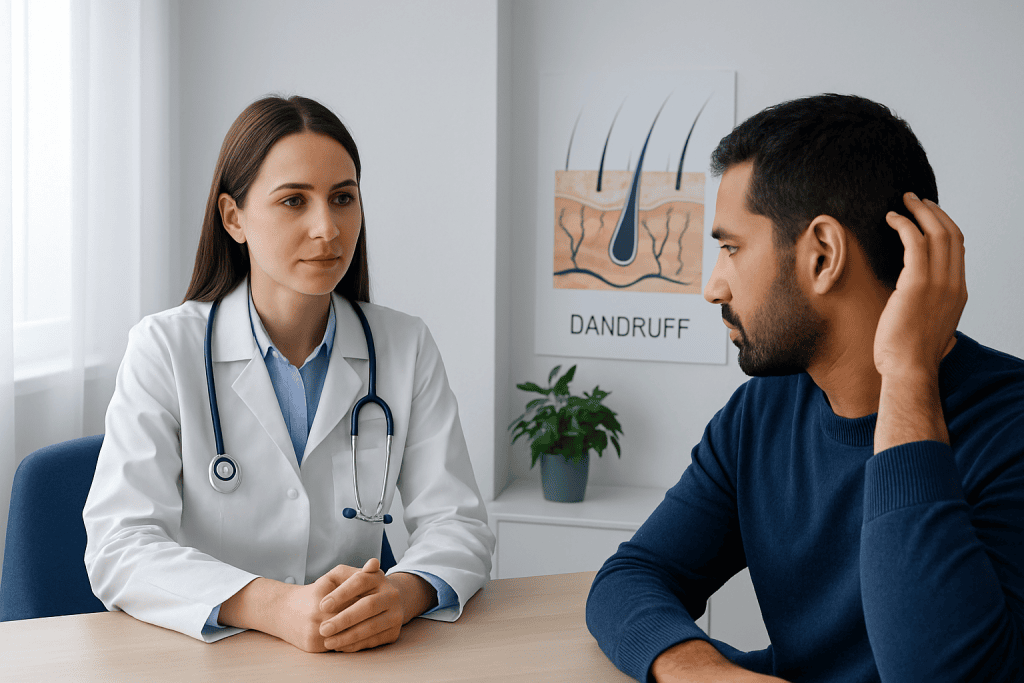
Dandruff and seborrheic dermatitis are influenced by several factors rather than one single cause. A yeast that normally lives on the skin, called Malassezia, plays an important role. In some people, this yeast and the oils on the scalp trigger irritation and increased skin cell shedding, which appears as flaking.
Oil production also matters. Seborrheic dermatitis tends to affect areas with more sebaceous glands, which produce skin oil. This does not mean the scalp is dirty. In fact, washing too harshly or using irritating products can sometimes worsen inflammation, while not washing often enough may allow oil and scale to build up.
Common triggers and risk factors include:
- Cold, dry weather or seasonal changes
- Stress, fatigue, or recent illness
- Oily skin or a naturally oilier scalp
- Certain hair products that irritate the scalp or leave buildup
- Neurological conditions such as Parkinson disease
- Immune system conditions or medicines that affect immunity
Diet is not usually the main cause of dandruff, but overall health can influence the skin. Adequate sleep, balanced nutrition, and stress management may support better symptom control. If flaking is sudden, severe, or associated with other skin changes, a dermatologist can help rule out conditions such as psoriasis, eczema, fungal infection, or contact dermatitis.
Diagnosis
In most cases, dandruff and seborrheic dermatitis are diagnosed by examining the scalp and skin. A doctor or dermatologist will look at the pattern of flaking, the presence of redness or greasy scale, and whether other areas of the face or body are involved. They may also ask about symptoms, hair care routines, medical history, medicines, and previous treatments.
Further tests are not usually needed. However, if the diagnosis is unclear, the doctor may check for other causes of scalp scaling. Psoriasis can cause thicker silvery plaques. Tinea capitis, a fungal infection of the scalp, can cause patchy hair loss and scaling, especially in children. Allergic or irritant contact dermatitis may occur after hair dye, fragrance, or product exposure.
Occasionally, a skin scraping, fungal test, or small skin biopsy may be recommended, particularly if symptoms are severe, unusual, or not responding to standard treatment. Accurate diagnosis is important because the treatments for dandruff, psoriasis, fungal infection, and eczema can differ.
Treatment Options
Treatment depends on severity and location. Mild dandruff often improves with regular use of an anti-dandruff shampoo. These shampoos may contain active ingredients such as ketoconazole, selenium sulfide, zinc pyrithione, coal tar, salicylic acid, or other antifungal and scale-reducing agents. Different ingredients work in different ways, so a person may need to try more than one product or rotate products under guidance.
Correct use is important. Many medicated shampoos need to stay on the scalp for several minutes before rinsing, so the active ingredient has time to work. The hair can be washed with a regular shampoo afterward if needed, especially for hair texture or styling preferences. Once symptoms improve, medicated shampoo may be used less often for maintenance, as advised by a clinician or product instructions.
For moderate or severe seborrheic dermatitis, a dermatologist may prescribe additional treatments. These can include prescription-strength antifungal shampoos, lotions, foams, or creams. Short courses of anti-inflammatory medicines may be used for flares, especially when redness and itching are prominent. Treatment near the eyes, face, or in infants should be guided by a qualified health professional.
People should avoid using strong topical steroids or home remedies on the scalp without medical advice, especially for long periods. Some substances can irritate the skin, worsen scaling, or cause unwanted side effects. If symptoms do not improve after several weeks of appropriate over-the-counter care, medical evaluation can help adjust the plan safely.
Prevention and Self-care
Self-care can reduce flares and support treatment. A gentle, consistent washing routine is often helpful. People with oily scalps may need to wash more frequently, while people with dry or textured hair may need a routine that balances scalp treatment with hair moisture. The best routine is the one that controls scale without causing dryness, breakage, or irritation.
Hair products can affect the scalp. Heavy oils, pomades, gels, and leave-in products may build up and worsen flaking in some people. Fragranced products, hair dyes, and harsh cleansers can trigger irritation or contact dermatitis. If symptoms flare after a new product, stopping it and simplifying the routine for a few weeks may help identify the trigger.
Helpful scalp care habits include:
- Massage shampoo gently into the scalp rather than scratching with nails
- Rinse thoroughly to reduce product residue
- Avoid picking at scales, which can irritate the skin
- Clean combs, brushes, hats, and pillowcases regularly
- Manage stress and protect the scalp from harsh weather when possible
Sunlight may improve seborrheic dermatitis in some people, but sunburn can damage the skin and is not a treatment. People should use safe sun protection when outdoors. If scalp care is complicated by hair loss, sensitive skin, pregnancy, infant care, or another medical condition, a healthcare professional can recommend an individualized approach.
When to See a Doctor
Many people manage mild dandruff at home, but medical advice is useful when symptoms are persistent, severe, or confusing. A dermatologist can confirm the diagnosis, check for other scalp conditions, and recommend treatment that fits the person’s skin type, hair care needs, and medical history.
A doctor should be consulted if there is intense itching, pain, swelling, oozing, bleeding, thick crusting, or patchy hair loss. Medical care is also recommended if symptoms spread to the face or body, if a child has significant scalp scaling, or if over-the-counter shampoos do not help after consistent use. People with weakened immune systems or neurological conditions should seek guidance earlier if seborrheic dermatitis is troublesome.
Acibadem International’s dermatology teams and related specialists in JCI-accredited hospitals diagnose and treat scalp and skin conditions for international patients, including dandruff and seborrheic dermatitis. Care may include dermatologic examination, tailored treatment plans, and follow-up advice for long-term symptom control.
Frequently asked questions
Is dandruff the same as seborrheic dermatitis?
Dandruff is often considered a mild form of seborrheic dermatitis that mainly affects the scalp. Seborrheic dermatitis can be more inflammatory and may also involve the face, ears, chest, or beard area. A dermatologist can help distinguish it from psoriasis, eczema, or fungal infection.
Is dandruff caused by poor hygiene?
No. Dandruff is not caused by being unclean, and it is not contagious. It is related to scalp oil, Malassezia yeast, skin sensitivity, and inflammation. However, regular washing can help remove scale and improve the effectiveness of medicated shampoos.
Can dandruff cause hair loss?
Dandruff itself usually does not cause permanent hair loss. Heavy scratching, inflammation, or an untreated scalp condition may contribute to temporary shedding or breakage. Patchy hair loss, pain, or scaling with broken hairs should be evaluated by a doctor.
How long does anti-dandruff shampoo take to work?
Some people notice improvement within a few washes, but it may take several weeks of consistent use for better control. The shampoo often needs to remain on the scalp for a few minutes before rinsing. If there is no improvement despite correct use, a different active ingredient or prescription treatment may be needed.
Are natural oils helpful for dandruff?
Some people use oils for hair moisture, but heavy oils can worsen greasy scaling or buildup in seborrheic dermatitis. Essential oils may irritate the scalp or cause allergic reactions if applied directly. It is safer to use gentle, evidence-based scalp care and ask a dermatologist before trying home remedies.
Can seborrheic dermatitis be cured permanently?
Seborrheic dermatitis often has a recurring pattern, so treatment focuses on controlling symptoms and preventing flares. Many people keep it well managed with maintenance shampoo and gentle skin care. If flares become frequent or severe, a clinician can adjust the treatment plan.
References
- American Academy of Dermatology Association
- Mayo Clinic
- National Eczema Association
- DermNet
- Cochrane Library
This article is for general information only and is not a substitute for professional medical advice. Please consult a qualified doctor about your individual situation.
Seborrheic Dermatitis in Turkey — costs, top hospitals & a free quote
JCI-accredited · board-certified surgeons · reply within 24h