Dark Coloured Eyes: An Evidence-Based Guide for Patients

Dark coloured eyes are commonly a normal inherited eye color caused by higher melanin in the iris. Eye color can appear darker because of lighting, pupil size, makeup, clothing, or photographs.
Key Takeaways
- Dark coloured eyes are commonly a normal inherited eye color caused by higher melanin in the iris.
- Eye color can appear darker because of lighting, pupil size, makeup, clothing, or photographs.
- A true change in eye color, especially in one eye, may need an eye examination.
- Pain, redness, blurred vision, halos, or light sensitivity with darker-looking eyes need prompt medical care.
- Some eye diseases, inflammation, injury, medicines, or bleeding inside the eye can alter eye appearance.
Dark coloured eyes are most often a normal result of natural iris pigmentation and genetics. However, if the eyes seem to become darker suddenly or this change happens with pain, redness, or vision changes, a medical assessment is important to rule out an underlying eye condition.
Overview: what dark coloured eyes usually mean
Dark coloured eyes usually mean that the iris, the colored part of the eye, contains more melanin pigment. In most people, this is simply a normal inherited trait rather than a health problem. Brown and very dark brown eyes are common worldwide, and the depth of color can vary naturally from person to person.
People often use the phrase “dark coloured eyes” in different ways. Some mean naturally dark brown or almost black-looking eyes. Others are describing eyes that seem darker than usual in certain lighting, during tiredness, or in photographs. These situations are often harmless because eye appearance can change with light, pupil size, and contrast from skin tone, clothing, or cosmetics.
The point that matters medically is whether the eye has always looked this way or whether there has been a noticeable new change. A sudden darkening, a difference between the two eyes, or a darker appearance together with discomfort or vision symptoms deserves professional evaluation. This article explains what is normal, what may cause concern, and when a doctor should assess the eyes.
How eye color works
Eye color mainly depends on how much melanin is present in the iris and how that pigment is distributed. Melanin is the same natural pigment involved in skin and hair color. Eyes with more melanin tend to look brown or very dark brown, while eyes with less melanin may appear blue, green, gray, or hazel.
Even when someone describes eyes as “black,” the iris is usually extremely dark brown rather than truly black. The eye may also look darker because the pupil, the black opening in the center, becomes larger in dim light or during strong emotions. This can reduce the visible colored part of the iris and make the entire eye seem darker.
Natural eye color is determined largely by genetics, but appearance can still shift slightly with age and environment. Babies, children, and adolescents may show gradual changes as iris pigment matures. In adults, however, major new color changes are less common and should not be dismissed if they are persistent or associated with symptoms.
Common reasons eyes may look darker

Many non-medical factors can make dark coloured eyes appear even darker. Lighting is one of the most common reasons. Indoor light, shadows, flash photography, and strong sunlight can all change how the iris looks. A large pupil in low light may also make the eye appear deeper in color.
Contrast effects play a role as well. Dark clothing, certain makeup styles, tanned skin, or different camera settings may highlight the iris and make it appear more intense. Temporary tiredness or mild dryness can also alter the brightness of the eye surface, changing how color is perceived.
In some people, there is a normal variation between the two eyes or within different parts of the same iris. This is called heterochromia when the eye colors differ, and it may be harmless if longstanding. Still, any new difference between the eyes should be checked because some eye disorders can begin this way.
- Natural high melanin levels in the iris
- Dim lighting or shadows
- Larger pupils
- Photography effects
- Contrast from skin tone, clothes, or makeup
- Normal lifelong variation in iris color
Medical causes of a darker-looking eye
A true new darkening of the eye can have several medical explanations. One possibility is pigment release or accumulation within the eye. Another is blood in the front chamber of the eye after trauma, known as hyphema, which can make the eye look darker or reddish-brown and requires urgent assessment. Inflammation, injury, or previous surgery may also affect the eye’s appearance.
Some eye conditions can change iris color gradually or suddenly. Inflammation inside the eye, called uveitis, may alter pigment and is often accompanied by pain, light sensitivity, or blurred vision. Eye pressure disorders may also be relevant, especially if symptoms suggest glaucoma. In certain forms of glaucoma or with long-term use of some eye drops, eye color changes may occur over time.
Rarely, a growth or abnormal pigmented lesion involving the iris can make one eye look darker. These changes are not always dangerous, but they do need expert evaluation. If a person notices one iris becoming darker, a new spot on the iris, or a visible change together with reduced vision, an ophthalmologist may recommend a detailed examination and, if needed, a comprehensive eye examination or further imaging.
Other causes include medication effects, bleeding, and some systemic conditions that affect pigmentation. Although many causes are manageable, it is important not to self-diagnose based only on appearance. A specialist can determine whether the change is a harmless variation or part of another problem such as uveitis.
Symptoms that suggest the change is not just cosmetic
If dark coloured eyes are simply a person’s natural eye color, there are usually no symptoms. Concern rises when the darker appearance is new, affects only one eye, or appears alongside other changes. Symptoms can provide important clues that the cause is more than lighting or genetics.
Warning symptoms include eye pain, redness, sudden blurred vision, halos around lights, light sensitivity, new floaters, or a feeling of pressure in the eye. Swelling around the eye, headache, or nausea with eye symptoms should also be taken seriously. These features can occur with inflammation, raised eye pressure, trauma, or bleeding.
Changes after an injury need particular attention. Even if the eye looks only slightly darker after being hit, there may be internal damage that is not obvious from the outside. Visual symptoms after trauma should be assessed promptly, and emergency care may be needed if there is severe pain, vision loss, or visible blood.
- New or sudden darkening of one or both eyes
- Redness or persistent irritation
- Blurred or decreased vision
- Light sensitivity
- Eye pain or headache
- Halos, floaters, or flashes
- Recent eye injury
How doctors evaluate dark coloured eyes
An eye doctor will first ask whether the eye color has always been dark or whether it changed recently. They may ask about symptoms, injury, medications, family history, and how long the change has been noticeable. Photos taken over time can sometimes help show whether the appearance is truly new.
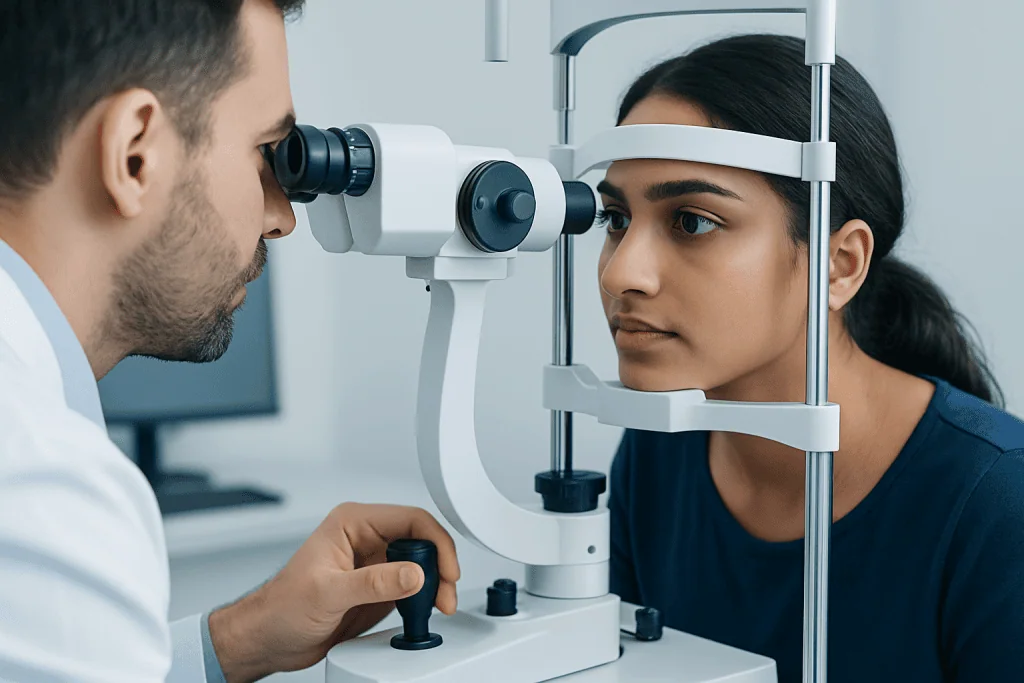
The examination usually includes checking visual acuity, pupil responses, eye pressure, and the front and back parts of the eye. A slit-lamp microscope allows the doctor to look closely at the cornea, iris, lens, and any signs of inflammation or bleeding. If the concern is about pressure, internal structures, or possible damage, the specialist may also recommend glaucoma evaluation and treatment or additional tests.
Depending on what is found, tests may include imaging of the eye, measurement of eye pressure, or dilated retinal examination. If a pigmented lesion or another structural problem is suspected, referral to an ophthalmologist with subspecialty experience may be advised. In centers with multidisciplinary eye services, these assessments may be coordinated alongside eye surgery planning when needed, although many people do not require surgery at all.
Treatment and self-care
Treatment depends entirely on the cause. Naturally dark eyes do not need treatment. If the darker appearance is due to lighting, dry eyes, or cosmetic contrast, no medical treatment is required, though lubricating drops may help if dryness is contributing to irritation or a dull eye surface.
When the cause is an underlying eye problem, treatment focuses on that condition. This may include medicines for inflammation, pressure-lowering treatment for glaucoma, care for eye injury, or close monitoring of an iris lesion. Because different causes need very different approaches, people should avoid using leftover eye drops or over-the-counter products without guidance if there are pain or vision changes.
General self-care supports eye health. Protecting the eyes from injury, using sunglasses with UV protection, managing chronic conditions such as diabetes, and attending regular eye checks are all sensible steps. Contact lens users should also follow hygiene advice carefully and stop wearing lenses if redness, pain, or blurred vision develops.
Near the end of the care pathway, some patients may benefit from specialist review in a tertiary center. Acibadem International’s multidisciplinary specialists and JCI-accredited hospitals evaluate and treat eye conditions for international patients when advanced diagnostics or treatment planning is needed.
When to seek medical care
A routine eye appointment is appropriate if a person notices that one or both eyes seem darker than before and the change does not go away. This is especially important if the change is visible in daylight, affects only one eye, or there is a new spot or uneven area on the iris. A clinician can confirm whether the change is benign or needs follow-up.
Prompt medical attention is needed if the darker appearance comes with pain, redness, light sensitivity, blurry vision, halos, or headache. Emergency assessment is important after any eye injury, if there is sudden vision loss, or if blood is visible in the eye. These symptoms may point to internal inflammation, raised eye pressure, or trauma-related complications that should not be delayed.
People with known eye disease, previous eye surgery, or long-term use of prescription eye drops should mention any color change to their doctor. Even when the cause turns out to be harmless, a professional assessment provides reassurance and helps protect long-term vision.
Frequently asked questions
Are dark coloured eyes normal?
Yes. In most cases, dark coloured eyes are a normal inherited trait caused by higher melanin in the iris. If the eyes have always been dark and there are no other symptoms, this is usually not a medical problem.
Can eye color really change over time?
Small changes in appearance can happen because of lighting, pupil size, aging, and the way photos are taken. A true new eye color change in adulthood is less common and should be assessed, especially if it affects one eye or comes with symptoms.
Why do my eyes look darker in some settings?
Eyes may look darker in dim light because the pupils become larger and less of the iris is visible. Makeup, clothing, skin tone, shadows, and camera settings can also make the iris appear deeper or more intense.
Is one dark eye and one lighter eye a concern?
If the difference has been present for many years, it may be a harmless natural variation. If it is new or more noticeable than before, an eye examination is important to rule out inflammation, injury, pigment changes, or another eye condition.
Can medications make eyes look darker?
Yes, some medicines, including certain prescription eye drops, can gradually affect eye pigmentation in some people. Anyone who notices a change while using eye medications should discuss it with their prescribing doctor rather than stopping treatment on their own.
When should someone see a doctor about dark coloured eyes?
A doctor should assess any persistent new darkening of the eye, especially if only one eye is affected. Urgent care is needed if there is pain, redness, blurred vision, halos, light sensitivity, visible blood, or recent trauma.
References
- American Academy of Ophthalmology
- National Eye Institute
- Mayo Clinic
- Merck Manual Consumer Version
This article is for general information only and is not a substitute for professional medical advice. Please consult a qualified doctor about your individual situation.
Explore treatments in Turkey — costs, top hospitals & a free quote
JCI-accredited · board-certified surgeons · reply within 24h
Add us as a Preferred Source to see more of our trusted health content across Google Search, AI Overviews and Discover.

More from the Health Library

Coconut Sugar Glycemic Index: A Complete Medical Overview

Toe Splint: What Patients Need to Know

Triple X Triple: What Patients Need to Know

Contera ADHD: An Evidence-Based Guide for Patients

Urethral Diverticulum — Explained by Medical Evidence, Not Myths