Decorticate Posturing: What Patients Need to Know

Decorticate posturing usually means there is damage affecting brain pathways above the brainstem. It commonly appears with bent arms, clenched fists, and extended legs in response to pain or severe illness.
Key Takeaways
- Decorticate posturing usually means there is damage affecting brain pathways above the brainstem.
- It commonly appears with bent arms, clenched fists, and extended legs in response to pain or severe illness.
- This posture is a medical emergency and should prompt immediate hospital care.
- Treatment focuses on the underlying cause, such as head injury, stroke, bleeding, infection, or swelling in the brain.
- Recovery depends on the cause, severity of brain injury, speed of treatment, and the person’s overall condition.
Decorticate posturing is an abnormal flexed body position that often appears after a significant brain injury or other serious neurological problem. It is not a disease itself, but a physical sign that needs urgent medical assessment to identify and treat the underlying cause.
Overview
Decorticate posturing is an abnormal body posture in which a person’s arms bend inward toward the chest, the wrists and fingers may flex, and the legs usually extend and turn inward. It often appears in someone who is unconscious or severely ill and is most commonly seen after a major injury or disorder affecting the brain. In practical terms, it is a warning sign that the brain is under serious stress.
This posture is sometimes called decorticate rigidity or flexor posturing. It usually happens in response to pain or another strong stimulus rather than as a voluntary movement. The pattern can help doctors understand which parts of the nervous system may be affected, although it does not by itself provide a diagnosis.
Decorticate posturing is different from normal muscle stiffness, shaking, or a seizure. It reflects disrupted communication in motor pathways of the brain, often from damage above the brainstem. Because the causes can include life-threatening conditions, urgent medical evaluation is essential.
What decorticate posturing looks like
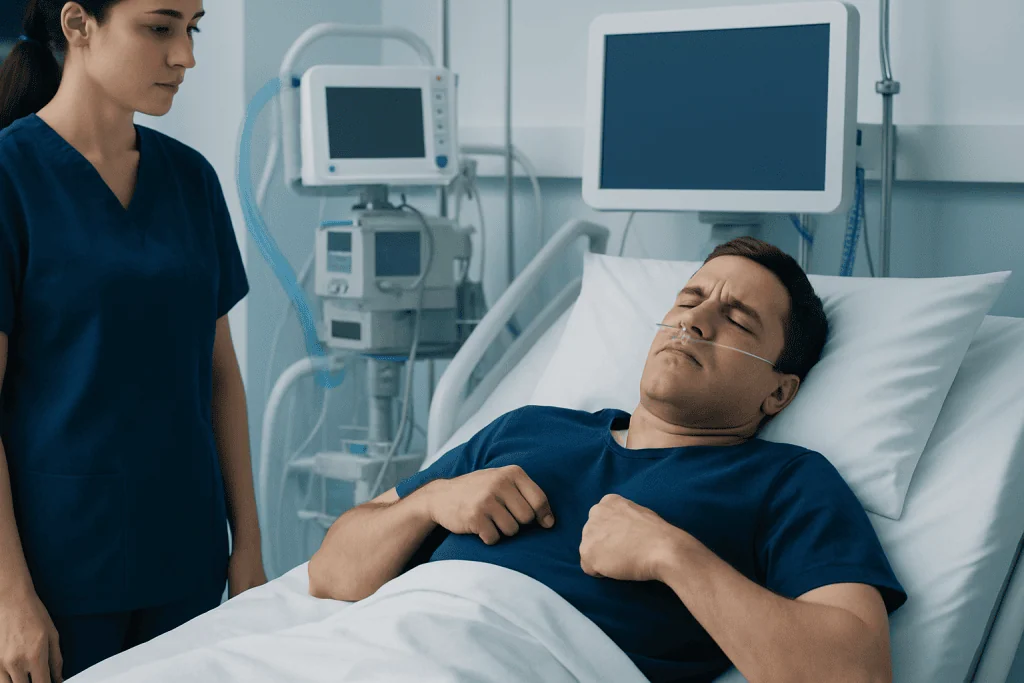
The classic pattern involves the arms being flexed at the elbows and pulled in toward the body. The hands may be clenched, and the wrists may bend. At the same time, the legs are often straight and stiff, with the feet pointed downward. The neck may also arch slightly, depending on the cause and the person’s condition.
Healthcare teams often observe this posture when a person does not respond normally and shows abnormal movements after a painful stimulus. It may appear on one side or both sides of the body. The pattern can be constant or intermittent, depending on changes in pressure, swelling, or injury within the brain.
Doctors distinguish decorticate posturing from decerebrate posturing, another serious abnormal posture in which the arms extend straight rather than bend inward. Although both are emergencies, decorticate posturing generally suggests injury affecting brain pathways above the level associated with decerebrate posturing. Even so, either finding requires rapid evaluation and close neurological monitoring.
Causes and risk factors

Decorticate posturing can happen when there is significant injury or pressure affecting the brain. Common causes include traumatic brain injury, bleeding in or around the brain, reduced oxygen to the brain, severe stroke, brain swelling, tumors, infections such as meningitis or encephalitis, and certain metabolic problems. It may also appear after prolonged seizures or in advanced neurological emergencies.
Some underlying conditions are closely related, such as stroke, severe head trauma, or increased pressure inside the skull. In some cases, the posture develops suddenly after an accident. In others, it appears during worsening illness in a hospital setting, such as a rapidly progressing infection or swelling after a brain event.
Risk factors depend on the underlying cause. They can include falls, motor vehicle accidents, contact sports injuries, uncontrolled high blood pressure, blood clotting disorders, brain infections, and delayed treatment of neurological symptoms. People with known brain masses or a history of significant neurological disease may also be at higher risk of developing dangerous pressure changes within the skull.
- Traumatic brain injury
- Bleeding in the brain
- Severe stroke
- Brain tumors or swelling
- Central nervous system infections
- Lack of oxygen to the brain
Symptoms and associated warning signs
Decorticate posturing rarely happens on its own. It is usually accompanied by other serious symptoms, such as reduced consciousness, confusion, inability to speak, unequal pupils, vomiting, seizures, severe headache, weakness, or loss of normal responses. In an unconscious person, it may be one of the most visible clues that the brain has been injured.
Family members may notice that the person is unresponsive and holds the arms tightly against the chest with stiff legs. The posture may follow a painful stimulus, such as a sternal rub or nail bed pressure performed by a clinician. It should not be interpreted as purposeful movement or a sign that the person is waking up.
Changes in breathing, fever, sudden collapse, or worsening responsiveness can all point to a severe underlying cause. If abnormal posturing follows a head injury, seizure, fainting episode, or sudden neurological event, emergency care is needed immediately. Quick recognition can help speed treatment and reduce the risk of further brain injury.
How doctors diagnose the cause
Diagnosis begins with emergency assessment of the person’s airway, breathing, circulation, and neurological status. Doctors examine the type of posturing, level of consciousness, pupil reactions, reflexes, and response to pain. They may use standardized tools such as the Glasgow Coma Scale to assess brain function and track changes over time.
Imaging is usually needed to look for bleeding, swelling, stroke, or another structural cause. This often includes urgent brain CT, and in some situations brain MRI for more detailed evaluation. Blood tests may help identify infection, metabolic imbalance, drug effects, or problems with oxygenation and organ function.
Additional tests depend on the suspected cause. These can include brain MRI to evaluate deeper brain structures, electroencephalography if seizures are a concern, and vascular imaging if stroke or vessel blockage is suspected. If doctors believe there is bleeding or pressure from a surgical problem, early neurosurgical input may be needed. Because the posture is a sign rather than a diagnosis, the workup focuses on finding and treating the underlying neurological emergency.
Treatment options and hospital care
There is no single treatment for decorticate posturing itself. Care is directed at the cause and at protecting the brain from further harm. In emergency settings, this may include oxygen support, airway management, intravenous fluids, treatment of seizures, control of blood pressure, and close monitoring in an intensive care or high-dependency unit.
If there is bleeding, swelling, or a mass effect inside the skull, treatment may involve medications to reduce brain swelling or procedures to relieve pressure. Some patients need urgent neurosurgery if there is a clot, hemorrhage, tumor, or severe traumatic injury compressing the brain. If the cause is a severe brain tumor or another structural lesion, the care plan may involve surgery, critical care, and rehabilitation.
When stroke is the cause, treatment depends on whether the stroke is due to a blocked artery or bleeding. This may include time-sensitive stroke therapies, neurocritical care, and rehabilitation planning. In selected cases, doctors may recommend stroke treatment pathways or other advanced neurological interventions based on imaging and timing.
Recovery care often continues after the emergency phase. People who survive the initial event may need physical therapy, occupational therapy, speech therapy, and long-term neurological follow-up. Near the end of the care pathway, some international patients may seek evaluation at centers such as Acibadem International, where multidisciplinary specialists in JCI-accredited hospitals diagnose and treat complex neurological conditions.
Prognosis, recovery, and possible complications
The outlook for someone with decorticate posturing depends mainly on the cause, the severity of brain damage, and how quickly treatment begins. In some cases, the posture improves as swelling decreases or the underlying problem is treated. In others, it may signal severe brain injury with a prolonged recovery or lasting disability.
Doctors do not judge prognosis from posturing alone. They consider imaging findings, level of consciousness, breathing pattern, pupil responses, vital signs, and the person’s response over time. Some people recover meaningful function, while others may have long-term physical, cognitive, or communication difficulties.
Complications are usually related to the underlying brain disorder and prolonged immobility. These may include aspiration, infections, blood clots, pressure injuries, joint stiffness, muscle contractures, and persistent neurological deficits. Early rehabilitation and supportive care are important parts of reducing these risks whenever the person’s condition allows.
When to seek medical care
Decorticate posturing always requires urgent medical attention. If a person shows this posture after a head injury, during a seizure, after sudden collapse, or while becoming difficult to wake, emergency services should be called right away. It is safer to assume a serious brain emergency until doctors determine otherwise.
Immediate evaluation is also needed for severe symptoms that may appear before or along with abnormal posturing, such as sudden weakness, trouble speaking, severe headache, repeated vomiting, confusion, unequal pupils, or loss of consciousness. These can be signs of stroke, bleeding, infection, or increased pressure in the brain.
After emergency treatment, follow-up care remains important. Families should ask about the diagnosis, treatment plan, rehabilitation needs, and warning signs of worsening brain function. Any new decline in responsiveness, fever, seizures, breathing changes, or new neurological symptoms should be reported to a doctor without delay.
Frequently asked questions
Is decorticate posturing a disease?
No. Decorticate posturing is a clinical sign, not a disease itself. It usually means there is a serious problem affecting the brain and that urgent medical evaluation is needed.
What causes decorticate posturing?
It is most often caused by severe brain injury, stroke, bleeding, swelling, infection, lack of oxygen, or a brain mass. The posture happens because important motor pathways in the brain are disrupted.
What is the difference between decorticate and decerebrate posturing?
In decorticate posturing, the arms bend inward toward the chest while the legs extend. In decerebrate posturing, the arms extend straight outward or downward. Both are serious neurological signs and require emergency care.
Can someone recover from decorticate posturing?
Recovery is possible, but it depends on the cause, how severe the brain injury is, and how quickly treatment begins. Some people improve with emergency care and rehabilitation, while others may have long-term neurological problems.
Should decorticate posturing always be treated as an emergency?
Yes. This posture usually indicates a severe neurological problem that should be assessed in a hospital immediately. Delays can increase the risk of further brain injury and complications.
How do doctors confirm the cause?
Doctors use a neurological examination along with tests such as brain CT or MRI, blood tests, and sometimes EEG or vascular imaging. These help identify whether the cause is trauma, stroke, bleeding, infection, seizures, or another condition.
References
- National Institute of Neurological Disorders and Stroke
- American Association of Neurological Surgeons
- Mayo Clinic
- Merck Manual
- World Health Organization
This article is for general information only and is not a substitute for professional medical advice. Please consult a qualified doctor about your individual situation.
Joint and spine care in Turkey — expert assessment & treatment
JCI-accredited · board-certified surgeons · reply within 24h
Add us as a Preferred Source to see more of our trusted health content across Google Search, AI Overviews and Discover.
Check your numbers in seconds
BMI, calories, due date, blood pressure and 30+ more clinical calculators — free, instant, doctor-reviewed ranges.