

Face Lift Surgery: Benefits, Types, and Recovery

Face lift surgery targets sagging skin, deep facial folds, jowls, and loss of jawline definition. There are different techniques, from less invasive mini facelifts to more extensive full facelifts, depending on anatomy and goals.
Key Takeaways
- Face lift surgery targets sagging skin, deep facial folds, jowls, and loss of jawline definition.
- There are different techniques, from less invasive mini facelifts to more extensive full facelifts, depending on anatomy and goals.
- A facelift does not stop aging, but it can create longer-lasting improvement than non-surgical treatments alone.
- Recovery usually involves swelling and bruising that improve over weeks, while final results continue to settle over several months.
- Choosing an experienced, board-certified or equivalently qualified plastic surgeon is important for safety and natural-looking results.
Face lift surgery is a cosmetic procedure designed to reduce visible signs of facial aging by repositioning deeper tissues and removing or redraping excess skin. It can improve jawline definition, soften deep folds, and create a refreshed appearance when planned carefully with a qualified plastic surgeon.
Overview of Face Lift Surgery
Face lift surgery, also called rhytidectomy, is a cosmetic operation that improves visible aging in the lower face and neck. It is designed to lift and reposition deeper facial tissues, reduce jowls, soften lines around the mouth, and improve the contour of the jawline. In many cases, excess skin is also removed so the face looks smoother and more refreshed rather than simply tighter.
A facelift does not change a person’s basic features or stop the natural aging process. Instead, it aims to restore a more rested, balanced appearance that still looks like the patient. Results vary depending on skin quality, facial structure, age-related changes, and whether other treatments are combined with surgery.
Many people consider face lift surgery when they feel their appearance no longer matches how energetic they feel. For some, non-surgical options such as fillers or skin treatments are no longer enough to address tissue descent and skin laxity. A surgeon may also discuss related procedures such as brow lift for the upper face or aesthetic neck contouring when neck bands or under-chin fullness are major concerns.
Who May Benefit and What Concerns It Can Improve

Face lift surgery may benefit adults with moderate to advanced signs of facial aging, especially in the midface, lower face, and neck. Common concerns include sagging cheeks, deep creases from the nose to the mouth, marionette lines, jowls, loose skin along the jawline, and banding or laxity in the neck.
Good candidates are usually in overall good health, do not smoke or are willing to stop, and have realistic expectations about what surgery can achieve. Healthy skin elasticity and good bone structure can help support a favorable result, but many different facial types may still be suitable for treatment after careful assessment.
A facelift is sometimes combined with other facial procedures to address areas that a facelift alone does not fully correct. For example, eyelid aging may be evaluated alongside eyelid and periocular reconstruction procedures when medically appropriate, and volume loss in the cheeks may be discussed together with cheek augmentation. If facial asymmetry is related to previous injury, a surgeon may also take into account a history of facial trauma during planning.
Types of Facelift Procedures
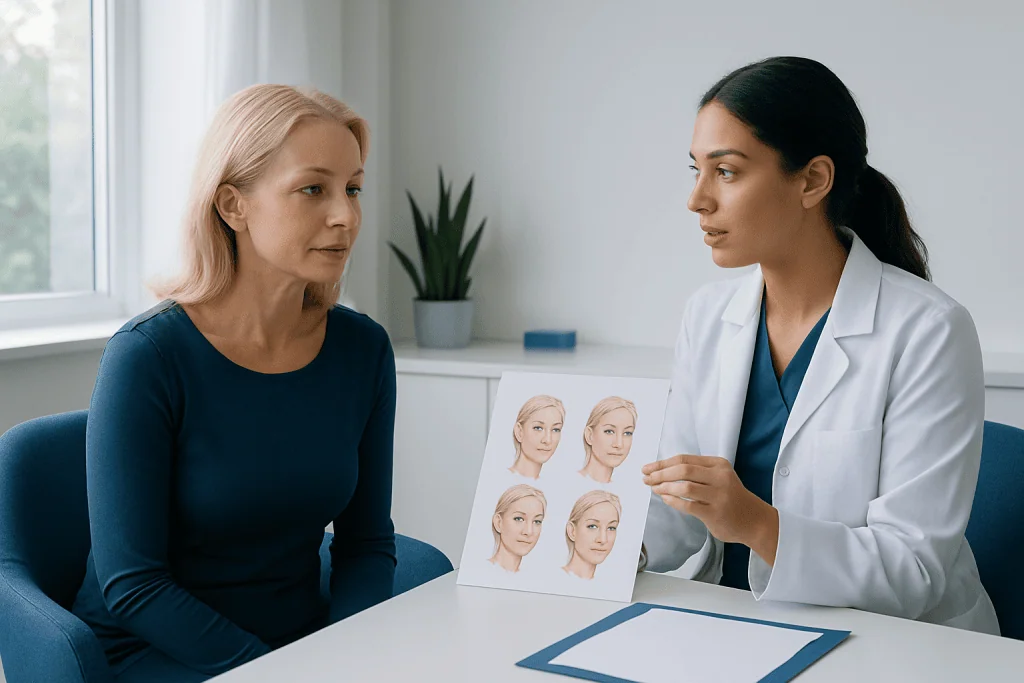
There is no single facelift technique that suits everyone. The best approach depends on where aging changes are most visible, how much correction is needed, skin condition, and the patient’s recovery preferences. A consultation with a plastic surgeon helps match the technique to the individual face rather than using a one-size-fits-all plan.
A mini facelift is usually a less extensive procedure used for early jowling and mild lower-face laxity. Incisions are typically shorter, and recovery may be somewhat easier than with a full facelift. A traditional or full facelift generally addresses more significant sagging in the cheeks, jawline, and neck by lifting deeper support layers and removing excess skin with more comprehensive contouring.
Some surgeons also perform deep plane, SMAS, or neck lift variations depending on the anatomy and desired degree of lift. These methods differ in how the deeper tissues are handled, but the goal remains the same: natural-looking repositioning rather than over-tightening the skin. In selected cases, neck improvement may be a major part of treatment, and the plan may overlap with chin aesthetic procedures if chin projection or profile balance affects the final result.
- Mini facelift: for earlier, milder signs of aging
- Traditional facelift: for more advanced facial and neck laxity
- Neck lift components: for banding, loose skin, or poor jaw-neck definition
- Combined procedures: may include brow, eyelid, or facial volume treatments
How Surgeons Plan and Perform the Procedure
Before surgery, the surgeon reviews medical history, medications, prior procedures, allergies, smoking status, and overall health. The face and neck are examined in detail, including skin elasticity, fat distribution, bone support, and the position of deeper soft tissues. Photographs are often taken for planning and comparison.
The surgeon then discusses goals, expected changes, scar placement, anesthesia, risks, and recovery. Patients are usually advised to avoid smoking and to follow instructions about blood-thinning medicines or supplements, because these can increase bleeding or slow healing. Clear preoperative guidance helps improve both safety and recovery.
During face lift surgery, incisions are commonly placed around the ears and sometimes into the hairline so scars are less visible once healed. The surgeon lifts and repositions deeper tissues, removes or redistributes fat when needed, trims excess skin, and closes the incisions carefully. Depending on the plan, the procedure may be done under general anesthesia or deep sedation with local anesthesia.
Many patients go home the same day, while others may stay overnight based on the extent of surgery and individual needs. Drains may be used temporarily in some cases. The exact surgical details vary, but modern facelift techniques generally focus on natural contours and preserving facial expression.
Recovery, Healing, and Results
After face lift surgery, it is normal to have swelling, bruising, tightness, mild numbness, and a feeling of facial fullness. These effects are usually most noticeable in the first one to two weeks and then gradually improve. Keeping the head elevated, resting, and following wound-care instructions can help support recovery.
Patients often return to light daily activities within about one to two weeks, although the exact timeline depends on the technique used and the person’s healing rate. Exercise, heavy lifting, and activities that raise blood pressure are usually restricted for longer. Stitches may be removed in stages if non-dissolving sutures are used.
The face continues to settle over several weeks to months as swelling fades and scars mature. Early results can look firmer than the final outcome, so patience is important. Most people notice improved jawline definition and a fresher appearance, while the goal is still to maintain natural movement and identity.
Scars usually fade gradually and are placed in natural creases or hair-bearing areas when possible. Sun protection, healthy skincare, and avoiding smoking can help scars heal more favorably. If a patient has a history of thick scarring, such as keloid scars, this should be discussed before surgery because it may affect planning and aftercare.
Benefits, Risks, and Limitations
The main benefit of face lift surgery is improvement in tissue sagging that non-surgical options cannot fully correct. It can create a smoother jawline, reduce jowls, soften deep folds, and improve the neck contour. For many patients, the result is a more refreshed appearance that still looks natural and expressive.
Another advantage is longevity. Although a facelift cannot stop future aging, its effects often last longer than injectables or skin-tightening procedures. Many people still choose to combine surgery with skincare, lasers, or volume treatments over time to maintain a balanced result.
Like any operation, face lift surgery has risks. These may include bleeding, infection, fluid collection, delayed healing, visible scarring, asymmetry, temporary or rarely longer-lasting nerve changes, numbness, hairline changes, or dissatisfaction with the cosmetic outcome. Careful surgeon selection and following instructions before and after surgery can help reduce these risks.
It is also important to understand what a facelift cannot do. It does not significantly improve fine surface wrinkles, sun damage, or skin texture on its own, and it may not address every feature of aging equally. A consultation should include a realistic discussion of goals, trade-offs, and whether surgery is the best fit at that time.
Preparing for Surgery and Supporting Long-Term Results
Good preparation begins with an honest consultation and a full understanding of the procedure. Patients should share their medical conditions, all medicines and supplements, and any history of smoking or wound-healing problems. Asking about the surgeon’s training, experience, and typical recovery process can also help set clear expectations.
Before surgery, patients are commonly advised to stop smoking, arrange transportation and help at home, and prepare a recovery space with extra pillows, soft foods, and prescribed supplies. Following all preoperative instructions is important, especially regarding eating, drinking, and medication use before anesthesia.
Long-term results are best supported by steady weight, sun protection, gentle skincare, and overall healthy habits. While a facelift can restore structure, skin quality still matters. Daily sunscreen, good hydration, balanced nutrition, and avoiding tobacco can help the result age well over time.
For international patients seeking aesthetic care, Acibadem International’s multidisciplinary specialists and JCI-accredited hospitals diagnose and treat facial aging concerns with individualized planning and follow-up. This can be helpful when face lift surgery is considered alongside other facial or reconstructive needs.
When to See a Qualified Plastic Surgeon
A consultation with a qualified plastic surgeon is appropriate when facial sagging, jowls, or neck laxity are causing concern and non-surgical treatments no longer seem effective. The visit can help clarify whether the issue is best treated with a facelift, a smaller procedure, or a combination approach. It is also the right time to discuss expected results, recovery, and scar placement.
Anyone considering surgery should seek medical advice promptly if they have significant health conditions, a history of poor wound healing, or questions about how medications may affect surgery. A thorough review can help identify risks and determine whether additional testing or specialist clearance is needed before proceeding.
After surgery, patients should contact their surgeon if they develop severe swelling on one side, increasing pain, fever, wound drainage, shortness of breath, or any new symptom that feels concerning. These signs do not always mean there is a serious problem, but they deserve prompt evaluation. Early communication with the care team is one of the safest parts of recovery.
Frequently asked questions
What does face lift surgery actually improve?
Face lift surgery mainly improves sagging in the lower face and neck. It can reduce jowls, soften deep folds, and create a more defined jawline. It is less effective for very fine wrinkles or changes in skin texture unless combined with other treatments.
How long does facelift recovery take?
Most people need at least one to two weeks before returning to many normal social activities, though bruising and swelling can last longer. Healing continues over several weeks, and the final result usually settles gradually over months. Recovery time varies depending on the type of facelift and the person’s health.
Will a facelift make the face look unnatural?
A well-planned facelift aims to create a refreshed, natural-looking result rather than a pulled appearance. Modern techniques focus on repositioning deeper tissues, not just tightening the skin. Choosing an experienced surgeon and discussing realistic goals are important parts of achieving a balanced outcome.
How long do facelift results last?
Face lift surgery does not stop aging, but results are usually longer-lasting than non-surgical treatments alone. How long the result remains noticeable depends on skin quality, genetics, sun exposure, lifestyle, and the surgical technique used. Many people continue to look younger than they would have without surgery, even as aging continues.
Is face lift surgery only for older adults?
No. Some people consider surgery earlier if they have noticeable jowling, neck laxity, or tissue descent that does not respond well to non-surgical options. Candidacy is based more on anatomy, health, and goals than on age alone.
Can a facelift be combined with other procedures?
Yes, it is often combined with procedures that address areas a facelift does not fully treat, such as the brow, eyelids, neck, or facial volume. Combining treatments may improve overall harmony when done safely and with appropriate planning. A surgeon can explain whether a combined approach is suitable.
References
- American Society of Plastic Surgeons
- American Board of Cosmetic Surgery
- National Health Service
- Mayo Clinic
- U.S. Food and Drug Administration
This article is for general information only and is not a substitute for professional medical advice. Please consult a qualified doctor about your individual situation.
Explore treatments in Turkey — costs, top hospitals & a free quote
JCI-accredited · board-certified surgeons · reply within 24h
Add us as a Preferred Source to see more of our trusted health content across Google Search, AI Overviews and Discover.

Related Treatments
Related Conditions
More from the Health Library



Related Specialists
Assoc. Prof. Dr. Erdem Güven (m)
Aesthetic Plastic & Reconstructive Surgery
Prof. Dr. Şükrü Yazar
Aesthetic Plastic & Reconstructive Surgery
Prof. Dr. Hakan Ağır
Aesthetic Plastic & Reconstructive Surgery
Prof. Dr. Bülent Saçak
Aesthetic Plastic & Reconstructive Surgery