Femto LASIK vs iLASIK: Which Laser Vision Correction Is Right for You?

Femto LASIK is a blade-free LASIK technique that uses a femtosecond laser to create a precise corneal flap before reshaping the cornea. iLASIK is commonly used to describe a branded, customized all-laser LASIK approach that combines femtosecond flap creation with wavefront-guided treatment planning.
Key Takeaways
- Femto LASIK is a blade-free LASIK technique that uses a femtosecond laser to create a precise corneal flap before reshaping the cornea.
- iLASIK is commonly used to describe a branded, customized all-laser LASIK approach that combines femtosecond flap creation with wavefront-guided treatment planning.
- Neither option is automatically better for every patient; candidacy depends on corneal thickness, corneal shape, tear film quality, prescription, and overall eye health.
- A comprehensive preoperative eye assessment is essential to reduce risks and choose the safest appropriate procedure.
- Most patients return to daily activities quickly, but temporary dryness, glare, halos, and fluctuating vision can occur during healing.
- People with unstable prescriptions, certain corneal conditions, significant dry eye, or some medical conditions may need another option or may not be suitable for laser vision correction.
Femto LASIK and iLASIK are advanced forms of laser vision correction that use a femtosecond laser to create the corneal flap. The best choice depends on a detailed eye examination, corneal measurements, prescription stability, lifestyle needs, and the surgeon’s recommendation.
Overview: What Are Femto LASIK and iLASIK?
Femto LASIK and iLASIK are both forms of laser vision correction used to reduce dependence on glasses or contact lenses. They are designed to treat common refractive errors such as nearsightedness, farsightedness, and astigmatism by reshaping the cornea, the clear front surface of the eye. When the cornea is reshaped accurately, light can focus more precisely on the retina, which can improve distance or near vision depending on the prescription being treated.
Femto LASIK refers to a blade-free LASIK technique in which a femtosecond laser creates a thin corneal flap. After the flap is lifted, an excimer laser reshapes the underlying corneal tissue, and the flap is gently repositioned. This approach differs from older LASIK techniques that used a mechanical microkeratome blade to create the flap.
iLASIK is often used to describe a branded, customized all-laser LASIK platform. In general terms, it combines femtosecond laser flap creation with wavefront-guided or wavefront-optimized laser treatment planning. This customization aims to account not only for the glasses prescription but also for subtle optical imperfections in the eye. Because the names can be used differently by clinics and manufacturers, patients should ask which exact laser systems and planning methods will be used.
How the Procedures Are Similar and Different
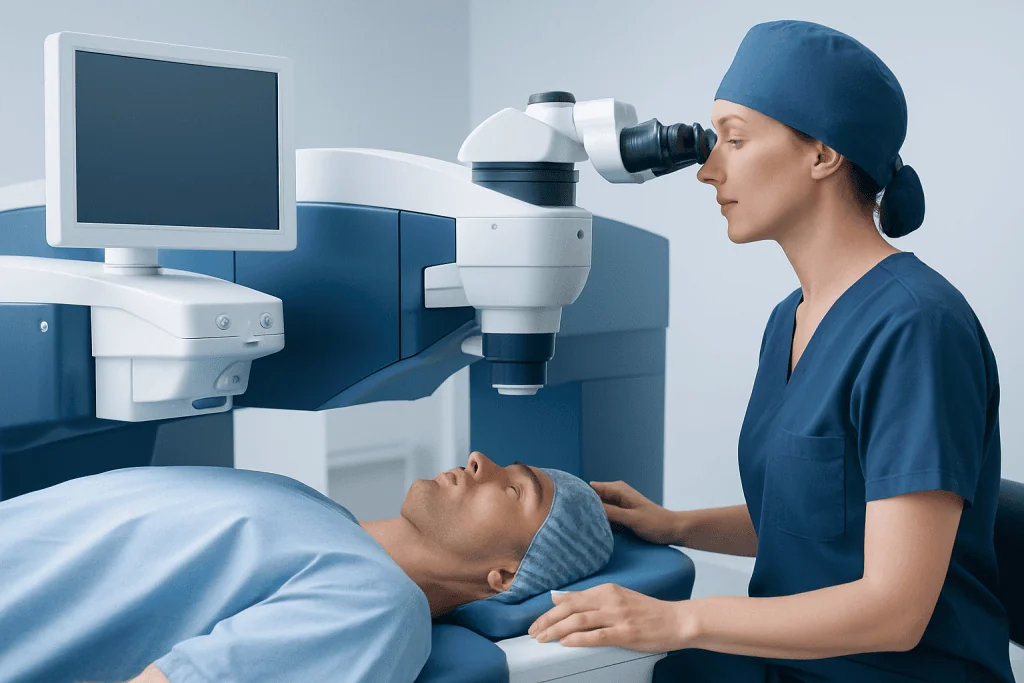
The main similarity is that both Femto LASIK and iLASIK are typically blade-free LASIK procedures. In both, a femtosecond laser creates the flap, and an excimer laser performs the corneal reshaping. Both are usually outpatient procedures, performed with numbing eye drops, and the laser time itself is generally brief. Patients remain awake, but they should not feel sharp pain during the procedure.
The difference is mainly in the level and type of customization. Femto LASIK describes the flap-making technique, while iLASIK usually refers to a specific customized LASIK approach that may include wavefront measurements. Wavefront-guided planning maps how light travels through the entire eye, identifying higher-order aberrations that are not fully captured by a standard glasses prescription. For some patients, this information may help refine the treatment plan.
However, customization does not mean that iLASIK is automatically the best option for every person. Some patients do very well with standard or wavefront-optimized Femto LASIK, while others may benefit from wavefront-guided treatment. The decision depends on measurements such as corneal thickness, pupil size, corneal curvature, degree of refractive error, and the presence or absence of irregular optical patterns.
Who May Be a Candidate?
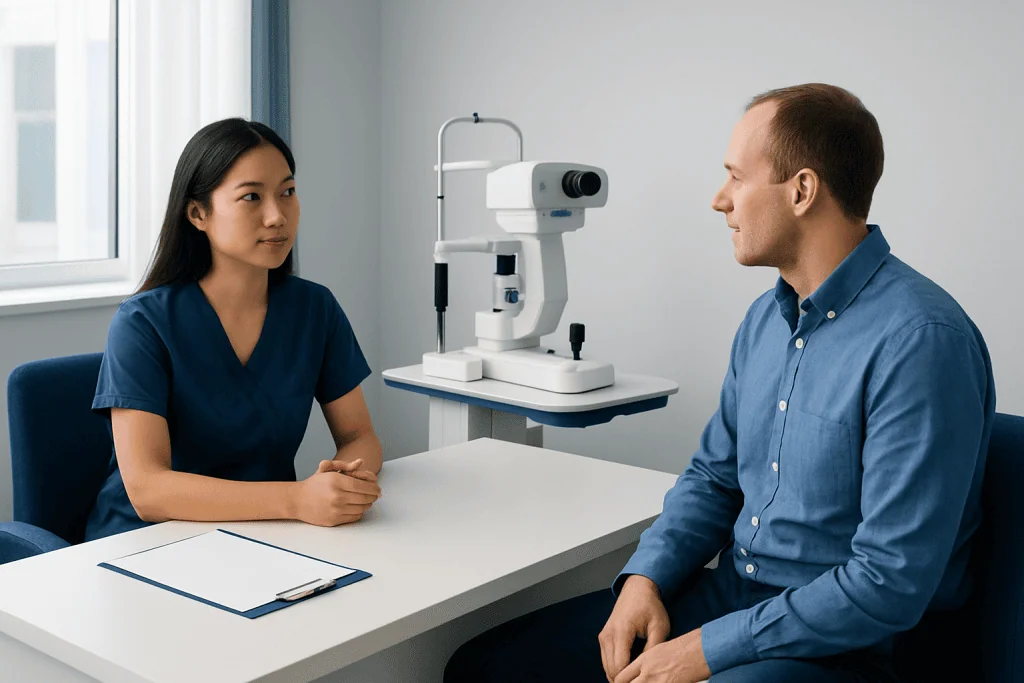
Good candidates for laser vision correction usually have a stable glasses or contact lens prescription, healthy corneas, and realistic expectations. Age is also considered, because vision can continue to change in younger people. Many surgeons prefer to confirm that the prescription has been stable for at least one year before recommending surgery. Pregnancy, breastfeeding, and certain hormonal changes can temporarily affect vision and tear film quality, so timing may need to be discussed.
A candidate should have enough corneal thickness to allow safe flap creation and reshaping. The cornea should also have a regular shape, without signs of keratoconus or other corneal weakening conditions. Tear film quality matters because dry eye can worsen after LASIK, at least temporarily. People with significant dry eye may need treatment before surgery, or another type of refractive procedure may be considered.
LASIK may not be suitable for everyone. Patients with uncontrolled autoimmune disease, poorly controlled diabetes, active eye infections, significant corneal scarring, advanced glaucoma, or certain retinal conditions may not be good candidates. A careful consultation for LASIK vision correction helps determine whether Femto LASIK, iLASIK, another procedure such as PRK or SMILE, or continued use of glasses or contact lenses is the safest choice.
Preoperative Eye Examination and Testing
A thorough preoperative assessment is the most important step in choosing between Femto LASIK and iLASIK. The examination is not limited to measuring the glasses prescription. It includes a detailed review of eye health, medical history, medications, work and sports needs, and expectations. Contact lens wearers may be asked to stop wearing lenses for a period before measurements, because lenses can temporarily change corneal shape.
Testing often includes corneal topography or tomography, which maps the shape and thickness of the cornea. Pachymetry measures corneal thickness, while pupil measurements may be taken under different lighting conditions. Tear film evaluation helps identify dry eye risk. Wavefront aberrometry may be used when considering customized treatment, including approaches often associated with iLASIK.
A dilated eye examination may be recommended to assess the retina and optic nerve, especially in patients with high myopia or other risk factors. This comprehensive eye examination helps the ophthalmologist identify issues that could affect safety, healing, or visual quality. If any findings suggest increased risk, the surgeon may recommend treatment first, a different procedure, or no surgery.
Benefits, Limitations, and Possible Risks
The main benefit of Femto LASIK and iLASIK is reduced dependence on glasses or contact lenses. Many patients notice clearer vision within the first day or two, although vision can fluctuate while the cornea heals. The blade-free flap may offer predictable flap thickness and shape, which is one reason femtosecond technology has become widely used in modern LASIK.
Like any medical procedure, laser vision correction has limitations and risks. Temporary dry eye, light sensitivity, glare, halos around lights, and fluctuating vision can occur during recovery. Some people may need lubricating drops for weeks or months. Less commonly, undercorrection, overcorrection, infection, inflammation, epithelial ingrowth, flap-related issues, or persistent visual symptoms may occur. Serious complications are uncommon, but they are possible, which is why screening and follow-up are essential.
It is also important to understand that LASIK does not prevent normal age-related changes. People in their 40s and beyond may still need reading glasses because of presbyopia. Later in life, cataracts or other eye diseases can affect vision independently of previous laser surgery. A surgeon should explain not only the expected benefits but also what the procedure cannot do.
Recovery and Aftercare
Recovery after Femto LASIK or iLASIK is usually quick, but the eyes still need time to heal. Patients are commonly advised to rest after the procedure and avoid rubbing the eyes. Protective shields may be recommended during sleep for the first nights. Prescription eye drops are often used for a short period to reduce inflammation and lower infection risk, and lubricating drops may be used to support comfort and tear film stability.
Vision may be misty or fluctuating at first, and mild burning, watering, or a gritty sensation can occur in the early hours. Many people return to desk work within a short time, depending on the surgeon’s advice and their comfort. Swimming, eye makeup, dusty environments, and contact sports may need to be avoided temporarily. Follow-up visits allow the doctor to confirm that the flap is stable and healing is progressing as expected.
Patients can support recovery by following instructions carefully and attending scheduled check-ups. They should use only the drops recommended by their doctor and should not restart contact lenses or eye products without permission. If vision changes suddenly or discomfort is more than expected, the clinic should be contacted promptly.
Choosing Between Femto LASIK and iLASIK
The right choice is not based on the name of the procedure alone. It is based on whether the planned treatment matches the patient’s eye measurements and visual goals. For a patient with a straightforward prescription, regular corneal shape, and healthy tear film, Femto LASIK may be an appropriate option. For a patient with certain optical imperfections, a wavefront-guided approach associated with iLASIK may be considered if the measurements support it.
Patients should ask clear questions before deciding. Useful questions include: What is the thickness and shape of the cornea? Is the treatment wavefront-guided, wavefront-optimized, or based on another planning method? What are the expected benefits and limitations for this specific prescription? What symptoms are most likely during recovery? What alternatives are available if LASIK is not the best fit?
A personalized consultation for Femto LASIK or other eye laser treatment should include enough time to review results and discuss expectations. Near the end of the decision process, some international patients may also consider where they feel comfortable receiving care. Acibadem International’s multidisciplinary eye specialists and JCI-accredited hospitals diagnose and treat refractive eye conditions for international patients, with treatment planning based on individual examination findings.
When to See an Eye Doctor
Anyone considering laser vision correction should see an ophthalmologist for a complete evaluation, even if they have been told they are a good candidate elsewhere. A full eye examination can identify conditions that may not cause obvious symptoms but can affect surgical safety. This is especially important for people with high prescriptions, thin corneas, dry eye symptoms, previous eye injury, or a family history of keratoconus.
After LASIK, patients should contact their eye doctor urgently if they develop increasing pain, sudden vision loss, worsening redness, discharge, or a new shadow or curtain in vision. These symptoms do not mean that a serious problem is certain, but they should be assessed promptly. Early evaluation allows treatment to begin quickly if inflammation, infection, flap movement, or another issue is present.
Patients should also return for routine follow-up even when they feel well. Some healing changes are easier for the doctor to detect with specialized equipment than for the patient to notice. Long-term eye care remains important because laser vision correction changes the need for glasses but does not replace regular eye health monitoring.
Frequently asked questions
Is iLASIK the same as Femto LASIK?
They are closely related but not exactly the same term. Femto LASIK describes blade-free flap creation with a femtosecond laser, while iLASIK usually refers to a branded customized all-laser LASIK approach that includes femtosecond flap creation and wavefront-guided planning. The exact technology can vary, so patients should ask their surgeon what system and treatment plan will be used.
Which is better: Femto LASIK or iLASIK?
There is no single best option for everyone. iLASIK may offer additional customization for certain eyes, but many patients can achieve good results with Femto LASIK when the procedure is appropriately planned. The safest choice depends on corneal measurements, prescription, tear film quality, and overall eye health.
Does Femto LASIK or iLASIK hurt?
The procedure is usually performed with numbing eye drops, so patients should not feel sharp pain. Some pressure, mild discomfort, watering, or a gritty feeling may occur during or after the procedure. These sensations are usually temporary, but patients should report pain that is increasing or unusual.
How long does recovery take after these procedures?
Many patients notice improved vision within a day or two, but healing and visual stability can take longer. Dryness, glare, halos, or fluctuating vision may occur for several weeks in some people. The surgeon will provide a personal recovery plan and follow-up schedule.
Can Femto LASIK or iLASIK treat astigmatism?
Yes, these procedures can often treat astigmatism when the cornea is otherwise suitable and the prescription is within a safe treatment range. The amount and pattern of astigmatism must be measured carefully. Irregular astigmatism or corneal disease may require a different approach.
Will LASIK prevent the need for reading glasses later?
LASIK reshapes the cornea to treat refractive error, but it does not stop age-related changes inside the eye. Presbyopia, which affects near focusing in midlife, can still occur after LASIK. Some patients may eventually need reading glasses or may discuss other options such as monovision with their doctor.
What if a person is not a candidate for Femto LASIK or iLASIK?
Not being a LASIK candidate does not always mean there are no options. Depending on the reason, an ophthalmologist may discuss alternatives such as PRK, SMILE, phakic intraocular lenses, or continued use of glasses or contact lenses. In some cases, the safest recommendation is to avoid elective laser surgery.
This article is for general information only and is not a substitute for professional medical advice. Please consult a qualified doctor about your individual situation.
Femto LASIK in Turkey — costs, top hospitals & a free quote
JCI-accredited · board-certified surgeons · reply within 24h
Add us as a Preferred Source to see more of our trusted health content across Google Search, AI Overviews and Discover.

Ophthalmology
Comprehensive eye care from laser vision correction to retina, cornea and cataract surgery.
75 specialists in this unitRelated Treatments
More from the Health Library

When to See an Ophthalmologist vs an Optometrist

Who Is a Good Candidate for Femto LASIK?

Tearing in Babies: When a Blocked Tear Duct Needs Treatment

PRK vs LASEK: Key Differences in Recovery and Results

Toddler Tear Duct Surgery: When Is Probing Recommended?