Fragile X Screening Before IVF: When Genetic Testing May Be Recommended

Fragile X screening looks for changes in the FMR1 gene, usually through a blood test. Testing may be recommended before IVF if there is a family history of Fragile X-related conditions, intellectual disability, autism spectrum disorder, or unexplained reduced ovarian reserve.
Key Takeaways
- Fragile X screening looks for changes in the FMR1 gene, usually through a blood test.
- Testing may be recommended before IVF if there is a family history of Fragile X-related conditions, intellectual disability, autism spectrum disorder, or unexplained reduced ovarian reserve.
- A person can be a carrier without having symptoms, so family history and genetic counseling are important.
- Results can affect IVF planning, including whether to consider embryo testing or donor eggs.
- Genetic counseling helps couples understand what test results mean for fertility, pregnancy, and future children.
Fragile X screening before IVF helps identify whether a person carries changes in the FMR1 gene that could affect fertility or the chance of passing Fragile X-related conditions to a child. It is not needed for everyone, but it may be advised in certain family, reproductive, or ovarian reserve situations.
Overview: What Fragile X screening before IVF means
Fragile X screening before IVF is a type of genetic testing used to look for changes in the FMR1 gene. The main goal is to identify whether a person carries an FMR1 expansion that could be passed to a child or could be related to reduced ovarian function. In fertility care, this information can help guide treatment choices and family planning discussions before an IVF cycle begins.
Fragile X syndrome is an inherited condition linked to changes in the FMR1 gene on the X chromosome. It is a known cause of inherited intellectual disability and can also be associated with developmental and behavioral differences. Some people who carry a smaller expansion, called a premutation, do not have Fragile X syndrome themselves but may still face reproductive implications, including a risk of passing on a larger expansion to future children.
For people preparing for IVF treatment, Fragile X screening is not a routine requirement in every case. Instead, it is usually recommended when certain personal or family history clues suggest a higher likelihood of an FMR1-related change. A fertility specialist or genetic counselor can explain whether testing is appropriate and how the results may influence care.
Who may be advised to have Fragile X screening before IVF

Fragile X screening may be recommended before IVF for women with unexplained diminished ovarian reserve, early menopause, or a diagnosis related to reduced ovarian function such as premature ovarian insufficiency. Research has shown that some FMR1 premutation carriers have a higher chance of ovarian insufficiency, which can affect egg supply and response to stimulation during IVF.
Testing may also be considered if there is a family history of Fragile X syndrome, unexplained intellectual disability, autism spectrum disorder, learning difficulties, or tremor and balance problems in older relatives. Because Fragile X-related conditions can appear differently across family members, the pattern may not be obvious at first. Even if no one in the family has a formal diagnosis, these clues can be important.
In some clinics, screening is also discussed when infertility has no clear explanation after standard evaluation, or when there has been a history of repeated reproductive challenges such as recurrent pregnancy loss. While Fragile X is not a common cause of every fertility problem, testing can be useful when the history suggests a possible inherited factor. People receiving care for female infertility may be offered this assessment as part of a broader workup.
Men may also be part of the counseling process, especially when there is a relevant family history. Although carrier testing before IVF often focuses on the female partner because expansion risk to a child depends strongly on maternal transmission, family-based genetic evaluation may still involve both partners to build a complete reproductive plan.
What the test looks for and how results are reported
Fragile X screening is usually done with a simple blood test. The laboratory measures the number of CGG repeats in the FMR1 gene. Results are generally grouped into ranges such as normal, intermediate, premutation, and full mutation. These categories matter because the chance of health effects and inheritance risks differ from one group to another.
A normal result means the repeat size is within the typical range. An intermediate result is not considered a full carrier state, but it may still need explanation, especially when a family history is present. A premutation means the repeat number is higher than usual but not in the full mutation range. This is often the category most relevant to IVF counseling because a premutation can expand when passed from mother to child.
A full mutation is associated with Fragile X syndrome. If a person has this result or a significant premutation, a genetics specialist usually discusses what this means for fertility, embryo risks, and family members who may also benefit from testing. The report may also include information about related patterns in the gene that help estimate the chance of expansion, but these details should be interpreted by an experienced professional.
Results do not stand alone. They are interpreted together with age, ovarian reserve tests, family history, and the couple’s fertility goals. This is why Fragile X screening is most helpful when paired with pre-test and post-test counseling.
Why Fragile X matters in fertility and IVF planning
The reason Fragile X screening matters before IVF is twofold: it can affect both reproductive potential and the risk of passing on a genetic condition. Some women with an FMR1 premutation may have fewer eggs than expected for their age or may respond differently to ovarian stimulation. This does not mean IVF is impossible, but it can influence how treatment is timed and planned.
Just as importantly, if a woman carries an FMR1 premutation, there may be a risk that the repeat expansion will increase in the next generation. In some pregnancies, this can lead to a full mutation in the child, which is associated with Fragile X syndrome. Understanding that risk before treatment gives couples more time to consider their options carefully and make informed decisions.
Depending on the results, the fertility team may discuss approaches such as proceeding with IVF and considering embryo testing, using donor eggs, or moving forward without further intervention after counseling if the risk is low. Couples may also be referred to specialists in ICSI and advanced IVF techniques when male-factor infertility or other laboratory needs are part of the treatment plan, although ICSI itself does not change Fragile X inheritance risk.
Fragile X screening is only one part of a larger fertility assessment. Other conditions, such as ovulatory disorders, uterine abnormalities, or tubal factors like pelvic inflammatory disease, may also affect fertility and need attention alongside genetic testing. A comprehensive plan considers all of these factors together.
How doctors diagnose and counsel before IVF
The diagnostic process usually begins with a detailed personal and family history. The fertility specialist may ask about early menopause in relatives, developmental disorders, unexplained infertility, autism spectrum disorder, or family members with learning disabilities. A reproductive history is also important, including menstrual pattern, previous pregnancies, ovarian reserve results, and any past fertility treatment.
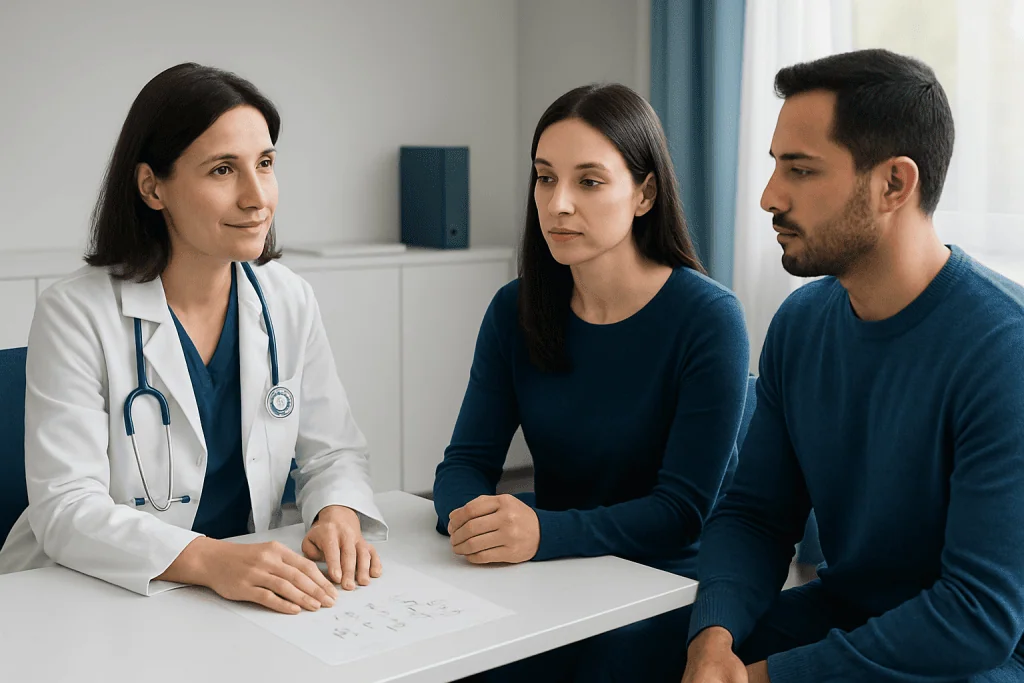
When Fragile X screening is indicated, the doctor orders FMR1 testing and may recommend meeting with a genetic counselor. Counseling before testing helps patients understand what the test can and cannot show, how results may affect relatives, and what choices might follow. This step often reduces confusion and supports more confident decision-making.
Fertility evaluation usually continues in parallel. Depending on the clinical picture, this may include hormone testing, ultrasound, semen analysis, and assessment for other causes of infertility. Some patients will already be under evaluation for infertility treatment, and the genetic test becomes one piece of a broader diagnostic pathway rather than a stand-alone answer.
After results return, the care team explains whether there is a reproductive risk, whether additional family testing is worth considering, and whether IVF with preimplantation genetic testing may be discussed. The emphasis is on individualized counseling, because the same laboratory category can carry different practical implications from one patient to another.
Treatment options and reproductive choices after a positive result
If Fragile X screening shows a premutation or another significant finding, there is no single response that fits every family. The next step depends on the patient’s age, ovarian reserve, family-building goals, and comfort with different reproductive options. Some couples choose to proceed with IVF after genetic counseling, while others may explore alternatives that lower the chance of passing on the condition.
One option may be IVF with preimplantation genetic testing, which can help identify embryos that do not carry the concerning expansion pattern being assessed. This does not guarantee pregnancy, and it may not be appropriate in every case, but it can be an important consideration for some families. Others may consider donor eggs if ovarian reserve is significantly reduced or if they want to avoid transmission risk linked to maternal FMR1 status.
In some situations, a couple may decide to conceive naturally after receiving counseling and understanding the possible outcomes. Others may choose adoption or decide not to pursue pregnancy. The right decision is the one that aligns with the family’s values, medical circumstances, and emotional readiness.
Supportive counseling is an essential part of care. Learning about carrier status can bring up questions about siblings, parents, and existing children, since Fragile X-related changes can run in families. Fertility specialists, genetic counselors, and mental health professionals can work together to support patients through these conversations. Near the end of this process, some international patients seek coordinated care at Acibadem International, where multidisciplinary specialists in JCI-accredited hospitals diagnose and treat fertility conditions and provide genetic counseling as part of assisted reproduction planning.
Self-care, planning ahead, and when to see a doctor
There is no lifestyle change that can prevent a Fragile X gene expansion, but planning ahead can make fertility care more informed and less rushed. Anyone considering IVF should share a complete family history with their doctor, including developmental, neurological, and reproductive conditions in relatives. Bringing this information early allows the team to decide whether targeted genetic testing is useful.
It is wise to ask about Fragile X screening before IVF if there is early menopause in the family, unexplained low ovarian reserve, previous unexplained infertility, or a known relative with Fragile X syndrome or related conditions. Women with irregular periods, infertility, or signs of reduced egg supply should also discuss whether broader fertility evaluation is needed. General reproductive health concerns such as amenorrhea may be part of the wider picture and deserve medical review.
People should see a fertility specialist if pregnancy has not occurred after a reasonable period of trying, if they plan IVF and have a suggestive family history, or if prior testing shows diminished ovarian reserve. A genetic counselor is especially helpful when results are unclear or when there are questions about risks to future children and relatives. Early discussion often expands options and can improve decision-making.
Although genetic testing can feel overwhelming, it is best viewed as a tool for preparation rather than a reason for fear. For many couples, Fragile X screening before IVF provides useful clarity, helps guide the safest and most suitable fertility plan, and supports informed choices about pregnancy.
Frequently asked questions
Is Fragile X screening recommended for everyone before IVF?
No. Fragile X screening is usually recommended when there are specific risk factors, such as a family history of Fragile X-related conditions, unexplained reduced ovarian reserve, or premature ovarian insufficiency. A fertility specialist or genetic counselor can decide whether the test is appropriate based on personal and family history.
Can someone be a Fragile X carrier without knowing it?
Yes. Many carriers, especially those with an FMR1 premutation, may have no obvious symptoms. That is why family history and targeted genetic testing can be important before IVF or pregnancy planning.
Does a positive Fragile X test mean pregnancy is not possible?
No. A positive result does not automatically prevent pregnancy or IVF. It means that additional counseling is needed to understand fertility implications and options for reducing the risk of passing on the condition.
What is the difference between a premutation and a full mutation?
A premutation means the FMR1 gene has more repeats than usual but not enough to be classified as a full mutation. A full mutation is associated with Fragile X syndrome, while a premutation may affect inheritance risk and, in some women, ovarian function.
Can Fragile X screening explain infertility?
Sometimes, but not always. In some women, an FMR1 premutation is linked to reduced ovarian reserve or premature ovarian insufficiency, which can contribute to infertility. However, many other causes of infertility are more common, so the result is interpreted as part of a complete fertility evaluation.
If one partner tests positive, should other family members be tested too?
Possibly. Because Fragile X-related gene changes can run in families, a genetic counselor may recommend that certain relatives consider testing. This can help other family members understand their own reproductive or health risks.
This article is for general information only and is not a substitute for professional medical advice. Please consult a qualified doctor about your individual situation.
IVF & fertility treatment in Turkey — success rates and costs
JCI-accredited · board-certified surgeons · reply within 24h
Add us as a Preferred Source to see more of our trusted health content across Google Search, AI Overviews and Discover.

IVF & Reproductive Health
Assisted reproduction and fertility treatments tailored to each couple.
Related Treatments
Related Conditions
More from the Health Library

IVF With Adenomyosis: Symptoms, Imaging, and Treatment Strategy

IVF Risks and Side Effects: What Patients Should Know Before Treatment

Egg Retrieval in IVF: Timing, Sedation, and Recovery

Ovulation Induction: Medications, Monitoring, and Risks

Day 3 vs Day 5 Embryo Transfer in IVF: How Timing Is Chosen