GIFT Treatment: How Gamete Intrafallopian Transfer Works and Who May Benefit

GIFT treatment combines egg retrieval with placement of eggs and sperm into a fallopian tube. At least one healthy, open fallopian tube is generally needed for GIFT to be an option.
Key Takeaways
- GIFT treatment combines egg retrieval with placement of eggs and sperm into a fallopian tube.
- At least one healthy, open fallopian tube is generally needed for GIFT to be an option.
- GIFT differs from IVF because fertilization occurs inside the body rather than in a laboratory dish.
- It may be considered in some cases of unexplained infertility, cervical factor infertility, or mild male factor infertility.
- A fertility specialist evaluates age, ovarian reserve, tubal health, sperm quality, and overall medical history before recommending GIFT.
GIFT treatment, or gamete intrafallopian transfer, is a fertility procedure that places collected eggs and prepared sperm directly into a fallopian tube so fertilization can happen inside the body. It is used less often than IVF today, but it may still be considered for carefully selected patients.
Overview of GIFT treatment
GIFT treatment stands for gamete intrafallopian transfer. It is an assisted reproductive technique in which eggs are collected from the ovaries, mixed with specially prepared sperm, and then placed into a fallopian tube during a minor surgical procedure. The aim is for fertilization to occur naturally within the body rather than in a laboratory.
GIFT was used more frequently before in vitro fertilization became widely established. Today, many fertility centers prefer IVF treatment because it allows doctors to confirm fertilization and monitor embryo development before transfer. Even so, GIFT may still have a role in carefully selected situations, especially when at least one fallopian tube is healthy and open.
For some people, the idea that fertilization takes place inside the body is an important consideration. Others may be advised against GIFT because it requires laparoscopy and offers less direct information than IVF about whether fertilization actually occurred. A fertility specialist can explain which approach best fits a couple’s diagnosis, goals, and values.
How gamete intrafallopian transfer works
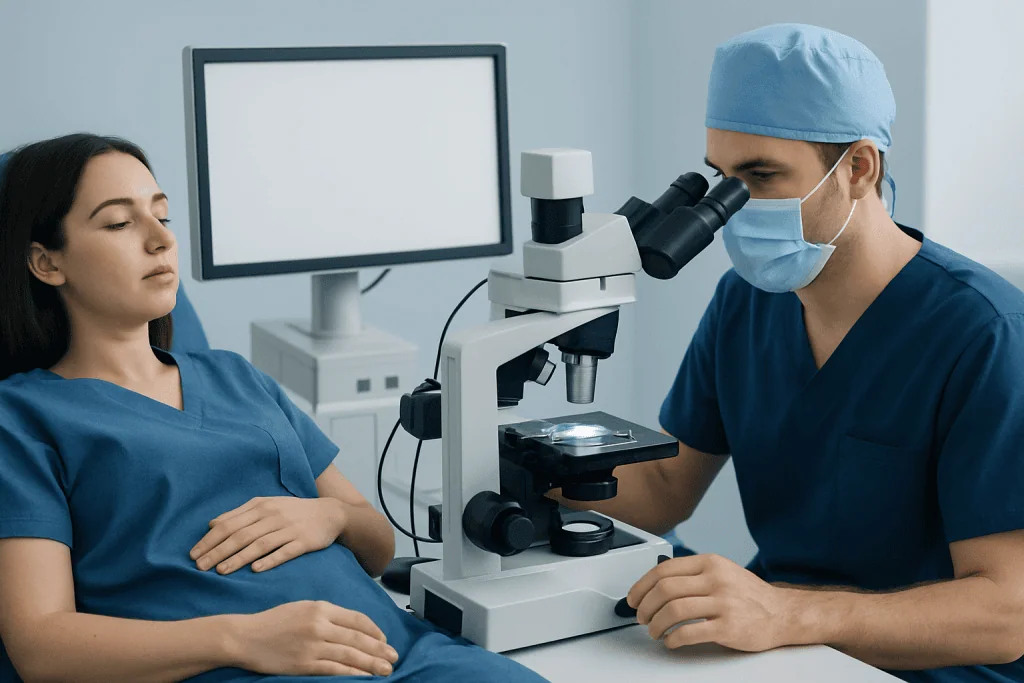
The process usually begins with ovarian stimulation. Fertility medications encourage the ovaries to mature multiple eggs in one cycle. During this stage, blood tests and ultrasound scans are used to monitor how the follicles are developing and to help determine the right timing for egg retrieval.
When the eggs are ready, they are collected from the ovaries. The sperm sample is prepared in the laboratory so that the healthiest and most motile sperm can be selected. Unlike IVF, the eggs are not fertilized outside the body. Instead, the eggs and sperm are placed together into a fallopian tube using laparoscopy.
Because GIFT depends on fertilization happening in the tube, at least one functioning fallopian tube is necessary. After the procedure, if fertilization and implantation are successful, pregnancy develops in the uterus as it would after natural conception. Some centers may discuss related fertility options such as artificial fertilisation techniques or ICSI when sperm factors or other issues make GIFT less suitable.
Who may benefit from GIFT treatment

GIFT treatment may be considered for selected people who have infertility but still have at least one healthy fallopian tube. It has sometimes been used for unexplained infertility, certain cases of cervical factor infertility, and some forms of mild male factor infertility when sperm are present in adequate number and quality after preparation.
It may also be discussed when a couple prefers fertilization to occur inside the body for personal or ethical reasons. However, because GIFT does not allow the laboratory to verify fertilization or assess embryo growth, many patients are more commonly guided toward IVF or other methods with more predictable monitoring.
GIFT is usually not appropriate if both fallopian tubes are blocked or severely damaged, if there is significant tubal disease from conditions such as pelvic inflammatory disease, or if severe sperm abnormalities are present. Women with diminished ovarian reserve, advanced reproductive age, or complex reproductive conditions such as premature ovarian insufficiency may need a different fertility plan. A complete infertility evaluation, often as part of care for infertility, is essential before deciding.
How GIFT differs from IVF and other fertility treatments
The main difference between GIFT and IVF is where fertilization takes place. In IVF, eggs are fertilized in the laboratory and the resulting embryo is later transferred into the uterus. In GIFT, eggs and sperm are placed into a fallopian tube first, and fertilization happens within the body.
This difference affects how much doctors can observe. With IVF, the care team can confirm that fertilization happened and can monitor embryo development. With GIFT, there is no direct confirmation at the time of the procedure, so a pregnancy test later on is the main way to learn whether the cycle was successful.
GIFT also differs from insemination, which places prepared sperm into the uterus around ovulation but does not involve egg retrieval. Compared with IVF, GIFT generally requires laparoscopy, making it more invasive. For many patients, IVF has become the more common option because it is flexible, widely used, and often more informative for treatment planning.
Evaluation, testing, and preparation
Before recommending GIFT treatment, a fertility specialist performs a thorough assessment of both partners. This often includes a medical history, physical examination, hormone testing, pelvic ultrasound, ovarian reserve testing, and a semen analysis. The goal is to identify the most likely cause of infertility and decide whether GIFT is a reasonable choice.
Testing to confirm that at least one fallopian tube is open is especially important. Doctors may use imaging or minimally invasive procedures to evaluate the uterus and tubes. If symptoms or imaging suggest other gynecologic conditions, they may also look for issues such as uterine septum or ovarian cysts, since these can affect fertility planning.
Preparation also includes discussing expectations, possible alternatives, and potential risks. Patients may be advised about medications, timing of the cycle, and how to prepare for egg retrieval and laparoscopy. Good communication with the fertility team helps people understand each step and make informed decisions.
Benefits, risks, and possible limitations
A possible benefit of GIFT treatment is that fertilization occurs within the body, which some patients prefer. It may be an option for couples who meet the medical criteria and who are looking for an alternative to standard IVF. In carefully selected cases, it can be part of an individualized fertility plan.
Like all fertility procedures, GIFT has risks and limitations. Ovarian stimulation medicines can occasionally lead to an exaggerated response, and egg retrieval has procedural risks such as bleeding, infection, or discomfort. Because the eggs and sperm are placed into a fallopian tube, there is also a risk of ectopic implantation, meaning a pregnancy developing outside the uterus, such as ectopic pregnancy.
Another limitation is that GIFT requires surgery, usually laparoscopy, which means anesthesia and recovery time are part of the process. In addition, because fertilization is not observed in the laboratory, a failed cycle provides less information than IVF about whether the issue was fertilization, embryo development, or implantation. These practical differences are one reason GIFT is less commonly used today.
What to expect after the procedure and when to seek medical advice
After GIFT treatment, mild cramping, bloating, or fatigue may occur for a short time, especially after egg retrieval and laparoscopy. The care team usually gives clear instructions about rest, activity, medications, and follow-up. A pregnancy test is typically scheduled after an appropriate waiting period to see whether implantation has occurred.
Emotional support is also important during fertility care. Waiting for results can be stressful, and it is normal for patients to have questions about chances of success, next steps, or alternatives if pregnancy does not occur. Counseling, support groups, or continued discussion with the fertility team can be helpful.
Patients should contact their doctor promptly if they have severe abdominal pain, heavy bleeding, fever, shortness of breath, fainting, or symptoms that feel worse rather than better. A specialist can also review whether another option may be more suitable if GIFT is not advised. Near the end of the decision-making process, some international patients choose centers such as Acibadem International, where multidisciplinary specialists in JCI-accredited hospitals evaluate and treat fertility conditions including GIFT.
Frequently asked questions
What is GIFT treatment in simple terms?
GIFT treatment is a fertility procedure in which eggs are collected from the ovaries and placed together with sperm into a fallopian tube. The goal is for fertilization to happen inside the body rather than in a laboratory.
Is GIFT the same as IVF?
No. In IVF, fertilization happens in the laboratory and an embryo is later transferred into the uterus. In GIFT, eggs and sperm are placed into a fallopian tube first, so fertilization takes place inside the body.
Who is a good candidate for gamete intrafallopian transfer?
A good candidate usually has at least one open, healthy fallopian tube and enough ovarian function to produce eggs. It may be considered in selected cases of unexplained infertility, cervical factor infertility, or mild male factor infertility after full specialist assessment.
Why is GIFT used less often today?
GIFT is less common because IVF allows doctors to confirm fertilization and monitor embryo development before transfer. GIFT also requires laparoscopy, which makes it more invasive than some other fertility treatments.
What are the risks of GIFT treatment?
Risks can include side effects from ovarian stimulation, discomfort after egg retrieval, surgical risks related to laparoscopy, and the possibility of ectopic pregnancy. A fertility doctor explains these risks in the context of each patient's health and treatment plan.
How long does it take to know if GIFT worked?
A pregnancy test is usually done after a waiting period following the procedure, based on the timing recommended by the fertility team. Because fertilization is not observed directly in GIFT, the pregnancy test is the main way to know whether the cycle was successful.
References
- World Health Organization
- American Society for Reproductive Medicine
- Centers for Disease Control and Prevention
- National Institute for Health and Care Excellence
- European Society of Human Reproduction and Embryology
This article is for general information only and is not a substitute for professional medical advice. Please consult a qualified doctor about your individual situation.
GIFT in Turkey — costs, top hospitals & a free quote
JCI-accredited · board-certified surgeons · reply within 24h
Add us as a Preferred Source to see more of our trusted health content across Google Search, AI Overviews and Discover.

Related Treatments
Related Conditions
More from the Health Library



Related Specialists
Prof. Dr. Mehmet Cihat Ünlü
Gynecology & Obstetrics
Prof. Dr. Mete Güngör
Gynecology & Obstetrics
Prof. Dr. Bülent Tıraş
Gynecology & Obstetrics
Prof. Dr. Tansu Küçük
Gynecology & Obstetrics