How to Choose a LASIK Surgeon for Safe Results

The best LASIK surgeon is an ophthalmologist with specific refractive surgery training and substantial experience. A thorough eye evaluation is essential because not everyone is a good candidate for LASIK.
Key Takeaways
- The best LASIK surgeon is an ophthalmologist with specific refractive surgery training and substantial experience.
- A thorough eye evaluation is essential because not everyone is a good candidate for LASIK.
- Good surgeons explain benefits, limits, alternatives, and possible risks in clear, balanced language.
- Technology matters, but surgeon judgment and personalized planning matter just as much.
- Patients should feel comfortable asking questions about outcomes, complications, follow-up, and alternatives.
Choosing a LASIK surgeon is one of the most important steps in planning vision correction. A safe, patient-centered decision usually depends on the surgeon’s qualifications, careful preoperative testing, clear communication, and whether LASIK is truly the best option for that individual.
Overview: Why Choosing the Right LASIK Surgeon Matters
LASIK is a commonly performed laser vision correction procedure used to reduce dependence on glasses or contact lenses. While many people achieve excellent results, the quality and safety of the experience depend on more than the laser itself. Choosing the right LASIK surgeon helps ensure that the patient is carefully evaluated, the procedure is appropriately recommended, and follow-up care is well managed.
A qualified surgeon does more than perform surgery. They assess whether the cornea is suitable, review the stability of the prescription, check for dry eye or other eye disease, and discuss realistic expectations. In some cases, a surgeon may advise against LASIK and recommend another option, which is often a sign of careful, patient-first judgment rather than a negative outcome.
It is also helpful to remember that LASIK is not the only refractive procedure available. Depending on age, corneal shape, prescription, or eye surface health, alternatives such as PRK, LASEK, or iLASIK may be considered. A trustworthy surgeon explains why one approach may fit better than another for a particular person.
Qualifications to Look For in a LASIK Surgeon

The surgeon should be a fully trained ophthalmologist, meaning a medical doctor specialized in eye care and eye surgery. For LASIK, it is especially important that the ophthalmologist has experience in refractive surgery, which focuses on correcting vision problems such as nearsightedness, farsightedness, and astigmatism.
Patients may wish to ask about the surgeon’s training, how frequently they perform LASIK, and whether they routinely handle a range of refractive cases. A surgeon who regularly evaluates corneal health, prescription stability, and complex visual needs may be better prepared to identify whether LASIK is appropriate or whether a different option should be discussed. Experience is particularly important when planning treatment for higher prescriptions or irregular corneas.
Useful points to ask about include:
- Board certification and ophthalmology specialization
- Specific training in refractive surgery
- Experience with LASIK and related laser procedures
- Comfort managing complications or enhancement procedures if needed
- Availability of structured postoperative follow-up care
It can also be reassuring if the surgeon practices within a broader eye care service such as general ophthalmology, where related eye conditions can be evaluated and treated if needed before surgery.
The Importance of a Thorough LASIK Consultation
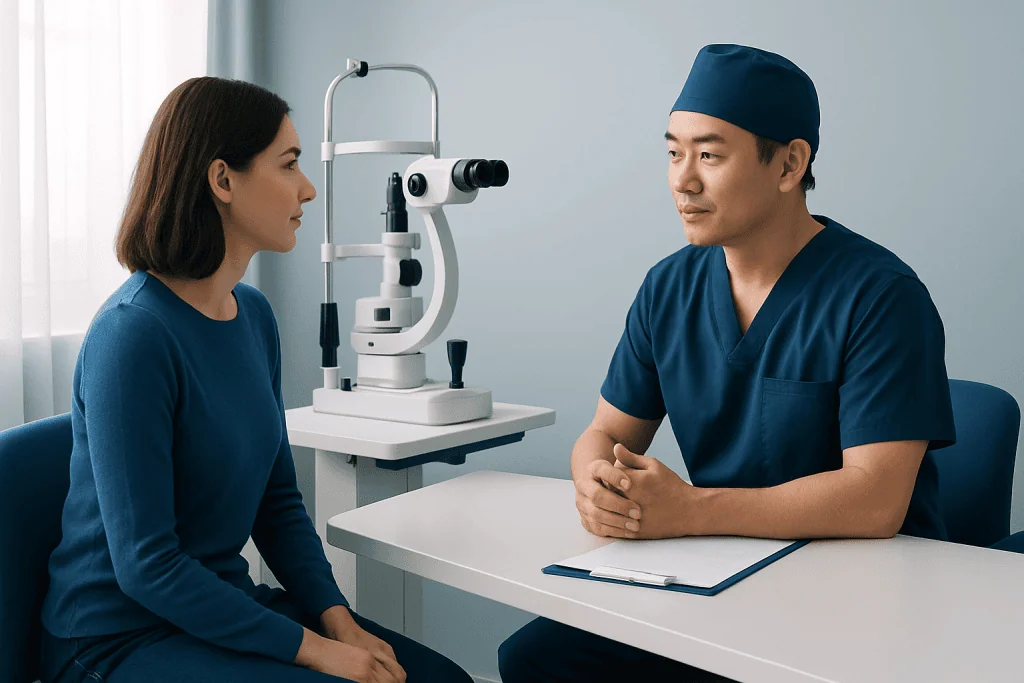
A careful consultation is one of the strongest signs of a responsible LASIK surgeon. This visit should not feel rushed. It usually includes a detailed discussion of medical history, medications, prior eye problems, contact lens use, occupational visual needs, and expectations about life after surgery.
The eye examination should include precise measurements of the prescription, corneal thickness, corneal topography or tomography, pupil assessment, tear film evaluation, and a general eye health check. These tests help identify people who may not be ideal LASIK candidates, including those with significant dry eye, unstable vision, certain corneal disorders, or other eye disease.
For example, screening may reveal an issue such as astigmatism that can be treated, or it may raise concern for conditions that require a different plan. A good surgeon explains the meaning of these findings in plain language and shows how they affect both safety and likely visual results.
Patients should be cautious if surgery is offered without full testing or if the consultation focuses mainly on convenience and quick scheduling. Safe LASIK begins with deciding whether surgery should be done at all, not just how soon it can be arranged.
Questions Patients Should Ask Before Choosing
Asking questions can help patients compare surgeons in a practical, informed way. A reliable surgeon welcomes questions and gives clear, balanced answers without pressure. The goal is not to find promises of perfection, but to understand how carefully the surgeon approaches safety, planning, and communication.
Helpful questions include how the surgeon determines candidacy, what type of laser system is used, what alternatives exist if LASIK is not ideal, and what short-term side effects are common. Patients can also ask what vision results are typical, how often enhancements are needed, and how issues such as dry eye, glare, or night vision symptoms are monitored and treated.
Other useful questions are:
- Will the same surgeon perform the key parts of the procedure and follow-up care?
- How long should contact lenses be stopped before measurements?
- What happens if the prescription changes later?
- What costs are included in postoperative visits or enhancement planning?
- How should the patient prepare for surgery and recovery?
If answers are vague, dismissive, or overly promotional, that may suggest the practice is not focused enough on individualized care. Good communication is a major part of LASIK safety.
How to Judge Safety, Technology, and Surgical Planning
Modern LASIK depends on advanced diagnostic tools and laser platforms, but the presence of technology alone does not guarantee good outcomes. What matters most is whether the surgeon uses those tools thoughtfully, interprets the data accurately, and tailors treatment to the patient’s eyes and lifestyle.
Patients may hear terms such as femtosecond laser, wavefront-guided treatment, topography-guided treatment, or bladeless LASIK. These can be valuable, but the best choice depends on the individual prescription, corneal shape, and visual goals. A good surgeon explains why a certain method is recommended instead of presenting every case as the same. In some practices, specialized ophthalmic lasers are part of a broader refractive program designed to match technology to the patient, not the other way around.
Safety also includes infection prevention, equipment maintenance, emergency protocols, and consistent postoperative care. The clinic should have a clear process for addressing urgent symptoms after surgery and for scheduling follow-up visits to monitor healing, vision, and eye surface comfort.
Most importantly, patients should be wary of guarantees of perfect vision or language suggesting LASIK is risk-free. Every procedure has potential downsides, and responsible surgeons discuss them openly while also putting them in context.
Red Flags and Common Mistakes to Avoid
One common mistake is choosing a surgeon based mainly on price or advertising. Cost is understandably important, but LASIK is a medical procedure, not a retail purchase. A very low advertised fee may not reflect the total cost of care, and it says little about screening quality, surgeon experience, or postoperative support.
Another red flag is a consultation that skips or minimizes discussion of risk. Temporary dry eye, glare, halos, fluctuating vision, and the possible need for glasses in some situations should be discussed honestly. A responsible surgeon also explains that aging of the eye continues after LASIK, so reading glasses or future treatment for unrelated conditions may still be needed later in life.
Patients should also be cautious if they feel pressured to book surgery quickly, if they are told everyone is a candidate, or if a surgeon appears unwilling to discuss alternatives. Some people are better served by non-LASIK options or by delaying surgery until the prescription stabilizes. Others may need treatment for another condition first, such as cataract evaluation through cataract surgery pathways rather than refractive corneal surgery.
Finally, ignoring symptoms before surgery can be a mistake. Chronic irritation, fluctuating vision, severe allergies, or a history of corneal problems deserve careful review. Sharing complete information helps the surgeon protect long-term eye health.
Recovery, Follow-Up, and Long-Term Expectations
Choosing a LASIK surgeon also means choosing a follow-up plan. Vision often improves quickly after LASIK, but healing continues over time. The surgeon should explain what to expect in the first few days, when normal activities can usually resume, and which symptoms require prompt medical attention.
Follow-up visits are important for checking flap position, corneal healing, vision quality, and signs of dryness or inflammation. Patients should know who to contact after hours and whether the operating surgeon remains involved in postoperative care. Continuity can be especially reassuring if vision feels uneven early in recovery.
Long-term expectations should be realistic. LASIK can reduce dependence on glasses or contact lenses, but it does not prevent natural age-related changes such as presbyopia. It also does not treat all eye diseases. Good surgeons explain that future eye care remains important even when vision is much improved.
For international patients seeking evaluation and treatment abroad, coordinated care can be especially helpful. Acibadem International’s multidisciplinary specialists and JCI-accredited hospitals diagnose and treat a wide range of eye conditions, including refractive vision problems, with individualized planning and follow-up support.
When to Seek Another Opinion
A second opinion can be very helpful when a patient feels uncertain, has been told they are only borderline suitable for LASIK, or receives very different recommendations from different clinics. It may also be wise when there is a high prescription, thin corneas, significant dry eye, previous eye surgery, or an irregular corneal map.
Another opinion does not necessarily mean something is wrong. It simply provides more information and can improve confidence in the final decision. If two experienced ophthalmologists independently reach similar conclusions, patients often feel more comfortable moving forward.
Second opinions are also useful when LASIK is not advised and the patient wants to understand alternatives. In some cases, the safest decision may be another refractive procedure, updated glasses, or contact lens optimization rather than surgery. The best outcome is not always the fastest path to an operation.
Above all, patients should choose the surgeon who combines technical expertise with careful screening, honest communication, and respect for individual needs. Feeling informed and comfortable is an important part of safe results.
Frequently asked questions
What kind of doctor should perform LASIK?
LASIK should be performed by an ophthalmologist, a medical doctor specialized in eye care and eye surgery. Ideally, that doctor should also have specific training and experience in refractive surgery.
How can a patient tell if a LASIK surgeon is experienced?
Patients can ask about the surgeon’s training, how often they perform LASIK, and how they handle complex cases and follow-up care. An experienced surgeon should be comfortable discussing candidacy, expected outcomes, and possible complications in a clear way.
Is the newest laser technology always the best choice?
Not necessarily. Advanced technology can be very helpful, but the best results depend on matching the technique to the patient’s eyes, prescription, and corneal measurements. Good surgical judgment is just as important as the equipment used.
What are signs of a poor-quality LASIK consultation?
Warning signs include rushed appointments, limited testing, pressure to book quickly, and promises of perfect vision with no discussion of risks. A good consultation should include detailed measurements, medical history review, and a balanced explanation of benefits and limitations.
Should patients get a second opinion before LASIK?
A second opinion can be useful, especially if the patient has thin corneas, dry eye, a high prescription, or mixed recommendations from different clinics. It can also help when LASIK is not advised and the patient wants to understand alternatives.
If someone is not a good candidate for LASIK, what happens next?
The surgeon may suggest another refractive procedure, updated glasses, or contact lenses depending on the reason LASIK is not suitable. In some cases, treating dry eye or another eye condition first may open up more options later.
This article is for general information only and is not a substitute for professional medical advice. Please consult a qualified doctor about your individual situation.
LASIK in Turkey — costs, top hospitals & a free quote
JCI-accredited · board-certified surgeons · reply within 24h
Add us as a Preferred Source to see more of our trusted health content across Google Search, AI Overviews and Discover.

Related Treatments
More from the Health Library

Side Effects of LASIK Eye Surgery You Should Know

Are You Awake During LASIK? What Happens in Surgery

What Does OD Mean in Eye Care? Ophthalmologist, Optometrist, and Eye Exam Basics
What Is LASIK Eye Surgery? A Beginner’s Guide

PRK vs LASEK: Key Differences in Recovery and Results