Infertility in Men: Causes, Symptoms, and When Sperm Testing Is Needed

Male infertility can result from sperm, hormone, anatomical, genetic, lifestyle, or medical factors. Many men with infertility have no clear symptoms other than difficulty achieving pregnancy.
Key Takeaways
- Male infertility can result from sperm, hormone, anatomical, genetic, lifestyle, or medical factors.
- Many men with infertility have no clear symptoms other than difficulty achieving pregnancy.
- Semen analysis is usually the first and most important sperm test in the evaluation.
- Some causes are treatable with lifestyle changes, medication, or surgery.
- Assisted reproductive techniques may help when natural conception is difficult.
Male infertility means a man has reduced ability to help start a pregnancy, often because of problems with sperm production, sperm function, or sperm delivery. Careful evaluation, including sperm testing, can identify many causes and guide treatment or fertility planning.
Overview of Male Infertility
Male infertility refers to a reduced ability to cause pregnancy with a partner after a reasonable period of regular, unprotected intercourse. It is a medical issue that can involve sperm count, sperm movement, sperm shape, ejaculation, hormones, or structural problems in the reproductive tract. In many couples, fertility challenges involve male factors alone or a combination of male and female factors.
Male fertility depends on several steps working well together. The testicles need to produce healthy sperm, hormones from the brain and testes need to be balanced, and sperm need to travel through the reproductive tract and be released effectively during ejaculation. A problem at any point in this process can affect fertility.
It is important to know that male infertility is common and often manageable. Some causes are temporary, some are treatable, and others can be worked around with modern reproductive care such as ICSI or IVF treatment. Early evaluation can help reduce uncertainty and support informed decisions for both partners.
Symptoms and Signs to Watch For

The most common sign of male infertility is difficulty achieving pregnancy. Many men do not notice any other symptoms, and routine daily health may seem completely normal. This is one reason fertility assessment is often delayed until a couple has been trying to conceive for some time.
When symptoms are present, they may point to an underlying cause rather than infertility itself. These can include problems with ejaculation, reduced sexual desire, trouble maintaining an erection, pain or swelling in the testicles, or a history of testicular injury. Some men notice reduced facial or body hair, breast enlargement, or other signs that may suggest a hormone imbalance.
Other clues can come from a person’s medical history. Past undescended testicles, groin or scrotal surgery, repeated genital infections, mumps after puberty, cancer treatment, or long-term exposure to heat or certain chemicals may all be relevant. Because symptoms are often subtle or absent, professional evaluation is usually needed to understand whether fertility is affected.
Causes and Risk Factors
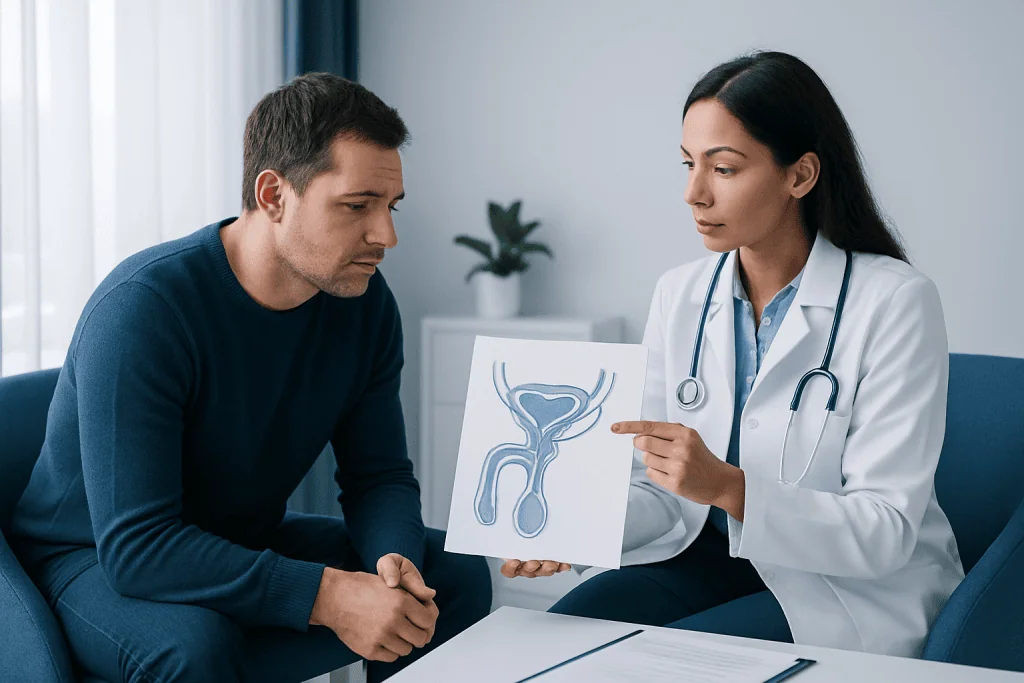
Male infertility has many possible causes. Sperm-related problems are among the most common. A semen sample may show a low sperm count, poor sperm movement, abnormal sperm shape, or no sperm at all. In some men, sperm are produced but cannot leave the body properly because of a blockage in the reproductive tract or problems with ejaculation.
Hormonal conditions can also interfere with sperm production. The brain, pituitary gland, and testicles work together to regulate testosterone and other reproductive hormones. If this system is disrupted by endocrine disorders, obesity, severe stress, or certain medicines, fertility may be reduced. Genetic conditions may also affect testicular function or the transport of sperm.
Structural and medical conditions are another important group of causes. Varicocele, which is enlargement of veins in the scrotum, may impair sperm quality in some men. Infection, inflammation, testicular trauma, previous surgery, diabetes, liver or kidney disease, and chronic illness can all play a role. Lifestyle factors such as smoking, heavy alcohol use, recreational drugs, anabolic steroids, poor sleep, and overheating of the testes may further reduce fertility.
Male infertility should also be understood in the wider context of couple fertility. Even if a male factor is found, a female partner may also need evaluation, particularly if there are known gynecologic conditions such as pelvic inflammatory disease, endometrial polyps, or premature ovarian insufficiency. A balanced assessment helps the couple choose the most appropriate next steps.
When Sperm Testing Is Needed
Sperm testing is usually recommended when a couple has not achieved pregnancy after a period of regular, unprotected intercourse. For many couples, this means around 12 months, or sooner if the female partner is older, menstrual cycles are irregular, or there are known fertility concerns in either partner. Testing may also be advised earlier if a man has a history of testicular surgery, chemotherapy, undescended testicles, genital infection, or sexual dysfunction.
The main sperm test is a semen analysis. This laboratory test looks at semen volume, sperm concentration, total sperm number, movement, and shape. Because semen results can vary from one sample to another, doctors often repeat the test to confirm findings. Proper collection instructions are important, including an appropriate period of abstinence and timely delivery of the sample.
Additional sperm testing may be needed in selected cases. Depending on the results and medical history, a doctor may suggest hormone blood tests, scrotal ultrasound, genetic testing, post-ejaculation urine testing, or specialized sperm function studies. If no sperm are seen in the semen, further investigation is especially important to distinguish between a production problem and a blockage.
Sperm testing is not only about finding a diagnosis. It also helps guide treatment decisions, whether that means lifestyle changes, medication, surgery, or assisted reproduction such as insemination or artificial fertilisation.
How Male Infertility Is Diagnosed
Diagnosis usually begins with a detailed medical history and physical examination. The doctor may ask about the length of time trying to conceive, sexual function, childhood development, previous pregnancies, infections, surgery, medications, work exposures, exercise habits, and use of tobacco, alcohol, or supplements. A physical exam may assess the testes, penis, scrotum, and signs of hormonal imbalance.
Semen analysis is central to diagnosis, but it is only one part of the evaluation. Blood tests may measure hormones such as follicle-stimulating hormone, luteinizing hormone, testosterone, and prolactin. These results can show whether the problem is likely to be in the testes or in the hormonal signals controlling them.
Imaging and specialized tests are used when needed. Scrotal ultrasound can help identify varicocele or other structural findings. Transrectal ultrasound may help detect blockages in the ducts that carry semen. Genetic testing can be useful for men with very low sperm counts or no sperm in the ejaculate. In some cases, doctors may recommend testicular sperm retrieval or biopsy as part of diagnosis and treatment planning.
The aim of diagnosis is not just to label the problem, but to identify reversible factors, estimate the chance of natural conception, and choose the safest and most effective way forward for the couple.
Treatment Options
Treatment depends on the cause. When a reversible problem is found, addressing it may improve fertility. This can include stopping tobacco or anabolic steroids, reducing alcohol, managing weight, improving sleep, limiting excessive heat exposure, and reviewing medications that may affect sperm production. If infection or inflammation is present, doctors may treat the underlying condition. Hormonal disorders may respond to targeted medical therapy in selected cases.
Surgical treatment may help when there is a correctable structural issue. For example, some men benefit from treatment for varicocele, repair of an obstruction, or procedures to retrieve sperm directly from the testes or epididymis. The right option depends on whether sperm production is present and whether sperm can travel normally through the reproductive tract.
Assisted reproductive treatments can help when sperm quality is low, sperm numbers are severely reduced, or other treatments are unlikely to be enough. Depending on the situation, options may include fertility treatment, insemination, IVF, or ICSI, in which a single sperm is injected into an egg. These approaches are often considered after both partners have been evaluated so that the treatment plan matches the couple’s overall fertility picture.
Near the end of the care pathway, some couples may need counseling and support as they consider timing, expectations, and treatment choices. At Acibadem International, multidisciplinary specialists in JCI-accredited hospitals evaluate and treat infertility for international patients, including male-factor fertility problems as part of coordinated couple care.
Prevention and Self-Care
Not all causes of male infertility can be prevented, but healthy habits can support reproductive health. Avoiding smoking, limiting alcohol, and staying away from recreational drugs and anabolic steroids are practical steps. Maintaining a balanced weight, regular physical activity, and a nutrient-rich diet may also help overall hormonal and metabolic health.
Protecting the testes from injury and unnecessary heat exposure is also sensible. Men who work in high-heat environments or use hot tubs frequently may wish to discuss this with a doctor if they are trying to conceive. Early treatment of infections, careful management of chronic medical conditions, and discussing fertility risks before chemotherapy or radiation can also be important.
Self-care should not replace medical evaluation. Even with healthy habits, fertility problems can still occur because of genetics, anatomy, or hormone-related causes. Men who are planning a family and have known risk factors may benefit from speaking with a healthcare professional sooner rather than later.
When to See a Doctor
A doctor should be consulted if a couple has been trying to conceive without success, especially when there are known risk factors in either partner. Earlier evaluation is reasonable if the female partner is older, cycles are irregular, or there is a history of surgery, infection, testicular problems, erectile dysfunction, or abnormal ejaculation. Seeking advice early can sometimes shorten the path to a diagnosis and treatment plan.
Medical attention is also important for symptoms such as testicular pain, swelling, a lump, reduced libido, or visible changes in the scrotum. These signs do not always mean infertility, but they deserve assessment because they may point to a treatable underlying condition.
Fertility care works best when both partners are considered together. Male infertility does not reflect masculinity or general worth, and it is not something a person should manage alone. A qualified doctor or fertility specialist can explain testing, interpret results carefully, and help the couple choose the next step with confidence.
Frequently asked questions
What is the first test for male infertility?
The first and most common test is a semen analysis. It checks sperm count, movement, shape, and semen volume. Because results can vary, doctors often repeat the test to confirm the findings.
Can a man be infertile and still have normal sexual function?
Yes. Many men with infertility have normal erections, ejaculation, and sexual desire. Fertility problems often involve sperm production or transport, which may not affect sexual performance.
Does male infertility always cause symptoms?
No. Many men have no symptoms apart from difficulty achieving pregnancy with a partner. When symptoms do occur, they may include testicular pain or swelling, ejaculation problems, or signs of hormone imbalance.
How long should a couple try before sperm testing is needed?
In general, testing is considered after about 12 months of regular, unprotected intercourse without pregnancy. It may be recommended sooner if there are known fertility risks, sexual dysfunction, previous testicular problems, or concerns related to the female partner’s age or cycle pattern.
Can male infertility be treated?
Often, yes. Treatment depends on the cause and may include lifestyle changes, medication, surgery, or assisted reproductive techniques. Even when a cause cannot be fully reversed, fertility options may still be available.
What can affect sperm quality?
Sperm quality can be influenced by smoking, alcohol, recreational drugs, anabolic steroids, obesity, illness, infections, hormone problems, and heat exposure. Some medications, chronic diseases, and genetic conditions can also affect sperm.
References
- World Health Organization
- American Urological Association
- American Society for Reproductive Medicine
- European Association of Urology
- National Institute for Health and Care Excellence
This article is for general information only and is not a substitute for professional medical advice. Please consult a qualified doctor about your individual situation.
Infertility in Turkey — costs, top hospitals & a free quote
JCI-accredited · board-certified surgeons · reply within 24h
Add us as a Preferred Source to see more of our trusted health content across Google Search, AI Overviews and Discover.

IVF & Reproductive Health
Assisted reproduction and fertility treatments tailored to each couple.
Related Treatments
Related Conditions
More from the Health Library



Related Specialists

Prof. Dr. Mehmet Cihat Ünlü
Gynecology & Obstetrics
Prof. Dr. Mete Güngör
Gynecology & Obstetrics
Prof. Dr. Bülent Tıraş
Gynecology & Obstetrics
Prof. Dr. Tansu Küçük
Gynecology & Obstetrics