Is Laser Eye Surgery Safe? Risks and Success Rates

Laser eye surgery has a strong safety record in appropriately selected patients. Most side effects, such as dry eyes and glare, are temporary and improve over time.
Key Takeaways
- Laser eye surgery has a strong safety record in appropriately selected patients.
- Most side effects, such as dry eyes and glare, are temporary and improve over time.
- Not everyone is a good candidate; corneal thickness, prescription stability, and overall eye health matter.
- A detailed pre-operative eye examination is essential for choosing the safest procedure.
- Success is usually measured by improved vision and reduced need for glasses, not guaranteed perfect eyesight.
Laser eye surgery is generally considered safe and effective for many people who want to reduce dependence on glasses or contact lenses. Safety depends on careful screening, the type of procedure, and realistic expectations about benefits, risks, and recovery.
Overview: How Safe Is Laser Eye Surgery?
Laser eye surgery refers to procedures that reshape the cornea, the clear front surface of the eye, to correct refractive errors such as nearsightedness, farsightedness, and astigmatism. Common types include LASIK, PRK, and LASEK. For suitable candidates, these procedures are widely regarded as safe and effective, and millions of people worldwide have undergone them.
That said, no surgery is completely risk-free. The safety of laser eye surgery depends on several factors, including the patient’s age, the stability of their vision, corneal thickness and shape, tear film quality, and any underlying eye or health conditions. Careful evaluation helps reduce the chance of problems and improves the likelihood of a good outcome.
It is also important to understand what “success” means. In most cases, success means clearer uncorrected vision and less dependence on glasses or contact lenses. It does not always mean perfect vision in every situation, and some people may still need glasses for reading, night driving, or certain detailed tasks.
Types of Laser Eye Surgery and How They Differ
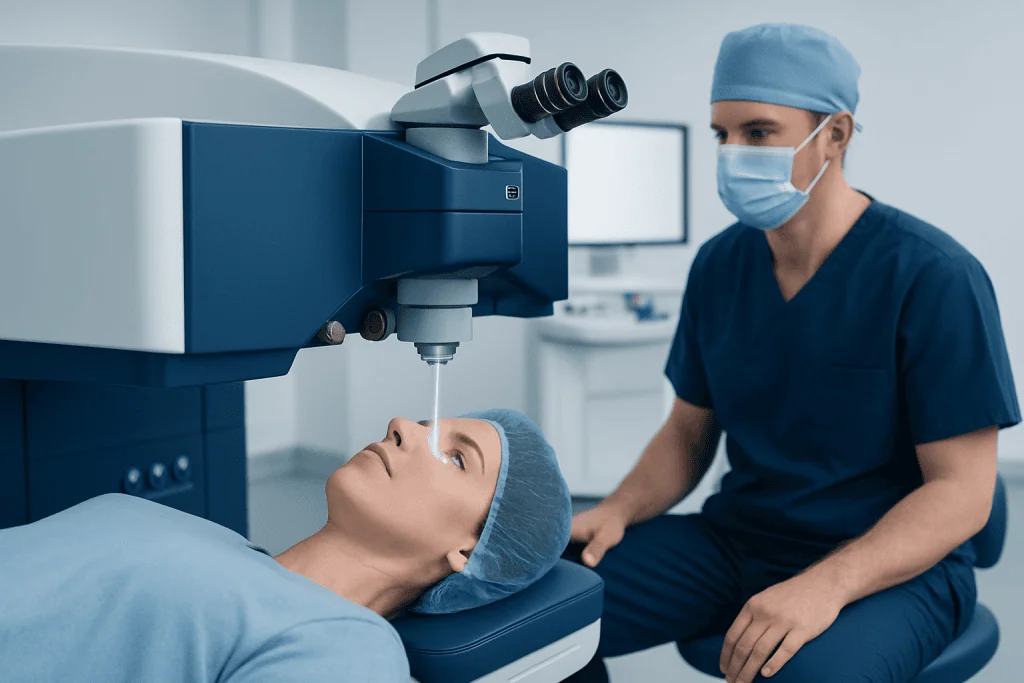
LASIK is the best-known form of laser vision correction. In LASIK, a thin flap is created on the cornea, the underlying tissue is reshaped with a laser, and the flap is repositioned. This approach usually offers rapid visual recovery and little discomfort for many patients. Modern bladeless options such as iLASIK or Intralase-assisted LASIK may be discussed in some centers.
PRK removes the outer surface layer of the cornea before laser reshaping. The surface then heals naturally over several days. PRK may be recommended for people with thinner corneas or certain corneal features, and it remains a trusted option with a strong safety profile. Patients who want to learn about surface-based laser treatment may hear about PRK during consultation.
LASEK is another surface procedure that preserves and repositions part of the outer corneal layer. Although it is used less commonly than LASIK or PRK in some settings, it can be useful in selected cases. The safest procedure is not the same for everyone, which is why individualized planning is so important.
Possible Risks and Side Effects

Most people recover without serious complications, but temporary side effects are common in the early healing period. These may include dry eyes, glare, halos around lights, fluctuating vision, light sensitivity, mild discomfort, and the sensation that something is in the eye. For many patients, these symptoms improve gradually over weeks to months.
Less common complications can include infection, inflammation, delayed healing, undercorrection or overcorrection, visual symptoms that last longer than expected, and the need for an enhancement procedure. With LASIK specifically, flap-related problems are possible, though they are uncommon with modern techniques and careful surgical practice.
Rarely, more serious concerns can affect vision quality, such as corneal ectasia, in which the cornea becomes progressively weak and changes shape after surgery. This is one reason surgeons screen carefully for thin or irregular corneas and conditions such as keratoconus. People with signs of corneal instability may need alternatives to laser vision correction or further assessment through general ophthalmology and corneal evaluation.
It is helpful to remember that complications are not the norm, but they are part of informed decision-making. A balanced discussion with an eye specialist should cover both the likely benefits and the possible downsides in the context of the individual patient’s eyes and lifestyle.
Who Is a Good Candidate?
Laser eye surgery is safest when offered to the right person. In general, candidates should be adults with a stable glasses or contact lens prescription, healthy corneas, and no major untreated eye disease. The eyes should also produce enough tears for healthy healing, especially if LASIK is being considered.
Some people may not be suitable candidates, or they may need a different procedure. This can include people with very thin corneas, irregular corneal shape, severe dry eye, uncontrolled diabetes, active eye infection, significant cataracts, or progressive corneal disease. Pregnancy and breastfeeding may also affect timing because vision can temporarily change during hormonal shifts.
Age matters too. Younger adults may do well if their prescription has stabilized, while older adults may need discussion about age-related changes such as presbyopia or cataracts. In some situations, laser surgery may not address the main reason for blurred vision, and alternatives such as presbyopia treatment or cataract surgery may be more appropriate.
- Stable vision for an appropriate period
- Suitable prescription range
- Healthy corneal thickness and shape
- No active eye disease or significant untreated dry eye
- Realistic expectations about results and recovery
How Doctors Assess Safety Before Surgery
A thorough pre-operative examination is one of the most important parts of laser eye surgery safety. The eye doctor measures the exact prescription, checks vision quality, maps the shape of the cornea, and assesses corneal thickness. Tear film, pupil size, and overall eye health are also evaluated. These tests help identify people who are likely to do well and those who may be at higher risk.
The doctor will also review medical history, medications, previous eye problems, and lifestyle needs. Certain autoimmune conditions, some medicines, or a history of poor wound healing may influence whether surgery is advisable. Contact lens users are often asked to stop wearing lenses for a period before measurements so that the cornea can return to its natural shape.
This planning phase is also when expectations should be discussed openly. Patients can ask about the surgeon’s recommended procedure, likely recovery time, possible side effects, and the chance that glasses may still be needed. Good safety is not only about the operation itself; it begins with selecting the right treatment for the right eye.
Success Rates and What Results Usually Mean
Laser eye surgery generally has high satisfaction and success rates in properly selected patients. Many people achieve vision good enough for everyday activities without glasses or contact lenses, especially for distance vision. However, results can vary based on the starting prescription, age, corneal features, and the specific procedure used.
Success should be understood in practical terms. A person may see much better without glasses than before surgery, yet still notice some limitations in dim light or need reading glasses later in life. This is particularly relevant for presbyopia, the age-related loss of near focus that laser surgery does not fully stop from developing.
Some patients need a refinement or enhancement procedure if the initial correction is not fully adequate or if vision changes over time. This does not necessarily mean the first surgery failed; it can be part of long-term refractive management in selected cases. The goal is usually safe, functional improvement rather than a promise of perfect vision forever.
Recovery, Self-Care, and When to Seek Medical Advice
Recovery depends on the type of procedure. Many LASIK patients notice improved vision within a day or two, while PRK and LASEK usually involve a slower recovery as the surface layer heals. The doctor typically prescribes eye drops and gives instructions to avoid rubbing the eyes, swimming, eye makeup for a period, and dusty or smoky environments during early healing.
Self-care matters for both comfort and safety. Using prescribed drops correctly, attending follow-up visits, protecting the eyes from accidental trauma, and reporting any unexpected symptoms can support healing. Temporary dryness is common, and lubricating drops are often recommended.
Patients should contact their doctor promptly if they develop severe pain, a sudden drop in vision, increasing redness, discharge, or symptoms that worsen instead of improving. These signs do not always mean something serious, but they do need timely review. Near the end of the care journey, some international patients may choose centers such as Acibadem International, where multidisciplinary specialists in JCI-accredited hospitals evaluate and treat eye conditions using individualized treatment planning, including ophthalmic laser options when appropriate.
For anyone unsure whether laser vision correction is the best choice, a comprehensive eye examination is the safest next step. A qualified ophthalmologist can explain whether the expected benefits outweigh the risks for that person’s eyes and daily needs.
Frequently asked questions
Is laser eye surgery completely safe?
No surgery is completely without risk, but laser eye surgery is generally considered safe for carefully selected patients. A detailed examination helps identify who is most likely to benefit and who may be better suited to another treatment.
What are the most common side effects after laser eye surgery?
Temporary dry eyes, glare, halos, light sensitivity, and fluctuating vision are among the most common early side effects. These usually improve as the eyes heal, although recovery time differs from person to person.
Can laser eye surgery cause blindness?
Severe vision-threatening complications are very rare, especially when surgery is performed after proper screening and follow-up. However, because the risk is not zero, patients should discuss possible complications clearly with their ophthalmologist before deciding.
How successful is laser eye surgery?
For suitable candidates, laser eye surgery often provides a major improvement in unaided vision and reduces dependence on glasses or contact lenses. Success does not always mean perfect vision, and some people may still need glasses in certain situations.
Who should avoid laser eye surgery?
People with unstable prescriptions, thin or irregular corneas, significant dry eye, active eye disease, or certain medical conditions may not be ideal candidates. Older adults with cataracts or people with presbyopia may need a different approach depending on the cause of their vision problems.
Is LASIK safer than PRK?
Both LASIK and PRK are established procedures with good safety records, but each has different advantages and risks. LASIK usually offers faster recovery, while PRK may be preferred for people with thinner corneas or certain surface concerns.
This article is for general information only and is not a substitute for professional medical advice. Please consult a qualified doctor about your individual situation.
Eye Surgery in Turkey — costs, top hospitals & a free quote
JCI-accredited · board-certified surgeons · reply within 24h
Add us as a Preferred Source to see more of our trusted health content across Google Search, AI Overviews and Discover.

Ophthalmology
Comprehensive eye care from laser vision correction to retina, cornea and cataract surgery.
75 specialists in this unitRelated Treatments
More from the Health Library

Second Opinion Before Eye Surgery: When It Helps and What to Ask

Contact Lenses for Keratoconus: Who May Benefit and What to Expect

Can You Get LASIK With Astigmatism? Eligibility Explained

Strabismus: Crossed Eyes, Double Vision, and Treatment
Corrective Eye Surgery: LASIK, PRK, SMILE, and More