IVF After 40: Testing, Treatment Options, and Realistic Expectations

Age-related changes in egg number and egg quality are the main reasons IVF becomes less predictable after 40. Testing usually includes ovarian reserve assessment, ultrasound, uterine evaluation, semen analysis, and selected hormone or genetic tests.
Key Takeaways
- Age-related changes in egg number and egg quality are the main reasons IVF becomes less predictable after 40.
- Testing usually includes ovarian reserve assessment, ultrasound, uterine evaluation, semen analysis, and selected hormone or genetic tests.
- IVF with a person’s own eggs may still be considered after 40, but more than one cycle may be needed and success varies widely.
- Embryo genetic testing can help identify embryos with the expected chromosome number, but it does not guarantee pregnancy or birth.
- Pregnancy after 40 needs careful medical follow-up because risks such as miscarriage, high blood pressure, gestational diabetes, and chromosomal conditions are higher.
- A supportive, multidisciplinary fertility team can help patients choose options that match their medical situation, values, and local regulations.
IVF after 40 is possible for many people, but it requires clear testing, individualized planning, and realistic expectations about egg quality and pregnancy risks. A fertility specialist can help clarify whether using one’s own eggs, embryo testing, donor eggs, or other approaches may offer the safest and most appropriate path.
Overview
IVF after 40 is a common and important topic for people who wish to build a family later in reproductive life. In vitro fertilization, or IVF, is a treatment in which eggs are collected from the ovaries, fertilized with sperm in a laboratory, and then an embryo is transferred into the uterus. After age 40, IVF planning becomes more individualized because ovarian reserve, egg quality, general health, previous pregnancies, and sperm factors can all influence the chance of success.
The most important biological change after 40 is not simply having fewer eggs, but having a higher proportion of eggs with chromosome differences. These chromosome changes can make it harder for embryos to implant and can increase the chance of miscarriage. This does not mean pregnancy is impossible, but it does mean that expectations should be based on a careful medical assessment rather than age alone.
A fertility specialist may discuss IVF using the patient’s own eggs, IVF with intracytoplasmic sperm injection, embryo genetic testing, frozen embryo transfer, or donor egg options where legally and ethically available. The right approach depends on test results, personal priorities, safety, and the time available to attempt treatment.
Why Fertility Changes After 40
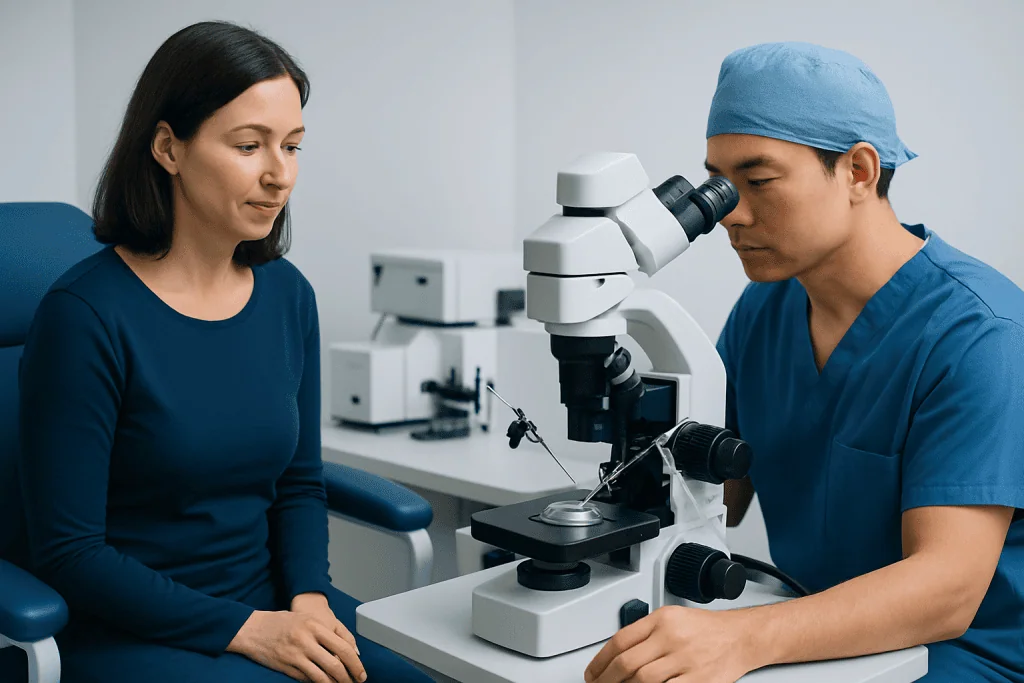
Women and people with ovaries are born with a finite number of eggs, and both egg number and egg quality decline with age. By the early 40s, the ovaries may respond less strongly to stimulation medications, meaning fewer eggs may be retrieved in an IVF cycle. At the same time, a larger share of eggs may have chromosome abnormalities, which can reduce the number of embryos suitable for transfer.
Age also affects the uterine and whole-body environment indirectly. Conditions that become more common with age, such as fibroids, endometriosis, thyroid disorders, high blood pressure, diabetes, or autoimmune conditions, may influence fertility or pregnancy health. Some people over 40 have excellent general health and a reassuring uterine assessment, while others need medical optimization before treatment.
Male partner or sperm factors should not be overlooked. Although sperm production continues with age, sperm count, movement, shape, and DNA integrity may change over time. A semen analysis is usually part of the evaluation, even when the main concern appears to be ovarian age.
Fertility Testing Before IVF After 40

Testing before IVF helps estimate how the ovaries may respond and whether there are treatable barriers to pregnancy. Ovarian reserve testing commonly includes anti-Müllerian hormone, known as AMH, and an antral follicle count by transvaginal ultrasound. Blood tests such as follicle-stimulating hormone and estradiol may also be checked early in the menstrual cycle. These tests cannot guarantee whether IVF will succeed, but they help guide medication choices and counseling.
A complete assessment may include thyroid and prolactin tests, screening for infections before fertility procedures, blood type and immunity checks, and review of medications and medical history. The uterus may be evaluated with ultrasound, saline infusion sonography, hysteroscopy, or other imaging if there is concern about polyps, fibroids, scar tissue, or congenital uterine differences. These findings can affect implantation and may need treatment before embryo transfer.
Testing often includes both partners when applicable. A semen analysis checks sperm concentration, motility, and morphology, and additional testing may be recommended in selected cases. Genetic carrier screening or karyotype testing may be discussed depending on personal history, recurrent pregnancy loss, family history, or local practice.
Patients who are researching female infertility evaluation should remember that test results are most useful when interpreted together. A low AMH, for example, may suggest fewer eggs will be retrieved, but it does not measure the health of every egg. Similarly, a normal ultrasound does not remove the age-related effect on embryo chromosomes.
IVF Treatment Options After 40
Standard IVF after 40 usually begins with ovarian stimulation. The patient takes fertility medications to encourage several follicles to grow at the same time. The fertility team monitors follicle development with ultrasound and blood tests, then schedules an egg retrieval when the follicles are ready. Retrieved eggs are fertilized in the laboratory, and embryos are observed for development before transfer or freezing.
Some patients are offered conventional insemination of eggs in the laboratory, while others may be advised to use intracytoplasmic sperm injection, or ICSI, especially when sperm parameters are abnormal or when previous fertilization has been low. During ICSI, a single sperm is injected directly into an egg. This can help with fertilization in selected situations, but it does not reverse the age-related changes in egg quality.
Embryo transfer may happen in the same cycle or in a later frozen embryo transfer cycle. Some clinics prefer freezing embryos and transferring later if hormone levels, uterine lining, genetic testing plans, or medical factors make a delayed transfer more appropriate. The number of embryos transferred should be carefully discussed because transferring more than one embryo may increase the chance of twins or higher-order pregnancy, which carries additional risks, especially after 40.
For some people, IVF with donor eggs may be discussed if ovarian reserve is very low, if repeated cycles do not produce viable embryos, or if the chance of success with one’s own eggs is very limited. Donor egg treatment is subject to local laws, ethical policies, and personal preferences. It can offer a different pathway to pregnancy because egg age is a major factor in embryo quality.
Embryo Testing and Realistic Expectations
Preimplantation genetic testing for aneuploidy, often called PGT-A, may be considered in IVF after 40 because the chance of embryos having missing or extra chromosomes increases with age. PGT-A involves taking a small sample from an embryo, usually at the blastocyst stage, and testing the chromosome number. The goal is to help select embryos more likely to implant and less likely to miscarry because of chromosome imbalance.
PGT-A can provide useful information, but it has limits. It does not improve the chromosome status of an embryo, and it does not guarantee implantation, pregnancy, or a healthy baby. Some cycles may produce no blastocysts for testing, or testing may show that no embryos are suitable for transfer. This possibility should be discussed before starting a cycle so that patients are emotionally and practically prepared.
Realistic expectations are central to good care. IVF success after 40 varies widely and depends on age, ovarian reserve, number of eggs retrieved, embryo development, sperm quality, uterine health, medical conditions, and previous fertility history. A person aged 40 may have a different outlook from someone aged 43 or 45, even though both are described as being over 40.
Many patients benefit from discussing a treatment plan that includes decision points. For example, the plan may state how many cycles using one’s own eggs feel reasonable, when to reconsider testing or medication protocols, and when to discuss donor eggs or other family-building options. This approach can reduce uncertainty and support informed choices throughout IVF treatment.
Pregnancy Health and Safety After 40
Pregnancy after 40 can be healthy, but it is generally monitored more closely. The risks of miscarriage, chromosomal conditions, gestational diabetes, high blood pressure, placenta-related problems, and cesarean birth are higher than in younger age groups. These risks do not mean that a patient should not try to conceive, but they do make preconception care and early pregnancy follow-up especially important.
Before IVF, a clinician may recommend reviewing chronic conditions, medications, vaccinations, weight, nutrition, blood pressure, blood sugar, and thyroid function. Some medications used for long-term health conditions may need adjustment before pregnancy, but patients should not stop prescribed medicines without medical advice. A preconception visit can also identify whether care from a maternal-fetal medicine specialist is advisable.
Once pregnant, patients may need individualized screening and monitoring. This may include early ultrasound, blood tests, screening or diagnostic testing for chromosomal conditions, and follow-up for blood pressure or glucose. Fertility clinics often coordinate with obstetricians after early pregnancy is confirmed so that care continues smoothly.
Lifestyle, Emotional Support, and Self-Care
Lifestyle choices cannot stop ovarian aging, but they can support general health and may improve readiness for treatment and pregnancy. Patients are usually encouraged to avoid smoking, limit alcohol, discuss caffeine intake with their doctor, maintain regular physical activity, and follow a balanced eating pattern. Folic acid or prenatal vitamins may be recommended before pregnancy, but supplement use should be discussed with a clinician, especially if other medical conditions are present.
Sleep, stress management, and emotional support also matter. IVF after 40 can involve time pressure, uncertain results, and difficult decisions about embryos, donor eggs, finances, or stopping treatment. Counseling, fertility support groups, and open communication with the care team may help patients feel less alone and more prepared.
Patients should be cautious about claims that special diets, supplements, or alternative treatments can restore egg quality or guarantee IVF success. Some supportive practices may improve wellbeing, but they should not replace evidence-based fertility care. Any supplement or herbal product should be reviewed with the fertility team because it may interact with medications or be unsafe in pregnancy.
When to See a Fertility Specialist
After 40, it is generally advisable to seek fertility advice promptly rather than waiting many months to see if conception happens naturally. A fertility specialist can review menstrual history, previous pregnancies, surgeries, medical conditions, and partner factors, then recommend targeted testing. Early evaluation can help preserve options and avoid delays when time is an important factor.
Medical consultation is especially important if there are irregular periods, known endometriosis, fibroids, previous ovarian surgery, recurrent miscarriage, pelvic infections, cancer treatment history, or abnormal semen analysis. People who have been trying to conceive for several months after 40, or who are considering fertility preservation or donor eggs, may also benefit from specialist guidance.
Acibadem International’s multidisciplinary specialists and JCI-accredited hospitals diagnose and treat infertility for international patients, including those considering infertility treatment after 40. Care should always be individualized, with clear discussion of expected benefits, limitations, alternatives, and pregnancy safety.
Frequently asked questions
Is IVF after 40 possible with my own eggs?
Yes, IVF after 40 may be possible with a person’s own eggs, but the chance of success becomes less predictable with age. Ovarian reserve testing, ultrasound findings, previous fertility history, and embryo development all help estimate whether this approach is reasonable.
What tests are most important before IVF after 40?
Common tests include AMH, antral follicle count by ultrasound, early-cycle hormone tests, uterine assessment, and semen analysis. Additional thyroid, prolactin, infectious disease, or genetic tests may be recommended depending on medical history and clinic protocols.
Does a low AMH mean IVF cannot work?
A low AMH usually suggests that the ovaries may produce fewer eggs during stimulation, but it does not prove that pregnancy is impossible. It should be interpreted together with age, ultrasound findings, menstrual history, and previous response to fertility treatment.
Can embryo genetic testing improve IVF success after 40?
Embryo genetic testing can help identify embryos with the expected number of chromosomes, which may support embryo selection. However, it does not repair embryos, guarantee implantation, or ensure a live birth, and some cycles may not produce embryos suitable for testing.
How many IVF cycles should someone try after 40?
There is no single correct number of cycles for everyone. The decision depends on ovarian response, embryo results, medical safety, emotional wellbeing, financial considerations, and whether alternatives such as donor eggs are acceptable to the patient or couple.
Is pregnancy after IVF over 40 considered high risk?
Pregnancy after 40 is often monitored more closely because risks such as miscarriage, gestational diabetes, high blood pressure, and chromosomal conditions are higher. Many people still have healthy pregnancies, especially with preconception planning and appropriate obstetric follow-up.
Should lifestyle changes be made before IVF after 40?
Healthy habits can support treatment readiness and pregnancy health, although they cannot reverse ovarian aging. Avoiding smoking, limiting alcohol, maintaining physical activity, eating a balanced diet, and reviewing medications and supplements with a doctor are practical steps.
References
- American Society for Reproductive Medicine
- European Society of Human Reproduction and Embryology
- American College of Obstetricians and Gynecologists
- Royal College of Obstetricians and Gynaecologists
- World Health Organization
This article is for general information only and is not a substitute for professional medical advice. Please consult a qualified doctor about your individual situation.
IVF & fertility treatment in Turkey — success rates and costs
JCI-accredited · board-certified surgeons · reply within 24h
Add us as a Preferred Source to see more of our trusted health content across Google Search, AI Overviews and Discover.
Check your numbers in seconds
BMI, calories, due date, blood pressure and 30+ more clinical calculators — free, instant, doctor-reviewed ranges.

Related Treatments
Related Conditions
More from the Health Library



Related Specialists

Prof. Dr. Bülent Tıraş
Gynecology & Obstetrics
Prof. Dr. Mete Güngör
Gynecology & Obstetrics
Prof. Dr. Faruk Suat Dede
Gynecology & Obstetrics
Prof. Dr. Tansu Küçük
Gynecology & Obstetrics