IVF After Tubal Ligation: Treatment Steps and Success Factors

Tubal ligation blocks or seals the fallopian tubes, but IVF can still allow pregnancy because fertilization happens in the laboratory and embryos are placed directly into the uterus. Age and egg quality are usually the strongest predictors of IVF success after tubal ligation.
Key Takeaways
- Tubal ligation blocks or seals the fallopian tubes, but IVF can still allow pregnancy because fertilization happens in the laboratory and embryos are placed directly into the uterus.
- Age and egg quality are usually the strongest predictors of IVF success after tubal ligation.
- Before treatment, doctors typically assess ovarian reserve, the uterus, hormone levels, and sperm health.
- IVF may be preferred over tubal reversal when the tubes were significantly damaged, when maternal age is higher, or when male-factor infertility is also present.
- A personalized fertility consultation helps compare IVF, tubal reversal, and other options based on medical history and reproductive goals.
IVF after tubal ligation is a well-established option for people who wish to become pregnant after having their tubes tied, because it bypasses the fallopian tubes entirely. The chance of success depends on several factors, especially age, ovarian reserve, sperm quality, embryo development, and uterine health.
Overview: Can IVF Work After Tubal Ligation?
IVF after tubal ligation is possible because in vitro fertilization does not require open fallopian tubes. In a natural pregnancy, an egg travels through the fallopian tube, where it may meet sperm and become fertilized. After tubal ligation, the tubes are cut, clipped, sealed, or otherwise blocked to prevent this meeting from happening.
During IVF, eggs are collected directly from the ovaries and fertilized with sperm in a laboratory. One or more embryos are then transferred into the uterus, where implantation may occur. Because the fallopian tubes are bypassed, a previous tubal ligation usually does not prevent IVF from being performed.
For many patients, IVF is considered when they wish to become pregnant after permanent contraception, when tubal reversal is not suitable, or when time is an important factor. The best approach depends on the patient’s age, ovarian reserve, type of tubal ligation, partner’s sperm health, and personal family-building goals.
Who May Consider IVF After Tubal Ligation?

IVF may be appropriate for people who have had their tubes tied and now want another child, including those whose life circumstances have changed. It may also be considered for patients who had tubal ligation many years earlier, when the remaining tube length may be uncertain or when reversal surgery is less likely to restore fertility.
Doctors often discuss IVF when the patient is in the mid-to-late reproductive years, because it can provide information about egg response and embryo development within a shorter time frame than waiting for natural conception after reversal. IVF may also be helpful when there are additional fertility factors, such as low sperm count, ovulation disorders, endometriosis, or reduced ovarian reserve.
Some patients ask whether tubal ligation must be reversed before IVF. In most cases, reversal is not necessary for IVF. However, if a fluid-filled tube called a hydrosalpinx is present, it may reduce implantation chances, and the fertility specialist may recommend treating the tube before embryo transfer.
IVF Treatment Steps After Tubal Ligation
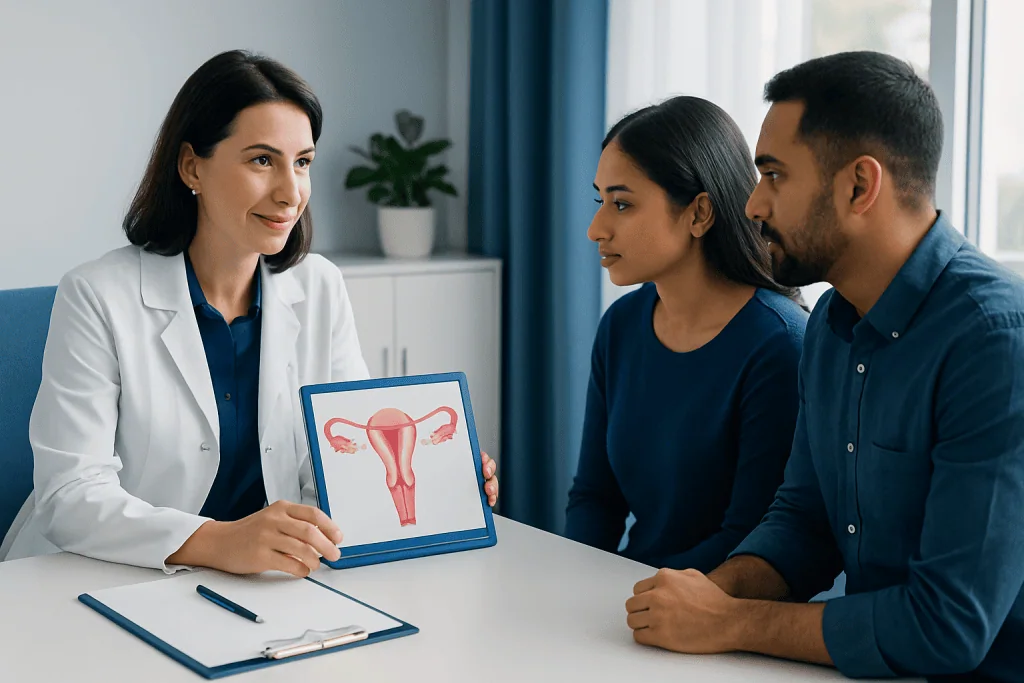
The first step is a fertility consultation and evaluation. The doctor reviews the tubal ligation history, menstrual pattern, previous pregnancies, surgeries, medical conditions, medications, and any fertility history for both partners. This visit helps determine whether IVF treatment is the most suitable option or whether another approach should also be discussed.
Next, ovarian stimulation is planned. The patient takes fertility medications to encourage multiple eggs to mature in the ovaries during one cycle. Monitoring with ultrasound and blood tests helps the care team follow follicle growth and hormone levels. When the eggs are ready, an injection is given to trigger final maturation, and egg retrieval is scheduled.
Egg retrieval is a short procedure performed with ultrasound guidance. The collected eggs are combined with sperm in the laboratory. In some cases, especially when sperm count, movement, or shape is reduced, the embryology team may use ICSI to inject a single sperm into each mature egg. Fertilized eggs are then monitored as embryos develop over several days.
Finally, an embryo is transferred into the uterus using a thin catheter. The procedure is usually brief and does not involve the fallopian tubes. Extra suitable embryos may be frozen for future use. A pregnancy blood test is performed after the transfer at the time recommended by the clinic.
Success Factors: What Affects the Chances of Pregnancy?
The most important success factor is often the age of the person providing the eggs. Egg number and egg quality generally decline with age, and embryo chromosomal health is closely related to egg age. This is why two people with the same tubal ligation history may have different IVF outcomes.
Ovarian reserve is another key factor. Tests such as anti-Müllerian hormone, antral follicle count, and sometimes follicle-stimulating hormone can help estimate how the ovaries may respond to stimulation. These tests do not guarantee pregnancy, but they help doctors choose medication protocols and set realistic expectations.
Sperm health also matters. Semen analysis evaluates sperm count, movement, and shape. If a male-factor issue is found, treatment planning may include ICSI, lifestyle guidance, or referral to a urology specialist. Embryo quality, laboratory conditions, and the skill of the fertility team also contribute to the overall chance of success.
The uterus must be able to support implantation and pregnancy. Fibroids that distort the uterine cavity, polyps, scar tissue, chronic inflammation, or untreated hydrosalpinx can affect outcomes. Identifying and treating these issues before embryo transfer may improve the conditions for implantation.
Tests and Preparation Before IVF
Before starting treatment, fertility specialists usually request a set of tests to build a personalized plan. These may include hormone blood tests, ultrasound assessment of the ovaries and uterus, infectious disease screening, blood type testing, and semen analysis. Depending on age and history, additional tests may be recommended.
Uterine evaluation is especially important before embryo transfer. This may involve transvaginal ultrasound, saline sonography, hysteroscopy, or other imaging based on the patient’s medical background. The goal is to confirm that the uterine cavity appears suitable for embryo implantation.
Patients should also share records from the tubal ligation if available, including the method used and any operative notes. IVF can usually proceed even without these records, but they can be useful if the doctor suspects a hydrosalpinx or if the patient wants to compare IVF with tubal reversal surgery.
Preparation also includes reviewing general health. Conditions such as thyroid disease, diabetes, high blood pressure, anemia, or significant weight changes may need attention before pregnancy. A preconception visit allows the doctor to discuss folic acid, medication safety, vaccination status, and pregnancy-related risks in a calm and practical way.
IVF vs Tubal Reversal: How Doctors Compare Options
Tubal reversal is surgery that attempts to reconnect the fallopian tubes so that natural conception may occur. It can be a reasonable option for some patients, especially if they are younger, have a good length of healthy tube remaining, have no other fertility factors, and prefer the possibility of more than one natural pregnancy.
IVF may be preferred when the tubes were extensively removed or damaged, when there is a history of ectopic pregnancy, when the patient is older, or when another fertility factor is present. IVF also allows fertilization and embryo development to be observed in the laboratory, which can provide useful information during treatment.
Both approaches have advantages and limitations. Tubal reversal requires surgery and healing time, and pregnancy may not happen quickly. IVF involves medications, monitoring, egg retrieval, and embryo transfer, but it bypasses the tubes and may be more direct for some patients. A fertility specialist can explain the likely benefits and trade-offs based on the patient’s individual situation.
The choice is personal and medical. Couples or individuals should feel comfortable asking about expected timelines, tests, procedures, risks, and whether female infertility or male-factor issues may influence the plan.
Safety, Self-Care, and When to See a Doctor
IVF is widely used, but it is still a medical treatment that requires individualized supervision. Possible side effects of stimulation medications include bloating, mood changes, breast tenderness, and temporary pelvic discomfort. Rarely, the ovaries may over-respond to medication, so monitoring is important throughout the cycle.
Pregnancy after IVF is monitored carefully, including confirmation of pregnancy location. Although IVF places embryos in the uterus, ectopic pregnancy can still occur rarely, including in a remaining tubal segment. Patients should contact their doctor promptly if they have significant pelvic pain, heavy bleeding, dizziness, or symptoms that feel concerning.
Self-care during IVF focuses on supporting overall health rather than trying unproven methods. Helpful steps may include stopping smoking, limiting alcohol, maintaining a balanced diet, sleeping well, following medication instructions exactly, and attending all monitoring appointments. Supplements and herbal products should be discussed with the doctor because some may interfere with treatment or pregnancy.
A fertility consultation is appropriate whenever a person wishes to become pregnant after tubal ligation. Acibadem International’s multidisciplinary specialists and JCI-accredited hospitals evaluate and treat infertility for international patients, including those considering IVF after tubal ligation, with care plans based on medical assessment and patient goals.
Frequently asked questions
Can a person get pregnant with IVF after tubal ligation?
Yes. IVF can work after tubal ligation because it bypasses the fallopian tubes. Eggs are retrieved from the ovaries, fertilized with sperm in a laboratory, and an embryo is transferred directly into the uterus.
Does tubal ligation need to be reversed before IVF?
Usually, no. IVF does not require open tubes, so reversal is not typically needed. However, if there is a hydrosalpinx or another tubal problem that may affect implantation, the doctor may recommend treating it before embryo transfer.
Is IVF or tubal reversal better after having tubes tied?
There is no single best choice for everyone. IVF may be more suitable when age is a concern, the tubes were significantly damaged, or there are other fertility factors. Tubal reversal may be considered for some younger patients with healthy remaining tubes who hope for natural conception.
What is the biggest factor in IVF success after tubal ligation?
The age and egg quality of the person providing the eggs are usually the strongest factors. Ovarian reserve, sperm quality, embryo development, uterine health, and any medical conditions also influence the chance of pregnancy.
Can IVF after tubal ligation increase the risk of ectopic pregnancy?
IVF lowers the need for the fallopian tubes, but ectopic pregnancy can still happen rarely. This is why early pregnancy monitoring is important after a positive test. Patients should report severe pain, heavy bleeding, or dizziness to their doctor promptly.
How long does the IVF process take after tubal ligation?
A typical IVF cycle includes evaluation, ovarian stimulation, monitoring, egg retrieval, fertilization, embryo culture, and embryo transfer. The active treatment cycle often takes several weeks, but the full timeline varies depending on testing, scheduling, whether embryos are frozen, and whether any uterine or medical issues need treatment first.
References
- American Society for Reproductive Medicine
- European Society of Human Reproduction and Embryology
- American College of Obstetricians and Gynecologists
- National Institute for Health and Care Excellence
- Centers for Disease Control and Prevention
This article is for general information only and is not a substitute for professional medical advice. Please consult a qualified doctor about your individual situation.
IVF & fertility treatment in Turkey — success rates and costs
JCI-accredited · board-certified surgeons · reply within 24h
Add us as a Preferred Source to see more of our trusted health content across Google Search, AI Overviews and Discover.
Check your numbers in seconds
BMI, calories, due date, blood pressure and 30+ more clinical calculators — free, instant, doctor-reviewed ranges.

Related Treatments
Related Conditions
More from the Health Library



Related Specialists

Prof. Dr. Bülent Tıraş
Gynecology & Obstetrics
Prof. Dr. Mete Güngör
Gynecology & Obstetrics
Prof. Dr. Faruk Suat Dede
Gynecology & Obstetrics
Prof. Dr. Tansu Küçük
Gynecology & Obstetrics