IVF After Tubal Ligation: When Assisted Reproduction May Be Preferred

Tubal ligation is intended to be permanent, but pregnancy may still be possible through IVF or, in selected cases, tubal reversal surgery. IVF does not require open fallopian tubes because eggs are collected from the ovaries, fertilized in the laboratory, and transferred directly into the uterus.
Key Takeaways
- Tubal ligation is intended to be permanent, but pregnancy may still be possible through IVF or, in selected cases, tubal reversal surgery.
- IVF does not require open fallopian tubes because eggs are collected from the ovaries, fertilized in the laboratory, and transferred directly into the uterus.
- IVF may be preferred when the woman is older, tubal damage is extensive, ovarian reserve is reduced, or male factor infertility is present.
- A fertility evaluation usually includes ovarian reserve testing, pelvic ultrasound, semen analysis, and assessment of the uterus.
- The best choice between IVF and reversal depends on age, health history, type of tubal ligation, pregnancy goals, and specialist advice.
IVF after tubal ligation is a well-established option for women who wish to become pregnant after having their tubes tied. Because IVF bypasses the fallopian tubes, it may be preferred over surgical reversal in certain medical, age-related, or fertility-related situations.
Overview
Tubal ligation, often called having the tubes tied, is a form of permanent contraception in which the fallopian tubes are cut, sealed, clipped, or blocked. The goal is to prevent eggs from meeting sperm. Later in life, some women decide they would like to try for pregnancy because of a change in family plans, a new relationship, or personal reasons.
There are two main paths to pregnancy after tubal ligation: surgical tubal reversal and in vitro fertilization, or IVF. Tubal reversal attempts to reconnect the fallopian tubes so conception may occur naturally. IVF after tubal ligation takes a different approach: it bypasses the tubes altogether. Eggs are retrieved from the ovaries, fertilized with sperm in a laboratory, and an embryo is transferred into the uterus.
Both options can be appropriate, but they are not interchangeable for every patient. The decision depends on the woman’s age, ovarian reserve, the type of tubal ligation, overall reproductive health, partner sperm quality, previous pregnancies, and whether the couple hopes for one child or more than one. A fertility specialist can help compare the likely benefits, limitations, timing, and medical considerations of each approach.
How IVF Works After Tubal Ligation
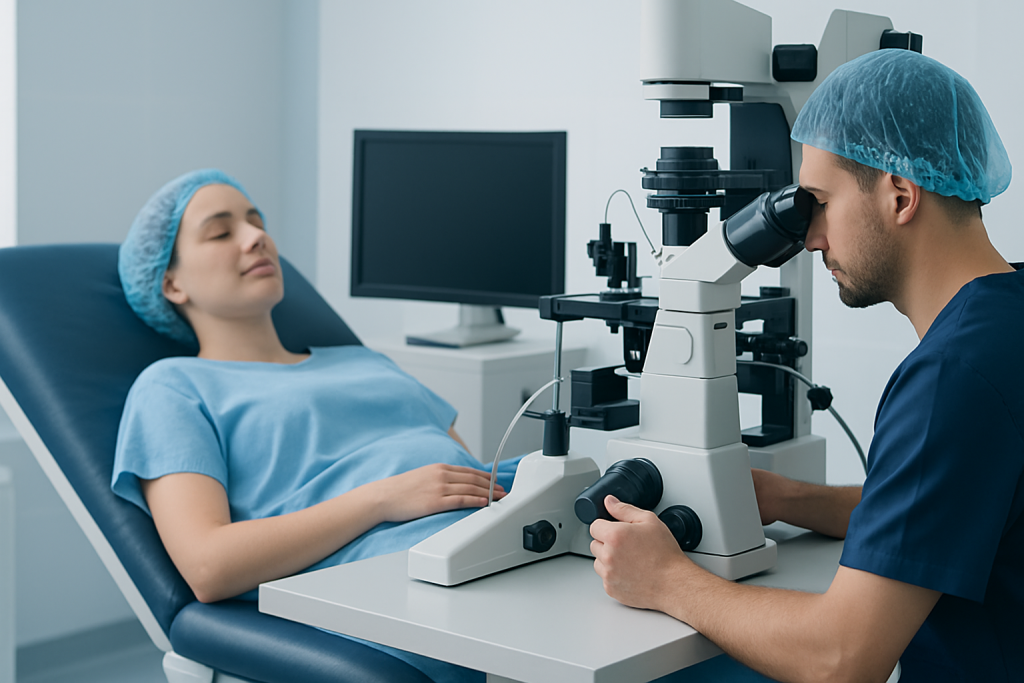
IVF is possible after tubal ligation because the fallopian tubes are not needed for the main steps of treatment. In a natural cycle, the ovary releases an egg, the fallopian tube captures it, and fertilization usually occurs inside the tube. With IVF, fertility medications stimulate the ovaries to mature several eggs, which are then collected using a minor procedure guided by ultrasound.
The eggs are combined with sperm in an embryology laboratory. In some cases, sperm are placed directly into an egg using intracytoplasmic sperm injection, known as ICSI, especially when sperm count, movement, or shape is reduced. Embryos are monitored for development, and one or sometimes more are transferred into the uterus at the appropriate time. If an embryo implants in the uterine lining, pregnancy can begin without the fallopian tubes being open.
This is why IVF treatment is often discussed early for women who have had tubal ligation. It can be particularly useful when the tubes were removed, severely damaged, or blocked in a way that cannot be reliably repaired. IVF may also shorten the time to treatment compared with having reversal surgery first and then trying to conceive naturally for several months.
When IVF May Be Preferred Over Tubal Reversal

IVF may be preferred when the chance of a successful tubal repair is lower or when time is an important factor. Age is one of the most important considerations. As ovarian reserve and egg quality decline with age, waiting many months after a reversal to see whether natural conception occurs may not be the best strategy for some patients. IVF allows the fertility team to evaluate ovarian response and embryos more directly.
The type of tubal ligation also matters. Reversal may be more feasible when enough healthy tube remains on both sides and the fimbrial ends near the ovaries are intact. IVF may be more practical if the tubes were removed, extensively cauterized, or damaged by infection, endometriosis, or prior pelvic surgery. IVF may also be preferred when there is a history of ectopic pregnancy, because damaged tubes can increase the chance that a pregnancy implants outside the uterus after reversal.
Male factor infertility is another common reason to consider IVF. If semen analysis shows low sperm count or reduced motility, reconnecting the tubes may not solve the full fertility problem. In these cases, IVF with laboratory fertilization techniques may address both tubal blockage and sperm-related factors. IVF may also be favored when a couple wants a clearer timeline or when additional fertility conditions are present.
- Older reproductive age or reduced ovarian reserve
- Extensive tubal damage or removal of the tubes
- Male factor infertility on semen analysis
- History of pelvic infection, endometriosis, or adhesions
- Need to avoid a long period of trying naturally after surgery
- Desire for embryo testing in selected medical situations
Who May Still Consider Tubal Reversal
Tubal reversal may be a reasonable option for selected women, especially those who are younger, have good ovarian reserve, have no major fertility problems, and had a type of tubal ligation that left enough healthy tube to reconnect. It may also appeal to patients who hope to have more than one pregnancy naturally without repeating IVF cycles. However, reversal is a surgical procedure and requires careful preoperative assessment.
Before recommending reversal, a specialist usually reviews the operative report from the tubal ligation, if available. The report can show whether rings, clips, cautery, or removal were used and how much tube may remain. Imaging or laparoscopy may sometimes be considered, although the exact plan varies by case and center. The partner’s semen analysis is also important because tubal surgery does not treat sperm-related infertility.
Even after technically successful reversal, pregnancy is not guaranteed, and conception may take time. There is also a higher risk of ectopic pregnancy compared with the general population, so early pregnancy monitoring is essential. For this reason, the choice between reversal and IVF should be personalized rather than based only on the desire to avoid IVF or surgery.
Fertility Evaluation Before Choosing a Treatment
A complete fertility evaluation helps determine whether IVF after tubal ligation, tubal reversal, or another approach is most suitable. The evaluation usually begins with a detailed medical and reproductive history, including age at tubal ligation, previous pregnancies, menstrual cycle pattern, surgeries, pelvic infections, endometriosis, and any known medical conditions. If available, records from the original tubal ligation are very helpful.
Ovarian reserve testing is commonly performed. This may include blood tests such as anti-Müllerian hormone, sometimes called AMH, and ultrasound assessment of the antral follicle count. These tests do not predict pregnancy with certainty, but they help estimate how the ovaries may respond to IVF medications. Additional hormone tests may be recommended if periods are irregular or if thyroid, prolactin, or other endocrine concerns are suspected.
The uterus should also be assessed because embryo implantation occurs in the uterine cavity. Ultrasound, saline sonography, or hysteroscopy may be used to evaluate fibroids, polyps, scarring, or congenital uterine differences. A semen analysis is equally important, even if the couple has conceived before. Many couples benefit from a broader infertility evaluation because fertility can change over time for both partners.
Treatment Options and What to Expect
When IVF is chosen, treatment usually starts with ovarian stimulation. The patient uses hormone medications for several days so that multiple follicles may mature in the ovaries. During this period, the fertility team monitors follicle growth and hormone levels with ultrasound and blood tests. When the follicles are ready, a trigger medication is given, and egg retrieval is scheduled.
Egg retrieval is typically performed with ultrasound guidance through the vagina while the patient receives appropriate anesthesia or sedation. The eggs are then fertilized with sperm in the laboratory. Embryos may be transferred a few days later or frozen for transfer in a later cycle, depending on medical circumstances, hormone levels, embryo development, and the clinic’s protocol. Some patients may have extra embryos suitable for freezing for future attempts.
If tubal reversal is chosen, surgery is usually performed using microsurgical or minimally invasive techniques when appropriate. Recovery time, surgical risks, and the likelihood of pregnancy depend on the individual situation. After reversal, patients generally try to conceive naturally, and early pregnancy testing is important so the location of the pregnancy can be confirmed.
Other treatments, such as intrauterine insemination, are usually not helpful if both tubes are blocked or tied because the sperm still need open tubes to reach the egg. However, if a woman had partial tubal surgery and at least one tube is open, the fertility specialist may discuss options based on the full diagnosis. The most appropriate plan is one that addresses all identified factors, not only the history of tubal ligation.
Success Factors, Risks, and Emotional Considerations
The chance of pregnancy after tubal ligation treatment depends on several factors. For IVF, important influences include the woman’s age, ovarian reserve, egg and sperm quality, embryo development, uterine health, and previous response to fertility medications. For tubal reversal, important influences include age, remaining tubal length, surgical technique, sperm quality, and whether there are adhesions or other pelvic conditions.
IVF carries medical considerations such as ovarian response that is lower or higher than expected, the need for injections and monitoring, and the possibility that not every egg will fertilize or develop into a transferable embryo. Multiple pregnancy is another consideration, especially when more than one embryo is transferred. Many fertility programs use careful embryo transfer planning to reduce this risk while maintaining a patient-centered approach.
Tubal reversal involves surgical and anesthesia-related risks, as well as the possibility of ectopic pregnancy. It may also require additional time before pregnancy occurs. Some patients find the choice emotionally complex because it can involve financial planning, previous decisions about permanent contraception, relationship changes, and uncertainty. Supportive counseling and clear communication with the care team can make decision-making easier.
Acibadem International’s multidisciplinary fertility specialists and JCI-accredited hospitals evaluate and treat female infertility for international patients, including those considering pregnancy after tubal ligation. Patients should receive individualized guidance based on records, test results, medical history, and personal goals.
Prevention, Self-Care, and When to See a Doctor
There is no home method to reopen fallopian tubes after tubal ligation, and supplements or lifestyle changes cannot reverse the procedure. However, general health can support fertility treatment and pregnancy planning. Patients are usually advised to avoid smoking, limit alcohol, aim for a healthy weight, manage chronic conditions such as diabetes or thyroid disease, and review all medications with a doctor before trying to conceive.
Preconception care is especially important after a previous sterilization procedure because the fertility plan may involve surgery, IVF medications, or early pregnancy monitoring. Folic acid or prenatal vitamins may be recommended before pregnancy, but patients should ask their clinician which supplement is appropriate. Vaccination status, blood pressure, blood sugar, and genetic carrier screening may also be discussed depending on personal and family history.
A doctor or fertility specialist should be consulted if a woman has had tubal ligation and is considering pregnancy, particularly if she is over 35, has irregular periods, has known endometriosis or pelvic surgery, or has a partner with possible sperm concerns. Urgent medical attention is needed for severe pelvic pain, fainting, shoulder pain, or heavy bleeding after a positive pregnancy test, because ectopic pregnancy must be ruled out. Early specialist advice can help patients choose a safe and realistic path forward.
Frequently asked questions
Can a woman get pregnant with IVF after tubal ligation?
Yes. IVF can make pregnancy possible after tubal ligation because it bypasses the fallopian tubes. Eggs are collected from the ovaries, fertilized in a laboratory, and an embryo is placed directly into the uterus.
Is IVF better than tubal reversal?
Neither option is automatically better for every patient. IVF may be preferred when age, tubal damage, reduced ovarian reserve, or male factor infertility lowers the chance of natural conception after reversal. Tubal reversal may be reasonable for selected younger women with healthy remaining tubes and no other fertility problems.
Does the type of tubal ligation affect the choice?
Yes. Clips or rings may leave more healthy tube for possible reversal, while extensive cautery or removal of part or all of the tubes may make reversal difficult or impossible. Operative records from the original procedure can help the specialist advise on the most suitable approach.
Are the fallopian tubes needed for IVF?
No. IVF does not require open fallopian tubes because fertilization occurs outside the body. The embryo is transferred into the uterus, where implantation may occur if conditions are favorable.
What tests are needed before IVF after tubal ligation?
Common tests include ovarian reserve blood tests, pelvic ultrasound, semen analysis, and evaluation of the uterine cavity. The doctor may also review previous surgical records and screen for general health conditions that can affect pregnancy.
Is there a higher risk of ectopic pregnancy after tubal ligation reversal?
Yes, ectopic pregnancy risk can be higher after tubal reversal because the repaired tube may not function normally. Any positive pregnancy test after reversal should be followed by early medical monitoring to confirm that the pregnancy is located in the uterus.
How soon should someone see a fertility specialist after deciding to try for pregnancy?
It is reasonable to see a fertility specialist as soon as pregnancy is being considered after tubal ligation. Early evaluation is especially important for women over 35, those with irregular periods, known pelvic disease, or a partner with possible sperm concerns.
References
- American Society for Reproductive Medicine
- European Society of Human Reproduction and Embryology
- American College of Obstetricians and Gynecologists
- National Institute for Health and Care Excellence
- Centers for Disease Control and Prevention
This article is for general information only and is not a substitute for professional medical advice. Please consult a qualified doctor about your individual situation.
IVF & fertility treatment in Turkey — success rates and costs
JCI-accredited · board-certified surgeons · reply within 24h
Add us as a Preferred Source to see more of our trusted health content across Google Search, AI Overviews and Discover.

Related Treatments
Related Conditions
More from the Health Library



Related Specialists

Prof. Dr. Bülent Tıraş
Gynecology & Obstetrics
Prof. Dr. Mete Güngör
Gynecology & Obstetrics
Prof. Dr. Faruk Suat Dede
Gynecology & Obstetrics
Prof. Dr. Tansu Küçük
Gynecology & Obstetrics