IVF With Adenomyosis: Diagnosis, Treatment Planning, and Expectations

Adenomyosis is a condition in which endometrial-like tissue grows within the muscular wall of the uterus, sometimes affecting implantation and miscarriage risk. Transvaginal ultrasound and, when needed, pelvic MRI are commonly used to diagnose and map adenomyosis before IVF.
Key Takeaways
- Adenomyosis is a condition in which endometrial-like tissue grows within the muscular wall of the uterus, sometimes affecting implantation and miscarriage risk.
- Transvaginal ultrasound and, when needed, pelvic MRI are commonly used to diagnose and map adenomyosis before IVF.
- IVF planning may include symptom control, hormonal pretreatment, frozen embryo transfer, or surgery in selected cases.
- Age, ovarian reserve, embryo quality, and coexisting conditions such as endometriosis or fibroids remain important for prognosis.
- Patients should discuss benefits, limits, timing, and potential side effects of any pretreatment with a fertility specialist.
Adenomyosis can make fertility treatment more complex, but many patients still pursue IVF successfully with careful diagnosis and individualized planning. Treatment decisions usually depend on age, symptoms, uterine findings, embryo quality, and whether other fertility factors are present.
Overview: What Adenomyosis Means for IVF
Adenomyosis is a benign uterine condition in which tissue similar to the lining of the uterus is found within the uterine muscle. This can cause the uterus to become enlarged, tender, or inflamed. Some people have clear symptoms, while others only learn about adenomyosis during fertility testing or pelvic imaging.
For patients considering IVF with adenomyosis, the main question is whether the condition may affect implantation, pregnancy continuation, or overall treatment planning. Research suggests that adenomyosis may be associated with lower implantation rates and a higher risk of miscarriage in some patients, but outcomes vary widely. The severity and type of adenomyosis, age, embryo quality, and other fertility factors all influence expectations.
IVF is still a reasonable option for many people with adenomyosis. The goal is not only to create embryos, but also to prepare the uterus as well as possible for embryo transfer. This is why diagnosis, mapping of the uterus, and individualized planning are central to IVF treatment in patients with suspected or confirmed adenomyosis.
Symptoms and How Adenomyosis Is Suspected

Adenomyosis can be silent, especially in people undergoing fertility evaluation for another reason. When symptoms are present, they often overlap with other gynecologic conditions, including endometriosis and fibroids. This overlap is one reason a structured assessment is important before starting or continuing IVF.
Common symptoms may include heavy menstrual bleeding, painful periods, pelvic pressure, bloating, pain during intercourse, or chronic pelvic discomfort. Some patients notice that their periods have become progressively more painful or heavier over time. Others may have recurrent implantation failure or pregnancy loss, leading the fertility team to look more closely at the uterine wall.
Symptoms alone cannot confirm adenomyosis. A person may have severe menstrual pain from endometriosis without adenomyosis, or adenomyosis with only mild symptoms. In fertility care, the diagnosis is usually considered together with ovarian reserve, semen analysis, tubal history, embryo development, and previous treatment results for female infertility.
Diagnosis Before IVF: Ultrasound, MRI, and Fertility Work-up
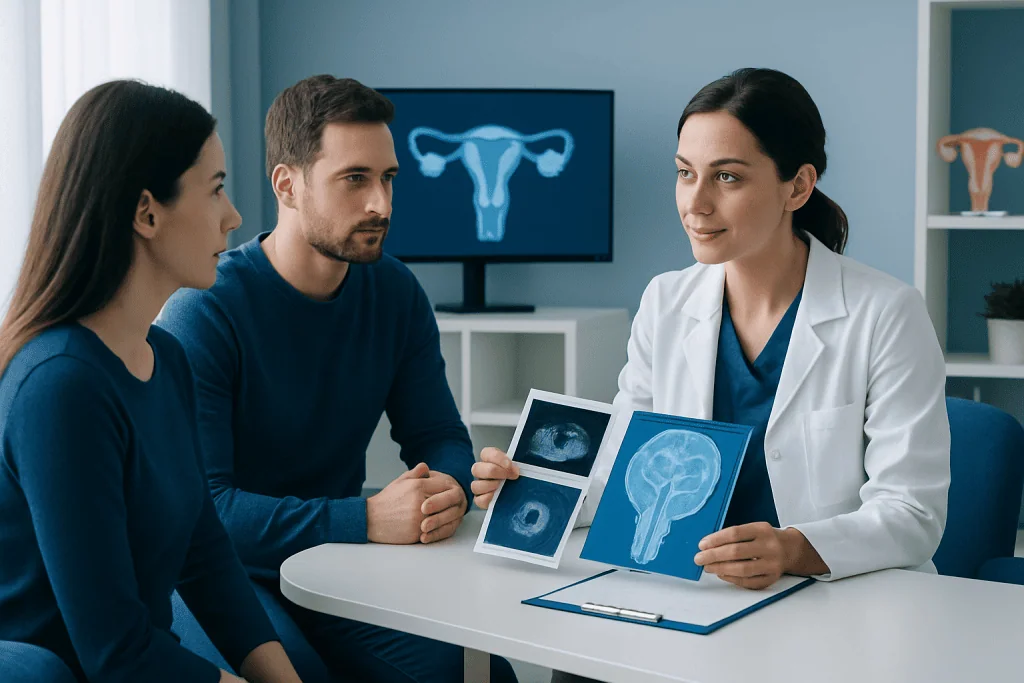
The first-line imaging test for suspected adenomyosis is usually transvaginal ultrasound performed by a clinician experienced in gynecologic imaging. Ultrasound may show features such as an enlarged or globular uterus, asymmetry of the uterine walls, small cyst-like spaces within the muscle, fan-shaped shadowing, or an irregular junction between the endometrium and myometrium.
Pelvic MRI can be helpful when ultrasound findings are unclear, when the uterus is difficult to assess, or when treatment planning depends on better mapping. MRI can show the junctional zone, the depth and distribution of adenomyosis, and whether the disease appears focal or diffuse. It may also help distinguish adenomyosis from fibroids or identify coexisting endometriosis.
A complete IVF assessment usually includes hormone testing for ovarian reserve, antral follicle count, semen analysis, review of prior pregnancies or losses, and evaluation of the uterine cavity. Depending on the case, hysteroscopy or saline ultrasound may be used to look for polyps, submucosal fibroids, adhesions, or other cavity abnormalities that can affect implantation.
- Focal adenomyosis affects a limited area and may sometimes be discussed in relation to surgery.
- Diffuse adenomyosis is spread more broadly through the uterine muscle and is usually managed medically rather than surgically.
- Coexisting conditions, such as endometriosis or fibroids, can change both symptoms and IVF planning.
How Adenomyosis May Affect Fertility and IVF Outcomes
Adenomyosis may affect fertility through several possible mechanisms. These include changes in uterine contractions, inflammation within the uterine muscle, altered blood flow, and changes in the endometrial environment needed for implantation. In some patients, adenomyosis may also be associated with endometriosis, which can affect eggs, pelvic anatomy, and pain.
In IVF, the embryo can be created in the laboratory, which helps bypass some fertility barriers such as tubal disease or certain sperm factors. However, the embryo still needs a receptive uterine environment after transfer. This is why adenomyosis is mainly discussed in relation to implantation, early pregnancy loss, and obstetric monitoring rather than fertilization alone.
It is important to keep expectations balanced. Adenomyosis does not mean IVF cannot work, and not every patient with adenomyosis will have poor outcomes. At the same time, some people may need additional planning, more than one embryo transfer, or treatment of symptoms before transfer. Age and embryo chromosome status remain major drivers of IVF success, especially after the mid-30s.
If male factor infertility is also present, the laboratory approach may include intracytoplasmic sperm injection, depending on semen findings and the fertility specialist’s recommendation. This may help fertilization in selected cases, but it does not directly treat the uterine effects of adenomyosis.
Treatment Planning Before Embryo Transfer
Treatment planning for IVF with adenomyosis is individualized. The fertility team considers symptom severity, ultrasound or MRI findings, ovarian reserve, age, embryo number and quality, previous IVF history, and whether the patient is planning a fresh or frozen embryo transfer. In many cases, embryo creation and uterine preparation are considered as two related but separate steps.
Hormonal pretreatment may be recommended for some patients, particularly those with significant adenomyosis or previous implantation failure. Options can include medications that temporarily suppress ovarian hormone activity, such as gonadotropin-releasing hormone agonists, or progestin-based approaches. These treatments aim to reduce uterine inflammation and adenomyosis activity before embryo transfer, but they are not suitable for everyone and may delay transfer.
A frozen embryo transfer strategy is sometimes used because it allows time to treat or stabilize adenomyosis after eggs are collected and embryos are created. This approach may be helpful when a patient’s ovaries should not be delayed, but the uterus may benefit from preparation before transfer. The best timing depends on clinical findings and patient priorities.
Surgery is not routinely used for all adenomyosis. It may be considered in selected cases of focal adenomyosis, severe symptoms, or a localized adenomyoma, but it can carry risks such as uterine scarring or weakening. For diffuse adenomyosis, medical management is more common. Procedures that may affect uterine blood supply are approached cautiously in people who still wish to carry a pregnancy.
What to Expect During IVF and Pregnancy Planning
Patients with adenomyosis usually follow the same main IVF steps as other patients: ovarian stimulation, egg retrieval, fertilization, embryo culture, and embryo transfer. The difference is that the transfer stage may be timed more carefully, especially if pretreatment is used. Some patients may proceed with a fresh transfer, while others may freeze embryos and transfer later.
Before transfer, the doctor may reassess the uterus, review symptoms, and confirm that the endometrial lining is appropriate. If there have been previous failed transfers or miscarriages, the team may also review embryo quality, genetic testing options where appropriate, thyroid status, metabolic health, and other factors that can influence implantation and pregnancy.
Pregnancy after adenomyosis may need attentive obstetric follow-up. Most patients who conceive are monitored in the usual way, but the care team may be more alert to pain, bleeding, uterine contractions, placental location, or growth concerns depending on the individual history. Patients should not assume complications will occur, but it is helpful to have coordinated fertility and obstetric care.
Emotional expectations also matter. IVF can be demanding, and adenomyosis may add uncertainty about timing or the need for pretreatment. Clear communication with the fertility team can help patients understand why a delay, medication, or frozen transfer strategy is being recommended.
Self-care, Lifestyle, and Supportive Measures
Self-care cannot cure adenomyosis, but it can support overall fertility treatment and help patients feel more in control. Regular sleep, balanced nutrition, gentle physical activity, and avoiding smoking are all useful foundations for reproductive health. Patients with heavy bleeding should ask whether iron levels need to be checked, as low iron can worsen fatigue.
Pain management should be discussed with a doctor, especially while trying to conceive or preparing for embryo transfer. Some pain medicines may not be appropriate at certain times in the cycle or during pregnancy. Heat therapy, relaxation techniques, pelvic floor physical therapy, and careful activity pacing may help some people manage symptoms alongside medical care.
Patients should tell their fertility specialist about all medications, supplements, and herbal products they use. Some supplements can interact with fertility medications or may not be recommended during pregnancy. A safe plan is one that is coordinated with the medical team rather than added independently during IVF.
- Track menstrual pain, bleeding, and cycle changes before appointments.
- Bring prior ultrasound, MRI, surgery, and IVF records if available.
- Ask whether adenomyosis appears focal or diffuse and how that affects planning.
- Discuss whether fresh transfer or frozen embryo transfer is preferred in the individual case.
When to See a Fertility Specialist
A fertility specialist should be consulted if a person with known or suspected adenomyosis has been trying to conceive without success, has recurrent pregnancy loss, has severe menstrual symptoms, or is planning IVF after prior failed embryo transfers. Early assessment is especially important for patients of advanced reproductive age or those with low ovarian reserve, because delaying egg retrieval may reduce options.
Medical advice is also important if periods are very heavy, pain is worsening, anemia is suspected, or imaging has shown an enlarged uterus, adenomyoma, fibroids, or endometriosis. A specialist can help determine which findings are likely to matter for IVF and which can simply be monitored.
At Acibadem International, multidisciplinary specialists in JCI-accredited hospitals evaluate and treat fertility conditions, including adenomyosis-related infertility, for international patients. Care may involve reproductive endocrinologists, gynecologic surgeons, imaging specialists, embryologists, and obstetric teams, depending on the patient’s needs.
Patients should seek urgent medical care for severe sudden pelvic pain, very heavy bleeding with dizziness or fainting, fever, or a positive pregnancy test with significant pain or bleeding. These symptoms do not necessarily mean a serious problem is present, but they should be assessed promptly and safely.
Frequently asked questions
Can IVF work if a patient has adenomyosis?
Yes, IVF can work in patients with adenomyosis, but treatment may need more individualized planning. Outcomes depend on age, ovarian reserve, embryo quality, severity of adenomyosis, and whether other conditions such as endometriosis or fibroids are present.
Should adenomyosis be treated before IVF?
Not every patient needs treatment before IVF. Pretreatment may be considered when adenomyosis is significant, symptoms are severe, or there have been failed transfers or miscarriages. The decision should balance possible benefits with time, side effects, and the patient’s ovarian reserve.
Is MRI always needed before IVF with adenomyosis?
MRI is not always required. A high-quality transvaginal ultrasound may be enough in many cases. MRI can be useful when ultrasound is unclear, when the uterus is enlarged, or when the treatment plan depends on accurately mapping the disease.
Does adenomyosis affect egg quality?
Adenomyosis mainly affects the uterus rather than the eggs. However, it can coexist with endometriosis or other factors that may influence ovarian reserve or egg quality. This is why a complete fertility work-up is important.
Is frozen embryo transfer better for adenomyosis?
Frozen embryo transfer may be helpful for some patients because it allows time for uterine pretreatment before transfer. It is not automatically better for everyone. The choice between fresh and frozen transfer should be based on symptoms, imaging findings, embryo development, and the doctor’s assessment.
Can surgery improve IVF results in adenomyosis?
Surgery may be considered only in selected cases, especially when adenomyosis is focal or forms a localized adenomyoma. It is not routinely recommended for diffuse adenomyosis because surgery can be complex and may affect the uterine wall. A fertility-focused gynecologic surgeon should review risks and benefits before any decision.
What questions should patients ask before starting IVF with adenomyosis?
Useful questions include whether the adenomyosis is focal or diffuse, whether MRI is needed, whether pretreatment is recommended, and whether a fresh or frozen embryo transfer is preferred. Patients may also ask how age, ovarian reserve, embryo quality, and previous IVF history affect their personal prognosis.
References
- European Society of Human Reproduction and Embryology
- American Society for Reproductive Medicine
- Royal College of Obstetricians and Gynaecologists
- National Institute for Health and Care Excellence
- World Health Organization
This article is for general information only and is not a substitute for professional medical advice. Please consult a qualified doctor about your individual situation.
IVF & fertility treatment in Turkey — success rates and costs
JCI-accredited · board-certified surgeons · reply within 24h
Add us as a Preferred Source to see more of our trusted health content across Google Search, AI Overviews and Discover.

Related Treatments
Related Conditions
More from the Health Library



Related Specialists

Prof. Dr. Bülent Tıraş
Gynecology & Obstetrics
Prof. Dr. Mete Güngör
Gynecology & Obstetrics
Prof. Dr. Faruk Suat Dede
Gynecology & Obstetrics
Prof. Dr. Tansu Küçük
Gynecology & Obstetrics