LASIK Eye Surgery: Eligibility, Benefits, and Recovery

LASIK eye surgery may correct nearsightedness, farsightedness, and astigmatism in appropriately selected patients. Eligibility depends on stable vision, adequate corneal thickness, healthy eyes, and overall medical suitability.
Key Takeaways
- LASIK eye surgery may correct nearsightedness, farsightedness, and astigmatism in appropriately selected patients.
- Eligibility depends on stable vision, adequate corneal thickness, healthy eyes, and overall medical suitability.
- Most people notice clearer vision within a few days, but healing and visual stability can continue for weeks to months.
- Dryness, glare, halos, and temporary visual fluctuations can occur, especially during early recovery.
- A detailed consultation with an ophthalmologist is essential before deciding on LASIK or another vision correction option.
LASIK eye surgery is a commonly performed laser vision correction procedure that reshapes the cornea to reduce dependence on glasses or contact lenses. A careful eye examination helps determine whether a person is a suitable candidate and what recovery expectations are realistic.
Overview
LASIK eye surgery, or laser-assisted in situ keratomileusis, is a type of refractive surgery used to improve how light focuses on the retina. The procedure reshapes the cornea, the clear front surface of the eye, so that images are brought into sharper focus. It is most often considered by people who have nearsightedness, farsightedness, or astigmatism and would like to reduce their dependence on glasses or contact lenses.
During LASIK, an ophthalmologist creates a thin corneal flap and uses an excimer laser to precisely remove microscopic amounts of corneal tissue. The flap is then repositioned, usually without stitches. The procedure is typically performed on an outpatient basis and is generally quick, but the evaluation before surgery is detailed because safety and suitability depend on several individual factors.
LASIK is elective, meaning it is not medically necessary for most patients. A person may still be better served by glasses, contact lenses, photorefractive keratectomy, implantable lenses, or cataract-related procedures depending on age, prescription, corneal shape, eye health, and lifestyle. The goal of consultation is not only to confirm whether LASIK is possible, but also whether it is the best choice for that individual.
Who May Be Eligible for LASIK
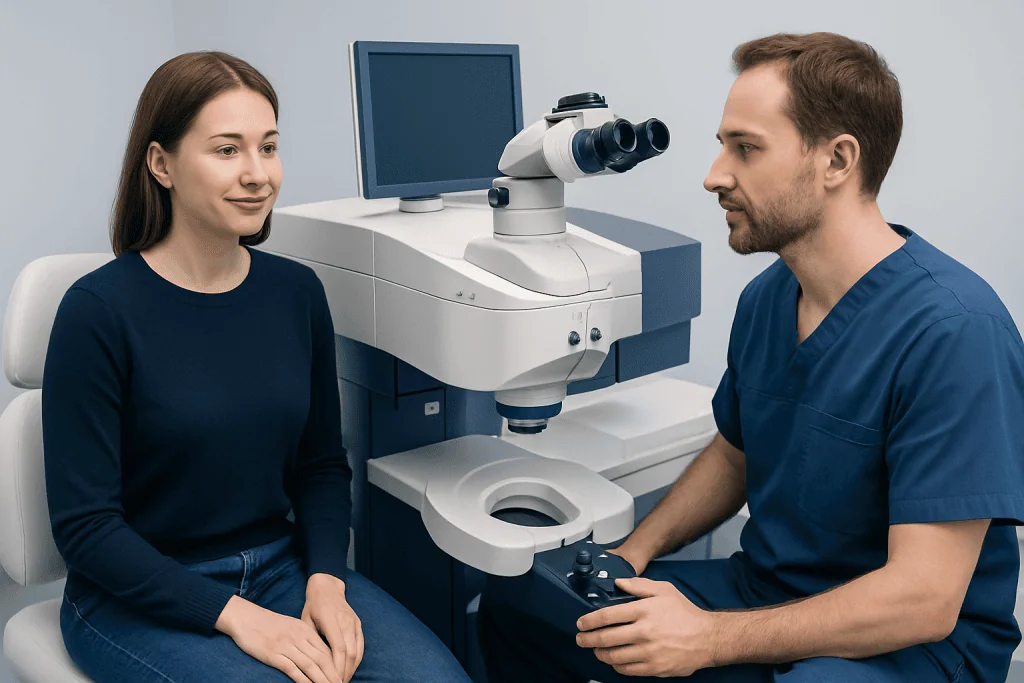
Good candidates for LASIK are usually adults with a stable glasses or contact lens prescription for at least one year. Stability is important because continuing changes in prescription can reduce the predictability of the result. The cornea should be thick and regular enough to safely support laser reshaping, and the eyes should be free from active disease, infection, or significant inflammation.
An ophthalmologist evaluates several measurements before recommending LASIK. These include corneal thickness, corneal curvature and topography, pupil size, tear film quality, prescription strength, and general eye health. The doctor also reviews medical history, medications, pregnancy status, previous eye surgery, and expectations for vision after treatment.
LASIK may not be advised for every patient. Common reasons to delay or avoid the procedure include unstable vision, very thin or irregular corneas, keratoconus, uncontrolled dry eye disease, advanced glaucoma, significant cataract, active eye infection, certain autoimmune or wound-healing conditions, or unrealistic expectations. Pregnancy and breastfeeding can temporarily affect vision and tear quality, so refractive surgery is often postponed until vision has stabilized.
- Age, prescription stability, and corneal health are key eligibility factors.
- Adequate tear production is important because dryness can affect comfort and healing.
- People with high prescriptions may need a discussion of alternative procedures.
- Eligibility can only be confirmed after a comprehensive refractive eye examination.
Benefits and Realistic Expectations
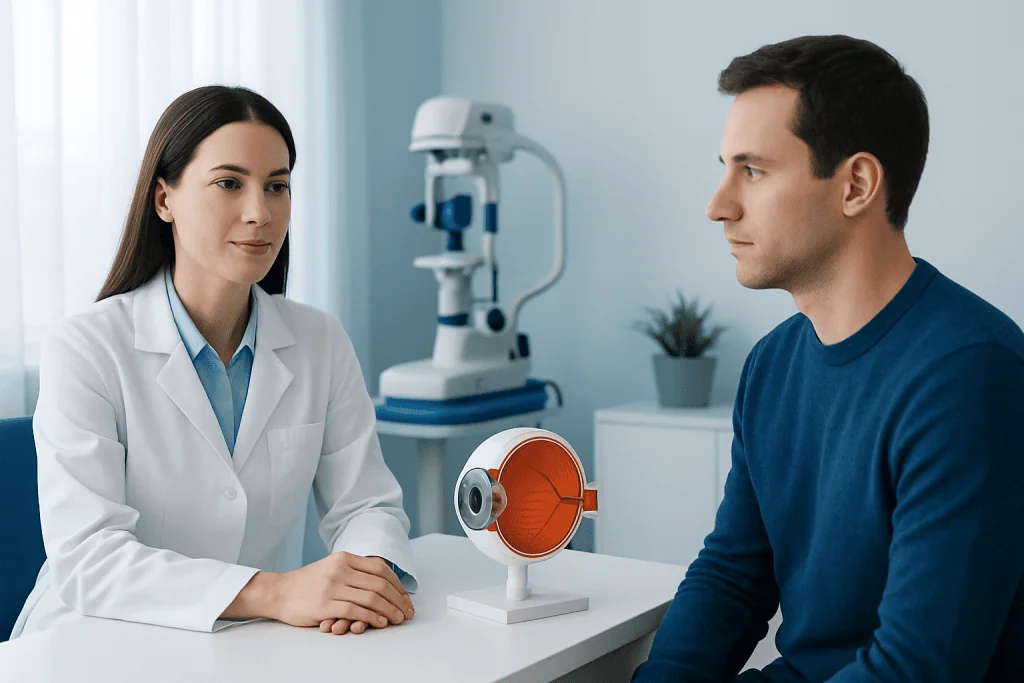
The main benefit of LASIK eye surgery is improved uncorrected distance vision. Many patients can perform daily activities with less need for glasses or contact lenses after healing. This may be especially helpful for people who find contact lenses uncomfortable, participate in certain sports, or prefer the convenience of reduced dependence on corrective eyewear.
LASIK is also valued because recovery is often relatively fast compared with some other corneal laser procedures. Vision commonly improves within the first day or two, although it may fluctuate during early healing. Most patients return to many routine activities quickly when advised by their surgeon, while still following specific eye drop and protection instructions.
Realistic expectations are essential. LASIK may reduce the need for glasses, but it does not guarantee perfect vision or eliminate the possibility of needing glasses for certain tasks. Some people may still require glasses for night driving, detailed work, or reading later in life due to presbyopia, the age-related focusing change that usually begins in midlife. The best outcomes occur when patients understand both the potential benefits and the limitations before surgery.
Possible Risks and Side Effects
LASIK is widely performed, but like any surgical procedure it carries possible risks and side effects. Many early symptoms are temporary and improve as the eye heals. These may include dryness, a gritty sensation, light sensitivity, tearing, mild burning, and visual fluctuations. Doctors usually prescribe lubricating drops and medicated eye drops to support comfort and healing.
Some patients notice glare, halos, starbursts around lights, or reduced night vision, especially in the first weeks after surgery. These effects often improve, but in some people they may persist. Under-correction or over-correction can also occur, meaning the final prescription is not exactly as intended. In selected cases, an enhancement procedure may be discussed after the eye has fully stabilized.
Less common but important complications include infection, inflammation under the corneal flap, flap-related problems, significant dry eye symptoms, or weakening of the cornea known as ectasia. These possibilities are part of the informed consent process. Careful screening, modern diagnostic testing, and adherence to postoperative instructions all help reduce risk, but no procedure can be considered risk-free.
Diagnosis and Preoperative Assessment
Before LASIK, a comprehensive eye examination is performed by an ophthalmologist or refractive surgery team. Contact lens wearers may be asked to stop wearing lenses for a period before testing because lenses can temporarily alter corneal shape. The exact length of time depends on the type of lens and the doctor’s instructions.
The assessment commonly includes measurement of visual acuity, refraction, corneal thickness, corneal mapping, pupil assessment, intraocular pressure, and a retinal examination when appropriate. Tear film testing may be performed to identify dry eye disease. The surgeon also evaluates whether the prescription falls within a treatable range and whether the corneal tissue available is sufficient for safe correction.
This consultation is also a time for shared decision-making. The patient should explain visual goals, occupation, hobbies, driving needs, screen use, and tolerance for possible glasses after surgery. The doctor should discuss benefits, alternatives, limitations, side effects, and recovery instructions in clear language. If LASIK is not suitable, other options such as PRK, SMILE, implantable collamer lens procedures, or continued optical correction may be considered.
Treatment Process and Recovery
On the day of LASIK eye surgery, numbing drops are placed in the eye. The patient remains awake, and the surgeon uses specialized instruments and laser systems to perform the correction. The actual laser treatment usually takes a short time, although preparation, checks, and post-procedure instructions take longer. Mild pressure may be felt briefly, but the eye is numbed to reduce discomfort.
After the procedure, vision may appear blurry, hazy, or watery at first. It is common for the eyes to feel scratchy or sensitive for several hours. Patients are usually advised to rest, avoid rubbing the eyes, use prescribed drops exactly as directed, and attend scheduled follow-up visits. Protective shields may be recommended during sleep for the first period to prevent accidental rubbing.
Many people notice significant improvement quickly, but healing is individual. Vision can fluctuate during the first days or weeks, and dryness may continue for a period. Patients should follow their surgeon’s guidance about driving, work, makeup, swimming, exercise, and screen use. Returning too quickly to activities that expose the eyes to sweat, dust, or water may increase irritation or infection risk.
- Use all prescribed eye drops as instructed.
- Do not rub the eyes during healing.
- Attend all follow-up appointments, even if vision feels good.
- Report worsening pain, redness, discharge, or sudden vision changes promptly.
Prevention, Self-Care, and When to See a Doctor
Good self-care before and after LASIK supports healing and comfort. Patients should tell their doctor about all medications, medical conditions, allergies, and previous eye problems. Managing dry eye, eyelid inflammation, or allergies before surgery may improve comfort after the procedure. Using artificial tears, avoiding smoke, and taking screen breaks may also help reduce dryness when recommended by the eye care team.
After LASIK, patients should seek medical advice immediately if they develop increasing eye pain, worsening redness, pus-like discharge, sudden loss of vision, new severe light sensitivity, or a feeling that something is wrong with the flap. Mild irritation and fluctuating vision can be part of normal recovery, but symptoms that worsen instead of improving deserve prompt assessment.
A person should see an ophthalmologist before deciding on LASIK if they are tired of glasses or contact lenses, have stable vision, and want to understand refractive surgery options. International patients may also benefit from coordinated evaluation and follow-up planning. Acibadem International’s multidisciplinary specialists and JCI-accredited hospitals provide diagnosis and treatment for eye conditions, including refractive surgery assessment, for patients traveling from abroad.
Frequently asked questions
Is LASIK eye surgery painful?
LASIK is usually performed with numbing eye drops, so significant pain is not expected during the procedure. Some patients feel brief pressure or mild discomfort. After surgery, scratchiness, watering, or burning may occur for several hours and typically improves with rest and prescribed drops.
How long does LASIK recovery take?
Many patients notice clearer vision within one to a few days, but recovery is not identical for everyone. Dryness, glare, or visual fluctuations can continue for weeks, and full stability may take longer. Follow-up visits help the surgeon confirm that healing is progressing normally.
Can LASIK completely remove the need for glasses?
LASIK can greatly reduce dependence on glasses or contact lenses for many suitable patients. However, it cannot guarantee perfect vision in every situation. Some people may still need glasses for night driving, detailed tasks, or reading as they age.
Who should not have LASIK?
LASIK may not be suitable for people with unstable prescriptions, thin or irregular corneas, keratoconus, uncontrolled dry eye, active eye infection, significant cataracts, or certain medical conditions affecting healing. Pregnancy and breastfeeding can also temporarily change vision. A full eye examination is needed to determine suitability.
What is the difference between LASIK and PRK?
Both LASIK and PRK reshape the cornea with a laser, but they differ in how the corneal surface is prepared. LASIK creates a thin flap, while PRK treats the surface after removing the outer epithelial layer. PRK may be recommended for some patients with thinner corneas or certain lifestyle needs.
Can LASIK be repeated if vision changes?
In some cases, an enhancement procedure may be possible if enough corneal tissue remains and the eye is otherwise healthy. The surgeon usually waits until vision is stable before considering another procedure. Not every patient is eligible for retreatment, so this should be discussed individually.
This article is for general information only and is not a substitute for professional medical advice. Please consult a qualified doctor about your individual situation.
Eye Surgery in Turkey — costs, top hospitals & a free quote
JCI-accredited · board-certified surgeons · reply within 24h
Add us as a Preferred Source to see more of our trusted health content across Google Search, AI Overviews and Discover.

Ophthalmology
Comprehensive eye care from laser vision correction to retina, cornea and cataract surgery.
75 specialists in this unitRelated Treatments
More from the Health Library

iLASIK vs IntraLase: Are These Laser Eye Procedures Different?

Side Effects of LASIK Eye Surgery You Should Know

How Long Does LASIK Take? Procedure and Recovery Time

Cataract Surgery Recovery: Healing Timeline, Drops, and Activity Limits

Retinal Detachment: Flashes, Floaters, and Emergency Warning Signs