

Liposuction or CoolSculpting: Which Fat Reduction Option Fits You?

Liposuction is a surgical procedure that can remove larger amounts of fat in one session. CoolSculpting is a non-surgical treatment that freezes fat cells and produces gradual changes over weeks to months.
Key Takeaways
- Liposuction is a surgical procedure that can remove larger amounts of fat in one session.
- CoolSculpting is a non-surgical treatment that freezes fat cells and produces gradual changes over weeks to months.
- Neither treatment is a weight-loss method; both are designed for body contouring in selected areas.
- The right option depends on the treatment area, skin quality, health history, budget, and recovery preferences.
- A consultation with a qualified specialist helps determine realistic expectations and the safest approach.
Liposuction and CoolSculpting are both body-contouring options for reducing stubborn fat that does not respond to diet and exercise. The best choice depends on treatment goals, how much fat is being targeted, desired recovery time, and whether a person prefers surgery or a non-surgical approach.
Overview
When people ask about liposuction or CoolSculpting, they are usually looking for a way to improve body contours in areas where fat tends to stay despite healthy habits. Common concerns include fullness in the abdomen, flanks, thighs, upper arms, under the chin, or back. Both treatments can help reshape these areas, but they work in very different ways.
Liposuction is a surgical procedure that physically removes fat from the body through small incisions. It can produce a more noticeable change in a single treatment and is often chosen when a person wants more dramatic contouring. Classic liposuction is one of the established approaches used to treat localized fat deposits.
CoolSculpting, by contrast, is a non-surgical technique based on controlled cooling of fat cells. The treated fat cells gradually break down and are naturally cleared by the body over time. CoolSculpting may appeal to people who want less downtime and prefer to avoid surgery.
Neither option is meant to treat obesity or replace weight management. Instead, both are most useful for people who are close to their stable, healthy weight and want to address specific pockets of stubborn fat as part of broader body contouring planning.
How Each Treatment Works
Liposuction removes fat cells directly. During the procedure, a surgeon makes very small incisions and inserts a thin tube called a cannula to loosen and suction out fat. Depending on the area being treated and the treatment plan, local anesthesia, sedation, or general anesthesia may be used. Because fat is removed immediately, results in body shape can often be seen soon after swelling begins to settle.
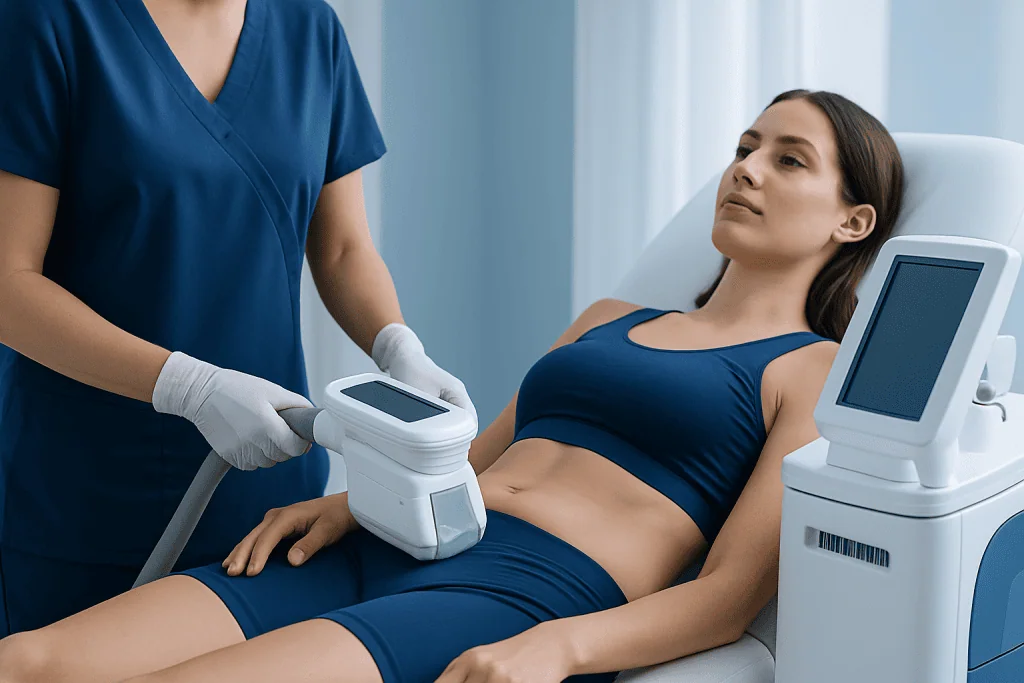
CoolSculpting works differently. A handheld applicator is placed on the skin over the treatment area, where it cools the underlying fat to a temperature that damages fat cells without surgery. Over the following weeks and months, the body gradually processes and removes those affected fat cells. Changes appear more slowly than with surgery, and some people need more than one session for the desired contour.
Both methods reduce the number of fat cells in the treated area. However, they do not prevent future weight gain. If a person gains weight after either treatment, remaining fat cells can still enlarge, which may affect the overall appearance.
In selected cases, liposuction may also be considered as part of treatment for contour concerns related to conditions such as gynecomastia, where excess tissue and fullness in the chest may require specialist assessment. This is why treatment planning should always start with a medical evaluation rather than a cosmetic preference alone.
Who May Be a Good Candidate

Good candidates for either treatment are generally adults in good overall health who have realistic expectations and specific areas of pinchable fat they would like to reduce. The best results are usually seen in people who are near their target weight, do not smoke or are willing to stop around the time of treatment, and can maintain stable habits afterward.
Liposuction may be a better fit for someone who wants more noticeable fat removal in one procedure, has several areas to treat, or is seeking a more sculpted result. It may also be preferred when the amount of fat is beyond what non-surgical contouring is likely to improve. For example, someone considering arm liposuction may be looking for a clearer reduction in upper-arm fullness than a non-surgical option can typically provide.
CoolSculpting may be suitable for people with mild to moderate localized fat who prefer a non-invasive treatment and can accept gradual results. It is often chosen by people who want little or no interruption to daily routines. That said, not every body area or fat type responds equally well, so candidacy depends on the exact contour concern.
Skin quality also matters. If the skin is loose, thin, or lacks elasticity, reducing fat alone may not create the desired shape. In such situations, a specialist may discuss whether surgery, skin tightening, or another contouring procedure would better match the person’s goals.
Results, Recovery, and What to Expect
Liposuction usually delivers faster and more visible contour change because fat is removed during the procedure itself. Swelling, bruising, soreness, and temporary numbness are common during recovery, and compression garments are often recommended. Most people need some downtime, although the exact recovery period depends on the size and number of areas treated.
CoolSculpting has a lighter recovery profile for many patients. Temporary redness, swelling, tenderness, tingling, or numbness in the treated area can occur, but many people return to routine activities the same day. The main trade-off is that improvement is gradual. It often takes several weeks to start noticing change, with fuller results developing over a few months.
In terms of precision, liposuction allows the surgeon to actively shape the area during treatment. This can be helpful for contouring transitions between neighboring body zones. CoolSculpting is more limited by the shape of the applicator and the amount of fat that can be effectively drawn into the device.
Neither treatment can guarantee a perfectly smooth or symmetric result. Final outcomes depend on factors such as anatomy, skin elasticity, healing, and adherence to aftercare instructions. A careful consultation helps set realistic expectations and lowers the chance of disappointment.
Benefits, Limitations, and Possible Risks
The main benefit of liposuction is its ability to remove a larger volume of fat in a controlled way, often with more dramatic contour improvement in one session. It can treat multiple areas and may be combined with other procedures in selected patients. However, because it is surgery, it involves anesthesia, incisions, recovery time, and the general risks associated with an invasive procedure.
Possible risks of liposuction include bleeding, infection, fluid collection, contour irregularities, asymmetry, prolonged swelling, changes in skin sensation, and anesthesia-related complications. Serious complications are uncommon when the procedure is performed by experienced specialists in an appropriate medical setting, but they should still be discussed openly before treatment.
The main advantage of CoolSculpting is that it is non-surgical, with no incisions and minimal downtime for many people. Its limitations include more modest fat reduction per session, slower results, and the possibility that more than one treatment cycle may be needed. Some treated areas may improve unevenly, and not all patients are satisfied with the degree of change.
CoolSculpting can cause temporary discomfort, numbness, bruising, or swelling. A rare but recognized complication is paradoxical adipose hyperplasia, in which the treated area becomes firmer or larger rather than smaller and may require surgery to correct. This is one reason why treatment should be planned by qualified professionals who can explain both common and uncommon risks clearly.
How Doctors Help You Choose
Choosing between liposuction or CoolSculpting starts with a personalized assessment rather than a general preference. During consultation, the doctor evaluates the treatment area, the amount and thickness of fat, skin quality, body proportions, medical history, and any previous procedures. They also discuss how much change the person hopes to see and how quickly they want to see it.
Someone who wants a significant reduction in one area, or who wishes to contour several zones at once, may be guided toward surgery. Someone with a smaller area of stubborn fat and a strong preference to avoid anesthesia or downtime may be better suited to a non-surgical option. In some cases, the doctor may explain that neither treatment is ideal if the main issue is loose skin rather than excess fat.
It is also important to review underlying conditions and medications. For example, circulation issues, healing problems, certain hernias, previous operations, or disorders affecting the treatment area may influence the safest plan. If a contour concern relates to scar tissue, such as keloid scars, the specialist will consider how this could affect healing and cosmetic outcome.
At experienced centers, treatment planning may involve dermatology, plastic surgery, and imaging or anesthesiology support when needed. Acibadem International’s multidisciplinary specialists and JCI-accredited hospitals assess and treat body contouring concerns for international patients, helping match the method to the person rather than forcing a one-size-fits-all choice.
Self-care, Preparation, and When to See a Doctor
Before either treatment, people should aim for stable weight, regular exercise, balanced nutrition, and realistic expectations. These steps do not replace treatment, but they support better contouring results and make long-term maintenance easier. Smoking cessation is especially important before surgery because smoking can interfere with blood flow and healing.
Preparation for liposuction may include lab tests, medication review, and instructions about fasting, compression garments, and arranging transport home. Preparation for CoolSculpting is usually simpler, but it is still important to disclose medical conditions, especially sensitivity to cold, skin disorders, or previous procedures in the area. Following aftercare instructions carefully can reduce discomfort and support smoother recovery.
A doctor should be consulted when stubborn fat causes distress despite healthy habits, when there is uncertainty about whether the issue is fat or loose skin, or when body asymmetry appears suddenly. Medical review is also important if there is a lump, pain, swelling, skin change, or any feature that seems unusual, because not every body contour change is cosmetic in origin.
After treatment, prompt medical advice is needed for fever, worsening redness, severe pain, shortness of breath, heavy bleeding, drainage with a bad odor, or sudden enlargement of the treated area. These symptoms do not always mean a serious complication, but they should be evaluated without delay.
Frequently asked questions
Is liposuction better than CoolSculpting?
Neither is universally better; the right choice depends on the person’s goals and anatomy. Liposuction usually removes more fat and gives faster, more visible contouring, while CoolSculpting is non-surgical and offers a gentler recovery with slower results.
Can CoolSculpting replace liposuction?
CoolSculpting can be a good alternative for some people with small to moderate areas of stubborn fat. However, it does not replace liposuction when a person wants larger-volume fat removal, more precise sculpting, or more dramatic one-time results.
Are the results of both treatments permanent?
Both treatments reduce fat cells in the treated area, so those specific cells do not return. Still, remaining fat cells can enlarge if weight is gained later, so maintaining stable habits is important for preserving the result.
Which option has less downtime?
CoolSculpting generally has less downtime because it is non-surgical and many people return to normal activities the same day. Liposuction usually requires a recovery period that includes swelling, soreness, and wearing compression garments.
Do liposuction and CoolSculpting help with loose skin?
Neither treatment is primarily designed to tighten loose skin. If skin laxity is the main concern, a doctor may recommend a different procedure or a combined treatment plan to improve contour more effectively.
Who should avoid these treatments?
People with certain medical conditions, unrealistic expectations, active skin problems in the treatment area, or major weight fluctuations may not be ideal candidates. CoolSculpting may not be suitable for individuals with cold-related disorders, while liposuction may be unsafe for some people with significant surgical or anesthesia risks.
References
- American Society of Plastic Surgeons
- American Board of Cosmetic Surgery
- U.S. Food and Drug Administration
- National Health Service
- International Society of Aesthetic Plastic Surgery
This article is for general information only and is not a substitute for professional medical advice. Please consult a qualified doctor about your individual situation.
CoolSculpting in Turkey — costs, top hospitals & a free quote
JCI-accredited · board-certified surgeons · reply within 24h
Add us as a Preferred Source to see more of our trusted health content across Google Search, AI Overviews and Discover.

Related Treatments
Related Conditions
More from the Health Library



Related Specialists

Assoc. Prof. Dr. Erdem Güven (m)
Aesthetic Plastic & Reconstructive Surgery
Prof. Dr. Şükrü Yazar
Aesthetic Plastic & Reconstructive Surgery
Prof. Dr. Hakan Ağır
Aesthetic Plastic & Reconstructive Surgery
Prof. Dr. Bülent Saçak
Aesthetic Plastic & Reconstructive Surgery