Myocardial Viability Testing Before CABG: How It Guides Surgery Decisions

Myocardial viability testing looks for heart muscle that is alive but underperforming because of reduced blood supply. The results can help guide CABG decisions, especially in patients with ischemic cardiomyopathy or reduced left ventricular function.
Key Takeaways
- Myocardial viability testing looks for heart muscle that is alive but underperforming because of reduced blood supply.
- The results can help guide CABG decisions, especially in patients with ischemic cardiomyopathy or reduced left ventricular function.
- Common tests include cardiac MRI, PET, SPECT, and dobutamine stress echocardiography.
- Viability results are considered together with symptoms, coronary anatomy, heart function, surgical risk, and patient preferences.
- A positive viability test does not automatically mean surgery is required, and a negative test does not always rule it out.
- Decisions are safest when reviewed by a multidisciplinary heart team.
Myocardial viability testing helps doctors understand whether areas of weakened heart muscle are still alive and likely to improve after coronary artery bypass grafting. It is most useful when a patient has coronary artery disease with reduced heart pumping function and the best treatment plan is not straightforward.
Overview
Myocardial viability testing is a group of imaging tests used to determine whether weakened areas of the heart muscle are still alive and have the potential to recover. This is especially important before coronary artery bypass grafting, often called CABG, when doctors are considering whether improving blood flow with surgery may help the heart pump more effectively.
In coronary artery disease, narrowed or blocked arteries can reduce blood supply to the heart muscle. Some heart muscle may be permanently scarred after a heart attack, while other areas may be alive but functioning poorly because they are not receiving enough oxygen-rich blood. This recoverable muscle is sometimes described as hibernating myocardium.
Before coronary artery bypass surgery, the cardiology and cardiac surgery team may use viability testing to understand how much of the weakened heart muscle could improve after revascularization. The test is not a standalone decision-maker; it is one part of a broader evaluation that includes symptoms, angiography findings, heart pumping function, other health conditions, and the patient’s goals.
Why Viability Matters Before CABG
CABG aims to restore blood flow by creating new routes around narrowed or blocked coronary arteries. When a patient has good heart pumping function, the reason for surgery may be relief of angina, protection of heart muscle, or improvement in long-term outcomes for certain coronary patterns. When the left ventricle is significantly weakened, the decision can be more complex, because the team must estimate both the potential benefit and the operative risk.
Viability testing can help identify whether the weak areas of the heart are mainly scar tissue or living muscle that may regain strength after blood flow is improved. If there is a meaningful amount of viable myocardium in regions supplied by blocked arteries, CABG may offer a chance for improved function, fewer symptoms, or better clinical stability. If most of the affected muscle is scarred, surgery may still be considered for other reasons, but the expectation of improved pumping function may be lower.
It is important for patients to understand that viability testing does not provide a simple yes-or-no answer. Research has shown that the relationship between viability and outcomes after CABG is influenced by many factors, including the extent of coronary disease, the severity of heart failure, valve disease, kidney function, frailty, and how complete revascularization can be. For this reason, results are best interpreted by an experienced heart team.
Who May Need Myocardial Viability Testing

Not every patient being evaluated for CABG needs viability testing. It is most often considered when coronary artery disease is present along with reduced left ventricular ejection fraction, meaning the heart’s main pumping chamber is not squeezing as strongly as expected. In this situation, doctors want to know whether bypassing blocked arteries is likely to help the heart muscle recover.
Viability testing may also be useful when symptoms and test results do not clearly match each other. For example, a patient may have severe artery narrowing but limited chest pain, or imaging may show areas of poor contraction that could represent either scar tissue or hibernating muscle. The test may also help when a patient has had a previous heart attack and the team needs to estimate how much tissue is still recoverable.
Common situations where viability testing may be discussed include:
- Reduced ejection fraction due to suspected ischemic cardiomyopathy
- Previous heart attack with areas of poor heart muscle movement
- Uncertainty about whether CABG will improve heart function
- High surgical risk where the expected benefit must be carefully weighed
- Planning for heart bypass surgery in complex multivessel coronary artery disease
Types of Myocardial Viability Tests
Several imaging methods can assess myocardial viability, and each provides slightly different information. The choice depends on local expertise, the patient’s kidney function, implanted devices, ability to exercise or receive stress medicines, and what the treating team needs to learn. In many cases, a single well-chosen test is enough.
Cardiac magnetic resonance imaging, or cardiac MRI, can show scar tissue in detail using a technique called late gadolinium enhancement. It helps estimate whether an area of abnormal heart muscle is mostly scarred or likely to recover. Cardiac MRI can also measure heart volumes, pumping function, valve findings, and wall motion, making it a comprehensive test for many patients.
Positron emission tomography, or PET, is highly sensitive for detecting living heart muscle by measuring blood flow and metabolism. Single-photon emission computed tomography, or SPECT, is more widely available and can assess perfusion and viability using nuclear tracers. Dobutamine stress echocardiography uses ultrasound while a medication gently stimulates the heart; improved contraction during the test suggests contractile reserve, meaning the muscle may respond after blood flow is restored.
No test is perfect for every patient. For example, cardiac MRI may not be suitable for some people with certain implanted devices or severe kidney impairment, while nuclear tests involve a small amount of radiation. The doctor explains the most appropriate option based on the patient’s overall health and the clinical question being asked.
How Doctors Interpret the Results
Viability test results are usually reported by heart segments. Each segment may be described as normal, ischemic, hibernating, stunned, scarred, or partially viable depending on the test used. Doctors then compare these areas with the coronary angiogram to see whether the living but weak muscle is supplied by arteries that can realistically be bypassed.
A favorable result may show a substantial amount of viable myocardium in regions with reduced blood supply. This can support a recommendation for CABG if the coronary anatomy is suitable and the patient’s surgical risk is acceptable. A less favorable result may show extensive scar tissue, especially if the scar extends through much of the thickness of the heart wall, making functional recovery less likely.
However, treatment decisions are not based only on the viability report. The heart team also considers:
- Severity and location of coronary artery blockages
- Left ventricular ejection fraction and heart size
- Symptoms such as angina, breathlessness, and reduced exercise capacity
- Other conditions such as diabetes, kidney disease, lung disease, or valve disease
- Whether complete or near-complete revascularization is technically possible
- The patient’s values, recovery expectations, and quality-of-life goals
In selected patients, CABG may be recommended even when viability is limited, particularly if there are other strong reasons for surgery. In others, optimal medical therapy, percutaneous coronary intervention, device therapy, or advanced heart failure care may be more appropriate. The value of the test is in making the discussion more individualized.
Preparing for the Test and What to Expect
Preparation depends on the type of viability test. Patients are usually asked to bring a list of medicines, previous heart test reports, and information about implanted devices such as pacemakers or defibrillators. Some tests require avoiding caffeine, fasting for a period of time, or adjusting certain medicines, but these instructions should only be followed if the healthcare team specifically provides them.
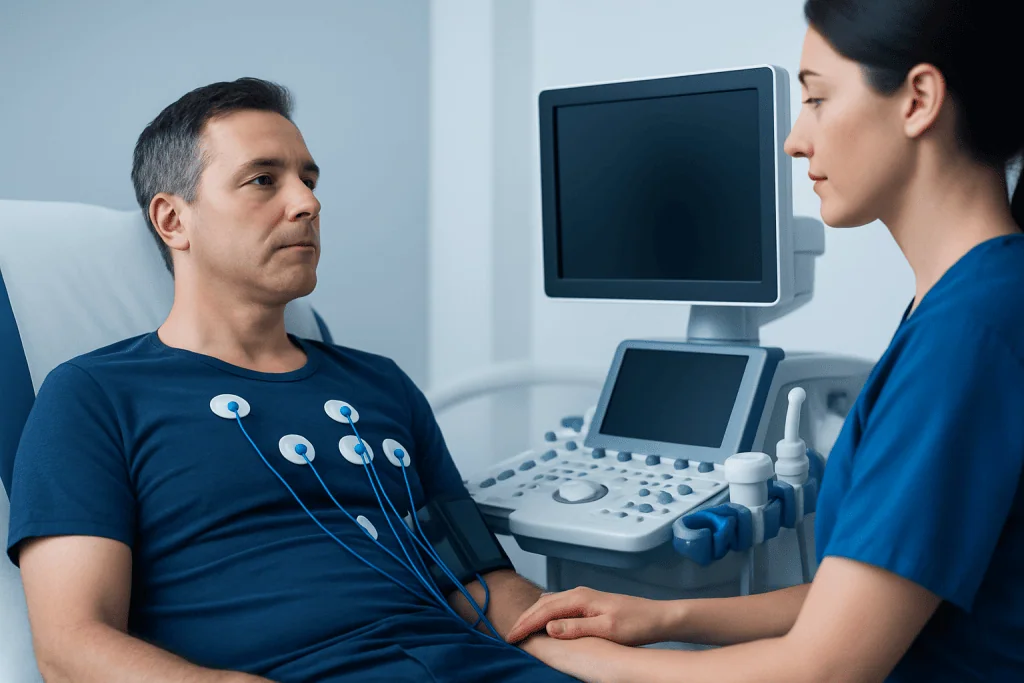
During cardiac MRI, the patient lies on a scanning table while images are taken in a large magnet. A contrast agent may be used unless there is a reason to avoid it. During PET or SPECT imaging, a tracer is injected into a vein and the scanner measures how it is taken up by the heart. During dobutamine stress echocardiography, ultrasound images are recorded while the heart is monitored closely as medication increases the heart’s workload.
Most viability tests are outpatient procedures, and the patient can usually return home the same day. The interpreting specialist reviews the images and sends a report to the treating cardiologist or surgeon. Because the results are often used for important treatment planning, patients should expect a follow-up appointment to discuss what the findings mean in their specific case.
Treatment Planning After Viability Testing
After viability testing, the care team combines the imaging results with coronary angiography and the overall medical assessment. If there is viable heart muscle in areas that can be supplied by bypass grafts, the team may recommend CABG as part of a broader plan to improve blood flow and manage heart failure symptoms. If surgery is chosen, patients receive individualized instructions about medicines, anesthesia assessment, hospital stay, and recovery.
Some patients may be managed with medicines and close follow-up instead of surgery, particularly when surgical risk is high or when the expected benefit is limited. Medicines may include therapies for coronary artery disease, heart failure, cholesterol management, blood pressure control, and diabetes care when relevant. Lifestyle support, smoking cessation, nutrition guidance, and supervised activity planning are also important.
Recovery planning is part of the treatment decision. After CABG or other cardiac treatment, structured cardiac rehabilitation can help patients rebuild fitness safely, learn heart-healthy habits, and monitor symptoms during recovery. Acibadem International’s multidisciplinary specialists in JCI-accredited hospitals can evaluate and treat coronary artery disease, including complex CABG planning, for international patients who need coordinated cardiac care.
When to See a Doctor
Patients with known coronary artery disease should speak with a cardiologist if they have chest discomfort, shortness of breath, reduced exercise tolerance, swelling in the legs, unexplained fatigue, or a history of heart attack with reduced heart function. These symptoms do not always mean surgery is needed, but they should be assessed so that treatment can be adjusted early and safely.
A person who has been told they may need CABG should ask whether myocardial viability testing is relevant to their case, especially if the ejection fraction is reduced or if previous imaging has shown areas of weak heart muscle. Helpful questions include which test is recommended, what the results could change, whether the coronary arteries are suitable for bypass grafting, and how the team will balance benefit and risk.
Urgent medical attention is needed for symptoms suggestive of a possible heart attack, such as persistent chest pressure, pain spreading to the arm or jaw, severe shortness of breath, fainting, or sudden sweating with weakness. For planned decisions about viability testing and CABG, patients should work with a qualified cardiologist and cardiac surgeon who can explain the options in clear, individualized terms.
Frequently asked questions
What is myocardial viability testing?
Myocardial viability testing is imaging used to see whether weak heart muscle is still alive and may recover if blood flow improves. It helps distinguish recoverable hibernating or stunned muscle from scar tissue. The information can support treatment planning before CABG or other coronary interventions.
Does everyone need viability testing before CABG?
No. Many patients can proceed with CABG planning based on symptoms, coronary angiography, heart function, and standard risk assessment. Viability testing is most useful when the heart’s pumping function is reduced and doctors need more information about whether weak muscle is likely to recover after surgery.
Which viability test is best?
There is no single best test for every patient. Cardiac MRI is excellent for scar assessment, PET is highly sensitive for living heart muscle, SPECT is widely available, and dobutamine stress echocardiography can show contractile reserve. The doctor chooses the test based on the patient’s condition, safety considerations, and local expertise.
If the test shows viable heart muscle, does that mean CABG is required?
Not necessarily. Viable heart muscle can strengthen the case for CABG, but the final decision also depends on coronary anatomy, symptoms, surgical risk, other illnesses, and patient preferences. The result is best viewed as one important piece of the full clinical picture.
If the test shows scar tissue, is CABG still possible?
Yes, CABG may still be considered in some patients even if a region is scarred. Surgery may be recommended for symptom relief, protection of other viable areas, or because of the pattern of coronary disease. However, the chance that a scarred area will regain pumping function is generally lower.
Is myocardial viability testing safe?
For most patients, viability testing is safe when performed in an appropriate medical setting. Some tests involve contrast agents, stress medications, or a small amount of radiation, so the team checks kidney function, allergies, implanted devices, rhythm issues, and other health factors first. Patients should follow the preparation instructions provided by their healthcare team.
How should patients use the results in decision-making?
Patients should review the results with their cardiologist and cardiac surgeon and ask how the findings affect the expected benefits and risks of CABG. It is helpful to discuss alternatives, recovery expectations, and how treatment aligns with personal goals. A heart team approach supports balanced, individualized decisions.
References
- American College of Cardiology
- American Heart Association
- European Society of Cardiology
- Society of Thoracic Surgeons
- British Society of Cardiovascular Imaging
This article is for general information only and is not a substitute for professional medical advice. Please consult a qualified doctor about your individual situation.
Explore treatments in Turkey — costs, top hospitals & a free quote
JCI-accredited · board-certified surgeons · reply within 24h
Add us as a Preferred Source to see more of our trusted health content across Google Search, AI Overviews and Discover.

Cardiology Department
Diagnosis and treatment of heart and vascular conditions, from prevention to advanced interventional procedures.
91 specialists in this unit