Neuromodulation for Movement Disorders: When Is It Considered?
Neuromodulation uses targeted electrical stimulation to help regulate abnormal brain circuits involved in movement disorders. It is not a first-line treatment and is usually considered after medications and rehabilitation have been optimized.
Key Takeaways
- Neuromodulation uses targeted electrical stimulation to help regulate abnormal brain circuits involved in movement disorders.
- It is not a first-line treatment and is usually considered after medications and rehabilitation have been optimized.
- The best-known form is deep brain stimulation, but candidacy depends on the diagnosis, symptom pattern, overall health, and goals.
- Neuromodulation can improve quality of life for selected patients, but it does not cure the underlying disease.
- Careful testing, brain imaging, and multidisciplinary assessment are important before treatment is recommended.
Neuromodulation for movement disorders is usually considered when symptoms such as tremor, stiffness, slowness, or abnormal muscle contractions remain troublesome despite carefully adjusted medication and therapy. A specialist team evaluates whether it may improve symptom control, daily function, and quality of life for the right patient.
Overview: What neuromodulation means for movement disorders
Neuromodulation is a medical approach that changes nerve activity using controlled electrical stimulation. In movement disorders, it is used to influence the brain circuits that help control movement, coordination, and muscle tone. When these circuits become overactive or unbalanced, symptoms such as tremor, stiffness, slowness, or involuntary twisting movements can develop.
The most established neuromodulation technique for movement disorders is deep brain stimulation, often called DBS. In this procedure, thin electrodes are placed in specific areas of the brain and connected to a small implanted pulse generator. The device sends carefully programmed electrical signals that can help reduce certain symptoms. Neuromodulation may be part of broader movement disorders care for people whose symptoms are not well controlled with standard treatment alone.
Neuromodulation is not a cure for the underlying neurological condition. However, in carefully selected patients, it may significantly improve symptom control and daily functioning. It can also sometimes allow lower doses of medication, which may help reduce medication-related side effects.
Because movement disorders vary widely, the decision to consider neuromodulation is individualized. The type of disorder, the person’s age and health, the severity of symptoms, and how those symptoms respond to medication all help guide the choice.
Which movement disorders may be treated
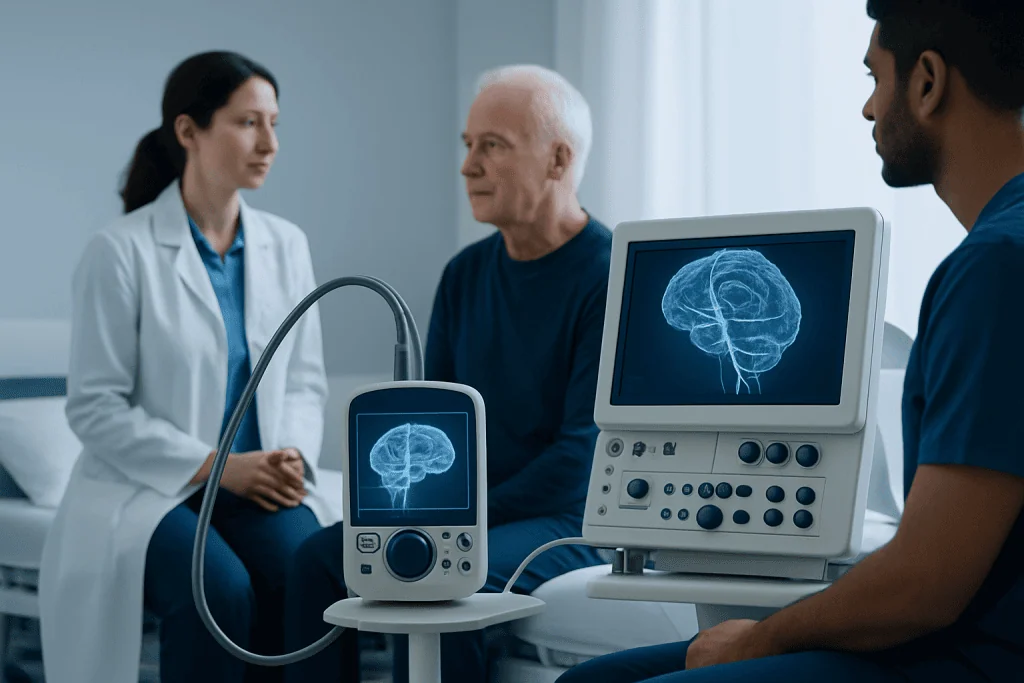
Neuromodulation is most commonly considered for Parkinson disease, tremor disorders, and some forms of dystonia. In people with essential tremor, for example, severe shaking that interferes with eating, writing, or dressing may improve with DBS when medicines have not provided enough benefit. In Parkinson disease, neuromodulation may help symptoms such as tremor, stiffness, slowness, and movement fluctuations.
Some people with dystonia may also benefit, especially when abnormal muscle contractions cause painful postures or major functional problems. In selected cases, neuromodulation can be considered for other movement disorders as well, but the strength of evidence and expected results may differ depending on the diagnosis.
Not every symptom responds equally well. For example, tremor that does not improve with medication may still respond well to DBS, while certain balance, speech, or cognitive symptoms may not improve and can sometimes become more noticeable over time as the underlying condition progresses. That is why clear expectations are an essential part of planning treatment.
Specialists often review the person’s exact diagnosis carefully before recommending treatment. This may include distinguishing between idiopathic Parkinson disease care and atypical parkinsonism, because treatment response can differ substantially.
When is neuromodulation considered?

Neuromodulation is usually considered when symptoms continue to interfere with daily life despite well-managed medication and supportive therapy. Doctors may discuss it if tremor, motor fluctuations, involuntary movements related to medication, or disabling dystonia remain difficult to control. In some people, medicines work but cause side effects that limit how much can be taken.
Timing matters. It is often best considered when symptoms are significant enough to affect quality of life, but before severe disability, frailty, or cognitive decline make treatment less suitable. Many centers look for signs that the diagnosis is well established and that symptoms have shown at least some pattern that suggests they are likely to respond.
Neuromodulation may be appropriate when a person has:
- a confirmed movement disorder diagnosis
- symptoms that remain disabling despite optimized medication
- reasonable overall health for surgery and follow-up
- realistic goals and a good understanding of benefits and limits
- access to ongoing programming and long-term specialist care
It is generally not considered a first step after diagnosis. Instead, it comes after careful review of medications, physical or occupational therapy, and the person’s day-to-day symptom pattern. In many cases, consultation with teams experienced in neuromodulation and complex movement disorders helps clarify whether the expected benefits are likely to outweigh the risks.
Evaluation before treatment
Before neuromodulation is recommended, a detailed assessment is needed. This usually begins with a neurological examination and a review of symptoms over time, including how symptoms respond to medication. The doctor may ask about tremor severity, falls, sleep, speech, swallowing, mood, memory, and how symptoms affect everyday tasks.
Brain imaging is commonly used to support planning and rule out other structural causes of symptoms. Neuropsychological testing may also be advised to assess memory, attention, language, and mood, because thinking and emotional health are important parts of candidacy. Some centers also use specialized testing from neurophysiology services as part of a fuller evaluation.
A multidisciplinary team often guides the decision. This can include a neurologist specializing in movement disorders, neurosurgeon, neuroradiologist, neuropsychologist, rehabilitation experts, and nursing staff. Together, they assess whether the likely symptom targets match what neuromodulation can realistically improve.
The team also reviews possible reasons not to proceed, such as uncontrolled medical illness, active infection, severe untreated depression, significant dementia, or an uncertain diagnosis. This careful screening helps improve both safety and treatment satisfaction.
How treatment works and what to expect
In deep brain stimulation, electrodes are placed into carefully selected brain targets. These are connected to a battery-powered pulse generator implanted under the skin, usually near the chest. After the procedure, the device is programmed and adjusted over several visits to find settings that best improve symptoms while minimizing side effects.
Different brain targets are used depending on the condition and the symptoms being treated. The choice depends on whether tremor, stiffness, slowness, dyskinesia, or dystonia is the main problem. Programming is highly individualized, and improvement is often gradual as settings and medications are refined.
Recovery does not end with surgery. Follow-up is a core part of treatment, because stimulation settings may need adjustment over time. Medications may also be changed after implantation. Many people continue rehabilitation and exercise as part of their long-term care plan.
Benefits can include better tremor control, smoother movement, fewer medication fluctuations, and improved ability to perform daily activities. Still, results vary from person to person. Neuromodulation does not stop disease progression, and some symptoms may continue or change over time, especially in neurodegenerative conditions managed within neurodegenerative disease care.
Benefits, limits, and possible risks
The main benefit of neuromodulation is targeted symptom control in people who have not achieved enough benefit from medicine alone. For some, this can mean steadier movement, less disabling tremor, fewer “off” periods, or less painful muscle contraction. These changes may improve independence and quality of life.
At the same time, there are important limits. Neuromodulation does not cure Parkinson disease, essential tremor, or dystonia. It may not improve every symptom, and it is usually less effective for problems such as severe balance impairment, speech difficulty, or advanced cognitive decline. A person can still need medication after treatment, although doses may sometimes be reduced.
As with any brain procedure, there are risks. Possible complications include bleeding, infection, device problems, discomfort around implanted hardware, or side effects from stimulation such as tingling, speech changes, balance issues, or mood changes. Many stimulation-related side effects can be improved by reprogramming, but close follow-up is essential.
A thoughtful discussion about goals, alternatives, and possible trade-offs helps patients and families decide whether this approach fits their needs. The most helpful question is often not simply “Can this be done?” but “Is this likely to help the symptoms that matter most in daily life?”
Living with a movement disorder before and after neuromodulation
Even when neuromodulation is being considered, non-surgical care remains very important. Regular exercise, physiotherapy, occupational therapy, and speech therapy can support mobility, balance, posture, and communication. These measures often remain useful after treatment as well.
Medication adherence and symptom tracking can also help. Keeping a diary of tremor, stiffness, involuntary movements, sleep patterns, and times when medicine wears off may help the medical team understand whether symptoms are suitable targets for neuromodulation. Family observations can be valuable too.
Emotional health matters alongside physical symptoms. Living with a chronic movement disorder can affect confidence, social activity, and mood. Support from clinicians, counselors, and patient support groups may help people adjust and make informed decisions about treatment.
For international patients, experienced centers may coordinate assessment, imaging, surgery, programming, and rehabilitation across specialties. Near the end of the evaluation journey, some patients choose centers such as Acibadem International, where multidisciplinary specialists in JCI-accredited hospitals diagnose and treat movement disorders with individualized care plans.
When to see a doctor
A person should see a doctor if tremor, slowness, stiffness, balance changes, or involuntary movements begin to affect work, self-care, walking, writing, or eating. Early evaluation is helpful because treatment options are often broader when symptoms are reviewed before they become severely disabling.
People already diagnosed with a movement disorder should ask about neuromodulation if medicines no longer provide steady symptom control, if side effects become hard to manage, or if daily activities remain significantly limited. This does not mean surgery is certain, but it may be the right time for a specialist consultation.
Urgent medical review is needed for sudden weakness, facial drooping, confusion, severe headache, or abrupt loss of coordination, because these symptoms may suggest a different neurological emergency rather than a typical movement disorder change. New or rapidly worsening symptoms should always be assessed promptly.
A movement disorders specialist can explain whether additional tests are needed and whether neuromodulation might be appropriate now, later, or not at all. The goal is to match the treatment to the person, rather than fitting every patient into the same pathway.
Frequently asked questions
Is neuromodulation the same as deep brain stimulation?
Deep brain stimulation is the best-known type of neuromodulation used for movement disorders, but the broader term neuromodulation refers to methods that alter nerve activity with targeted stimulation. In clinical practice for movement disorders, DBS is the most established example.
Who is a good candidate for neuromodulation?
A good candidate usually has a confirmed movement disorder diagnosis, symptoms that continue despite optimized medication, and overall health that allows surgery and long-term follow-up. Clear treatment goals and realistic expectations are also important parts of candidacy.
Can neuromodulation cure Parkinson disease or essential tremor?
No. Neuromodulation can reduce certain symptoms and improve daily function in selected patients, but it does not cure the underlying disease. Ongoing medical care is still needed after treatment.
What symptoms improve most with deep brain stimulation?
DBS often helps tremor, stiffness, slowness, medication-related movement fluctuations, and some forms of dystonia. Improvement depends on the diagnosis and the symptom pattern, so results vary from person to person.
Are there risks or side effects?
Yes. Possible risks include infection, bleeding, device-related problems, and stimulation side effects such as speech, balance, or mood changes. Many side effects can be adjusted with reprogramming, but careful follow-up is essential.
How long does follow-up continue after neuromodulation?
Follow-up is long term. The device usually needs programming adjustments over time, and medications may also need changes as symptoms evolve. Regular visits help maintain the best balance between symptom relief and side effects.
References
- National Institute of Neurological Disorders and Stroke
- National Institute for Health and Care Excellence
- American Academy of Neurology
- International Parkinson and Movement Disorder Society
- National Health Service
This article is for general information only and is not a substitute for professional medical advice. Please consult a qualified doctor about your individual situation.
Movement Disorders in Turkey — costs, top hospitals & a free quote
JCI-accredited · board-certified surgeons · reply within 24h
Add us as a Preferred Source to see more of our trusted health content across Google Search, AI Overviews and Discover.

Neurology
Diagnosis and treatment of disorders of the brain, spinal cord, nerves and muscles.
51 specialists in this unit