

Open vs Robotic IVF Lab Systems: Does Technology Affect Success?
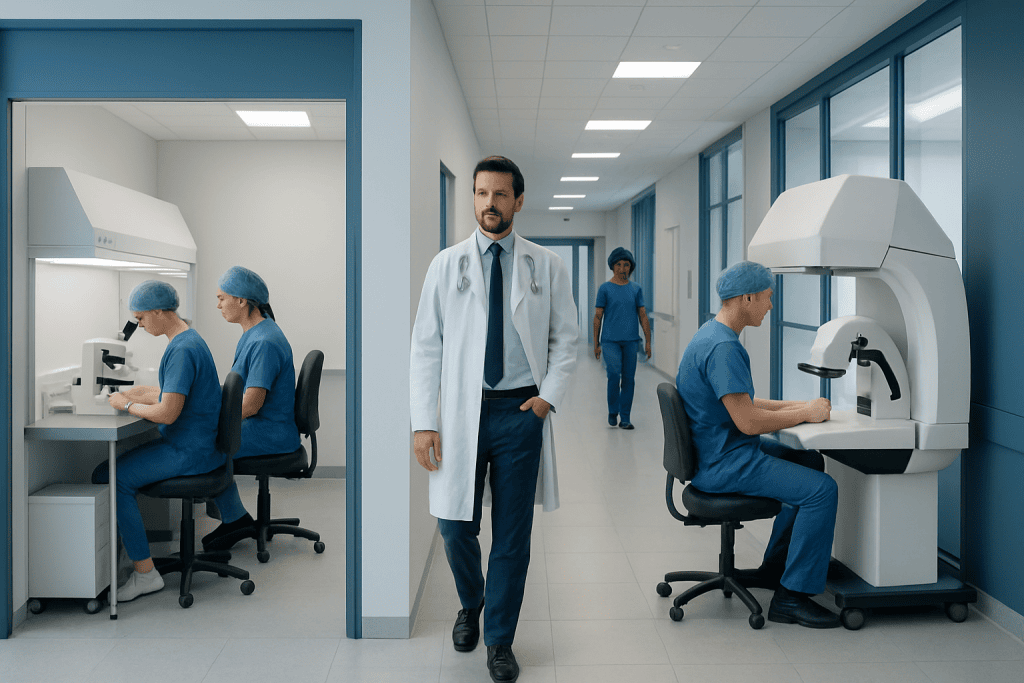
Robotic and automated IVF lab systems aim to improve consistency, traceability, and environmental control. Open lab systems can also produce excellent results when they are well designed and carefully managed.
Key Takeaways
- Robotic and automated IVF lab systems aim to improve consistency, traceability, and environmental control.
- Open lab systems can also produce excellent results when they are well designed and carefully managed.
- No single technology guarantees pregnancy; age, egg and sperm quality, diagnosis, and embryo health remain major factors.
- Patients should ask how a clinic monitors air quality, temperature, witnessing, and quality control rather than focusing on one device alone.
- The skill of embryologists and the overall IVF process are just as important as the equipment used in the lab.
Open vs robotic IVF lab systems is a common question for people starting fertility treatment. Technology can improve precision and consistency in the IVF laboratory, but outcomes usually depend on a combination of patient health, embryo quality, clinic standards, and the experience of the fertility team.
Overview: What Are Open and Robotic IVF Lab Systems?
In vitro fertilization (IVF) involves several carefully timed steps that take place in a specialized embryology laboratory. Eggs are collected, sperm is prepared, fertilization is carried out, and embryos are cultured for several days before transfer or freezing. Because embryos are highly sensitive to changes in temperature, pH, air quality, and handling, the laboratory environment plays an important role in treatment quality.
An open IVF lab system generally refers to a more traditional setup in which embryologists perform key steps manually using standard lab workstations, microscopes, incubators, and monitoring tools. These labs may still be highly advanced, but more of the workflow depends directly on human handling and manual checks. In contrast, robotic or automated IVF lab systems use technologies such as enclosed workstations, digital witnessing, automated environmental control, time-lapse imaging, and in some settings robotic assistance for certain repetitive tasks.
Patients often wonder whether newer technology automatically means higher pregnancy rates. The answer is more nuanced. Advanced systems may help reduce variation and support safer processes, but they do not replace good clinical judgment, embryo biology, or experienced professionals. A high-quality lab can use either model effectively if it follows strong standards, quality control, and patient-centered care.
How IVF Lab Technology Could Influence Success

Technology may affect IVF success indirectly by improving the conditions in which eggs, sperm, and embryos are handled. Embryos do best in stable environments. If a system helps maintain constant temperature, humidity, gas levels, and low exposure to outside air, it may reduce stress on developing embryos. Automation can also help standardize processes that might otherwise vary slightly from one operator or one moment to another.
Robotic and semi-automated systems are often designed to reduce the number of times embryos are moved or exposed to changing conditions. Some enclosed platforms allow observation and handling within a controlled environment. Time-lapse incubators, for example, let embryologists assess embryo development without removing embryos from the incubator as often. Digital witnessing systems can also reduce the risk of identification errors by confirming that eggs, sperm, and embryos are matched to the correct patient.
That said, technology does not create healthy embryos on its own. Embryo development still depends heavily on the quality of the egg and sperm, the genetic health of the embryo, and the underlying fertility diagnosis. Even the most advanced equipment cannot fully overcome age-related declines in egg quality, severe sperm problems, or certain uterine conditions. For many patients, the most meaningful question is not whether a lab is open or robotic, but whether it consistently supports careful, evidence-based care throughout IVF treatment.
Potential Advantages of Robotic or Automated Systems

Robotic and automated IVF lab systems may offer several practical benefits. One of the main advantages is consistency. Machines and digital systems can help standardize workflows, reduce small handling differences, and document each step in detail. This can be especially helpful in busy fertility centers where maintaining the same high standard across many cycles is essential.
Another possible benefit is environmental protection. Enclosed or integrated systems may limit exposure to room air, light, vibration, and temperature fluctuations. Because eggs and embryos are sensitive, fewer disruptions may support a more stable culture environment. Automated monitoring can also alert staff quickly if gas levels, incubator conditions, or storage parameters change.
Traceability and safety are also important. Electronic witnessing and barcode-based identification systems can help confirm sample identity at each stage. While strict manual protocols can also be very safe, digital systems add another layer of verification. Some clinics combine automation with advanced procedures such as ICSI, in which a single sperm is injected into an egg, to improve precision in selected cases.
Still, not every automated feature has been proven to raise live birth rates for every patient group. In many cases, the value of these systems lies in reliability, workflow efficiency, and quality assurance rather than in a dramatic change in outcomes for all patients.
Strengths of Traditional Open IVF Labs
Traditional open IVF labs should not be viewed as outdated by default. Many highly respected fertility centers use open or partly open systems and achieve strong outcomes. Success depends on how the lab is designed, how staff are trained, and how carefully conditions are monitored. Skilled embryologists can achieve excellent fertilization, embryo culture, and freezing results in a well-run conventional lab.
One strength of open systems is flexibility. Embryologists may be able to adapt techniques in real time based on the appearance of eggs, sperm, and embryos. Manual observation can also be valuable when complex clinical judgment is needed. A laboratory team with deep experience may use this flexibility to tailor care for people with different fertility diagnoses, including female infertility and male-factor infertility.
In addition, newer technology is not equally necessary in every situation. If a clinic already has strict air filtration, stable incubators, validated procedures, double witnessing, and strong laboratory oversight, patient outcomes may be excellent without extensive robotic integration. In short, a traditional lab can still be modern in its standards, even if more of the work is done by trained specialists rather than by automated systems.
What Matters More Than the Lab System Alone
For most patients, the biggest factors affecting IVF success are personal medical factors rather than the type of workstation in the lab. Age is one of the most important, especially because egg quality and chromosomal normality generally decline over time. Ovarian reserve, sperm quality, previous pregnancy history, and the reason for infertility also matter. Conditions such as premature ovarian insufficiency, endometriosis, ovulatory disorders, or uterine abnormalities can affect outcomes in different ways.
The quality of the overall fertility program is equally important. This includes thoughtful stimulation protocols, safe egg retrieval, expert embryo culture, accurate embryo selection, and careful embryo transfer technique. Counseling, communication, and individualized planning also help patients move through treatment with more confidence and realistic expectations.
Patients may also benefit from asking broader questions about the clinic. For example, how often is equipment calibrated? How is air quality controlled? What systems are used to identify samples correctly? How are embryos monitored and frozen? A clinic that explains its quality systems clearly is often more reassuring than one that simply advertises the newest technology.
- Embryologist training and experience
- Quality control and laboratory accreditation
- Stable incubator and culture conditions
- Correct diagnosis and treatment planning
- Egg, sperm, and embryo quality
- Uterine health and embryo transfer technique
How Clinics Evaluate and Choose the Right Technology
Fertility centers usually choose laboratory systems based on safety, workflow, evidence, staffing, and the needs of their patients. A larger clinic may benefit from more automation to support high case volumes and consistent documentation. Another center may prefer a hybrid model, using traditional embryology methods along with selected technologies such as enclosed benches, time-lapse incubators, or electronic witnessing.
Importantly, evidence in reproductive medicine often develops gradually. Some technologies clearly improve process quality and reduce opportunities for error, while others are still being studied to determine which patients benefit most. A responsible clinic generally avoids presenting any device as a guarantee of pregnancy. Instead, it explains where technology supports care and where human expertise remains central.
People comparing clinics may wish to ask whether the laboratory uses standard IVF, artificial fertilisation techniques, or advanced micromanipulation when needed, and whether treatments are individualized. Some patients also have underlying conditions that need attention before IVF, such as fibroids, tubal problems, or a uterine septum, which can influence implantation and pregnancy outcomes regardless of lab design.
Questions Patients Can Ask Before Starting IVF
Choosing a fertility clinic can feel overwhelming, especially when websites emphasize equipment names and technical features. A helpful approach is to ask how technology fits into the clinic’s overall care model. Patients do not need to become experts in embryology, but understanding the basics can support informed decisions and more realistic expectations.
Useful questions include whether the clinic uses automated witnessing, what kind of incubators it uses, how often embryos are checked, and how sample safety is maintained. It can also help to ask who makes decisions about fertilization method, embryo culture, freezing, and transfer timing. These answers often reveal more about quality than a simple label such as open or robotic.
Patients may consider asking the clinic:
- How is the IVF lab monitored for temperature, gas balance, and air quality?
- What safeguards are used to verify patient identity and sample labeling?
- How experienced are the embryologists and fertility specialists?
- When is ICSI recommended instead of standard IVF?
- How are treatment plans adapted for age, ovarian reserve, or sperm factors?
- What support is available if previous cycles have not been successful?
These conversations can be especially important for those pursuing care for broader infertility concerns or after unsuccessful treatment elsewhere.
Bottom Line and When to Seek Specialist Advice
Open vs robotic IVF lab systems is an important but often oversimplified question. Technology can improve consistency, tracking, and environmental stability, which are valuable in embryo care. However, it is only one part of a larger treatment process. The best results usually come from a combination of skilled specialists, careful lab standards, accurate diagnosis, and a treatment plan tailored to the individual patient.
Anyone considering IVF should speak with a reproductive endocrinologist or fertility specialist about their specific situation rather than relying on technology claims alone. People with irregular cycles, repeated failed IVF, recurrent miscarriage, known sperm issues, low ovarian reserve, or suspected structural problems of the uterus may need additional evaluation before treatment decisions are made. A specialist can explain which laboratory approach and fertilization methods are most suitable for the case.
For international patients seeking fertility care, Acibadem International’s multidisciplinary specialists and JCI-accredited hospitals diagnose and treat infertility with individualized laboratory and clinical planning. The most reassuring sign for patients is usually not a single device, but a clinic that combines modern systems with transparent communication, patient safety, and experienced embryology care.
Frequently asked questions
Do robotic IVF lab systems guarantee higher success rates?
No. Robotic or automated systems may improve consistency, tracking, and environmental stability, but they do not guarantee pregnancy or live birth. Success still depends heavily on age, egg and sperm quality, embryo health, uterine factors, and the experience of the fertility team.
What is an open IVF lab system?
An open IVF lab system generally describes a more traditional laboratory setup in which embryologists perform many key steps manually using standard incubators, microscopes, and workstations. These labs can still be highly advanced and may produce excellent outcomes when they follow strict quality and safety standards.
Is newer IVF technology always better?
Not always. Some newer technologies clearly support workflow, traceability, or environmental control, but not every feature improves outcomes for every patient. It is more useful to look at the clinic's overall laboratory quality, staff experience, and individualized treatment approach.
What should patients ask a fertility clinic about the lab?
Patients can ask about air quality control, incubator monitoring, sample identification systems, embryo freezing methods, and embryologist experience. They may also ask how the clinic decides between standard IVF and ICSI and how treatment is adapted to their diagnosis.
Can a traditional IVF lab still be high quality?
Yes. A traditional or open lab can be high quality if it has strong quality control, stable culture conditions, experienced embryologists, and safe identification protocols. Good outcomes depend more on how well the lab is run than on whether every step is automated.
Who may benefit from a detailed fertility evaluation before IVF?
People with irregular periods, repeated IVF failure, recurrent pregnancy loss, severe male-factor infertility, low ovarian reserve, or suspected uterine abnormalities often benefit from a full evaluation. Identifying the underlying cause can guide the choice of treatment and may matter more than the specific lab platform used.
This article is for general information only and is not a substitute for professional medical advice. Please consult a qualified doctor about your individual situation.
IVF & fertility treatment in Turkey — success rates and costs
JCI-accredited · board-certified surgeons · reply within 24h
Add us as a Preferred Source to see more of our trusted health content across Google Search, AI Overviews and Discover.

Related Treatments
Related Conditions
More from the Health Library

Ovulation Induction: Medications, Monitoring, and Risks

IVF With PCOS: Stimulation Planning, Egg Quality, and Safety

Sperm Health and Fertility: What Count, Movement, and Shape Mean

ICSI in IVF: When Sperm Injection May Improve Fertilization

IVF for Male Factor Infertility: Testing, ICSI, and Treatment Planning

OHSS in IVF: Symptoms, Risk Factors, and Prevention
Gynecology & Obstetrics Specialists at Acibadem

Prof. Dr. Engin Oral (m)
Gynecology & Obstetrics
Dr. A. Ezgi Sancaklı
Gynecology & Obstetrics
Prof. Dr. A. Taner Usta
Gynecology & Obstetrics
Prof. Dr. Ahmet Cem Batukan
Gynecology & Obstetrics