Prolonged Pacifier Use Can Change a Child’s Bite

Long-term, frequent pacifier use—especially beyond age 2 or 3—can push front teeth forward, create an open bite, or narrow the upper jaw. Mild changes often improve once the habit stops. A dentist can examine the child's bite and advise whether observation or treatment is needed.
Key Takeaways
- Pacifier teeth usually describes dental or bite changes caused by prolonged sucking habits.
- The risk increases with frequent, long-term pacifier use, especially after age 2 to 3.
- Common signs include front teeth that tilt forward, an open bite, or changes in the roof of the mouth.
- Early dental checkups can help identify whether the changes are likely to resolve on their own.
- Gentle habit-ending strategies are often the first step before any dental treatment is considered.
Has your child’s smile started to look a little different — a gap between the top and bottom front teeth when the mouth closes, or upper teeth that seem to lean forward? If a pacifier has been part of daily life for years, that may be why.
“Pacifier teeth” is the everyday name for changes in tooth position or bite that can happen when a child uses a pacifier for a long time, especially beyond the toddler years. In many children these changes are mild and may improve once the habit stops. Some, though, need dental monitoring or treatment.
Overview: What are pacifier teeth?
Pacifier teeth is a nonmedical term used to describe tooth and bite changes linked to prolonged pacifier use. The most common changes affect how the upper and lower front teeth meet. In some children, the front teeth may not touch when the mouth closes, a pattern often called an open bite. Others may develop forward-tilting front teeth or narrowing of the upper dental arch.
These changes do not happen in every child who uses a pacifier. Short-term pacifier use in infancy is common and may be soothing. The concern is usually persistent, frequent sucking over time, especially during the years when the jaws and baby teeth are still developing rapidly.
Here is the reassuring part: early changes can sometimes settle on their own once the pacifier is gone. Whether that happens depends on your child’s age, how long the habit went on, and how much the teeth and jaw alignment were affected. A dentist or pediatric dentist can look at the bite and tell you whether to simply watch it or treat it.
How pacifier use affects teeth and jaw development
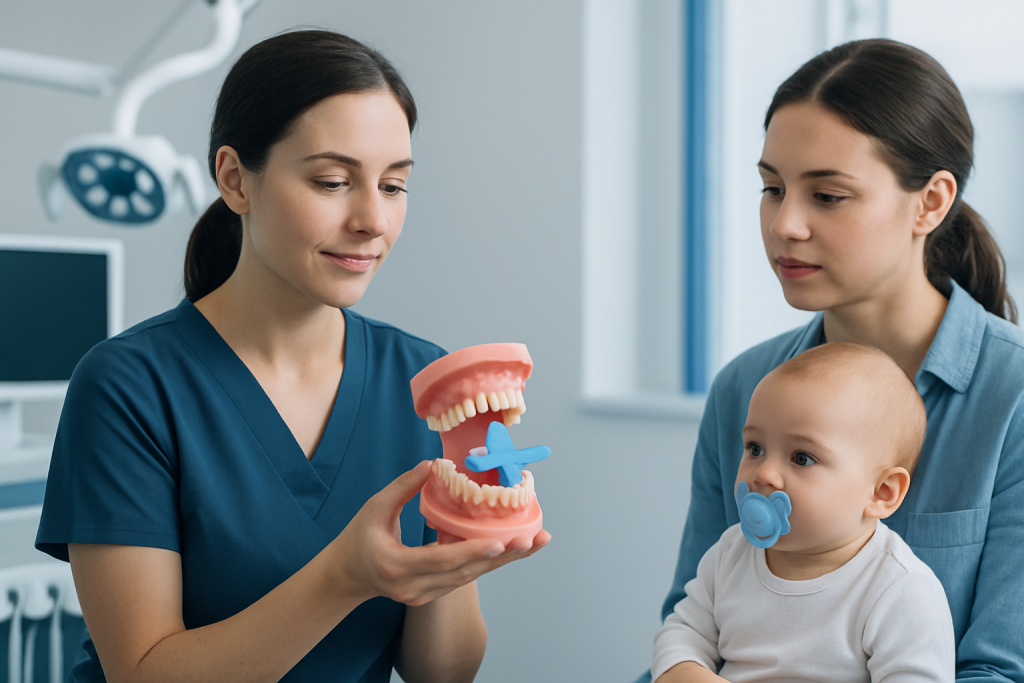
Sucking places repeated pressure on the teeth, gums, and growing jaw. Over time, that pressure can influence the position of the front teeth and the shape of the upper jaw. If a pacifier rests between the upper and lower front teeth for long periods, those teeth may move apart or angle outward.
The roof of the mouth may also become higher or narrower in some children. This can affect how the upper and lower teeth fit together. In certain cases, the child may develop a crossbite, where some upper teeth bite inside the lower teeth instead of outside them. Dentists often evaluate these patterns as part of a child’s routine oral growth assessment.
A pacifier is rarely the whole story. A child who breathes through the mouth, has a blocked nose, or sucks a thumb can end up with similar bite changes. Since these things overlap, it is worth having your child assessed rather than assuming the pacifier is to blame.
Signs and symptoms parents may notice

Pacifier teeth are often first noticed when the child smiles or bites down. Parents may see a gap between the upper and lower front teeth, front teeth that seem to lean forward, or teeth that do not line up as expected. Some children also show changes in the shape of the palate or the width of the upper jaw.
In many cases, there is no pain. The issue is more about alignment and developing bite patterns than discomfort. However, some children may have difficulty biting into foods with the front teeth, or they may develop speech differences involving sounds made with the tongue and front teeth.
Possible signs include:
- Upper front teeth that protrude more than expected
- A visible gap when the back teeth are together
- Lower front teeth positioned inward
- Narrow upper jaw or crossbite
- Speech changes, such as a lisp in some children
- Ongoing need for a pacifier beyond the toddler years
If there is concern about tooth position, a dental evaluation is the best way to confirm whether the changes are related to sucking habits, normal variation, or another dental issue.
Causes and risk factors
The main cause of pacifier teeth is prolonged and frequent non-nutritive sucking. The chance of bite changes tends to rise when a child uses a pacifier for several hours a day, sleeps with it regularly, or continues the habit beyond age 2 or 3. The duration and intensity of the habit matter more than occasional use.
Not all pacifiers have the same shape, but no pacifier can be considered completely risk-free for dental development if used for a long time. Orthodontic-style pacifiers may reduce certain pressures compared with traditional shapes, but they do not eliminate the possibility of alignment changes when the habit is persistent.
Other factors can increase the likelihood or severity of dental changes:
- Thumb or finger sucking in addition to pacifier use
- Family patterns of jaw shape or bite alignment
- Mouth breathing or chronic nasal congestion
- Delayed stopping of sucking habits
- Existing dental crowding or jaw growth differences
Because these influences can overlap, a dentist may also look for related conditions that affect facial growth and oral function. If breathing or upper airway issues are suspected, referral may be appropriate, especially when symptoms suggest enlarged adenoids.
Diagnosis and dental assessment
Diagnosis is usually straightforward and based on a clinical dental examination. The dentist asks about the child’s pacifier history, including the age the habit began, how often it is used, and whether it is used mainly for sleep or throughout the day. This helps estimate the level of pressure placed on the teeth over time.
During the examination, the dentist checks how the upper and lower teeth meet, whether the front teeth close together, and whether the upper jaw appears narrow. They also look for changes that may suggest thumb sucking, tongue posture issues, or breathing patterns that can affect oral development.
In some children, no immediate treatment is needed apart from stopping the habit and monitoring growth. In others, the dentist may recommend follow-up visits to see whether the bite improves over several months. If the child is older or the bite change is more pronounced, referral for orthodontic assessment may be suggested. This is especially relevant when there is concern about a developing malocclusion.
Treatment options and what helps
The first and most important step is stopping or reducing pacifier use. In younger children, this alone may allow the front teeth and bite to improve naturally as the jaws continue to grow. The earlier the habit ends, the more likely spontaneous improvement becomes.
If the child has mild changes, the dentist may recommend watchful follow-up. If the bite does not improve, or if the child is older and permanent teeth are starting to come in, orthodontic treatment may be considered. This can involve appliances that help guide the jaws or align the teeth. Depending on the child’s needs, care may include orthodontic treatment or a broader dental plan through pediatric dentistry.
When speech is affected, the child may benefit from evaluation of tongue posture and articulation. If mouth breathing, snoring, or chronic nasal blockage is present, treatment may also involve assessment of the nose and throat. In selected children, coordinated care can help address the underlying reason the pacifier habit persisted.
Every child’s plan looks a little different. We are not just after straighter teeth — we want a healthy bite, comfortable chewing, and mouth development that stays on track.
Prevention and self-care for families
Pacifier use can be a practical soothing tool in infancy, but it helps to plan early for when and how the habit will end. Many families find it easiest to gradually limit use to naps and bedtime before stopping completely. A calm, consistent approach usually works better than sudden pressure or punishment.
Helpful strategies include offering comfort in other ways, such as a bedtime routine, favorite toy, or extra reassurance. Parents can praise the child for time spent without the pacifier and set simple, age-appropriate goals. Cutting the tip, applying unpleasant substances, or shaming the child is generally not recommended unless advised by a clinician, because these approaches may increase distress or be unsafe.
General prevention tips include:
- Encourage stopping prolonged pacifier use by about age 2 to 3, or earlier if possible
- Limit pacifier use during the day rather than allowing constant use
- Schedule regular dental checkups starting in early childhood
- Watch for mouth breathing, snoring, or feeding and speech concerns
- Seek advice early if the front teeth no longer meet normally
Most children give up the pacifier just fine with patience and a steady routine. If yours is finding it hard, your dentist or pediatrician can suggest strategies that suit your child.
When to seek medical care
It is reasonable to mention pacifier use at routine pediatric and dental visits, even if there are no obvious problems. Professional advice is especially helpful if the child still relies heavily on a pacifier after age 2 to 3, if the front teeth no longer meet, or if the child has trouble chewing certain foods.
Get your child checked too if you notice speech concerns, ongoing mouth breathing, frequent snoring, or a visibly narrow upper jaw. None of these necessarily means something serious, but they are worth looking at, because they can affect how the mouth grows and works.
If a child needs coordinated care, multidisciplinary specialists can evaluate dental alignment, airway issues, and oral development together. Acibadem International’s multidisciplinary specialists and JCI-accredited hospitals diagnose and treat these concerns for international patients, including care related to ENT treatment when breathing or upper airway factors are part of the picture.
Frequently asked questions
Can pacifier teeth correct themselves?
In many younger children, mild bite changes can improve after the pacifier habit stops. The chance of natural improvement is better when the habit ends early and before the permanent teeth begin to come in. A dentist can tell whether watchful waiting is reasonable.
At what age should a child stop using a pacifier?
Many clinicians advise reducing and stopping prolonged pacifier use by around age 2 to 3. Earlier stopping may lower the risk of bite changes. The best timing can vary depending on the child’s needs and dental development.
Is thumb sucking worse than a pacifier for teeth?
Both habits can affect tooth alignment and jaw growth if they continue long enough. Thumb sucking may be harder to stop because the habit is always available to the child. The impact depends on how often, how intensely, and how long the habit continues.
Do orthodontic pacifiers prevent pacifier teeth?
Orthodontic-style pacifiers may be designed to reduce pressure on the developing mouth, but they do not fully prevent dental changes with prolonged use. Duration and frequency still matter. Families should not rely on pacifier shape alone to protect the bite.
Will every child who uses a pacifier develop pacifier teeth?
No. Many children use a pacifier without lasting dental problems, especially if use is limited and ends early. Risk rises with frequent, long-term use and when other factors, such as thumb sucking or mouth breathing, are present.
How do dentists treat pacifier teeth?
Treatment starts with stopping the sucking habit and monitoring how the teeth and bite change over time. Some children need only observation, while others may benefit from orthodontic guidance or appliances later. The approach depends on the child’s age and the severity of the bite change.
This article is for general information only and is not a substitute for professional medical advice. Please consult a qualified doctor about your individual situation.
Explore treatments in Turkey — costs, top hospitals & a free quote
7 JCI-accredited hospitals · board-certified surgeons · reply within 24h
Add us as a Preferred Source to see more of our trusted health content across Google Search, AI Overviews and Discover.

Medically reviewed by the Acıbadem International Medical Board — August 24, 2026
See our medical review board →
Update history
- PublishedAugust 4, 2026
- Medical review approvedAugust 24, 2026
- Last content updateAugust 24, 2026
References2
- Pacifiers and thumb sucking — MedlinePlus — medlineplus.gov
- Dummies (pacifiers) and thumb sucking — NHS — nhs.uk
Dental & Oral Health
Full-scope dental care from implants and aesthetics to oral and maxillofacial surgery.
151 specialists in this unitOral & Dental Health Specialists at Acibadem





Related Treatments
More from the Health Library
What a Dental Hygienist Does During a Preventive Visit

Where Dental Lasers Help and Where Drills Are Still Needed
Tooth Decay Starts Before a Cavity Appears
Dental Abfraction: Gumline Notches With More Than One Cause

A Chipped Tooth Can Be Minor or Deep, but Needs Checking