Peptic Ulcer Disease: Causes, Warning Signs, and When to Seek Care

Peptic ulcer disease usually affects the stomach or the upper small intestine. The most common causes are Helicobacter pylori infection and regular use of NSAID pain relievers.
Key Takeaways
- Peptic ulcer disease usually affects the stomach or the upper small intestine.
- The most common causes are Helicobacter pylori infection and regular use of NSAID pain relievers.
- Symptoms may include burning upper abdominal pain, bloating, nausea, or feeling full quickly, but some ulcers cause no symptoms.
- Black stools, vomiting blood, sudden severe abdominal pain, or fainting need urgent medical attention.
- Diagnosis often involves medical history, tests for H. pylori, and sometimes endoscopy.
- Treatment may include acid-reducing medicines, stopping ulcer-triggering drugs when possible, and treating the underlying cause.
Peptic ulcer disease happens when open sores form in the lining of the stomach or the first part of the small intestine. It is a common and often treatable condition, especially when the cause is identified early and warning signs are not ignored.
Overview of Peptic Ulcer Disease
Peptic ulcer disease refers to sores that develop in the protective lining of the stomach or the duodenum, which is the first part of the small intestine. Ulcers in the stomach are called gastric ulcers, while those in the duodenum are called duodenal ulcers. These sores form when the normal balance between digestive acids and the lining’s protective defenses is disrupted.
Many people think ulcers are caused mainly by stress or spicy foods, but those are not usually the main reasons an ulcer forms. In most cases, the problem is linked to infection with Helicobacter pylori (often called H. pylori) or to frequent use of nonsteroidal anti-inflammatory drugs, also known as NSAIDs. These include medicines such as ibuprofen, naproxen, and aspirin.
Peptic ulcer disease can range from mild and manageable to serious if complications develop. Some people have a dull or burning pain that comes and goes, while others may not notice symptoms until bleeding or another complication occurs. Because of this, persistent digestive symptoms should be discussed with a qualified doctor.
With proper diagnosis and treatment, most ulcers heal well. Understanding the cause is important, because treatment is not only about reducing acid. It may also involve clearing an infection, adjusting pain medicines, and preventing the ulcer from returning. Readers seeking more detail on this condition may also find peptic ulcer information helpful.
Symptoms and Warning Signs

The most common symptom of peptic ulcer disease is a burning or gnawing pain in the upper abdomen. Some people describe it as hunger-like discomfort, pressure, or soreness between the breastbone and the belly button. The timing of pain can vary. It may appear when the stomach is empty, after eating, or during the night.
Other symptoms can include bloating, belching, nausea, poor appetite, and feeling full sooner than usual. In some people, symptoms are mild and easy to confuse with indigestion, acid reflux, or other digestive conditions. In others, there may be no obvious warning signs until the ulcer becomes more severe.
Possible symptoms of peptic ulcer disease include:
- Burning upper abdominal pain
- Nausea or occasional vomiting
- Bloating or excessive burping
- Early fullness with meals
- Unexplained weight loss
- Symptoms that improve or worsen around meals
Certain symptoms need urgent medical attention because they may suggest a complication such as bleeding or perforation. These include black or tarry stools, vomiting blood or material that looks like coffee grounds, sudden severe abdominal pain, dizziness, weakness, or fainting. Bleeding in the digestive tract can also occur in other conditions, so doctors may evaluate for causes such as gastrointestinal bleeding more broadly when these symptoms appear.
Causes and Risk Factors
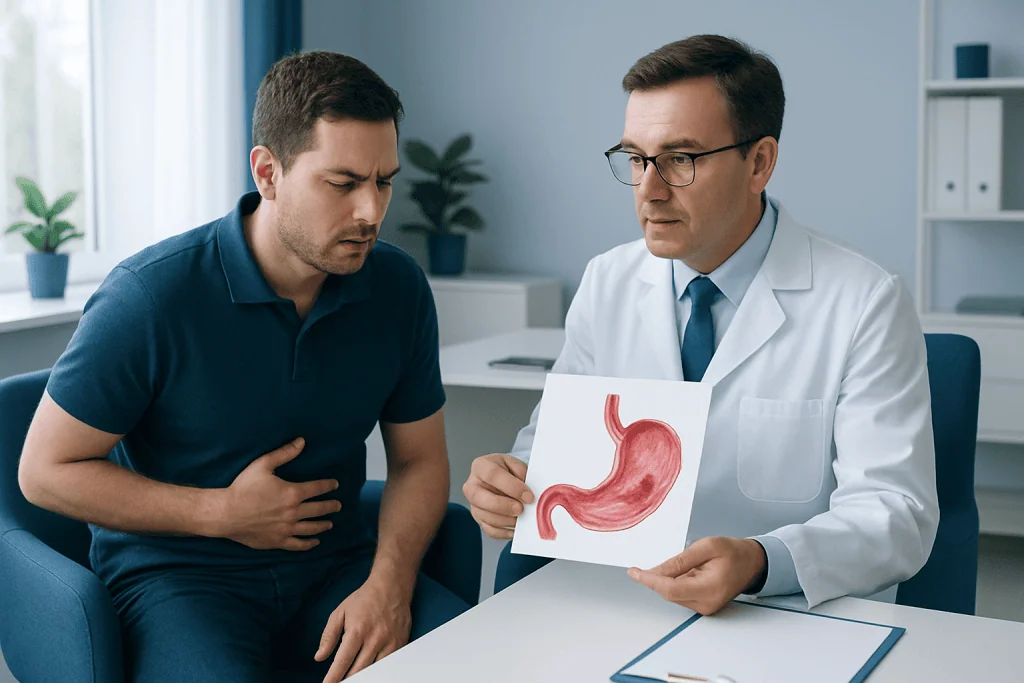
The two leading causes of peptic ulcer disease are H. pylori infection and regular use of NSAID pain relievers. H. pylori can weaken the stomach or duodenal lining and make it more vulnerable to acid. NSAIDs can reduce substances that normally help protect the digestive lining, especially when taken often or at higher doses.
Not everyone with H. pylori develops an ulcer, and not everyone who takes NSAIDs will have digestive injury. Risk tends to rise when several factors occur together. For example, an older adult who takes aspirin daily and has a history of ulcers may face a higher risk than someone younger without those factors.
Risk factors and contributors may include:
- H. pylori infection
- Frequent use of NSAIDs, including aspirin
- Previous history of ulcers
- Smoking
- Heavy alcohol use
- Older age
- Serious illness or physiologic stress in hospitalized patients
- Use of certain medicines such as steroids when combined with NSAIDs or blood thinners
Less commonly, ulcers may be related to conditions that increase acid production or affect the lining of the upper digestive tract. Sometimes symptoms overlap with other digestive problems, including Barrett’s esophagus or reflux-related disorders, which is one reason a careful medical evaluation is useful when symptoms persist or change.
How Doctors Diagnose Peptic Ulcer Disease
Diagnosis usually begins with a review of symptoms, medicines, medical history, and possible risk factors. A doctor may ask about pain relievers, aspirin use, smoking, alcohol, prior ulcers, and whether there are warning signs such as weight loss, vomiting, anemia, or bleeding. This history helps guide the next steps.
Testing for H. pylori is often an important part of the evaluation. Depending on the situation, this may be done with a breath test, stool test, or biopsy sample taken during endoscopy. In some cases, blood tests may help assess anemia or signs of blood loss, but they are not usually the main way to confirm an ulcer.
Upper endoscopy is one of the most useful tools when symptoms are significant, persistent, or accompanied by alarm features. During this procedure, a thin flexible tube with a camera is passed through the mouth to examine the esophagus, stomach, and duodenum. It can help doctors see an ulcer directly, check for bleeding, and take tissue samples if needed.
Doctors may be especially likely to recommend endoscopy for older adults, people with bleeding, those with difficulty swallowing, ongoing vomiting, unexplained weight loss, or symptoms that do not improve with treatment. When evaluation is complex, a gastroenterology team experienced in digestive motility and upper GI assessment may help clarify overlapping symptoms and guide care.
Treatment Options
Treatment depends on the cause of the ulcer and whether complications are present. In many cases, doctors prescribe medicines that reduce stomach acid so the lining can heal. These may include proton pump inhibitors or other acid-suppressing medicines. If an ulcer is linked to H. pylori, treatment usually also includes a combination of antibiotics and acid suppression.
When NSAIDs are contributing to the problem, the doctor may advise stopping them, lowering the dose, switching to another option, or adding stomach-protective treatment if they cannot be avoided. Any change in medication should be made with medical guidance, especially if aspirin or blood thinners are being used for heart or stroke prevention.
If there is bleeding, severe pain, or another complication, treatment may need to be more urgent. Endoscopy can sometimes stop active bleeding or treat an ulcer directly. Rarely, surgery may be needed if there is a perforation, obstruction, or bleeding that cannot be controlled with other methods. In more advanced cases, care may involve evaluation and treatment for gastrointestinal bleeding as part of the emergency plan.
Follow-up is important because symptom relief does not always mean the ulcer has fully healed. Some people need repeat testing to confirm that H. pylori has cleared, and selected patients may need repeat endoscopy. For readers exploring related digestive care, peptic ulcer treatment and reflux disease care may provide additional context about upper gastrointestinal management.
Prevention and Self-Care
Not every ulcer can be prevented, but several practical steps can lower risk. One of the most important is using NSAID pain relievers carefully and only as directed. People who need these medicines often, especially older adults or those with a previous ulcer, should ask a doctor whether stomach-protective treatment is appropriate.
Good self-care also includes avoiding smoking and limiting alcohol, as both can irritate the digestive tract and interfere with healing. Eating spicy foods does not usually cause ulcers, but some foods may make symptoms feel worse in certain people. It can help to notice personal triggers and choose smaller, more comfortable meals during recovery.
Helpful prevention and self-care steps include:
- Take NSAIDs only when necessary and as advised
- Tell a doctor about any history of ulcers or bleeding
- Avoid smoking
- Limit alcohol
- Complete the full course of treatment if H. pylori is diagnosed
- Attend follow-up visits and recommended testing
People should not try to self-treat ongoing ulcer symptoms with over-the-counter medicines alone for long periods. Temporary symptom relief can delay diagnosis of an ulcer or another condition. If symptoms continue, recur, or worsen, medical review is the safest approach.
When to Seek Medical Care
A person should arrange a medical appointment if upper abdominal pain keeps returning, indigestion does not improve, nausea persists, or there is unexplained loss of appetite or weight. Medical advice is also important for anyone who regularly takes NSAIDs or aspirin and starts developing stomach discomfort. Early evaluation can help prevent complications and identify the right treatment.
Urgent care is needed for symptoms that suggest bleeding or perforation. These include vomiting blood, passing black or tarry stools, fainting, severe weakness, or a sudden intense abdominal pain that does not ease. These symptoms do not always mean an ulcer is the cause, but they should never be ignored.
People with anemia, chronic medical conditions, or a history of ulcers may need more prompt assessment. Pregnant patients, older adults, and people taking blood thinners should be especially cautious because digestive bleeding can become serious more quickly. A qualified clinician can decide whether testing, endoscopy, or hospital care is needed.
For patients seeking international evaluation, Acibadem International’s multidisciplinary specialists in JCI-accredited hospitals diagnose and treat peptic ulcer disease and related digestive conditions with individualized care plans. Even so, any new or worsening symptoms should first be discussed with a licensed healthcare professional who can assess the urgency of care.
Frequently asked questions
What is peptic ulcer disease?
Peptic ulcer disease is a condition in which open sores form in the lining of the stomach or the upper part of the small intestine. The most common causes are H. pylori infection and regular use of NSAID pain relievers.
How do ulcer symptoms usually feel?
Many people feel a burning, gnawing, or aching pain in the upper abdomen. Some also notice bloating, nausea, burping, or discomfort that changes with meals, although symptoms can vary from person to person.
Can stress or spicy foods cause an ulcer?
Stress and spicy foods do not usually cause peptic ulcer disease by themselves. However, they may make existing symptoms feel worse in some people, so avoiding personal triggers can still be helpful.
Is peptic ulcer disease serious?
It can be mild and treatable, but it may become serious if it causes bleeding, perforation, or blockage. Warning signs such as black stools, vomiting blood, fainting, or sudden severe abdominal pain need urgent medical attention.
How is H. pylori related to ulcers?
H. pylori is a bacterium that can damage the protective lining of the stomach or duodenum. When it is present, treatment often includes antibiotics along with acid-reducing medicine to help the ulcer heal and lower the chance of recurrence.
Do all ulcers need an endoscopy?
Not always. Some people may first have noninvasive testing for H. pylori and a trial of treatment, while others need endoscopy because of age, persistent symptoms, bleeding, anemia, weight loss, or other alarm features.
Can peptic ulcer disease come back?
Yes, it can return, especially if the underlying cause is not fully treated or if NSAID use continues. Following the treatment plan, completing H. pylori therapy when prescribed, and attending follow-up care can help reduce the risk.
References
- National Institute of Diabetes and Digestive and Kidney Diseases
- American College of Gastroenterology
- National Health Service
- Mayo Clinic
- Merck Manual Consumer Version
This article is for general information only and is not a substitute for professional medical advice. Please consult a qualified doctor about your individual situation.
Peptic Ulcer in Turkey — costs, top hospitals & a free quote
JCI-accredited · board-certified surgeons · reply within 24h
Add us as a Preferred Source to see more of our trusted health content across Google Search, AI Overviews and Discover.

Gastroenterology
Diagnosis and treatment of the digestive system and liver, with advanced endoscopy.
46 specialists in this unit