PRK vs LASEK: Key Differences in Healing, Comfort, and Results

PRK and LASEK reshape the cornea without creating a LASIK flap. Long-term vision outcomes are often similar when patients are good candidates.
Key Takeaways
- PRK and LASEK reshape the cornea without creating a LASIK flap.
- Long-term vision outcomes are often similar when patients are good candidates.
- PRK usually removes the cornea’s surface cells, while LASEK preserves and repositions a thin epithelial layer.
- Early healing and discomfort can differ, but both procedures require careful aftercare and follow-up.
- The best choice depends on corneal health, prescription, lifestyle, and the eye surgeon’s assessment.
PRK and LASEK are both surface-based laser vision correction procedures that can treat common refractive errors. They often provide similar long-term vision results, but they differ in how the cornea’s outer layer is handled, which can affect comfort and healing in the first days to weeks.
Overview of PRK and LASEK
PRK and LASEK are types of laser refractive surgery used to reduce dependence on glasses or contact lenses. They are commonly used to treat nearsightedness, farsightedness, and astigmatism. Both are considered surface ablation procedures, meaning the laser treatment is performed on the front surface of the cornea rather than beneath a corneal flap.
The main difference between the two procedures is how the eye’s outermost layer, called the epithelium, is managed. In PRK, this layer is gently removed before laser reshaping begins. In LASEK, the epithelium is loosened with a diluted alcohol solution, moved aside, and then repositioned after the laser treatment.
Because neither procedure creates a deeper flap, PRK and LASEK may be considered for people who have thinner corneas, dry eye concerns, or lifestyles where eye trauma is possible. In many cases, both options can achieve excellent vision correction, but the healing experience may feel different in the early period after surgery.
How the procedures are performed
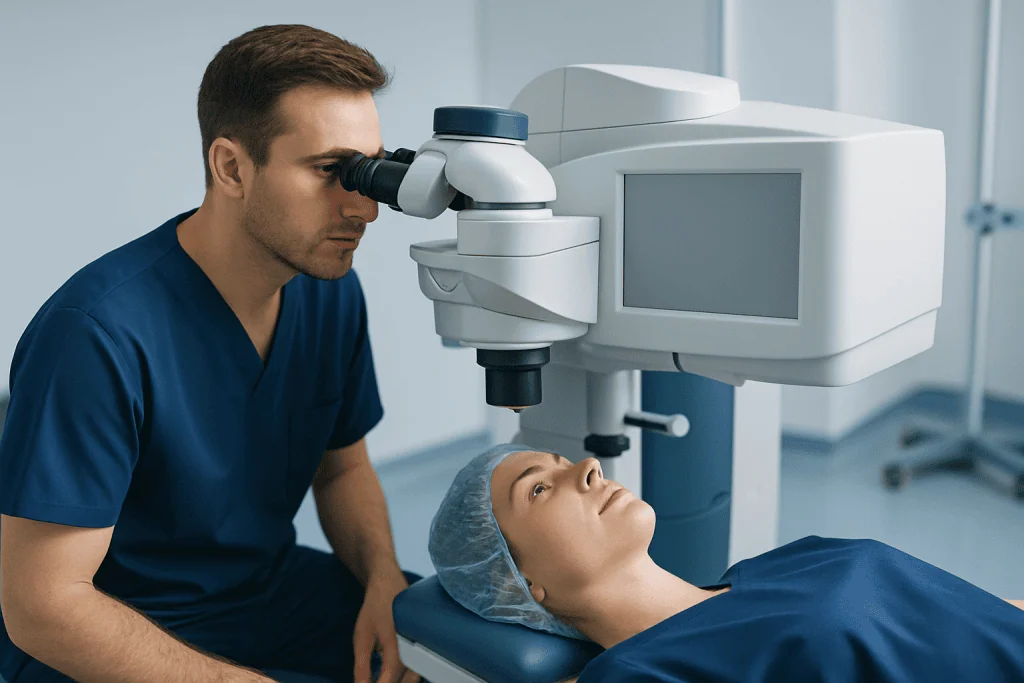
Before either treatment, the eye is numbed with anesthetic drops. The surgeon then prepares the corneal surface and uses an excimer laser to reshape the cornea with very precise tissue removal. This helps light focus more accurately on the retina, improving vision.
In PRK, the epithelium is removed and allowed to grow back naturally over the next several days. In LASEK, the surgeon attempts to preserve this thin surface layer and place it back onto the cornea after laser treatment. A soft bandage contact lens is usually placed on the eye after both procedures to protect the surface while it heals.
These procedures are often discussed alongside other vision correction options such as LASIK and ReLEx SMILE. A full eye examination helps determine which approach is most suitable based on corneal thickness, tear film quality, prescription stability, and overall eye health.
Healing time and early comfort

Healing is one of the most important differences patients notice when comparing PRK vs LASEK. With both procedures, recovery is usually slower than with LASIK because the corneal surface needs time to repair. Vision often improves gradually over days to weeks, and fine visual sharpness may continue to stabilize over a longer period.
PRK is often associated with a few days of more noticeable discomfort, light sensitivity, tearing, and a gritty sensation while the epithelium regrows. LASEK may be somewhat more comfortable for some people in the first days, but this is not always the case. Individual healing varies, and the quality of the repositioned epithelial layer can affect symptoms.
Most patients need several days away from work or study, especially if their tasks involve prolonged screen use or detailed visual work. Temporary blur, glare, and fluctuating focus are common during early recovery with either procedure. The surgeon usually prescribes eye drops to reduce inflammation, prevent infection, and support healing.
- PRK often has a slightly more direct surface healing process.
- LASEK may aim to reduce exposure of the corneal surface by replacing the epithelial layer.
- Both require protection from rubbing the eyes and careful drop use.
- Neither procedure should be judged by vision quality in the first few days alone.
Vision results and long-term outcomes
For suitable candidates, PRK and LASEK can both provide very good long-term visual outcomes. In general, the final vision results are often comparable, especially for mild to moderate refractive errors. The greatest differences between the two procedures are usually in early healing and comfort rather than in the ultimate correction achieved.
Even so, no refractive surgery can guarantee perfect vision or lifelong freedom from glasses. Some people may still need glasses for certain tasks, and age-related changes such as presbyopia can still develop later. As with any refractive procedure, the accuracy of the result depends on stable prescription measurements, corneal characteristics, and proper healing.
Long-term safety depends heavily on patient selection and surgical planning. People with irregular corneas, untreated dry eye, or other eye diseases may need additional evaluation. In some cases, conditions affecting the corneal surface may lead a surgeon to discuss alternatives or related care through corneal surface and external disease services.
Who may be a good candidate
PRK or LASEK may be considered for adults with a stable glasses prescription who want refractive surgery and have healthy eyes overall. These procedures can be especially relevant for people with thinner corneas or for those whose work or sports increase the chance of an eye impact, since there is no deeper flap as in LASIK.
People with certain conditions may not be ideal candidates until those issues are treated or fully assessed. Examples include active eye infection, significant dry eye, uncontrolled autoimmune disease, pregnancy-related prescription changes, or corneal disorders. A surgeon also looks closely at pupil size, corneal topography, and healing history.
Contact lens users are often asked to stop wearing lenses for a period before testing so the cornea can return to its natural shape. This is especially important because contact lenses can temporarily alter measurements needed for accurate planning. Patients who are not ideal candidates for surgery may still benefit from updated contact lenses or glasses.
Risks, side effects, and aftercare
Like all surgeries, PRK and LASEK carry possible risks and side effects. Common short-term effects include pain or discomfort, tearing, redness, light sensitivity, hazy vision, and a foreign-body sensation. These usually improve as the corneal surface heals, but the timeline can vary from person to person.
Less common concerns include infection, delayed healing, corneal haze, glare or halos at night, under-correction, over-correction, or dry eye symptoms. Careful follow-up is important so the surgeon can monitor healing and respond quickly if any concerns arise. People with unusual pain, worsening redness, discharge, or sudden vision decline should seek prompt medical advice.
Aftercare typically includes antibiotic and anti-inflammatory eye drops, lubricating drops, rest, and avoiding eye rubbing. Patients are usually advised to protect their eyes from dust, smoke, swimming pools, and strong sunlight during early recovery. Wearing sunglasses outdoors and keeping all follow-up appointments can support safer healing.
How to choose between PRK and LASEK
The choice between PRK and LASEK is best made after a detailed discussion with an ophthalmologist who performs refractive surgery. The surgeon considers the shape and thickness of the cornea, the degree of refractive error, tear film quality, healing expectations, occupation, and sports or lifestyle needs. Personal preference also matters, especially regarding recovery time and tolerance for early discomfort.
Some surgeons prefer one technique more often because of their experience and the patient’s corneal findings. In modern practice, PRK is performed more commonly than LASEK in many centers, but LASEK may still be a reasonable option in selected cases. What matters most is not the popularity of the name, but whether the procedure fits the eye safely and predictably.
Patients benefit from asking practical questions before deciding. Helpful topics include expected downtime, how pain is managed, when driving may be possible again, whether both eyes can be treated together, and what happens if vision needs enhancement later. Near the end of the evaluation process, some patients choose care in experienced centers such as Acibadem International, where multidisciplinary specialists in JCI-accredited hospitals diagnose and treat eye conditions for international patients.
When to see a doctor
Anyone considering laser vision correction should first have a full ophthalmic assessment rather than deciding based only on online comparisons. A doctor can explain whether PRK, LASEK, LASIK, or another option is appropriate and can identify problems that may need treatment first. This is especially important for people with previous eye surgery, dry eye, or corneal disease.
After surgery, patients should contact their doctor if they develop severe or worsening pain, increasing redness, thick discharge, fever, sudden drop in vision, or new flashes and floaters. These symptoms do not always mean a serious problem, but they need timely evaluation. Routine follow-up remains a key part of safe recovery even when healing seems to be going well.
People who are not suitable for refractive surgery can still explore other ways to improve vision comfort and function. Depending on the cause of blurred vision, the doctor may recommend glasses, contact lenses, or treatment for another eye condition rather than corneal laser reshaping.
Frequently asked questions
Which is better, PRK or LASEK?
Neither procedure is universally better for everyone. Both can provide strong long-term vision results, and the better option depends on corneal features, prescription, lifestyle, and the surgeon’s assessment. The main differences are usually in the way the surface layer is handled and how recovery feels in the first days.
Does PRK hurt more than LASEK?
PRK is often described as having more noticeable discomfort in the first few days because the surface cells are removed and must regrow. LASEK may feel slightly more comfortable for some patients, but comfort varies from person to person. Doctors usually provide drops and guidance to help manage symptoms during healing.
Is recovery faster with LASEK?
LASEK may offer somewhat smoother early healing in selected cases, but the difference is not always large. Both PRK and LASEK usually recover more slowly than LASIK because the corneal surface needs time to heal. Vision can fluctuate early and may continue to sharpen over several weeks.
Are the final vision results the same?
For many good candidates, the final vision results of PRK and LASEK are very similar. The biggest difference is often the recovery experience rather than the long-term outcome. Final clarity depends on accurate preoperative measurements, proper healing, and the individual eye.
Who should not have PRK or LASEK?
People with unstable prescriptions, active eye infections, significant untreated dry eye, certain corneal diseases, or some autoimmune conditions may not be good candidates. Pregnancy or breastfeeding may also affect timing because vision can temporarily change. A full eye examination is needed to make a safe decision.
How long before normal activities can resume?
Many people need several days of reduced activity after PRK or LASEK, especially if they use screens, drive, or do detailed work. The exact timing depends on healing speed and the surgeon’s advice. Strenuous exercise, swimming, and eye rubbing are usually restricted for longer.
References
- American Academy of Ophthalmology
- National Eye Institute
- Royal College of Ophthalmologists
- American Society of Cataract and Refractive Surgery
This article is for general information only and is not a substitute for professional medical advice. Please consult a qualified doctor about your individual situation.
LASEK in Turkey — costs, top hospitals & a free quote
JCI-accredited · board-certified surgeons · reply within 24h
Add us as a Preferred Source to see more of our trusted health content across Google Search, AI Overviews and Discover.