Recurrent Pregnancy Loss and IVF: Testing, PGT, and Treatment Planning

Recurrent pregnancy loss is commonly evaluated after two or more pregnancy losses, especially when there are risk factors or increasing maternal age. Testing may include uterine imaging, antiphospholipid syndrome screening, thyroid and diabetes checks, parental chromosomes, and genetic testing of pregnancy tissue when available.
Key Takeaways
- Recurrent pregnancy loss is commonly evaluated after two or more pregnancy losses, especially when there are risk factors or increasing maternal age.
- Testing may include uterine imaging, antiphospholipid syndrome screening, thyroid and diabetes checks, parental chromosomes, and genetic testing of pregnancy tissue when available.
- IVF with PGT may help some couples select embryos with the expected number or structure of chromosomes, but it does not guarantee pregnancy or prevent every miscarriage.
- Treatment planning should address both partners, embryo quality, uterine health, medical conditions, lifestyle factors, and emotional support.
- A specialist can help decide whether expectant care, targeted treatment, IVF, ICSI, or PGT is the most appropriate next step.
Recurrent pregnancy loss can be emotionally difficult, but a structured evaluation often identifies treatable factors and helps guide safer fertility planning. IVF, preimplantation genetic testing, and personalized medical care may be considered depending on age, pregnancy history, embryo genetics, and overall health.
Overview
Recurrent pregnancy loss, sometimes called recurrent miscarriage, usually means two or more pregnancy losses. Some guidelines use three losses for research definitions, but many fertility specialists begin evaluation after two, particularly if the patient is over 35, has had infertility, or has a known medical condition. The aim is not only to find a cause, but also to create a clear plan for the next pregnancy attempt.
Recurrent Pregnancy Loss and IVF care focuses on three questions: whether there is an identifiable reason for the losses, whether that reason can be treated before conception or during early pregnancy, and whether assisted reproductive technology may improve the chance of a healthy ongoing pregnancy. For some patients, the best plan is targeted medical treatment and natural conception. For others, IVF treatment with embryo testing may be considered.
It is important to know that many people with recurrent pregnancy loss later have a successful pregnancy, even when no single cause is found. A careful, evidence-based evaluation helps avoid unnecessary tests while making sure important factors, such as uterine abnormalities, antiphospholipid syndrome, endocrine disease, or chromosome rearrangements, are not missed.
Symptoms and When Pregnancy Loss Is Suspected
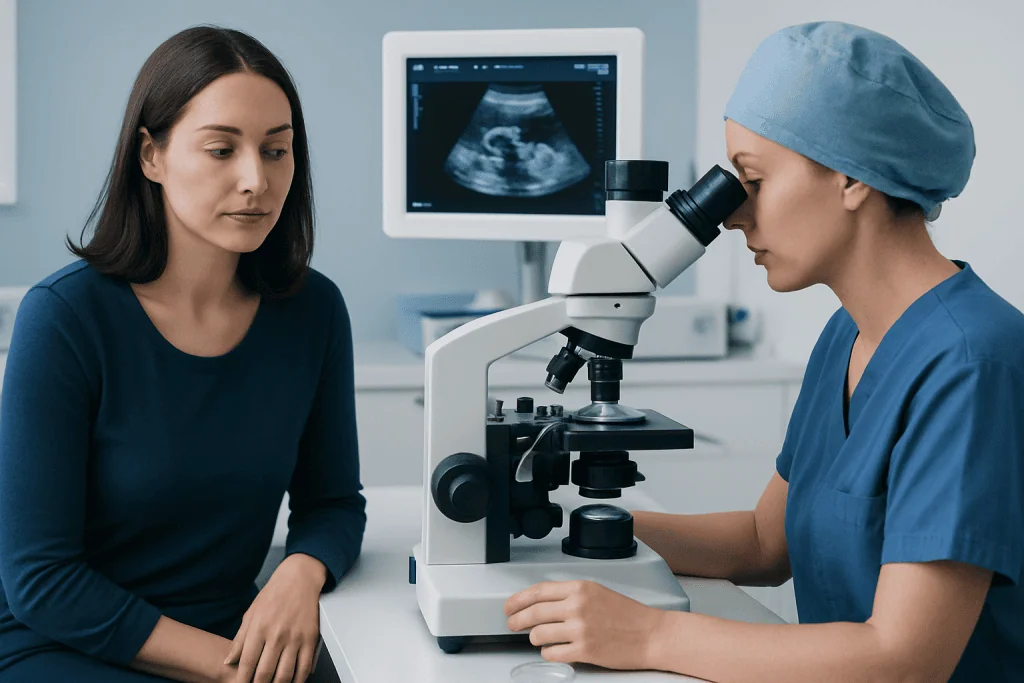
Pregnancy loss may be diagnosed after symptoms such as vaginal bleeding, cramping, pelvic pain, or passage of tissue. However, some losses are found only during an ultrasound when the pregnancy is not developing as expected. A biochemical pregnancy, which is detected by a positive pregnancy test but ends before ultrasound confirmation, can also be part of a fertility history and may help guide evaluation.
Symptoms alone do not confirm whether a pregnancy is viable. Bleeding in early pregnancy can occur for reasons other than miscarriage, so patients are usually assessed with ultrasound and blood tests such as serial pregnancy hormone measurements when appropriate. Anyone with heavy bleeding, severe pain, dizziness, fainting, shoulder-tip pain, or concern for ectopic pregnancy should seek urgent medical attention.
For people undergoing IVF, pregnancy monitoring is often more structured because the timing of embryo transfer is known. Even in IVF pregnancies, early bleeding or slow-rising hormone levels require individualized interpretation. The care team may repeat testing over several days to avoid making decisions too early.
Causes and Risk Factors

Recurrent pregnancy loss can have more than one contributing factor. Embryo chromosome abnormalities are a common reason for early miscarriage, and their likelihood increases with maternal age. Sometimes a parent carries a balanced chromosome rearrangement, such as a translocation, which does not affect that parent’s health but can increase the risk of embryos with unbalanced chromosomes.
Uterine factors can also play a role. These include a uterine septum, significant fibroids that distort the uterine cavity, intrauterine adhesions, or some congenital uterine differences. Hormonal and metabolic conditions, such as uncontrolled thyroid disease, poorly controlled diabetes, elevated prolactin, or polycystic ovary syndrome, may influence pregnancy outcomes and should be assessed in context.
Antiphospholipid syndrome is an important acquired clotting and immune-related condition linked to recurrent pregnancy loss and later pregnancy complications. Inherited thrombophilias are different and are not routinely tested in every patient unless there is a personal or family history suggesting blood clots. Other factors that may affect pregnancy health include smoking, excessive alcohol intake, certain medications, obesity or very low body weight, untreated infections, and severe chronic medical disease.
Male factors may also matter. Sperm count and movement are not the only considerations; sperm DNA integrity, age, lifestyle exposures, and underlying medical conditions can contribute to embryo development in selected cases. A balanced evaluation considers both partners rather than placing responsibility on one person.
Recommended Testing After Recurrent Pregnancy Loss
Testing should be individualized, but a standard evaluation often begins with a detailed history. The clinician reviews the number and timing of losses, ultrasound findings, prior embryo or pregnancy tissue results, menstrual pattern, medical conditions, medications, family history, and prior fertility treatments. The goal is to choose tests that can change management.
Common investigations may include imaging of the uterus with transvaginal ultrasound, saline infusion sonography, hysteroscopy, or hysterosalpingography. Blood tests may assess thyroid function, diabetes risk, prolactin, and antiphospholipid antibodies. Antiphospholipid testing usually requires specific antibodies to be checked and, if positive, confirmed on repeat testing after an interval according to diagnostic criteria.
Genetic evaluation can be very helpful. Testing pregnancy tissue after a loss may show whether the miscarriage was likely due to an embryo chromosome abnormality. Parental karyotyping may be recommended if losses are unexplained, if pregnancy tissue shows an unbalanced rearrangement, or if there is a suggestive family history. In couples also facing difficulty conceiving, a broader infertility evaluation may include ovarian reserve testing, semen analysis, and assessment of ovulation and tubal factors.
Not all advertised tests are routinely recommended. Broad immune panels, natural killer cell testing, non-indicated thrombophilia testing, and empiric treatments without a diagnosis may add cost and anxiety without proven benefit for many patients. A specialist can explain which tests are supported by guidelines and which are experimental or situation-specific.
IVF, PGT, and Embryo Selection
IVF may be considered when recurrent pregnancy loss occurs together with infertility, advanced maternal age, a known parental chromosome rearrangement, severe male factor infertility, or repeated losses suspected to be related to embryo chromosome abnormalities. In IVF, eggs are retrieved and fertilized in a laboratory, and embryos are monitored before transfer. When sperm-related fertilization concerns exist, intracytoplasmic sperm injection, or ICSI, may be part of the IVF plan.
Preimplantation genetic testing, or PGT, refers to testing a small sample of cells from an embryo before transfer. PGT-A screens for aneuploidy, meaning an abnormal number of chromosomes. PGT-SR is used when one parent has a structural chromosome rearrangement, such as a balanced translocation or inversion. PGT-M is used for specific single-gene conditions and is not usually a miscarriage test unless a known inherited condition is involved.
PGT can help identify embryos more likely to have the expected chromosome result, which may reduce the chance of transferring an embryo that would not implant or may miscarry. However, PGT does not create healthy embryos, cannot detect every possible problem, and does not guarantee a baby. Results must be interpreted alongside embryo quality, age, ovarian reserve, laboratory standards, and the possibility of mosaic results, where tested cells show a mixture of normal and abnormal chromosome patterns.
For some patients with recurrent loss, especially younger patients with good natural conception chances and no identified genetic issue, IVF with PGT may not improve the overall chance of live birth compared with careful natural conception and supportive care. For others, particularly those with a parental rearrangement or repeated aneuploid losses, PGT may be a valuable part of treatment planning.
Treatment Planning and Personalized Care
Treatment depends on the cause. If antiphospholipid syndrome is diagnosed, pregnancy care may include blood-thinning and antiplatelet medication under medical supervision. If a uterine septum, adhesions, or cavity-distorting fibroid is found, surgical correction may be considered. Thyroid disease, diabetes, elevated prolactin, and other medical conditions should be optimized before conception whenever possible.
When IVF is chosen, planning includes stimulation strategy, fertilization method, whether PGT is appropriate, timing of embryo transfer, and preparation of the uterine lining. A single embryo transfer is often preferred when an appropriate embryo is available because multiple pregnancy increases maternal and fetal risks. The care team also reviews medications used before and after transfer, such as progesterone support, based on the patient’s history and treatment protocol.
Patients with ovulatory disorders, including those related to polycystic ovary syndrome, may need individualized ovulation management, metabolic care, or IVF protocol adjustments. Those with low ovarian reserve may need counseling about expected egg numbers, embryo development, and whether repeated cycles, donor eggs, or other options are appropriate.
Emotional care is also part of treatment. Recurrent loss can cause grief, anxiety, and fear during subsequent pregnancies. Psychological support, clear communication about monitoring plans, and compassionate follow-up after test results can help patients feel more prepared and less alone.
Prevention, Self-Care, and Preparing for the Next Pregnancy
Not every pregnancy loss can be prevented, especially when it is caused by random chromosome changes in an embryo. Still, several steps can support general reproductive health. Patients are usually encouraged to take folic acid or a prenatal vitamin as advised, avoid smoking and recreational drugs, limit alcohol, review medications for pregnancy safety, and work toward healthy management of weight, blood pressure, diabetes, thyroid disease, and other chronic conditions.
Timing the next attempt depends on medical findings and emotional readiness. Some people can try again after recovery and medical review, while others should wait until testing or treatment is completed. If pregnancy tissue testing, uterine surgery, or blood tests are planned, the clinician may recommend completing these before the next conception attempt.
Early pregnancy care after recurrent loss often includes a written plan. This may involve early blood tests, ultrasound at an appropriate gestational age, medication guidance, and clear instructions about which symptoms should prompt urgent evaluation. A structured plan cannot remove all uncertainty, but it can make the early weeks more manageable.
For international patients, Acibadem International’s multidisciplinary specialists and JCI-accredited hospitals can evaluate recurrent pregnancy loss, fertility factors, and IVF options in one coordinated care pathway. The most appropriate plan should always be based on a doctor’s assessment of the patient’s medical history, test results, and personal goals.
When to See a Fertility Specialist
A fertility specialist or reproductive endocrinologist should be consulted after two or more pregnancy losses, after any loss with a known uterine or genetic concern, or after a loss in the setting of infertility. Earlier evaluation is also reasonable for patients over 35, those with irregular cycles, known endocrine disease, previous ectopic pregnancy, or a family history of chromosome rearrangements.
Medical attention is urgent if a pregnant patient has heavy bleeding, severe abdominal or pelvic pain, fainting, fever, foul-smelling discharge, or symptoms that could suggest ectopic pregnancy. After any miscarriage, follow-up is important to confirm physical recovery and to discuss whether tissue testing or further evaluation is recommended.
Patients considering IVF or PGT should ask what problem the treatment is intended to solve, what alternatives exist, and how results may affect embryo transfer decisions. A good consultation should include realistic expectations, discussion of limitations, and respect for the patient’s values, budget, and emotional wellbeing.
Frequently asked questions
How many miscarriages are considered recurrent pregnancy loss?
Many fertility specialists begin evaluation after two pregnancy losses, especially if the patient is older than 35 or has infertility or other risk factors. Some definitions use three losses, but waiting for a third loss is not always necessary for clinical care.
Can IVF prevent miscarriage?
IVF cannot prevent every miscarriage because losses can occur for many reasons, including uterine, hormonal, immune-related, and embryo-related factors. In selected cases, IVF with embryo genetic testing may reduce the chance of transferring an embryo with certain chromosome abnormalities.
What is the difference between PGT-A and PGT-SR?
PGT-A screens embryos for the expected number of chromosomes and is often discussed when age-related aneuploidy is a concern. PGT-SR is used when a parent carries a structural chromosome rearrangement, such as a balanced translocation, that can lead to unbalanced embryos.
Should both partners be tested after recurrent pregnancy loss?
Yes, the evaluation often considers both partners. Depending on the history, this may include semen analysis, genetic testing, medical review, and lifestyle assessment as well as evaluation of the uterus, hormones, and immune-related pregnancy risks.
Is genetic testing of miscarriage tissue useful?
When available, testing pregnancy tissue can help determine whether a loss was likely due to a chromosome abnormality in the embryo. This information may guide decisions about parental chromosome testing, IVF, PGT, or trying again without assisted reproduction.
Are blood thinners recommended for all patients with recurrent miscarriage?
No. Blood thinners are generally reserved for specific diagnoses, such as antiphospholipid syndrome, or other clear medical indications. Taking them without a diagnosis can cause side effects and should only be done under medical supervision.
What if all recurrent pregnancy loss tests are normal?
Unexplained recurrent pregnancy loss is common in clinical practice, and a normal evaluation can still be helpful because it rules out important treatable conditions. The plan may include supportive early pregnancy monitoring, lifestyle optimization, and discussion of whether IVF or PGT is appropriate based on age, embryo history, and fertility goals.
References
- American Society for Reproductive Medicine
- European Society of Human Reproduction and Embryology
- Royal College of Obstetricians and Gynaecologists
- American College of Obstetricians and Gynecologists
- World Health Organization
This article is for general information only and is not a substitute for professional medical advice. Please consult a qualified doctor about your individual situation.
IVF & fertility treatment in Turkey — success rates and costs
JCI-accredited · board-certified surgeons · reply within 24h
Add us as a Preferred Source to see more of our trusted health content across Google Search, AI Overviews and Discover.

Related Treatments
Related Conditions
More from the Health Library



Related Specialists

Prof. Dr. Bülent Tıraş
Gynecology & Obstetrics
Prof. Dr. Mete Güngör
Gynecology & Obstetrics
Prof. Dr. Faruk Suat Dede
Gynecology & Obstetrics
Prof. Dr. Tansu Küçük
Gynecology & Obstetrics