Reflux After Gastric Sleeve: When Heartburn Needs Medical Review

Reflux after gastric sleeve can be common, but ongoing heartburn, regurgitation, or swallowing trouble needs medical review and tailored treatment.
Key Takeaways
- Mild reflux can occur after sleeve gastrectomy, especially early in recovery, but ongoing symptoms need assessment.
- Heartburn, sour taste, regurgitation, chest discomfort, or trouble swallowing may suggest GERD or another postoperative issue.
- Eating patterns, sleeve anatomy, hiatal hernia, weight changes, and certain foods can all affect reflux symptoms.
- Treatment may include dietary adjustments, acid-lowering medicines, endoscopy, or in some cases revisional bariatric surgery.
- Urgent medical care is needed for severe chest pain, vomiting blood, black stools, dehydration, or inability to swallow liquids.
Reflux after gastric sleeve may happen as the stomach heals and adapts, but persistent heartburn should not be ignored. Medical review can identify whether symptoms are temporary, related to eating habits, or caused by a treatable problem such as GERD, a hiatal hernia, or narrowing of the sleeve.
Overview
Reflux after gastric sleeve refers to stomach contents moving upward into the esophagus after sleeve gastrectomy surgery. This can cause heartburn, a sour or bitter taste, regurgitation, chest discomfort, throat irritation, or coughing. Some people notice symptoms only occasionally, while others develop ongoing gastroesophageal reflux disease, often called GERD.
After sleeve gastrectomy, the stomach is smaller and more tube-shaped. This change helps with weight loss, but it can also alter pressure inside the stomach and affect the way food and acid move. For some patients, reflux improves as eating habits settle and swelling goes down. For others, symptoms may appear for the first time or become more frequent after surgery.
Occasional mild heartburn is not always a sign of a serious problem. However, persistent reflux deserves medical review because long-term irritation of the esophagus can affect comfort, nutrition, sleep, and quality of life. It may also point to a treatable issue such as a hiatal hernia, narrowing in the sleeve, or delayed stomach emptying.
A careful evaluation helps the care team decide whether symptoms can be managed with lifestyle changes and medication or whether further testing and procedural treatment are needed. Early review is usually the best way to prevent symptoms from becoming more difficult to control.
Symptoms of Reflux After Gastric Sleeve

The most common symptom is heartburn, usually described as a burning feeling in the chest or upper abdomen. Some patients also notice acid or food coming back up into the throat, especially after meals, when bending over, or when lying down. A sour taste in the mouth is another frequent complaint.
Reflux does not always feel like classic heartburn. It may also cause nausea, belching, bloating, hoarseness, chronic throat clearing, a dry cough, or a feeling of a lump in the throat. Nighttime reflux may disturb sleep and lead to coughing or choking sensations.
Symptoms that need closer attention include pain with swallowing, food sticking, repeated vomiting, worsening chest discomfort, or unintentional difficulty eating enough. These can suggest inflammation, ulceration, or narrowing of the sleeve rather than simple acid exposure alone.
- Burning in the chest or upper abdomen
- Regurgitation of acid or food
- Sour or bitter taste in the mouth
- Nausea, burping, or bloating after meals
- Hoarseness, cough, or throat irritation
- Trouble swallowing or food sticking
Why Reflux Can Happen After Sleeve Surgery
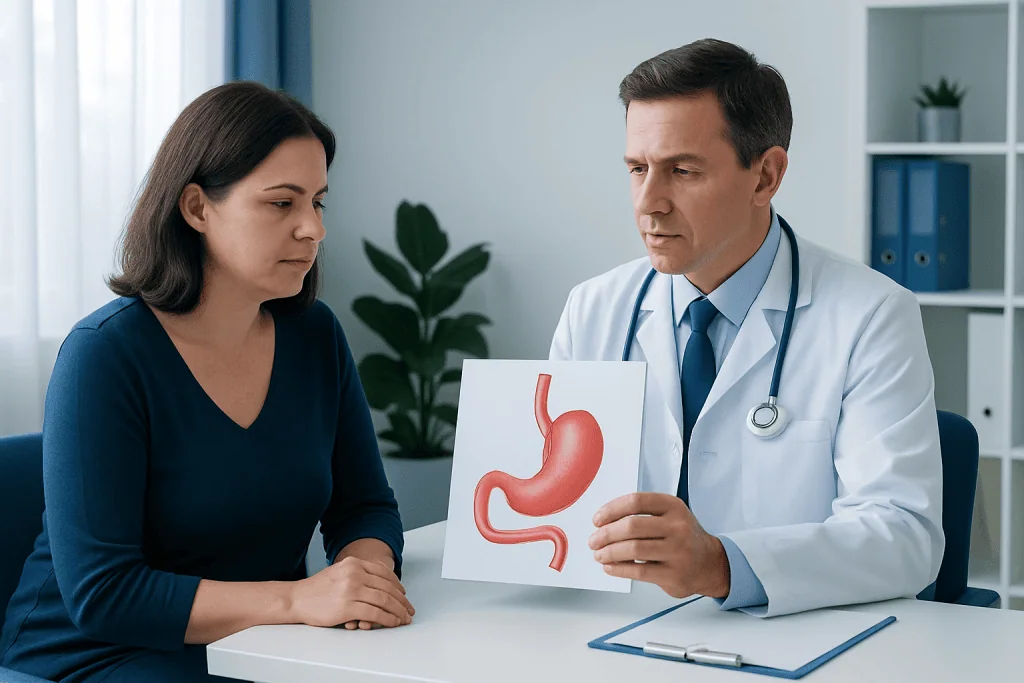
Several factors can contribute to reflux after sleeve surgery. The new stomach shape is narrower and may hold pressure differently than a larger stomach. If pressure rises inside the sleeve, acid and food may move upward more easily into the esophagus. This is one reason some patients develop GERD after surgery even if they did not have it before.
Swelling during healing can briefly worsen symptoms in the early postoperative period. Eating too quickly, taking large bites, drinking with meals, or advancing to solid foods before the surgical team recommends can also trigger reflux. Common dietary triggers include spicy foods, fried foods, chocolate, mint, caffeine, and carbonated drinks.
In some cases, reflux is related to anatomy. A hiatal hernia may be present before surgery or become more noticeable afterward. The sleeve can also be too narrow, twisted, or shaped in a way that slows the passage of food. Delayed emptying raises pressure and may lead to regurgitation, nausea, and chest discomfort.
Weight loss surgery is often part of broader care for morbid obesity, and many patients already have risk factors for reflux before surgery. People with pre-existing GERD, a hiatal hernia, smoking habits, or certain medications may be more likely to have ongoing symptoms after gastric sleeve surgery.
How Doctors Diagnose the Cause
Diagnosis begins with a detailed review of symptoms, timing, diet progression, medicines, and the type of discomfort a person feels. Doctors usually ask whether symptoms occur after meals, at night, or with certain foods, and whether there is vomiting, trouble swallowing, or weight loss beyond what is expected.
Physical examination alone cannot confirm the reason for reflux, so tests are often helpful when symptoms persist. Upper endoscopy allows the doctor to look directly at the esophagus and stomach sleeve. It can identify inflammation, ulcers, bile reflux, narrowing, twisting, and hernias. In some patients, a contrast swallow study is used to show how liquid moves through the sleeve and whether there is a structural problem.
Additional tests may be recommended if the diagnosis is still unclear. Esophageal pH monitoring can measure acid exposure over time, and manometry can assess how well the esophagus moves food downward. These tests are especially useful when symptoms are severe or when revisional surgery is being considered.
It is important not to assume all chest or upper abdominal discomfort is simple heartburn. Doctors may also rule out gallstones, ulcers, medication irritation, or non-digestive causes of pain. A careful workup helps treatment stay targeted and safe.
Treatment Options and Medical Review
Treatment depends on the cause and severity of symptoms. For many patients, the first step is a combination of lifestyle changes and acid-lowering medication such as a proton pump inhibitor or another reflux medicine chosen by the treating doctor. These medicines can reduce irritation and allow the esophagus to heal, but they do not correct every structural cause of reflux.
Nutritional guidance is often just as important as medication. Patients may be advised to eat smaller meals, chew slowly, avoid eating close to bedtime, and limit known trigger foods. If symptoms began after advancing the diet too quickly, a temporary adjustment in texture or portion size may help. Hydration remains important, but many teams recommend separating fluids from meals rather than drinking large amounts during eating.
If testing shows narrowing, twisting, severe inflammation, or another mechanical issue, endoscopic or surgical treatment may be needed. In selected cases, revisional bariatric surgery can improve reflux, especially when GERD is persistent and linked to sleeve anatomy. For some patients, conversion to gastric bypass is considered because it can reduce acid exposure more effectively than a sleeve in certain situations.
Any treatment plan should be individualized. The best option depends on symptom severity, endoscopy findings, weight loss progress, nutritional status, and overall health. Near the end of the care pathway, some international patients may seek evaluation at centers such as Acibadem International, where multidisciplinary specialists in JCI-accredited hospitals assess bariatric symptoms and postoperative reflux.
Prevention and Self-care After Gastric Sleeve
Good self-care can reduce the chance of reflux becoming a long-term problem. Following the surgeon and dietitian’s postoperative eating plan is one of the most important steps. Patients usually do best when they progress through liquids, purees, and solids at the recommended pace rather than testing heavier foods too early.
Meal habits matter. Taking small bites, chewing thoroughly, and stopping at the first sign of fullness helps avoid pressure inside the sleeve. Many people feel better when they eat several small meals instead of a few larger ones. Remaining upright after meals and raising the head of the bed can also reduce nighttime reflux.
Avoiding tobacco is important because smoking can weaken the barrier between the stomach and esophagus and slow healing. Alcohol may also worsen symptoms in some people. If a patient uses pain relievers or other medicines that irritate the stomach, they should ask the care team whether safer alternatives are available.
- Eat slowly and in small portions
- Avoid lying down for at least a few hours after meals
- Limit trigger foods and carbonated drinks
- Do not smoke
- Take reflux medicines exactly as prescribed
- Keep scheduled follow-up visits after weight loss surgery
When to See a Doctor
Medical review is advisable when heartburn happens often, interrupts sleep, returns despite medication, or affects the ability to eat and drink comfortably. Symptoms that continue beyond the early recovery phase should be discussed with the bariatric team or a gastroenterologist rather than managed only with over-the-counter remedies.
Prompt assessment is especially important if reflux is accompanied by vomiting, painful swallowing, food sticking, coughing at night, or unexplained fatigue. These may suggest inflammation, narrowing, poor nutrition, or another complication that needs more than simple symptom control.
Urgent medical care is needed for severe chest pain, shortness of breath, vomiting blood, black stools, dehydration, or inability to keep down liquids. These symptoms can have causes other than reflux and should not be ignored.
Follow-up is a normal part of recovery after weight loss surgery, and persistent reflux is a common reason for review. Early communication with the care team often leads to simpler treatment and better long-term comfort.
Frequently asked questions
Is reflux after gastric sleeve common?
It can happen in some patients, especially during the early healing period or if eating habits trigger symptoms. However, persistent or worsening reflux should be evaluated because it may be related to GERD, a hiatal hernia, or the shape of the sleeve.
Will heartburn after sleeve gastrectomy go away on its own?
Mild symptoms sometimes improve as swelling settles and the patient adapts to smaller, slower meals. If heartburn continues, wakes the person at night, or returns often, medical review is recommended rather than waiting too long.
What foods can make reflux worse after gastric sleeve?
Common triggers include spicy foods, fried foods, acidic foods, chocolate, mint, caffeine, and carbonated drinks. Eating too fast, overeating, or lying down soon after a meal can also worsen symptoms even if the food itself is not a major trigger.
How do doctors test reflux after gastric sleeve?
Doctors may use a symptom review, upper endoscopy, and a contrast swallow study to look for inflammation or problems with the sleeve. In some cases, pH monitoring or esophageal manometry is added to measure acid exposure and swallowing function.
Can reflux after gastric sleeve require another procedure?
Yes, but not everyone needs one. If medicines and dietary changes do not help, and tests show a structural problem or severe ongoing GERD, endoscopic treatment or revisional bariatric surgery may be discussed.
When is reflux after gastric sleeve an emergency?
Urgent care is needed for severe chest pain, vomiting blood, black stools, fainting, dehydration, or inability to swallow liquids. These symptoms may signal bleeding, obstruction, or another serious problem and should be assessed quickly.
This article is for general information only and is not a substitute for professional medical advice. Please consult a qualified doctor about your individual situation.
Medical weight-loss options in Turkey — costs & eligibility
JCI-accredited · board-certified surgeons · reply within 24h
Add us as a Preferred Source to see more of our trusted health content across Google Search, AI Overviews and Discover.

General Surgery Specialists at Acibadem





Related Treatments
Related Conditions
More from the Health Library

Bariatric Surgery and High Blood Pressure: Weight Loss Benefits and Medication Review

Gastric Balloon Side Effects: What Is Normal and What Needs Medical Review