Sleep-Deprived EEG: When It Is Used and How to Prepare
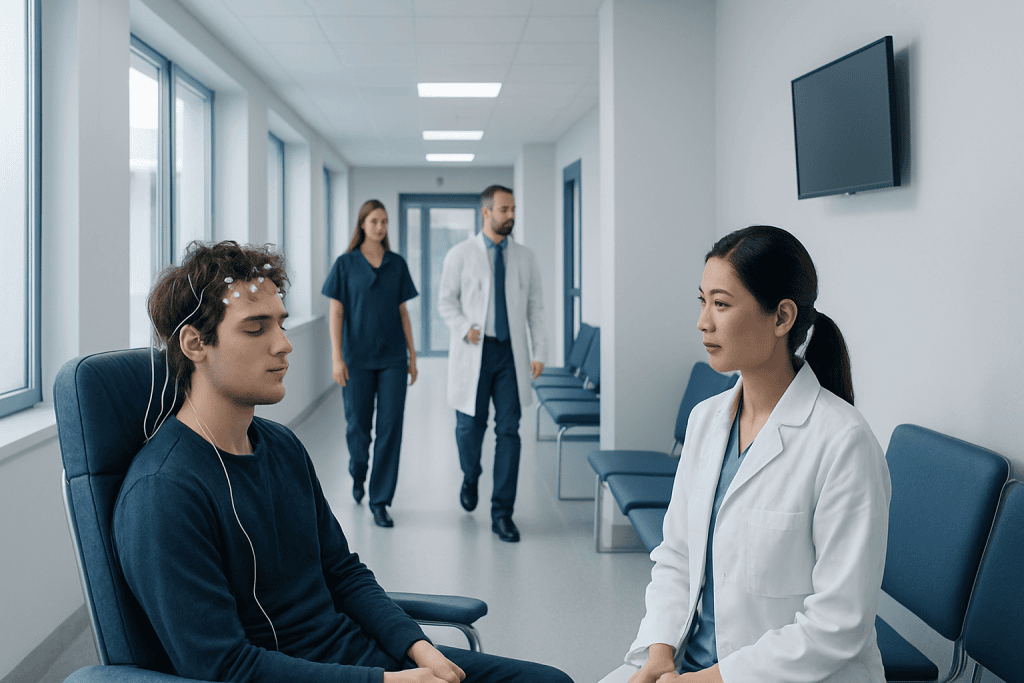
A sleep-deprived EEG is similar to a standard EEG, but the patient is asked to sleep less beforehand so certain brain wave patterns may be easier to detect. The test is noninvasive and painless; electrodes record brain signals but do not send electricity into the brain.
Key Takeaways
- A sleep-deprived EEG is similar to a standard EEG, but the patient is asked to sleep less beforehand so certain brain wave patterns may be easier to detect.
- The test is noninvasive and painless; electrodes record brain signals but do not send electricity into the brain.
- It is commonly used to help evaluate suspected epilepsy, unexplained episodes of staring or confusion, and some seizure-like events.
- Preparation instructions vary, especially for children, older adults, shift workers and people taking regular medicines.
- Patients should arrange safe transport if they are very tired or if their doctor advises against driving after the test.
A sleep-deprived EEG is a painless test that records the brain’s electrical activity after a person has slept less than usual. It is most often used when doctors need more information about possible seizures or epilepsy, especially if a standard EEG was normal or unclear.
Overview
A Sleep-Deprived EEG is an electroencephalogram performed after a planned period of reduced sleep. During the test, small sensors called electrodes are placed on the scalp to record the brain’s natural electrical activity. The test does not read thoughts, cause pain or deliver electric current; it simply records patterns produced by brain cells.
Doctors may recommend sleep deprivation because drowsiness and sleep can make certain abnormal brain wave patterns more visible. This can be helpful when a person has symptoms suggestive of seizures but a routine EEG has not provided enough information. Sleep deprivation may also increase the chance that a brief sleep period occurs during the recording, allowing the medical team to assess both awake and sleep-related brain activity.
A Sleep-Deprived EEG is usually part of a broader neurological assessment. The doctor considers the patient’s symptoms, medical history, physical and neurological examination, medication use, imaging results when needed, and the EEG findings together. In many hospitals, the test is performed by trained technologists and interpreted by neurologists with expertise in clinical neurophysiology.
When a Sleep-Deprived EEG Is Used
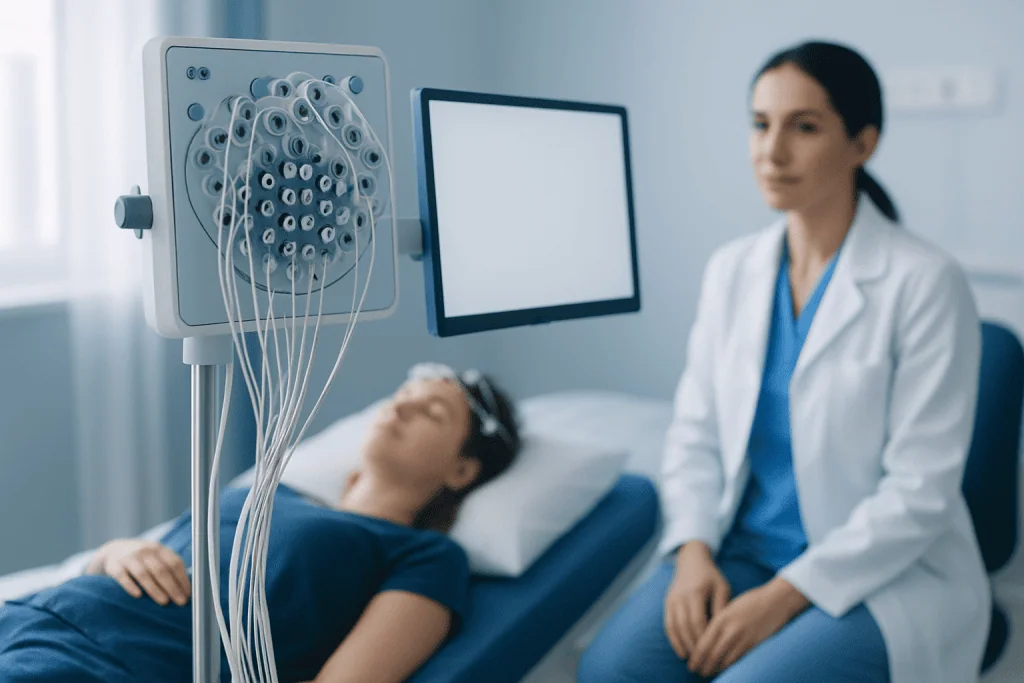
The most common reason for a Sleep-Deprived EEG is the evaluation of possible epilepsy. Some people have events such as brief loss of awareness, unusual movements, sudden confusion, unexplained falls, staring spells or sensations that are difficult to describe. If these episodes could represent seizures, EEG testing can help look for patterns that support or clarify the diagnosis.
A doctor may request this test after a routine EEG is normal, borderline or does not match the clinical picture. A normal EEG does not completely rule out epilepsy, because abnormal brain activity may not occur during a short recording. Sleep deprivation and sleep during the test can sometimes improve the chance of detecting epileptiform discharges, which are brain wave patterns that may be associated with seizure tendency.
Sleep-Deprived EEG may also be used in children, adolescents and adults with established epilepsy when more information is needed about seizure type or treatment planning. In children, it is often coordinated carefully so the child can tolerate the preparation and the recording. Families may be referred to teams experienced in pediatric neurology when age-specific evaluation and support are needed.
How the Test Works
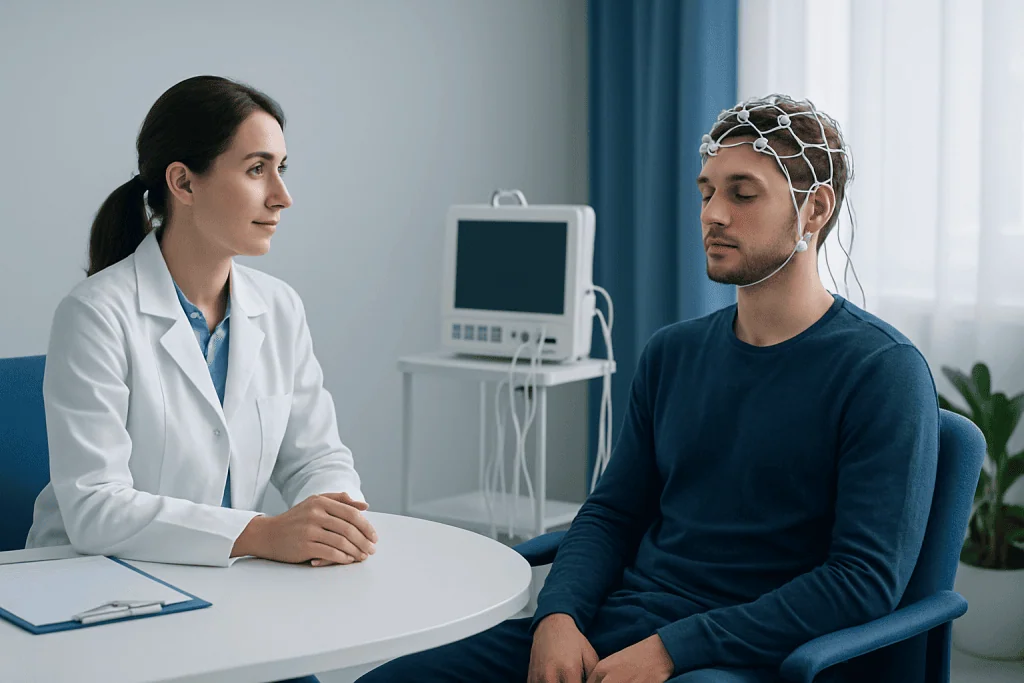
On the day of the test, the technologist measures the head and applies electrodes to the scalp using a washable paste or adhesive. The electrodes are connected to an EEG machine that records brain wave activity as lines on a computer screen. The recording may include periods with eyes open, eyes closed, quiet rest and, when possible, drowsiness or sleep.
Some activation procedures may be used to bring out certain EEG patterns. These can include deep breathing for a few minutes, called hyperventilation, or looking at flashing lights, called photic stimulation. These steps are standard in many EEG laboratories, but they may be adjusted or avoided depending on the patient’s age, medical condition, symptoms and the neurologist’s instructions.
The test itself usually feels calm and uneventful. The patient may be asked to relax, stay still and try to fall asleep if possible. If a typical symptom occurs during the recording, the team can mark the time so the neurologist can compare the event with the brain wave pattern. After the test, the electrodes are removed and any paste can be washed out at home.
How to Prepare
Preparation instructions are individualized, so patients should follow the exact plan provided by their clinic. In general, the goal is to arrive tired enough to become drowsy or sleep during the EEG, while remaining safe. Some adults may be asked to sleep only a few hours the night before, while children may be asked to stay up later or wake earlier rather than skip most of the night’s sleep.
Patients should ask in advance about medicines. Anti-seizure medicines, sleep medicines, antidepressants, stimulants and other treatments can affect sleep or EEG results, but they should not be stopped unless the prescribing doctor specifically advises it. It is also helpful to bring a current medication list, including over-the-counter products, herbal supplements and recent changes in dosage.
Common preparation tips may include:
- Wash hair the night before or the morning of the test, and avoid oils, sprays, gels or heavy conditioners.
- Eat a normal meal unless the clinic gives different instructions, because low blood sugar can affect comfort.
- Ask whether caffeine should be avoided; recommendations vary depending on the reason for the test.
- Bring comfort items for a child, such as a favorite blanket, quiet toy or bottle if age-appropriate.
- Plan transport if severe sleepiness is expected or if the doctor advises not driving.
People who work night shifts, have insomnia, have obstructive sleep apnea, are pregnant, are older adults, or have a condition that makes sleep deprivation difficult should tell the medical team beforehand. The schedule can often be adapted to reduce discomfort while still obtaining useful information.
What to Expect During and After the EEG
The appointment may take longer than the recording itself because electrode placement and removal require time. The patient sits or lies comfortably while the technologist prepares the scalp and attaches the electrodes. Mild scalp cleaning may be done to improve contact, and this can feel slightly scratchy, but it should not be painful.
During the recording, the patient may become very sleepy, which is expected. The technologist may give simple instructions such as opening or closing the eyes, breathing deeply or staying still. If the patient falls asleep, the team usually allows sleep to continue for a period because sleep stages can provide important information.
After the test, most people can return to normal activities once they feel alert. However, because sleep deprivation can temporarily reduce concentration and reaction time, patients should be cautious with driving, operating machinery, climbing, swimming alone or other activities that require full attention. Anyone with a known seizure disorder should follow the safety plan already discussed with their doctor.
Results are not usually interpreted by the technologist during the appointment. A neurologist reviews the recording and prepares a report for the referring doctor. The report may describe normal findings, nonspecific changes, epileptiform activity, slowing, or other patterns that need to be interpreted in the context of symptoms and medical history.
Understanding Results
A Sleep-Deprived EEG can provide valuable information, but it is only one part of diagnosis. If the EEG shows epileptiform discharges, it may support a diagnosis of epilepsy in the right clinical setting. If the EEG is normal, the doctor may still consider epilepsy if the history strongly suggests seizures, because abnormal activity can be intermittent and may not appear during the recording.
Sometimes EEG findings are described as nonspecific. This means the pattern may indicate a change in brain function but does not point to one single cause. Additional evaluation may include blood tests, brain MRI, longer video-EEG monitoring, sleep assessment, cardiac evaluation or other tests depending on the patient’s episodes and risk factors.
For some patients, symptoms may be related to sleep disorders rather than seizures, or both conditions may need consideration. For example, sudden sleep attacks, unusual behaviors during sleep, or severe daytime sleepiness may require evaluation through neurological sleep medicine. The best next step depends on the clinical story, the EEG findings and the doctor’s assessment.
Benefits, Limits and Safety
The main benefit of a Sleep-Deprived EEG is that it may improve the chance of capturing helpful brain wave patterns compared with a routine awake recording. It is noninvasive, widely used and generally well tolerated. It can help doctors choose appropriate treatment, avoid unnecessary treatment in some cases, or decide whether further monitoring is needed.
The main limitation is that EEG results must be interpreted carefully. A normal result does not always exclude epilepsy, and an abnormal result does not automatically explain every symptom. The doctor’s clinical judgment remains essential, especially when symptoms could also be caused by fainting, migraine, sleep disorders, medication effects, anxiety-related episodes, heart rhythm problems or metabolic conditions.
Sleep deprivation can make some people feel irritable, lightheaded, headachy or less alert for a short time. In people with epilepsy, lack of sleep may increase seizure tendency, which is one reason the test is performed in a supervised setting with trained staff. Patients should tell the team if they feel unwell during the test and should follow any post-test safety instructions.
When to See a Doctor
Medical advice is important for any episode involving loss of consciousness, repeated staring spells, sudden confusion, unexplained falls, rhythmic jerking, unusual sensations followed by altered awareness, or events that occur during sleep and are difficult to explain. A prompt but calm evaluation helps identify whether the episodes are seizures, fainting, sleep-related events or another condition.
People who already have epilepsy should contact their doctor if seizures change in pattern, become more frequent, occur after missed sleep, or are associated with injury or prolonged recovery. Medication changes should always be discussed with a qualified clinician, as stopping or adjusting anti-seizure treatment without guidance can be unsafe.
International patients seeking evaluation may benefit from coordinated neurology, EEG and sleep medicine services. Acibadem International’s multidisciplinary specialists and JCI-accredited hospitals diagnose and treat neurological conditions, including those requiring EEG-based assessment, for patients traveling from abroad.
Frequently asked questions
Is a Sleep-Deprived EEG painful?
No. The test is painless and noninvasive. Electrodes placed on the scalp record the brain’s natural electrical activity, but they do not send electricity into the brain.
Why does lack of sleep help during an EEG?
Drowsiness and sleep can make certain brain wave patterns easier to see. Sleep deprivation may also increase the chance that the patient falls asleep during the recording, which can provide additional information.
Can a normal Sleep-Deprived EEG rule out epilepsy?
Not always. EEG abnormalities can be intermittent, so they may not appear during a single test. Doctors interpret the result together with the patient’s symptoms, examination and other investigations.
Should regular medicines be stopped before the test?
Medicines should not be stopped unless the prescribing doctor gives clear instructions. Patients should bring an up-to-date medication list and ask the clinic in advance about anti-seizure medicines, sleep medicines, stimulants or other relevant treatments.
Can a person drive after a Sleep-Deprived EEG?
Some people feel too sleepy to drive safely after the test. Patients should follow their doctor’s advice and consider arranging transport, especially if they have epilepsy, are very sleep-deprived or have been told not to drive.
How long does it take to get results?
The timing varies by clinic and urgency. A neurologist must review the recording before a final report is issued, so results are usually discussed later with the referring doctor rather than during the test.
References
- International League Against Epilepsy
- American Clinical Neurophysiology Society
- National Institute for Health and Care Excellence
- Epilepsy Foundation
- American Academy of Neurology
This article is for general information only and is not a substitute for professional medical advice. Please consult a qualified doctor about your individual situation.
Hair transplant in Turkey — costs, graft counts & a free assessment
JCI-accredited · board-certified surgeons · reply within 24h
Add us as a Preferred Source to see more of our trusted health content across Google Search, AI Overviews and Discover.

Neurology
Diagnosis and treatment of disorders of the brain, spinal cord, nerves and muscles.
51 specialists in this unit