Tension-Type Headache: Causes and When to Seek Care

Tension-type headache often causes a band-like pressure around the forehead, temples, or back of the head and neck. Common triggers include stress, poor sleep, prolonged screen use, jaw clenching, dehydration, and muscle tension.
Key Takeaways
- Tension-type headache often causes a band-like pressure around the forehead, temples, or back of the head and neck.
- Common triggers include stress, poor sleep, prolonged screen use, jaw clenching, dehydration, and muscle tension.
- Diagnosis is usually based on medical history and neurological examination; imaging is only needed when warning signs are present.
- Treatment may include lifestyle changes, relaxation strategies, physical therapy, and appropriate pain relief medicines.
- Seek urgent medical care for sudden severe headache, neurological symptoms, fever with neck stiffness, head injury, or a major change in headache pattern.
Tension-type headache is the most common primary headache disorder and is usually felt as a mild to moderate, pressing or tightening pain on both sides of the head. Most episodes are not dangerous, but frequent, changing, or severe headaches should be assessed by a qualified doctor.
Overview
A tension-type headache is a primary headache, meaning the headache itself is the condition rather than a symptom of another disease. It is commonly described as a steady pressure, tightness, or squeezing sensation, often like a band around the head. The pain is usually mild to moderate and may involve the forehead, temples, scalp, back of the head, or neck.
Unlike migraine, tension-type headache typically does not cause throbbing pain, repeated vomiting, or marked sensitivity to light and sound. Many people can continue daily activities, although concentration and comfort may be affected. Episodes may last from 30 minutes to several days, and the pattern can vary from occasional headaches to frequent or chronic headache.
Although tension-type headache is usually not a sign of a serious problem, it can affect quality of life when it becomes frequent. Understanding personal triggers, using safe self-care strategies, and seeking medical advice when needed can help reduce headache burden and prevent unnecessary worry.
Symptoms of Tension-Type Headache
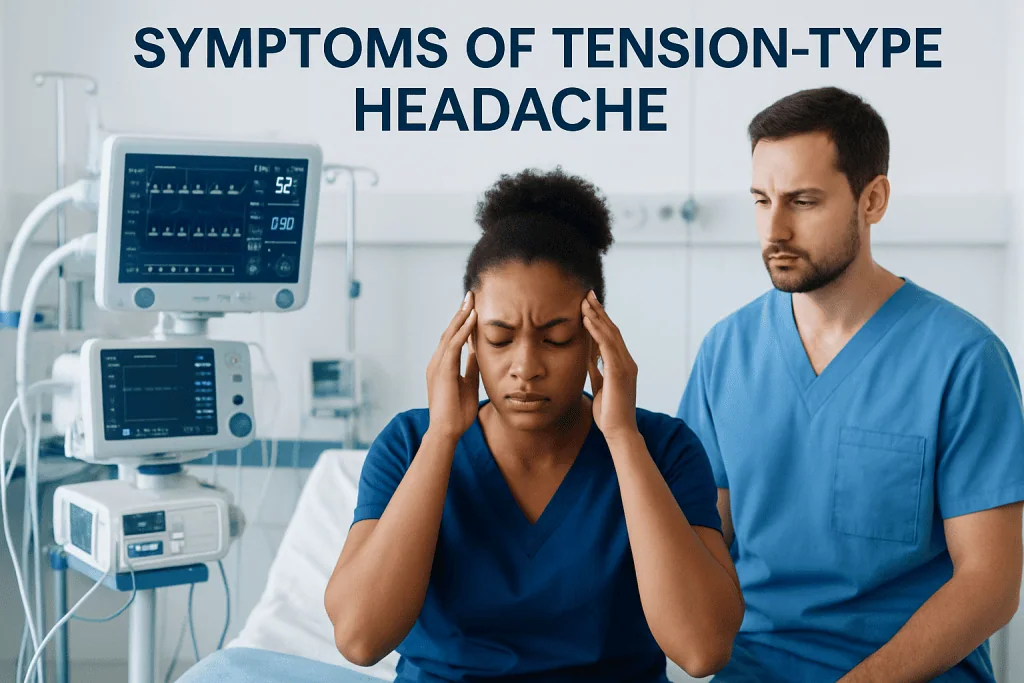
The typical symptom is a dull, pressing, or tightening pain on both sides of the head. Some people notice tenderness in the scalp, temples, jaw, shoulders, or neck muscles. The discomfort may build gradually during the day, especially after long hours of desk work, stress, or poor posture.
Tension-type headache is usually not worsened significantly by routine physical activity such as walking or climbing stairs. Nausea is uncommon, and vomiting is not typical. Mild sensitivity to light or sound can occur, but both together are more suggestive of migraine.
Common features may include:
- A sensation of pressure or tightness across the forehead or around the head
- Pain affecting both sides rather than one side only
- Neck, shoulder, or jaw muscle tightness
- Mild to moderate intensity
- No visual aura or neurological symptoms
Doctors may classify tension-type headache as infrequent episodic, frequent episodic, or chronic depending on how many days per month it occurs. Chronic tension-type headache generally means headaches occur on many days for several months, and it deserves medical evaluation to confirm the diagnosis and review treatment options.
Causes and Risk Factors

The exact cause of tension-type headache is not fully understood. It is believed to involve a combination of muscle sensitivity, pain processing in the nervous system, stress responses, and lifestyle factors. For some people, tight muscles in the neck, scalp, or jaw contribute to the pain; for others, the nervous system becomes more sensitive to ordinary tension or pressure.
Common triggers include emotional stress, anxiety, poor sleep, missed meals, dehydration, fatigue, prolonged screen time, and sustained postures such as working at a computer without breaks. Eye strain, jaw clenching, teeth grinding, and poorly supported workstations may also play a role. In some cases, frequent use of pain relief medicines can contribute to medication-overuse headache, which may make headaches more persistent.
Risk can be higher in people who experience regular stress, have sleep disturbances, perform repetitive desk or manual work, or have neck and shoulder muscle tension. A personal history of other headache types, such as migraine, can also make headache patterns more complex. Identifying triggers does not mean the headache is a person’s fault; rather, it gives practical opportunities for prevention and treatment.
Diagnosis
Diagnosis is usually made through a careful medical history and physical and neurological examination. The doctor will ask about the headache location, quality, intensity, duration, frequency, associated symptoms, medicines used, sleep patterns, stress, medical conditions, and any recent injuries or infections. A normal neurological examination is reassuring and supports the diagnosis of a primary headache disorder.
There is no single blood test or scan that confirms tension-type headache. Imaging tests such as MRI or CT are not routinely needed when the symptoms are typical and the examination is normal. However, a doctor may recommend tests if the headache has unusual features, starts suddenly, changes significantly, occurs after head trauma, or is accompanied by neurological signs.
A headache diary can be very helpful. Patients can record headache days, severity, duration, possible triggers, sleep, meals, menstrual timing if relevant, stress levels, and medicines taken. This information helps distinguish tension-type headache from migraine, sinus-related pain, medication-overuse headache, and other conditions that may need different care.
Treatment Options
Treatment depends on how often headaches occur, how severe they are, and how much they interfere with daily life. Occasional tension-type headaches may improve with rest, hydration, a regular meal, gentle stretching, heat applied to tight neck muscles, or short-term use of appropriate over-the-counter pain relievers. Medicines should be used according to the label or a doctor’s advice, especially for people with stomach, kidney, liver, heart, bleeding, pregnancy-related, or other medical concerns.
When headaches are frequent, relying only on pain relievers may not be the best approach. A doctor may recommend a broader plan that includes trigger management, physical therapy, posture and ergonomic changes, relaxation training, sleep improvement, or treatment of anxiety, depression, jaw problems, or neck pain when present. In selected cases of chronic tension-type headache, preventive medication may be considered by a physician.
Non-drug strategies can be highly useful, particularly when practiced consistently. These may include breathing exercises, progressive muscle relaxation, mindfulness-based stress reduction, regular low-impact exercise, and scheduled breaks from screens or repetitive work. Physical therapy may focus on neck mobility, shoulder strengthening, posture, and reducing muscle tenderness.
Patients should tell their doctor how often they use pain relief medicines. Using these medicines too frequently can sometimes worsen headache frequency over time. A clinician can help create a safe plan to reduce medication overuse if it is suspected and to replace it with preventive strategies.
Prevention and Self-Care
Prevention usually begins with recognizing patterns. Regular sleep, balanced meals, adequate fluid intake, and consistent physical activity can reduce vulnerability to headaches. For people who work at a desk, adjusting screen height, chair support, keyboard position, and lighting may reduce neck and eye strain.
Simple habits can make a meaningful difference over time:
- Take brief movement and stretching breaks during long work or study sessions
- Keep the jaw relaxed and avoid prolonged clenching
- Use relaxation techniques during stressful periods
- Limit excessive caffeine and avoid sudden caffeine withdrawal if sensitive
- Maintain a regular sleep schedule, including on weekends when possible
- Track headache days and medicine use in a diary
Self-care should be gentle and realistic. A person does not need to eliminate all stress to improve headaches; instead, the goal is to reduce repeated strain on the body and nervous system. If headaches continue despite good self-care, medical guidance can help identify overlooked triggers and choose appropriate treatment.
When to See a Doctor
A doctor should be consulted if headaches are new, frequent, worsening, interfering with work or sleep, or requiring pain relievers often. Medical review is also important if a person is unsure whether the headache is tension-type, migraine, sinus-related, medication-related, or linked to another condition. Early assessment can help prevent chronic patterns and provide reassurance.
Urgent medical care is needed for warning signs such as a sudden, severe headache that reaches maximum intensity quickly; headache with weakness, numbness, confusion, fainting, seizures, vision loss, or difficulty speaking; headache with fever and neck stiffness; headache after a significant head injury; or a new headache during pregnancy or after delivery. People with cancer, immune system problems, or a new headache after age 50 should also seek prompt medical advice.
Patients should not ignore a major change in their usual headache pattern, even if they have had tension-type headaches before. A qualified clinician can decide whether further testing is needed and can guide safe treatment. Acibadem International’s multidisciplinary specialists and JCI-accredited hospitals diagnose and treat headache disorders for international patients, including those who need coordinated neurological evaluation.
Frequently asked questions
What does a tension-type headache feel like?
A tension-type headache usually feels like pressure, tightness, or a squeezing band around the head. It often affects both sides and may be linked with neck, shoulder, or scalp tenderness. The pain is typically mild to moderate rather than throbbing.
Is a tension-type headache dangerous?
Most tension-type headaches are not dangerous and are not caused by a serious disease. However, headaches that are sudden, severe, new, worsening, or accompanied by neurological symptoms need medical assessment. A doctor can confirm the diagnosis and rule out other causes when necessary.
How is tension-type headache different from migraine?
Tension-type headache usually causes steady pressure on both sides of the head and is not greatly worsened by normal activity. Migraine more often causes moderate to severe throbbing pain, may affect one side, and can include nausea, vomiting, or sensitivity to both light and sound. Some people have both conditions, so medical evaluation can be helpful.
Can stress really cause tension-type headaches?
Stress is a common trigger, but it is rarely the only factor. Poor sleep, dehydration, muscle tension, posture, screen use, jaw clenching, and pain sensitivity can also contribute. Managing stress can help, especially when combined with healthy routines and physical relaxation strategies.
How often is too often to take pain relievers for headaches?
Frequent use of pain relievers can sometimes lead to medication-overuse headache, making headaches occur more often. The safe frequency depends on the medicine and the person’s health history. Anyone needing pain relief regularly should speak with a doctor or pharmacist for individualized guidance.
When should imaging tests be done for a headache?
Imaging is not usually needed for typical tension-type headache with a normal neurological examination. A doctor may recommend MRI, CT, or other tests if there are warning signs, an unusual pattern, neurological symptoms, head injury, or a significant change in headaches. The decision is based on the clinical assessment.
References
- World Health Organization
- International Headache Society
- American Migraine Foundation
- National Institute for Health and Care Excellence
- Mayo Clinic
This article is for general information only and is not a substitute for professional medical advice. Please consult a qualified doctor about your individual situation.
Hair transplant in Turkey — costs, graft counts & a free assessment
JCI-accredited · board-certified surgeons · reply within 24h
Add us as a Preferred Source to see more of our trusted health content across Google Search, AI Overviews and Discover.

Neurology
Diagnosis and treatment of disorders of the brain, spinal cord, nerves and muscles.
51 specialists in this unit